What encounters and choices have shaped the journeys of those who have carved out their own “Zero Mile,” a world uniquely their own? In this interview series, ZEROMILE Editor-in-Chief Ayako Inaba draws on her years of experience introducing Japan to international VIPs as a private concierge. This time, she becomes the traveler, exploring the personal journeys of people who have created their own Zero Mile.
For the second installment, we meet Yoshiyuki and Yoshihiro Fukuda of Fukudaki Co., Ltd., a Kyoto-based company specializing in fine handcrafted kimono. The two are now exploring ways to take the techniques passed down through three generations since the Meiji era beyond the world of kimono. We discover the aesthetic philosophy behind their work and how embracing change has allowed their traditions to endure.
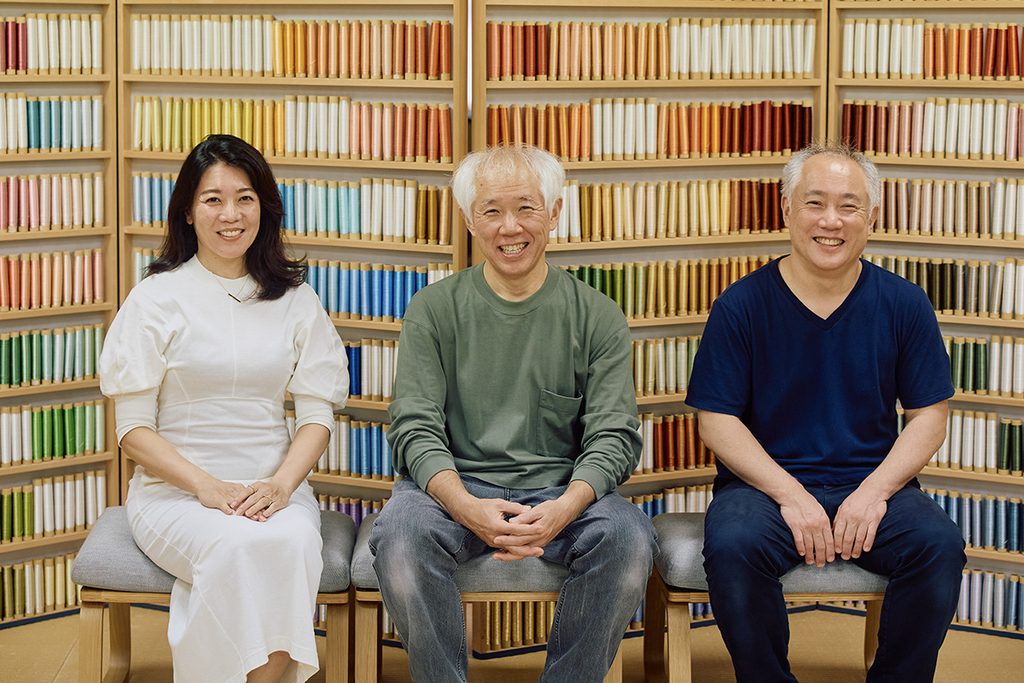
(From left) Ayako Inaba, Editor-in-Chief of ZEROMILE; Yoshiyuki Fukuda, President and Representative Director of Fukudaki; and Yoshihiro Fukuda, Director of Fukudaki.
Inaba: It’s been a while, Mr. Fukuda. Thank you again for welcoming our international guests to your workshop the other day.
Yoshiyuki Fukuda (hereafter Yoshiyuki): It was our pleasure. Everyone seemed genuinely interested in what they were seeing.
Inaba: Our guests always enjoy visiting Fukudaki because they get to see so much more than just embroidery. They can also watch the dyeing and hand-painting processes. The custom-made kimono have been a big hit, too. Today, I’d really like to take the time to learn more about Fukudaki’s history and what goes into creating your pieces.
The Embroidery Master Who Worked Without Sketches
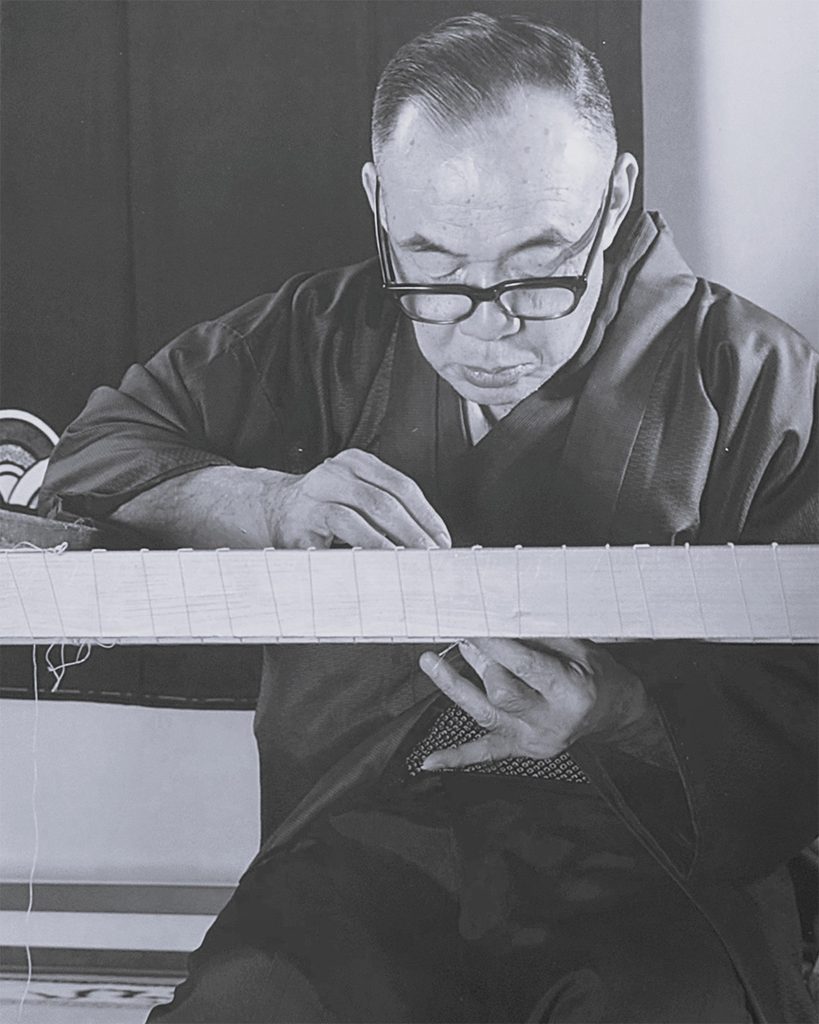
Kisaburo Fukuda
Kisaburo Fukuda, the first-generation master, was an unconventional figure. He entered the world of embroidery at a young age and became independent before turning 20. A stern figure even within his own family, he was said to keep his workshop in a constant state of tension. But his craftsmanship was exceptional. Working without preliminary sketches, he created remarkably lifelike pieces using nothing more than the direction and sheen of his embroidery threads, achieving a level of detail that rivaled photography.
Inaba: The first-generation master Kisaburo’s work is astonishingly delicate, yet there’s an almost overwhelming intensity to it. What was he actually like as a person?
Yoshiyuki: From what I’ve heard, my grandfather was quite a larger-than-life character who didn’t play by the rules. He loved gambling, and there are even stories of him playing hanafuda and mahjong during the war.
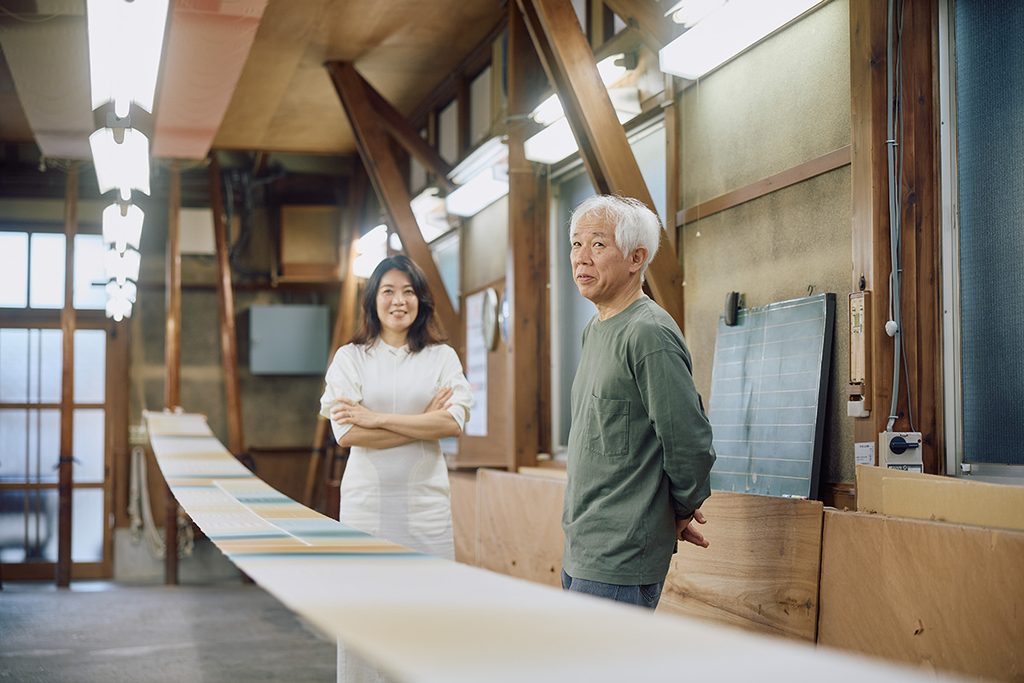
Yoshiyuki Fukuda, President and Representative Director of Fukudaki, at the company’s workshop, Fukuda Kogei Senshu Kenkyujo (FUKUDA CRAFTS DYEING)
Yoshihiro Fukuda (hereafter Yoshihiro): He was always interested in new things. He even rode a motorcycle, despite being born in the Meiji era. But he was strict with the family, and as his grandchildren, we found him absolutely terrifying. Whenever we had friends over and got too noisy, he’d immediately shout, “Keep it down!” from his workshop.
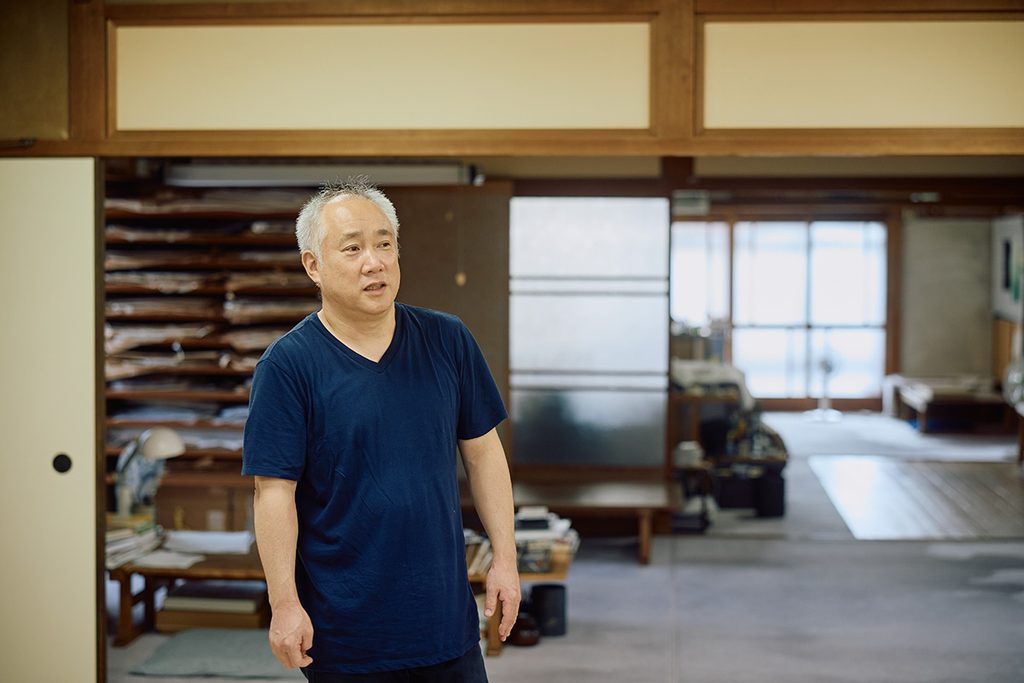
Yoshihiro Fukuda, Director of Fukudaki.
Yoshiyuki: I can still picture him sitting in a dimly lit room, his hands lit up by a light almost like a spotlight while he worked with his needle. He never used sketches for his embroidery. Just look at this piece featuring a mask. By playing with the direction of the threads and the way they catch the light, he was able to create something remarkably lifelike using just thread.
Inaba: At first glance, I thought I was looking at a photograph. It’s incredible that he could make something like this with just thread and no sketch to guide him. He really was a genius.
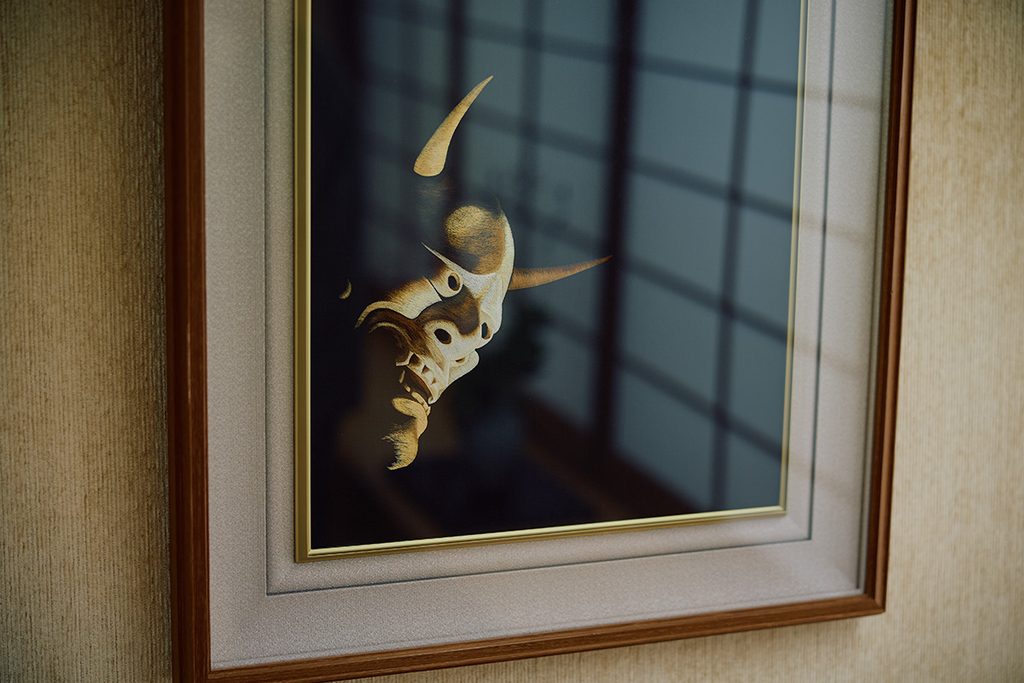
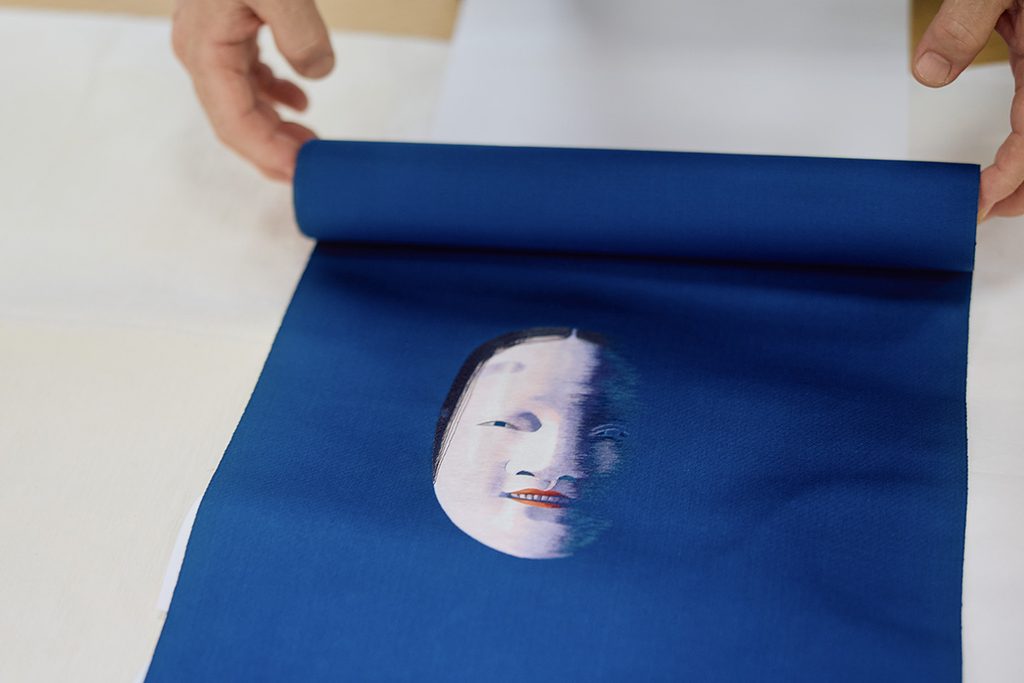
A masterpiece by Kisaburo Fukuda, created entirely with thread, capturing even the subtle shadows of a mask emerging from the darkness.
How Living National Treasure Kiju Fukuda Redefined the Beauty of Kimono
No one grew up closer to the genius of Kisaburo Fukuda than his son, Kiju Fukuda (1932–2022), who would go on to become the second-generation master.
“When I was a kid, I hated embroidery,” Kiju once recalled. He had dreamed of becoming an engineer and pursued mechanical engineering at a technical school after completing elementary school. But in the chaos following World War II, choosing his own future wasn’t really an option. With his family struggling to make ends meet, he had little choice but to apprentice under his father at just 15 years old.
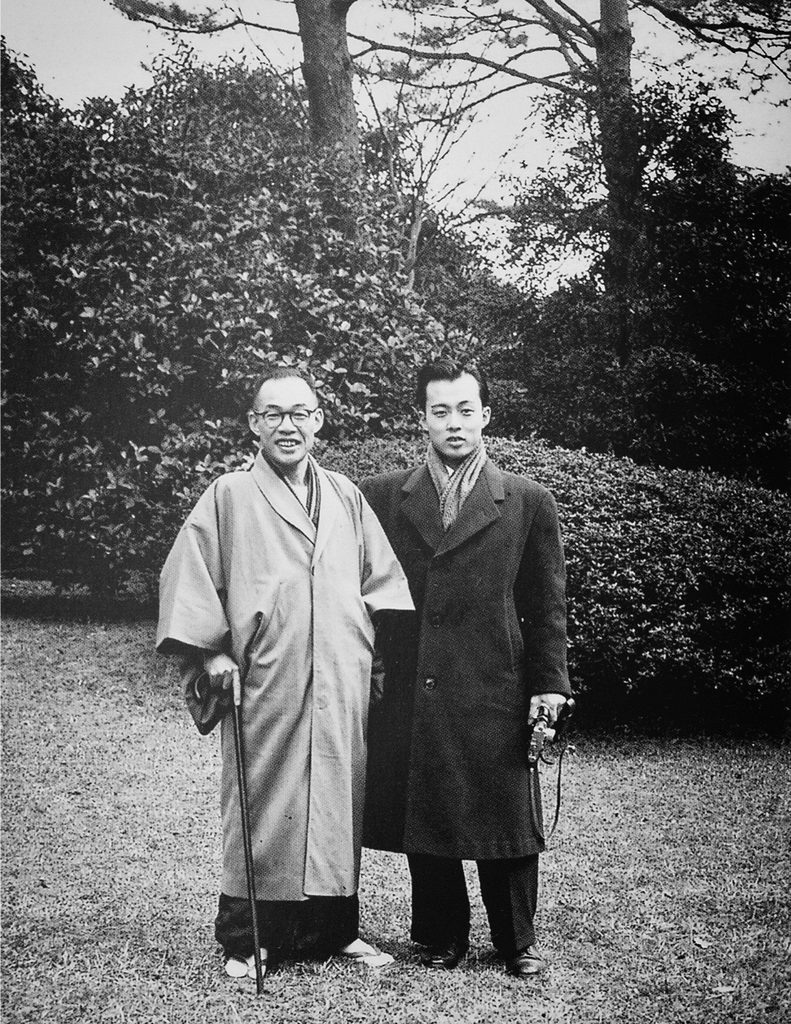
Kisaburo Fukuda (left) and Kiju Fukuda. Photo courtesy of Fukudaki.
Inaba: So he went on to spend more than 70 years working with needle and thread. Do you think it was more than just a sense of responsibility to carry on the family business? Was there also a part of him that wanted to prove he could be better than his father?
Yoshiyuki: My father actually approached embroidery quite differently from my grandfather. He didn’t want to simply follow in his footsteps as an embroidery craftsman. Instead, he wanted to be an artist who could develop his own ideas and express them through his work. Back then, embroidery was generally seen as just one part of textile production, so it was difficult for embroidered works to be seen as works of art in their own right . That’s why, in 1971, he founded the Fukuda Kogei Senshu Research Institute. He wanted to bring everything together under one roof, from design and dyeing to embroidery, so he could fully explore his own creative ideas.
Inaba: So he reinvented himself, going from craftsman to artist. As the next generation carrying on his legacy, what do you both think sets your father Kiju’s work apart?
Yoshiyuki: My father believed that the beauty of Japan’s landscapes came from what he called a “culture of water vapor.” With Japan’s humid climate, mist and haze soften the outlines of mountains and wrap around the colors of the morning sunrise. It creates these delicate transitions between shades. He felt that this lack of clearly defined boundaries was part of what made Japanese scenery so beautiful. His work reflected those sort of ever-changing colors and qualities of light through dyeing, carefully chosen threads, and the natural luster of embroidery.
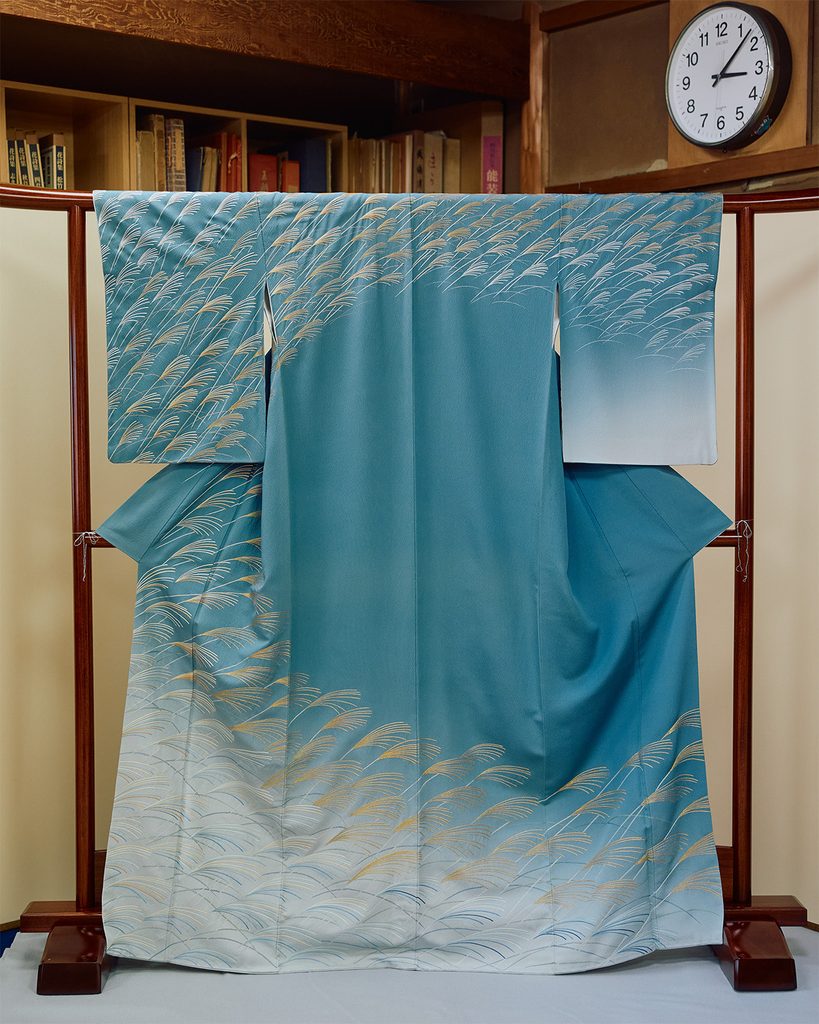
A work by Kiju Fukuda, depicting a full moon emerging from a cluster of Japanese silver grass plumes.
Inaba: Even though it depicted scenes from nature, there’s something subtly sensual about it, isn’t there?
Yoshiyuki: That’s true. Maybe it’s because he wasn’t just trying to capture the beauty of nature. What my father always had in mind was how a woman would look wearing one of his kimono. More than anything, he wanted the wearer to look even more beautiful and attractive. I think that’s why his work has such a sense of sensuality and vitality.
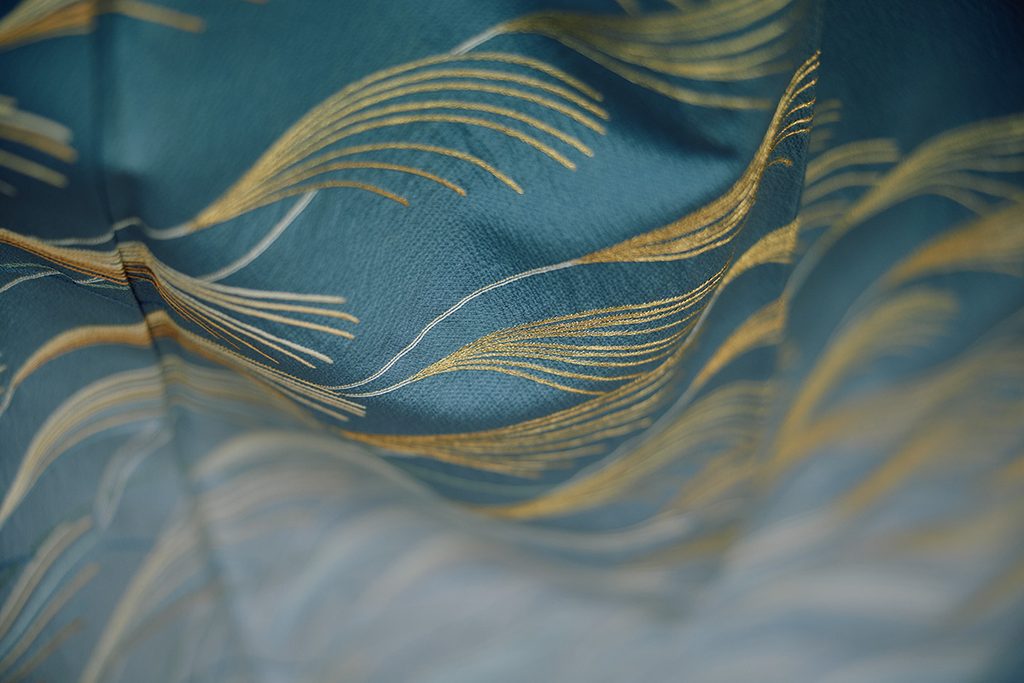
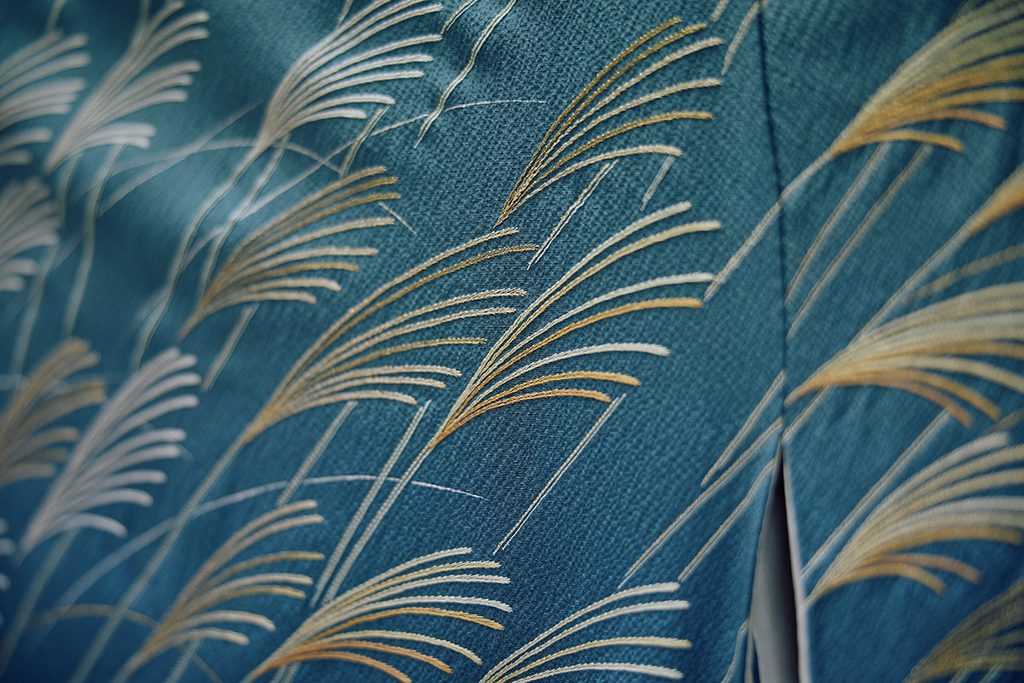
The delicate interplay of dyeing and embroidery creates a captivating visual effect.
Kiju once described beauty in these words:
“Beauty is sensual allure, it is eros, and ultimately, it is the very force of life itself.”
Yoshihiro: My father often used to say, “The kimono shouldn’t steal the spotlight.” No matter how much work went into making it, there was no point if people only admired the kimono itself. What mattered was that the person wearing it looked beautiful, and that people would think, “What a lovely person.”
Inaba: It’s not just about the kimono catching your eye. It’s about the person wearing it being so captivating that you can’t look away. That really helps me understand the kind of beauty Kiju was striving for.
Yoshiyuki: Exactly. Just because a kimono looks beautiful on a rack doesn’t mean it’s finished. I believe it only truly becomes a kimono when someone wears it, and it becomes part of their body and the way they express themselves.
Kiju also saw the relationship between the kimono and the obi as a reflection of human nature.
“The kimono symbolizes emotion, and the obi symbolizes reason. The essence of traditional Japanese dress lies in tempering emotion with reason,” he once said.
The soft fabric of the kimono wraps around the body, its sleeves and hem swaying with movement, expressing emotion. The obi, meanwhile, provides structure and restraint, embodying reason. For Kiju, the beauty of Japanese dress came from the harmony between these contrasting forces, brought together on the human body.
Preserving Tradition by Embracing Change
Through his tireless creative efforts, Kiju transformed embroidery from just one part of the production process into a comprehensive art form. In 1997, exactly 50 years after beginning his apprenticeship under his father, Kisaburo, he became the first person in the field of embroidery to be recognized as a Living National Treasure. He was officially designated a Holder of Important Intangible Cultural Property.
Inaba: Kiju’s work continued to evolve even after he was recognized as a Living National Treasure, didn’t it?
Yoshiyuki: My father was someone who constantly pushed himself to try new things. Every time he presented a new piece, his style would be different. I heard that people were sometimes so surprised they’d ask, “Did Kiju Fukuda really make this?” He never rested on his past achievements or spent time looking back. He often expressed that there’s a misconception that traditional crafts are supposed to stay the same, but that’s completely wrong. He believed if we want to preserve tradition, we need to keep changing and adapting to the times. Otherwise, we won’t survive.
Kiju continued to embrace new challenges until his passing in 2022 at the age of 90. Yet his creative spirit lives on in the Fukudaki workshop today.
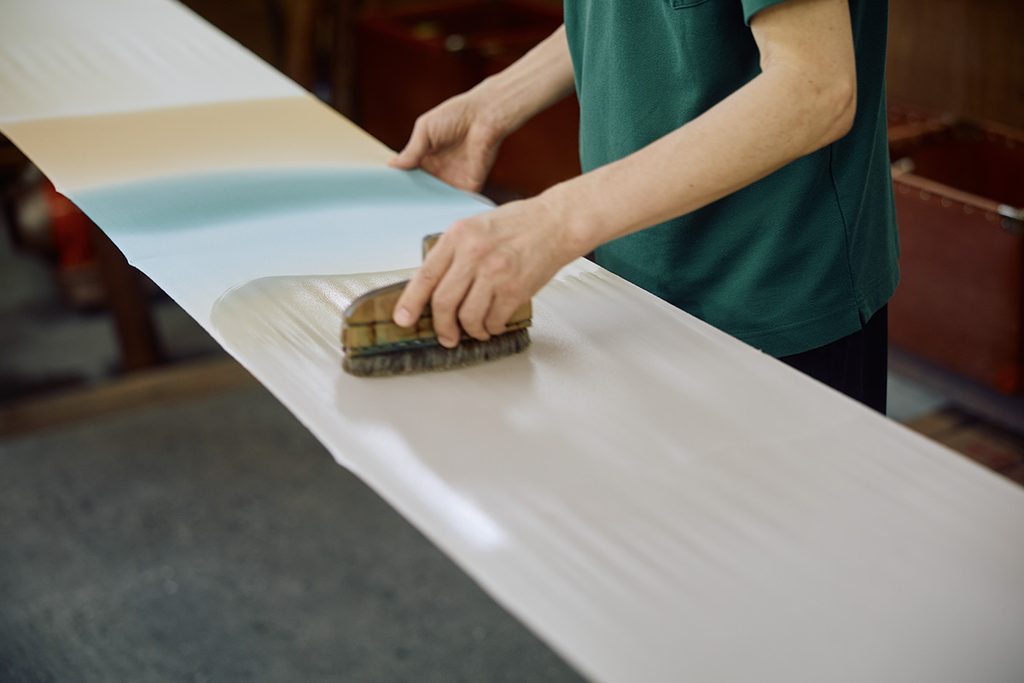
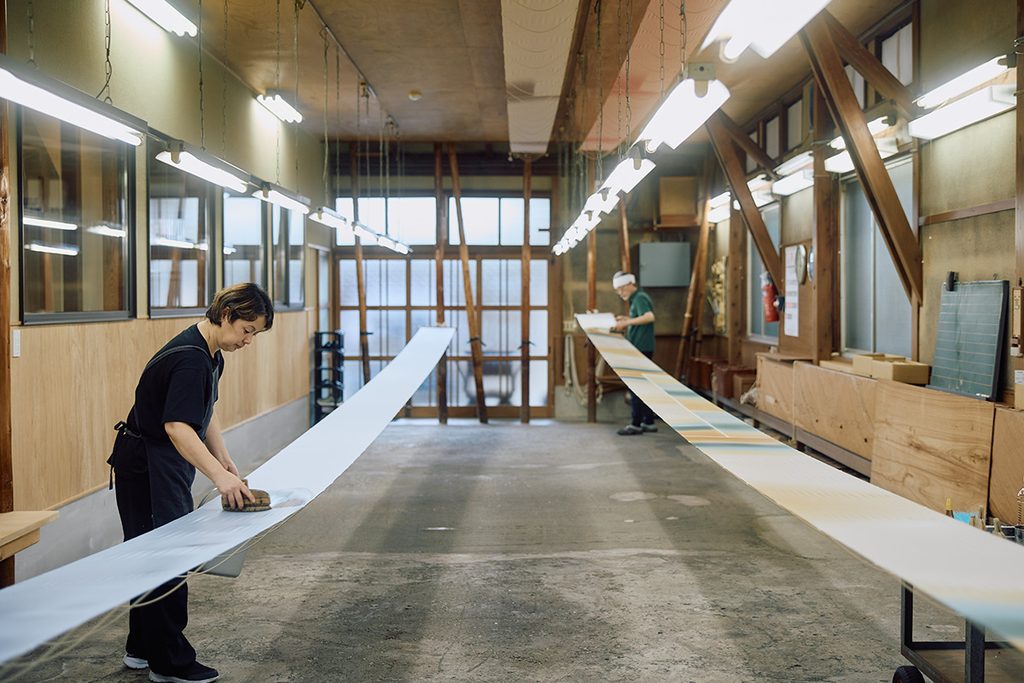
Image 1: A brush is swept across a length of stretched silk, creating subtle variations in color.
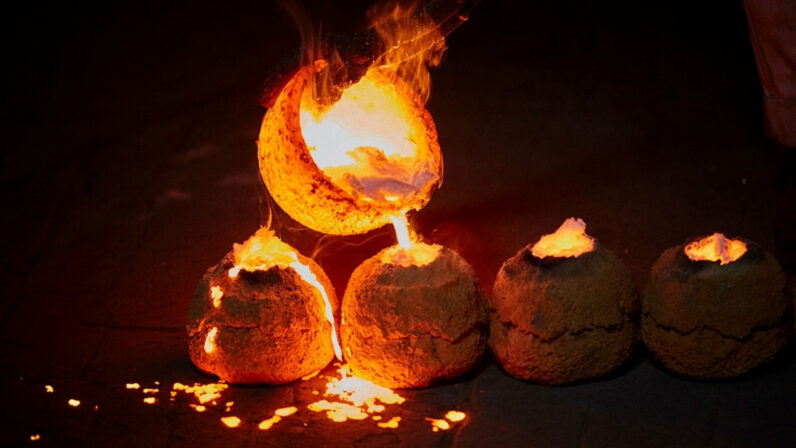
Image 2: Thin rods called shinshi are attached along both edges of the fabric to maintain its width during the dyeing process.
Inaba: As the second generation, Kiju elevated embroidery from just one step in the textile-making process into a more comprehensive form of artistic expression. As the third generation, what do you both want to preserve about Fukudaki, and what would you like to change?
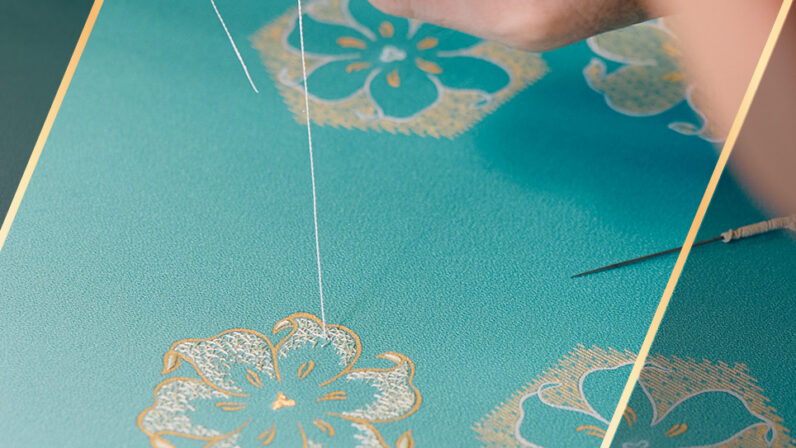
Yoshiyuki: Above all, I want to maintain the approach my father developed, where we do everything ourselves, from design to dyeing and embroidery. Originally, he created this system so Fukudaki could pursue its own artistic vision. But today, as demand for kimono declines and more artisans and businesses specializing in individual stages of production are closing down, this approach is also helping us preserve those skills within our workshop. In a way, my father’s commitment to his art has also helped ensure that these traditional techniques are passed down to future generations.
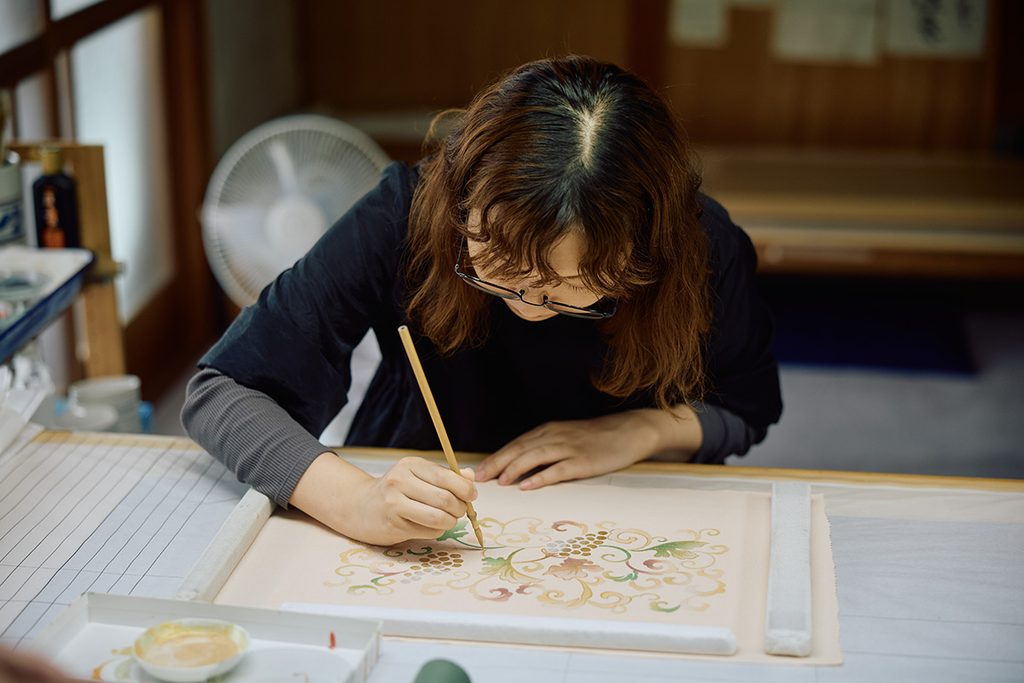
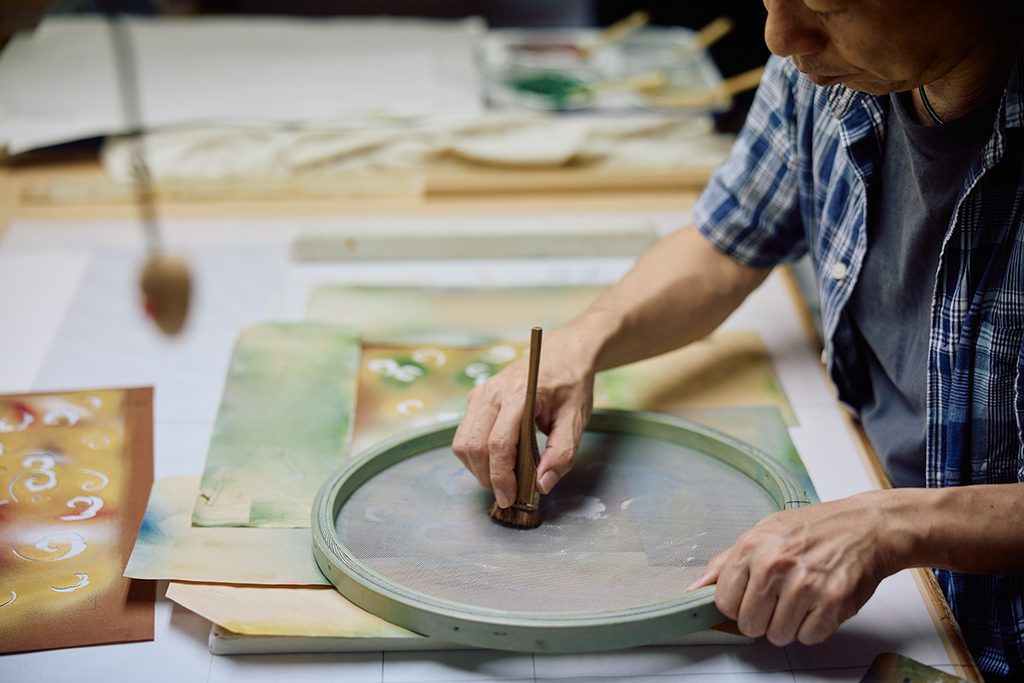
Image 1: Hand-coloring. Different brushes are used to carefully apply each color, one at a time.
Image 2: Gold and silver foil are also applied in-house, adding a touch of brilliance to the patterns.
Yoshihiro: At the same time, we need to change how we use our techniques and bring them to a wider audience. Alongside our own kimono, we take on commissions from other brands and create art pieces beyond traditional clothing. We also open our workshop to visitors from all walks of life, including tourists from overseas. We don’t want kimono to be the only introduction to Fukudaki. We want more people to have the chance to discover the beauty of our work and the techniques behind it.
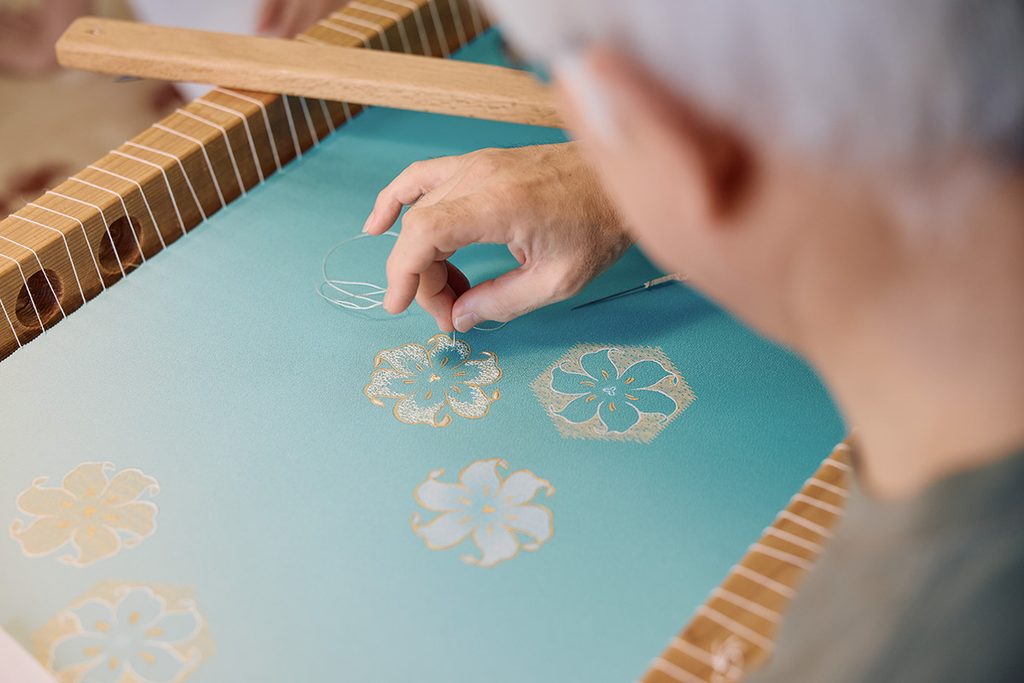
Yoshiyuki Fukuda preserves the embroidery techniques that form the foundation of Fukudaki.
Inaba: So, while preserving the techniques you’ve inherited, you’re also creating more opportunities for people to discover and engage with them.
Yoshihiro: When we collaborate with people from outside the workshop, we encounter ideas and creative approaches that we wouldn’t have discovered on our own. It’s a constant process of trial and error, finding ways to translate those influences into something that feels true to Fukudaki’s identity. But through those efforts, we’re creating things we’ve never done before.
Yoshiyuki: My father used to describe Kyoto as a city sustained by cultural transfusions. It may seem like a city built entirely on tradition, but in reality, Kyoto has survived by welcoming people and cultures from outside and absorbing them in its own way. Fukudaki is no different. We don’t want to keep the techniques we’ve inherited within the walls of our workshop. We want to expose them to different perspectives and find new ways of expressing them that connect with people living today. Even if fewer people wear kimono, the human desire for beauty will never go away. I believe our role as the third generation is to continue creating things that speak to that instinct.
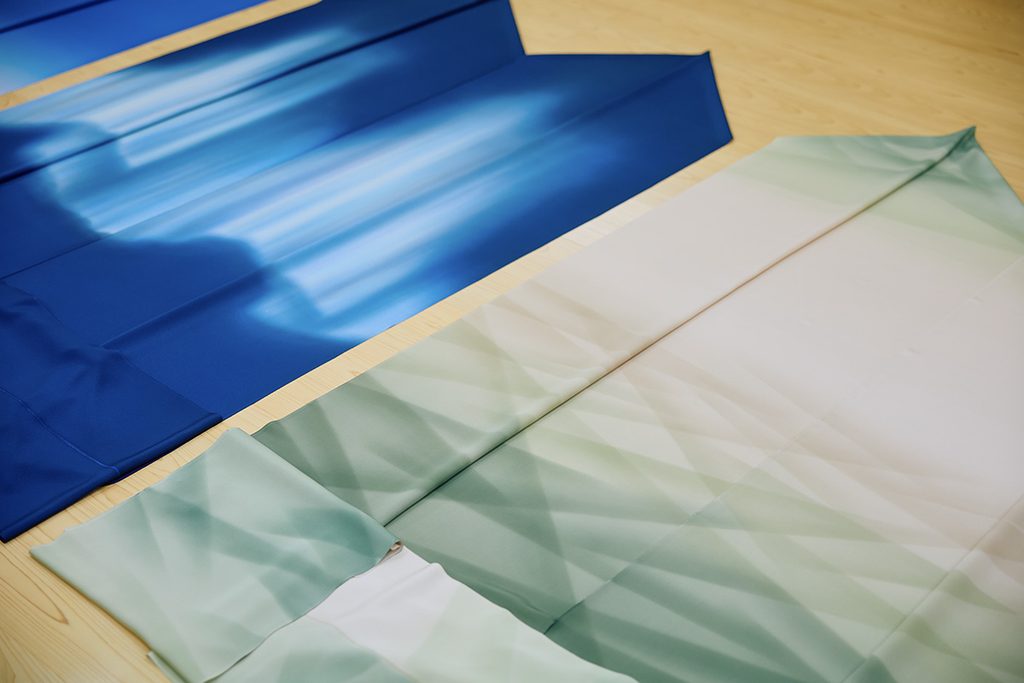
A selection of custom-made pieces, showcasing how Fukudaki uses its distinctive dyeing techniques to bring clients’ visions to life.
To preserve tradition, one must embrace change. From the first generation to the second, and now the third, Fukudaki’s craftsmanship and aesthetic sensibility have been passed down through continual evolution. Now, that enduring legacy is beginning to take on a new form.
◾️Yoshiyuki and Yoshihiro’s ZEROMILE
When people ask us where they should go in Kyoto, we always recommend the area between Konkai Komyoji Temple, also known as Kurodani, and Shinnyodo Temple. We used to walk around there often as students, and we still love it today. Back then, there weren’t nearly as many tourists, and the atmosphere was quiet and peaceful. It’s especially beautiful in autumn, when the temple grounds are covered in vibrant fall colors. It’s the perfect place for a relaxing walk while enjoying the atmosphere of old Kyoto.
◾️Profiles
Yoshiyuki Fukuda
Born in Kyoto in March 1965. In 1991, he began assisting his father, textile artist Kiju Fukuda, while learning every aspect of the craft at the Fukudaki workshop. In May 2020, he was appointed President and Representative Director of Fukudaki Co., Ltd., which operates Fukuda Kogei Senshu Kenkyujo (FUKUDA CRAFTS DYEING).
Yoshihiro Fukuda
Born in Kyoto in May 1970. He returned to Kyoto in 2001 and joined Fukudaki. He currently serves as Head of Sales.
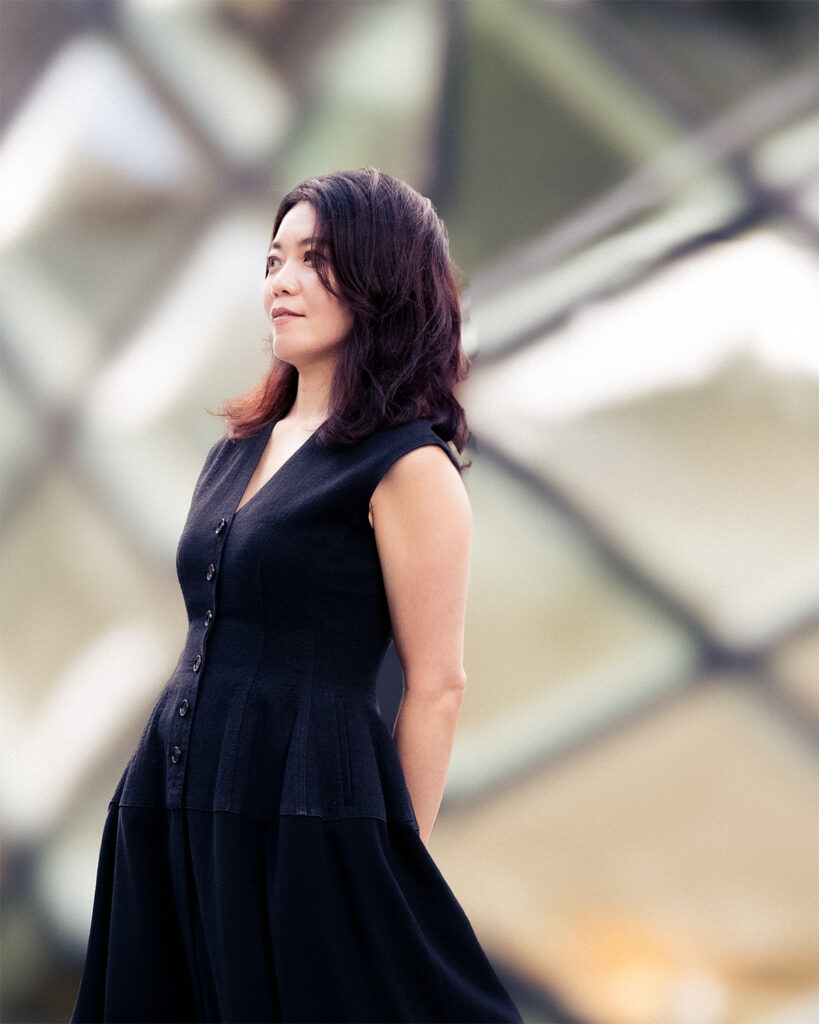
Ayako Inaba
ZEROMILE editor-in-chief / president of Private Concierge, Inc.,
ZEROMILE editor-in-chief and president of Private Concierge, Inc., providing luxury concierge services to introduce the best of Japan. Ayako is passionate about sharing Japanese culture and values both pop and sophistication. Her current focus is on nurturing the next generation.
Fukudaki Co., Ltd. (Fukuda Crafts Dyeing)
50 Koyama Kamihananokicho, Kita-ku, Kyoto 603-8121, Japan
https://fukudaki.jp/