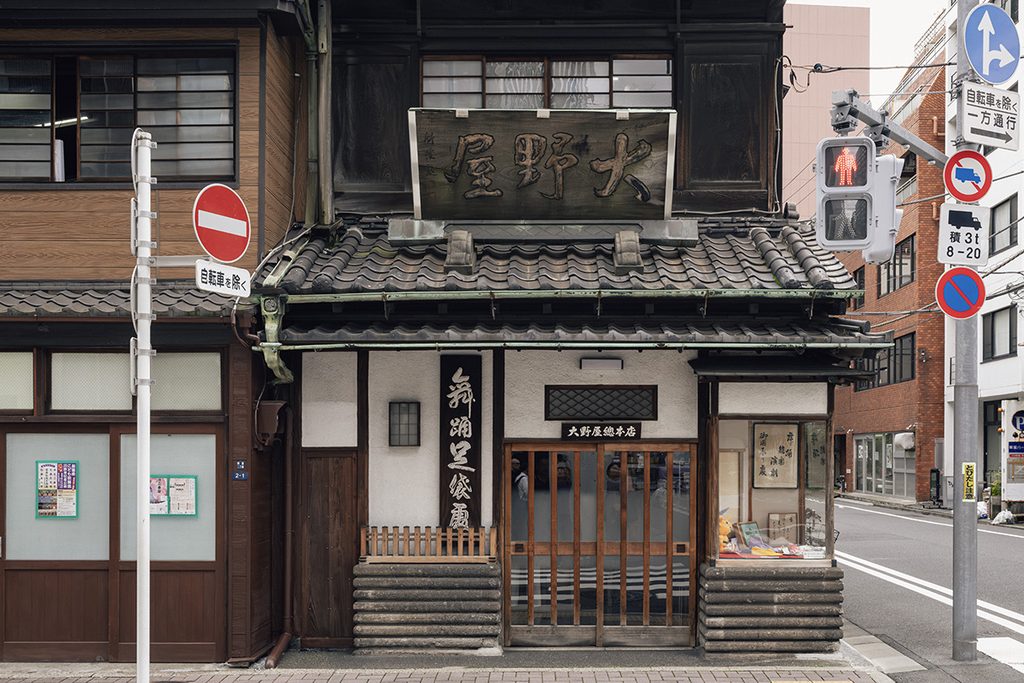
A short walk from Ginza, at an intersection in Shintomicho, stands a two-storey wooden machiya townhouse that retains the character of the Taisho era. This is Ōnoya Sōhonten, a long-established specialist in tabi, traditional Japanese split-toe footwear, founded more than 250 years ago during the Edo period.
For generations, the shop has catered to kabuki actors, masters of traditional Japanese dance and other performing artists, crafting bespoke tabi tailored to each customer’s feet. From the rooms tucked away at the back of the building to the workshop upstairs, traces of its history remain visible, reflecting both the hardships of the Great Kanto Earthquake and wartime Japan, and the generations who have adapted the business to changing times.
From Traditional White Tabi to Everyday Undergarments
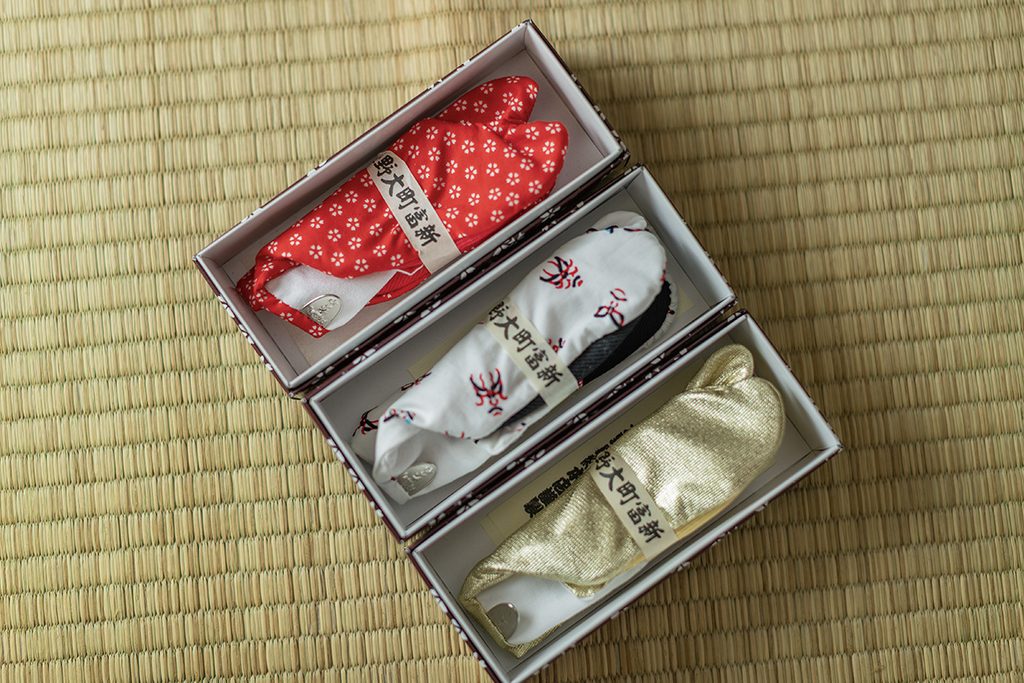
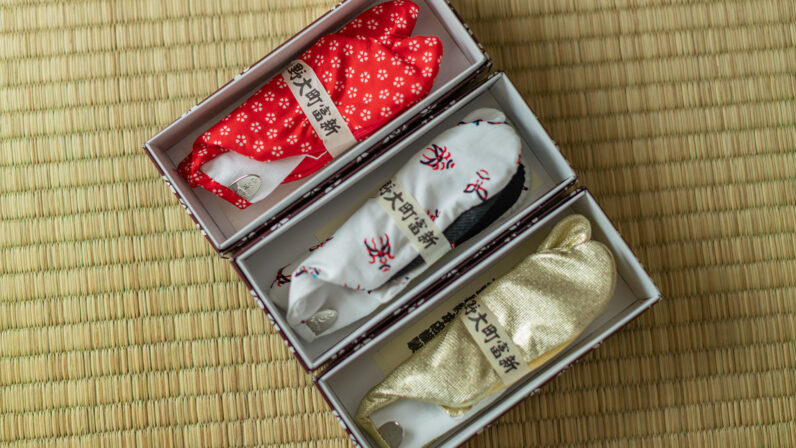
These charming, palm-sized decorative fuku-tabi feature traditional kabuki kumadori makeup designs and richly patterned gold brocade. Believed to bring good luck, they are particularly popular with visitors from overseas.
Stepping through the noren curtain at Ōnoya Sōhonten, visitors are greeted by an impressive array of tabi. Alongside the classic white variety are black tabi, traditionally favoured by men, and a wide selection of coloured tabi essential to Japan’s traditional performing arts.
The coloured tabi worn on stage have a distinctive palette of their own. Traditional shades include the clear blue of asagi, the soft pink of toki-iro, purple, the muted green of kawa-iro, the smoky tones of kusube-iro, the pale lavender of fuji-iro and the vivid yellow of tamago-iro. Each colour has its place, chosen to suit particular characters and performances.
Patterned tabi are equally varied. Among them are dragonfly motifs known as kachimushi, or “victory insects”, traditionally favoured for warrior roles because dragonflies are believed to fly only forwards, never backwards. Other designs include swirling tomoe patterns, uroko scales associated with protection against misfortune, cherry blossoms and auspicious ōiri motifs symbolising a full house.
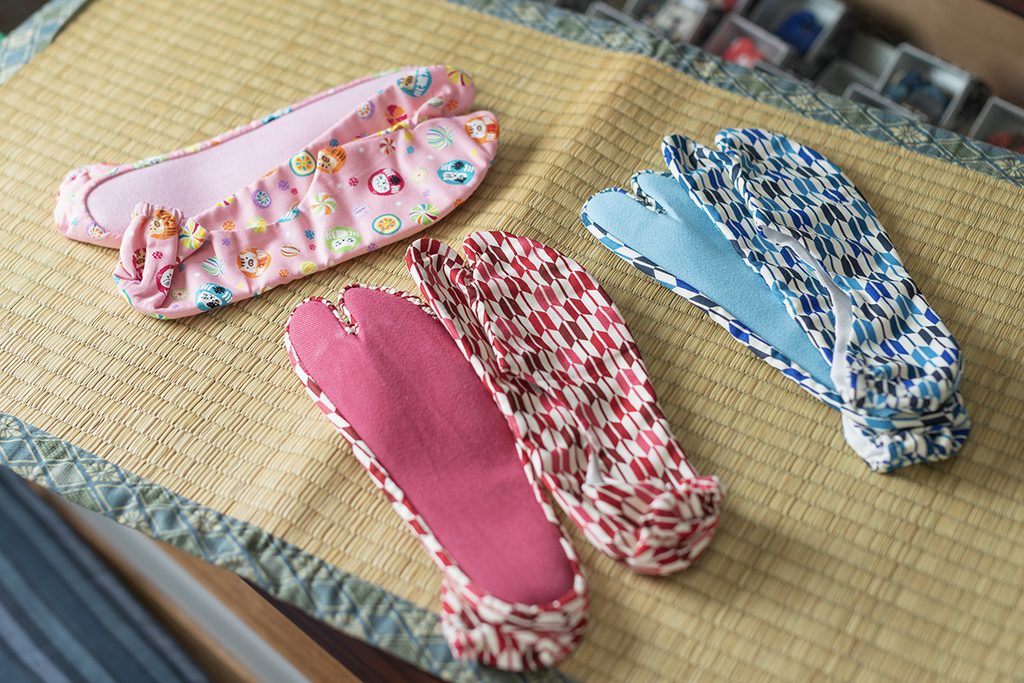
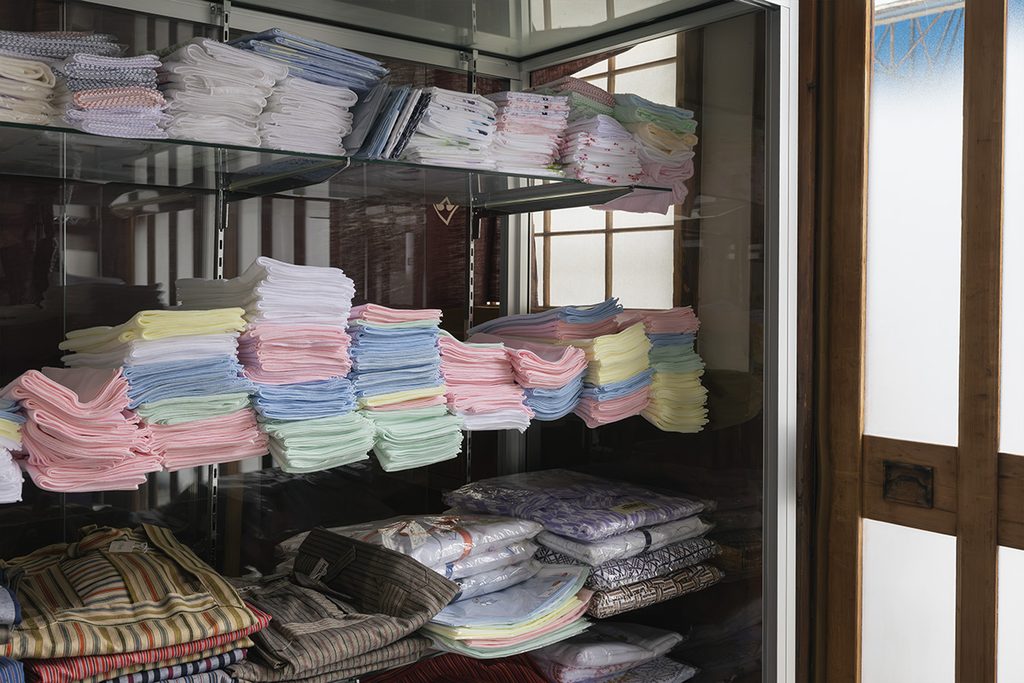
Image 1: Han-tabi feature elasticated heels, making them easy to slip on like slippers. Suitable for both traditional Japanese clothing and everyday wear, they can also be worn comfortably around the house.
Image 2: Undergarments made from bleached cotton and colourful gauze nightwear. Alongside tabi, traditional Japanese undergarments have been among the shop’s signature products since its founding.
Beyond tabi, the shop has long offered a range of traditional Japanese clothing essentials, from bleached cotton hadajuban undergarments and gauze nightwear to kappōgi aprons. More recently, it has introduced items that fit naturally into modern life, including easy-to-wear han-tabi with elasticated heels and miniature fuku-tabi, traditionally displayed near the entrance of a home as good-luck charms. Alongside these ready-made items, however, the shop’s true speciality remains its bespoke tabi, individually crafted from patterns created to fit each customer’s feet.
Shintomi-gata: A Distinctive Tabi Design for a Refined Fit
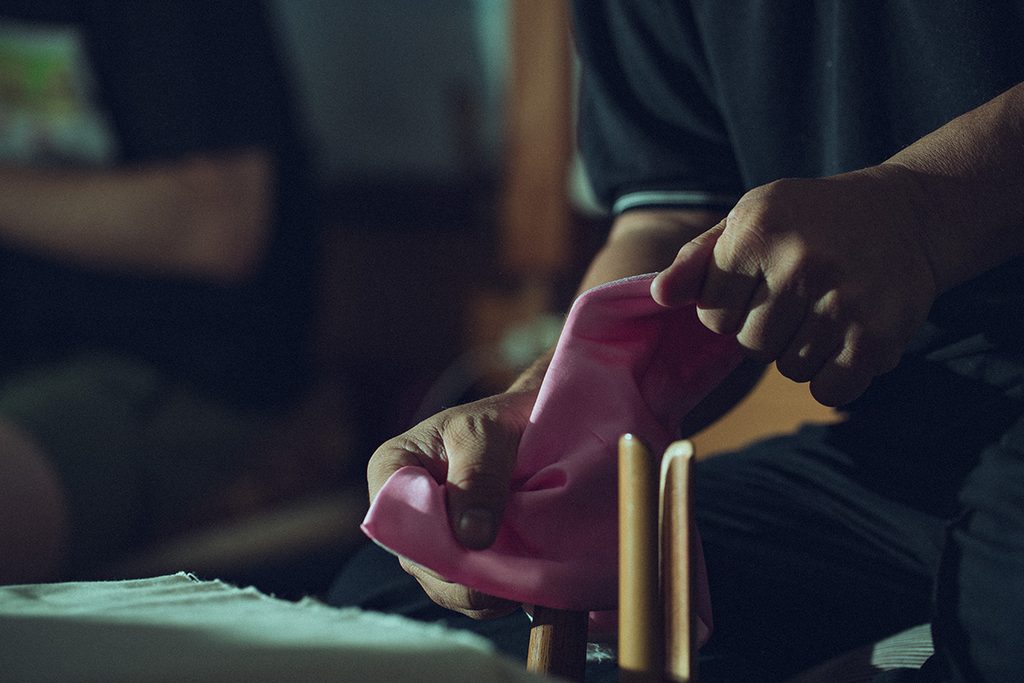
After sewing, the fabric is turned right side out, and a wooden form and spatula are used to carefully smooth away even the smallest wrinkles, gradually shaping the tabi into its elegant final form.
Central to Ōnoya Sōhonten’s tabi craftsmanship is a distinctive design known as Shintomi-gata, developed by the fifth-generation head of the family. Its defining feature is a narrower sole, with the fabric covering the top of the foot carefully shaped to wrap around it, creating a slim, elegant silhouette when worn. The design became so well known that it even inspired a dodoitsu, a traditional form of Japanese verse that translates as: “When dancing, all eyes are on the feet; when speaking, on the eyes. For tabi, choose Ōnoya’s Shintomi style.”
Unlike ordinary socks, tabi are made from cotton fabric that has little stretch. Achieving a close, almost second-skin fit therefore requires precise measurements and careful adjustments. The ideal fit varies considerably depending on how the tabi will be worn. Dancers performing vigorous movements on stage often prefer an exceptionally tight fit, with the fabric drawn in as much as possible while still allowing the foot to bend, leaving virtually no wrinkles. By contrast, practitioners of the tea ceremony and Buddhist monks, who spend long periods sitting in the traditional seiza position, require more room around the ankles, with allowances also made for shrinkage during washing. Some women also choose tabi with five or six kohaze fasteners, which extend higher up the ankle to make the feet appear smaller.
The shop carefully preserves detailed fitting records for generations of kabuki actors, dancers and prominent cultural figures. These include celebrated performers such as Ichikawa Danjūrō and Onoe Kikugorō, as well as actresses from the shinpa theatrical tradition, film actors and even members of the Imperial Family, for whom ceremonial tabi have been made. Each record meticulously documents the individual’s foot shape, differences between the left and right feet, and specific requirements such as the number of fastening loops. Over the years, the shop’s craftsmen have visited performers in their dressing rooms to make fine adjustments to their patterns, accommodating changes in body shape and the demands of individual productions. This dedication to personalised service has helped build lasting relationships of trust.
A Historic Townhouse Built in the Wake of the Great Kanto Earthquake
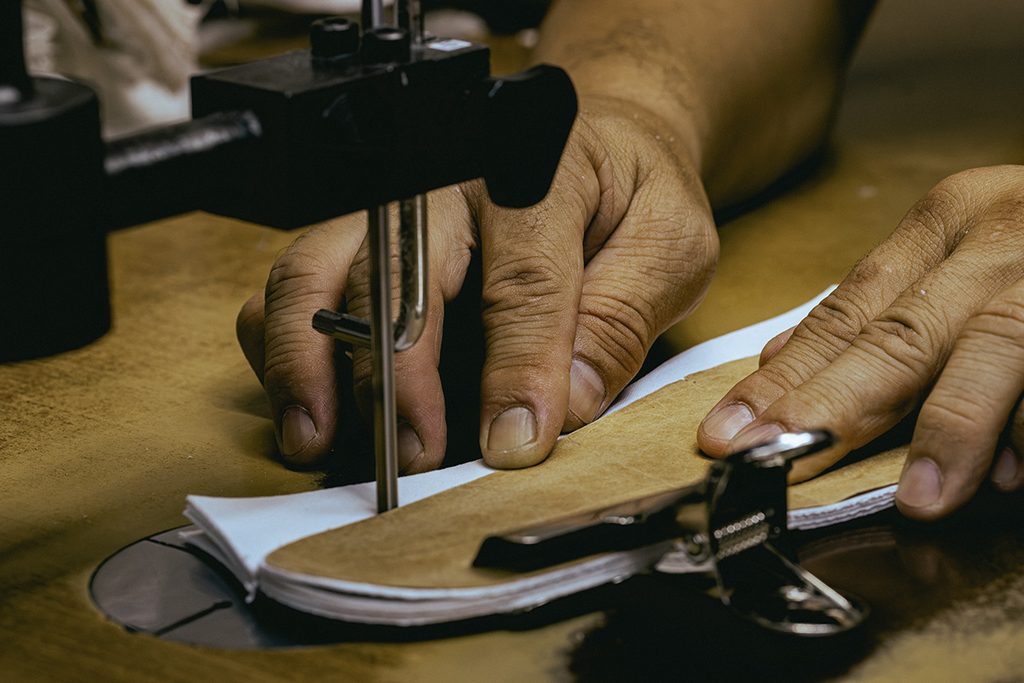
The layered fabric is meticulously stitched together according to the paper patterns, ensuring accuracy at every stage.
The building that houses Ōnoya Sōhonten was constructed in 1924, the year after the Great Kanto Earthquake. Today, it is recognised as a nationally Registered Tangible Cultural Property, valued as one of the few surviving wooden buildings in the Shintomi area. Although its exterior resembles a traditional Japanese townhouse, the building incorporates a steel framework within its wooden structure, giving it the strength to withstand repeated earthquakes.
Over the decades, the building has undergone numerous extensions and renovations. At one point, the family purchased and connected an adjoining property, resulting in slight differences in floor levels and a maze-like interior that extends deep into the building. In the attic, once used as sleeping quarters by young apprentices, graffiti dating back to the wartime years can still be found on the wooden pillars.
Beneath the shop, a sturdy air-raid shelter built during the war has also been preserved in its original condition. Reinforced with concrete and fitted with a thick iron door, the shelter was reportedly so solidly constructed that members of the Imperial Japanese Army once visited to inspect it. With nowhere else to evacuate, earlier generations of the family would retreat underground whenever air-raid sirens sounded, protecting both themselves and their livelihood. Having endured the upheavals of the Showa era, the building itself stands as a testament to the generations of history behind Ōnoya Sōhonten.
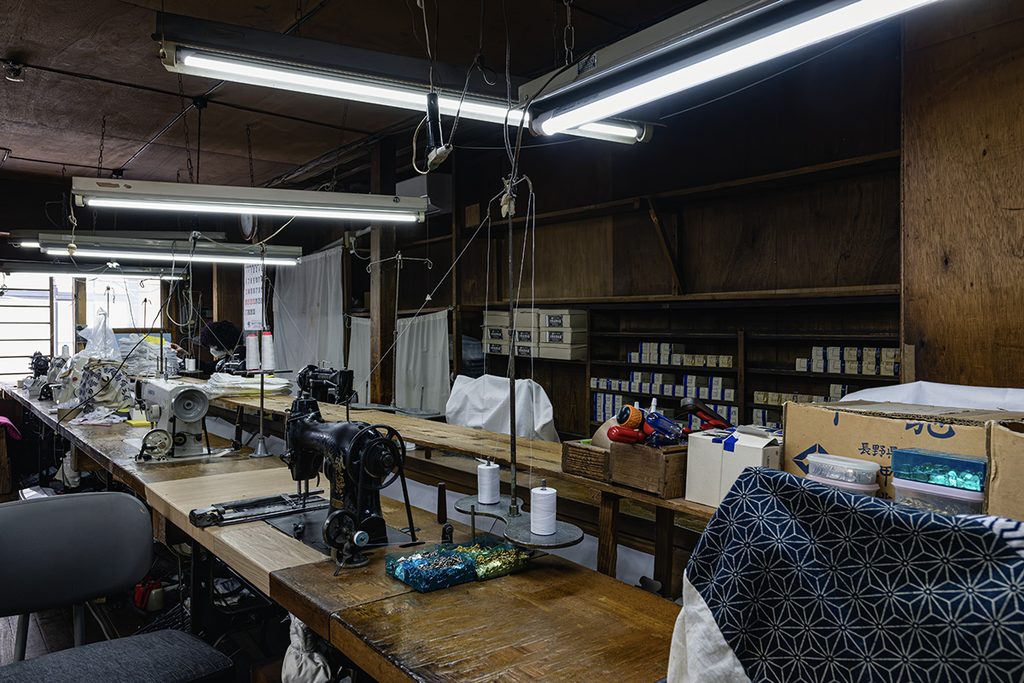
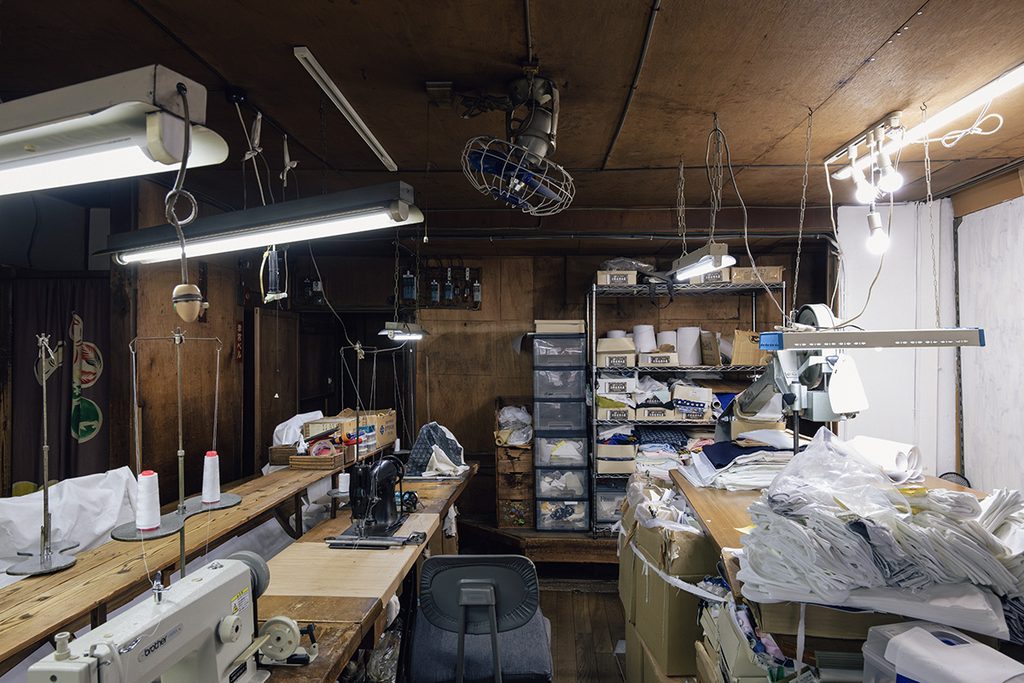
The second floor of the shop houses the workshop where all of Ōnoya Sōhonten’s tabi are made. The space once featured a small stage and served as a salon-like gathering place, where actors and magicians with close ties to the family would perform. Today, it is a working studio where skilled craftspeople operate sewing machines to produce the shop’s tabi.
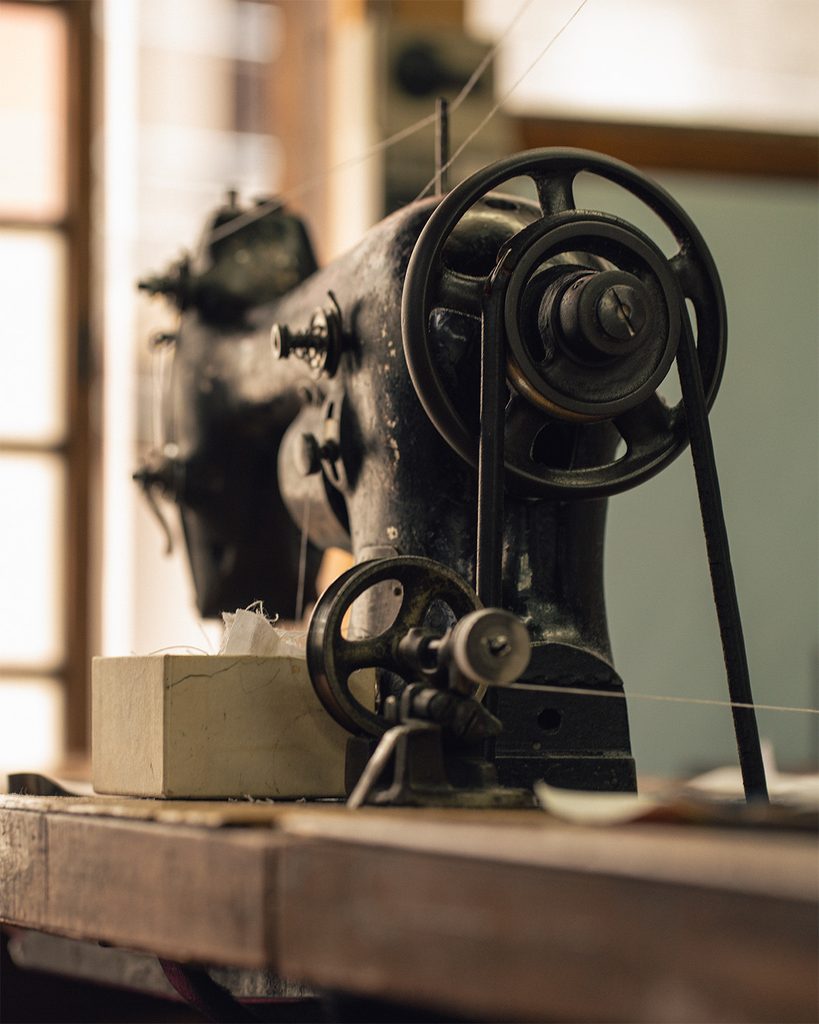
These German- and American-made sewing machines still bear patent markings dating back to the 19th century. Adapted specifically for making tabi, they continue to play an essential role in the workshop.
The workshop is home to an assortment of historic sewing machines that remain in active use, including German-made machines capable of stitching in multiple directions and American Singer machines bearing 19th-century patent markings. Modern sewing machines handle straight seams, but the rounded toes and complex curves of tabi still require the precision and capabilities of these older, heavy-duty machines. They have been specially adapted for tabi production by skilled craftspeople from Gyoda in Saitama Prefecture, one of Japan’s best-known centres of tabi manufacturing.
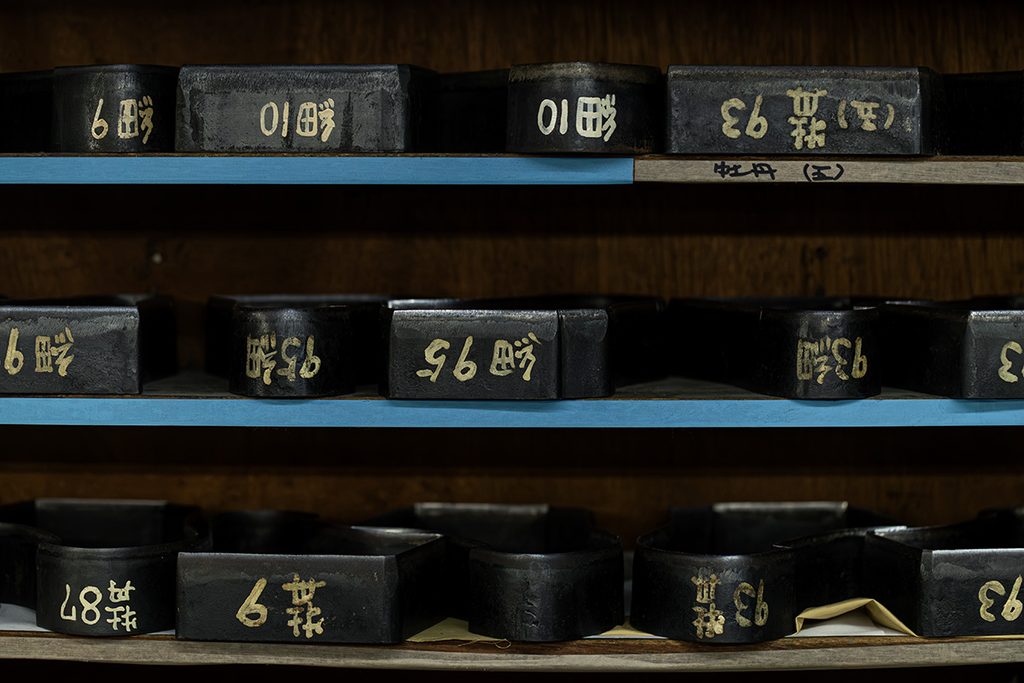
Metal cutting dies used to produce ready-made tabi. They are organised by traditional mon sizes, based on the diameter of an old Japanese one-mon coin, as well as by different widths and styles, including hoso (narrow) and botan.
On the ground floor, the cutting area is equipped with a machine that has been in use since before World War II. The fabric is carefully cut according to paper patterns, with the process designed to maximise efficiency and minimise waste. The workshop maintains a wide range of patterns, from those using the traditional mon sizing system, based on the diameter of an old Japanese one-mon coin, to modern patterns measured in centimetres. In recent years, changes in lifestyle have led to a growing number of younger customers with longer, narrower feet. In response, the shop has introduced new patterns designed for contemporary foot shapes, with narrower widths and lower insteps.
A Family Business Passed Down Through Generations
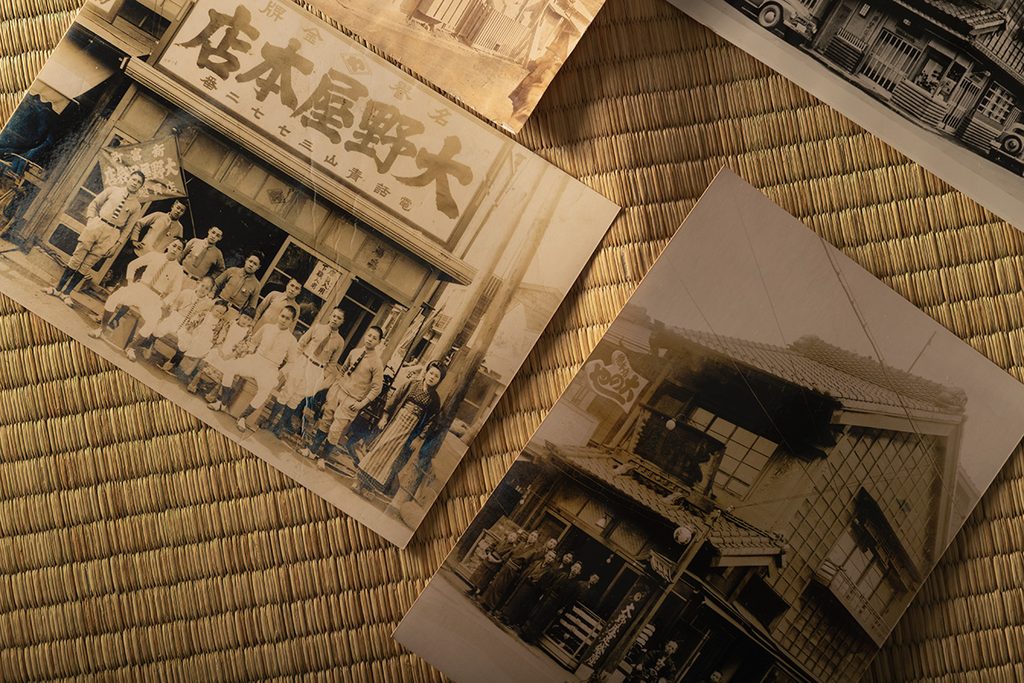
Previous generations of the Ōnoya family pose in baseball uniforms outside the shop during the Taisho era.
The story of Ōnoya Sōhonten begins more than 250 years ago, during the An’ei era of the Edo period. Its founder established a tailoring business specialising in traditional ceremonial clothing near the Satsuma Domain residence in Mita, before relocating to Shintomicho in 1849. When the Shintomiza theatre later opened nearby, the neighbourhood developed into a thriving entertainment quarter filled with theatre teahouses and geisha. Ōnoya gradually became a familiar name among the actors and performers who relied on its tabi.
Today, the business is led by its seventh-generation proprietor, whose career took an entirely different path before he returned to the family trade. He previously worked for a major trading company, arranging large-scale financing for aircraft and ships, with transactions reaching hundreds of billions of yen. Taking over Ōnoya meant leaving that world behind and discovering the satisfaction of working directly with customers, one pair of tabi at a time. Among the experiences that have stayed with him are the encouraging words of kabuki actor Bandō Tamasaburō, spoken during a visit to his dressing room for a fitting. That encounter, he says, remains an important source of inspiration in his work today.
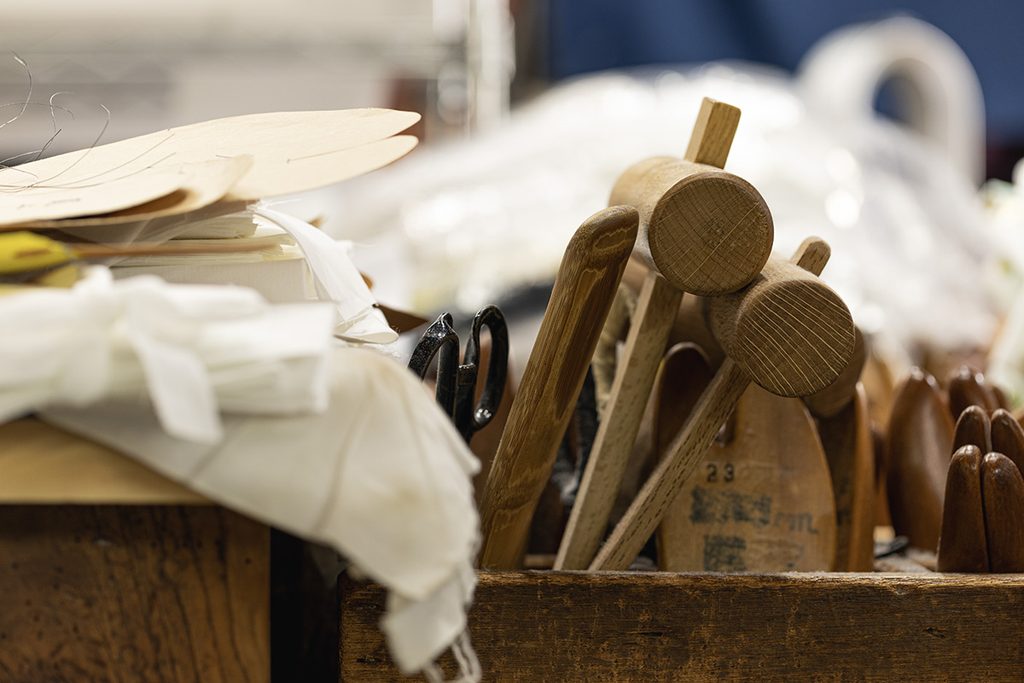
Once the tabi have been sewn, paper forms are inserted inside, and the fabric is carefully smoothed with a spatula before being tapped into shape with a wooden mallet. The tools used in this finishing process give each pair its distinctive three-dimensional form.
As traditional Japanese clothing has become less common in everyday life, many of the country’s once-numerous tabi shops have disappeared or shifted to other businesses. The decline has also affected the craftspeople and suppliers who support the trade, from fabric dyeing workshops to specialists in starch finishing, making even the sourcing of materials an ongoing challenge. Through it all, Ōnoya has stayed true to the principle that has guided the business for generations: producing its own tabi and delivering them directly into the hands of its customers.
At the same time, the shop continues to find ways to bring traditional tabi into modern life. Slipper-style han-tabi, designed to be worn with casual clothing, and miniature fuku-tabi made as symbols of good fortune are among its more recent offerings. Visitors from overseas are also drawn to the craftsmanship, often taking home a piece of this tradition. In its century-old townhouse in Shintomicho, Ōnoya Sōhonten continues its work much as it always has, making tabi that combine traditional beauty and practicality with a careful understanding of the people who wear them.
Ōnoya Sōhonten
Website: https://www.oonoyasohonten.jp/
Address: 2-2-1 Shintomi, Chuo-ku, Tokyo, Japan