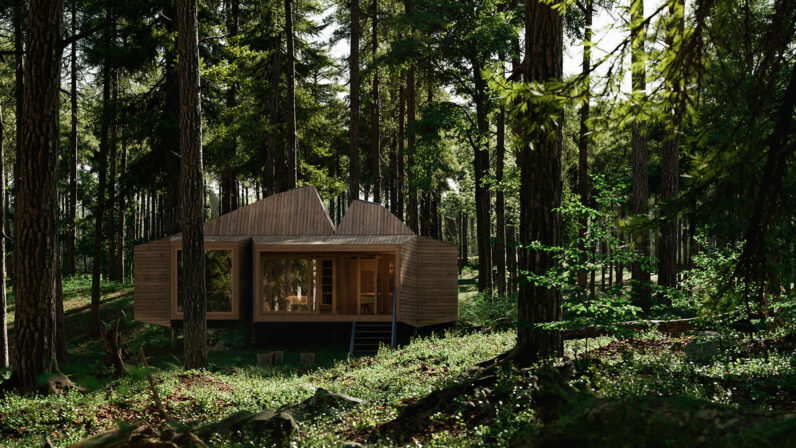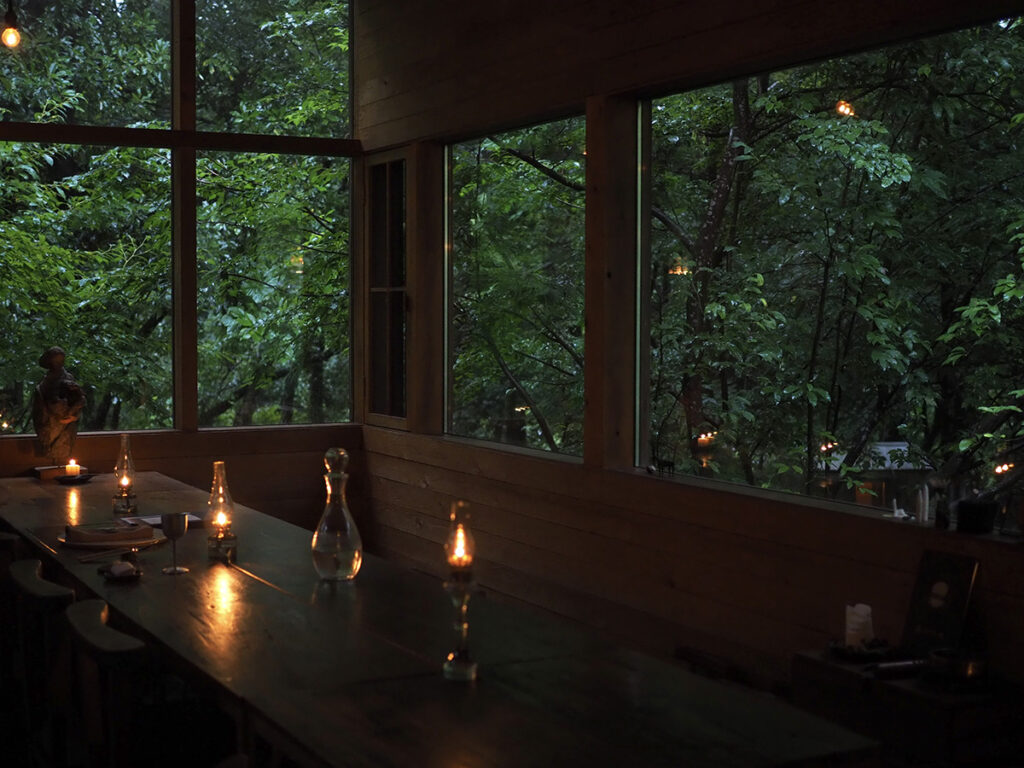
Wrapped in dense forest greenery, the dining cabin Forest Soup House offers a setting where nature feels intimately close.
Driven by a simple desire to offer something that brings warmth to the heart, A Night at the Forest Soup Shop is an exclusive, private retreat welcoming just one group per day, where beloved healing soups sit at the center of the experience.
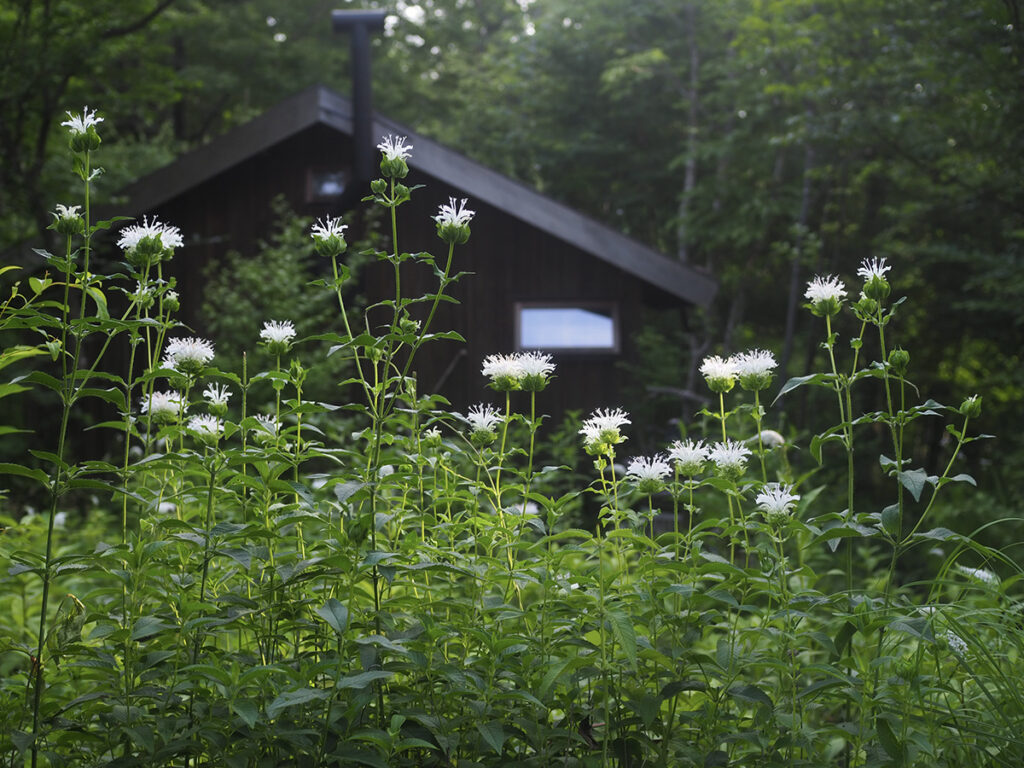
The retreat lies deep within the foothills of Mount Daisen in western Tottori Prefecture, a mountain also known as the Mount Fuji of Hoki. Like a scene lifted from a picture book, small cabins are scattered quietly throughout the forest. These include the dining cabin Forest Soup House, the guest lodging known as the Forest Resting Room, the Thatched Chapel used for morning meditation, the Kuromoji Bath designed to cleanse both body and mind, the Forest Medicine Chest for storing medicinal herbs, and a secluded meditation hut enclosed by trees. Minimal yet warmly maintained, the cabins avoid the artificiality of a themed attraction, with each one carrying a quiet sense of character and presence.
The retreat is run by Tomoya Fujikawa, together with Kazu Fujikawa, known as Kazuu, a soup creator and artist in her own right. What began as a place to serve soup in the forest marks its 10th anniversary in 2026. To commemorate the milestone, a new primitive-style cabin named Finabell, centered around fire rituals, was introduced this spring. Accommodation plans for international visitors to Japan have also been launched, opening this small forest retreat to the wider world.
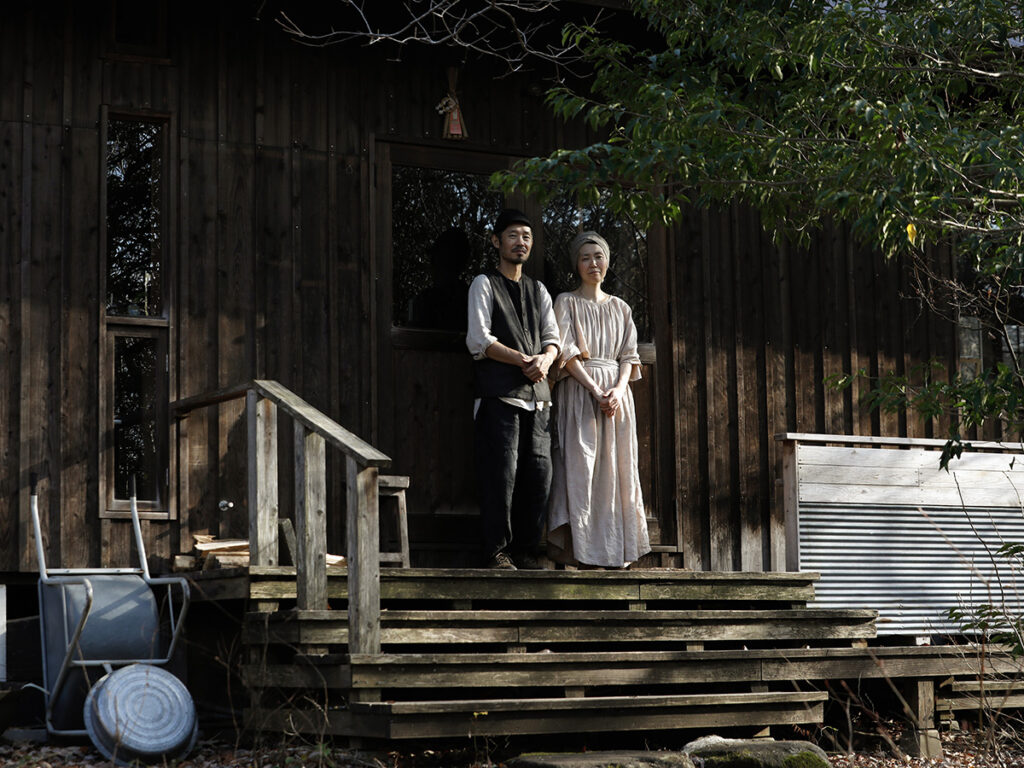

1st image: A nostalgic aesthetic captures Tomoya Fujikawa and Kazuu in their everyday, unadorned lives.
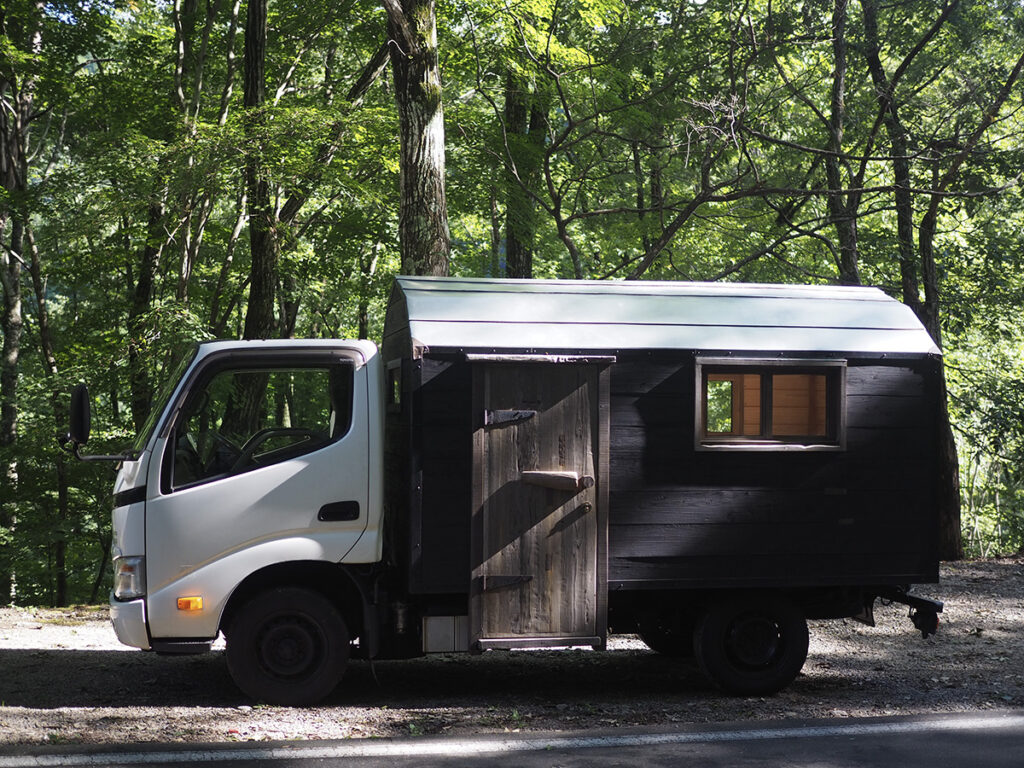
2nd image: Guests are transported to and from the nearest station, Kishimoto Station on the JR Hakubi Line, in the Soup Shop carriage, a hybrid vehicle combining a truck and a wooden hut.
3rd image: The Thatched Chapel, which serves as a space for morning meditation and also as artist Kazuu’s studio.
4th image: A burgundy-hued Kuromoji bath, made by simmering kuromoji branches for an entire day. The shampoo and body soap are also original blends made with medicinal herbs.
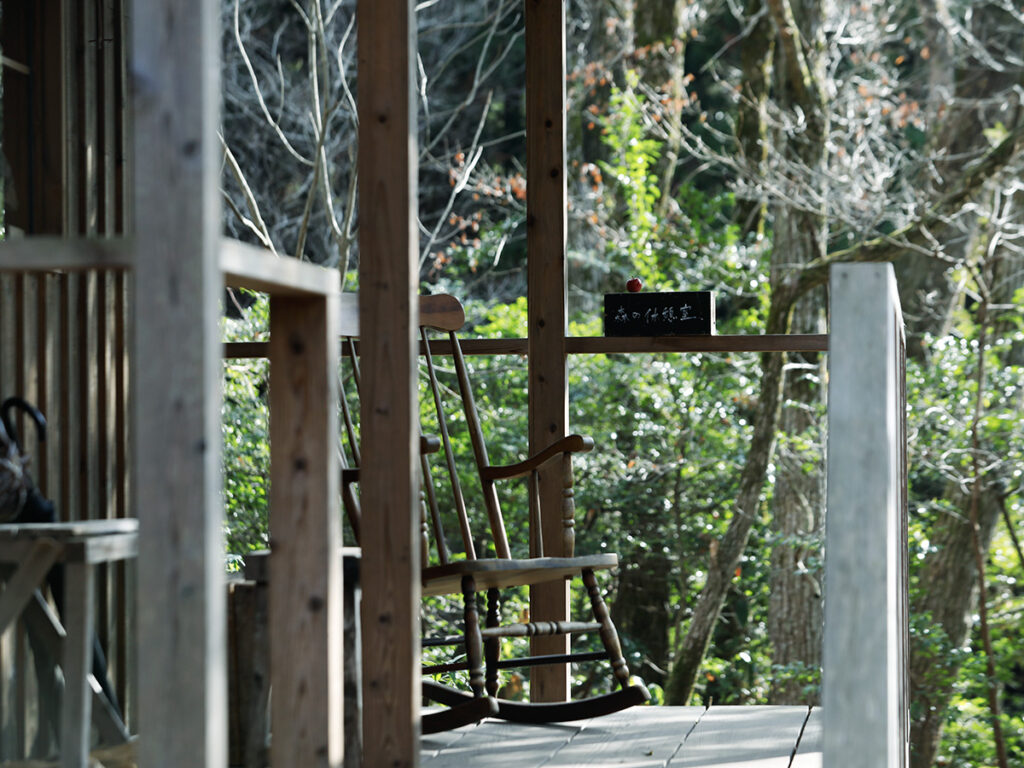
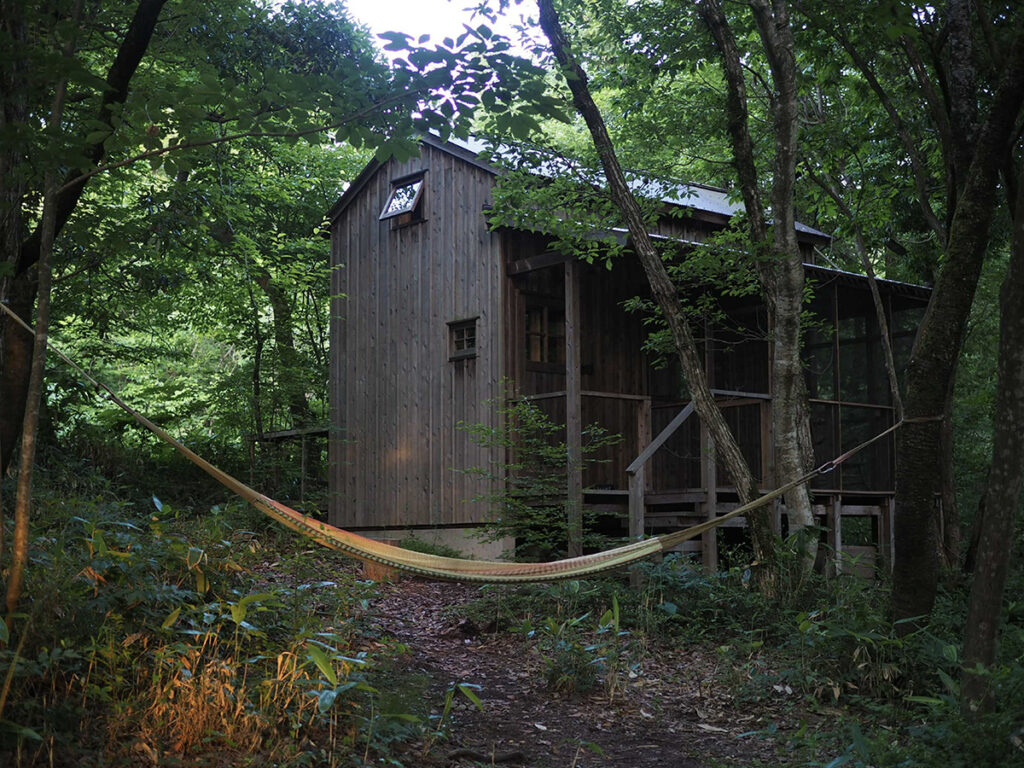
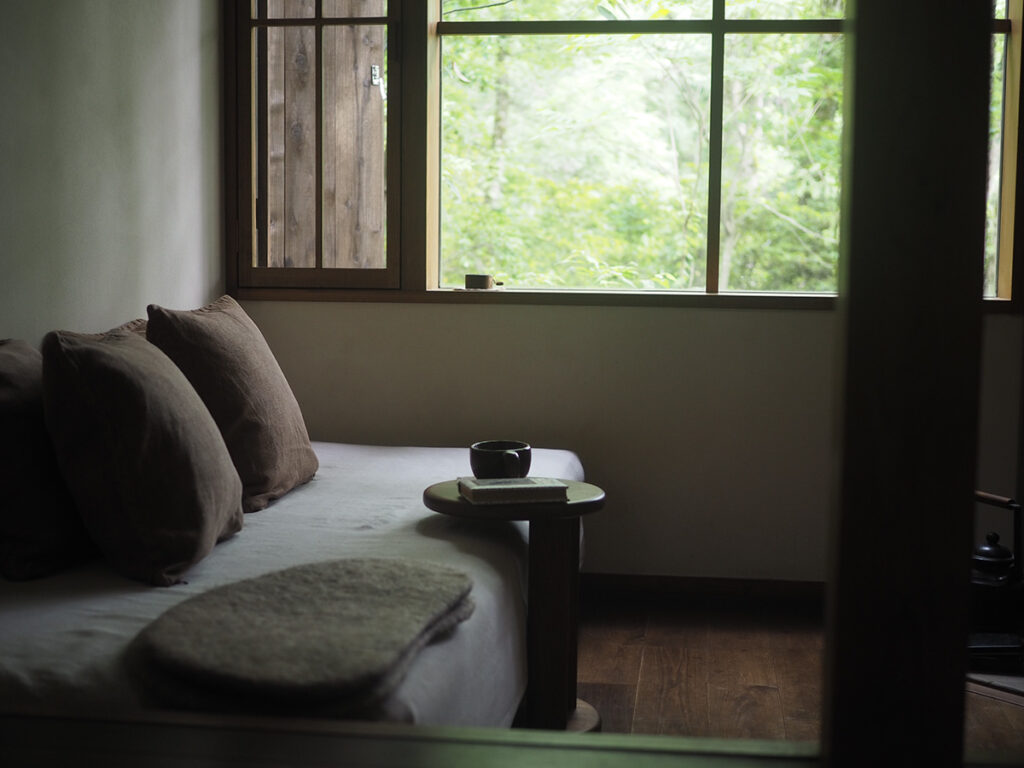
The Forest Resting Room, where guests stay. Set within a carefully curated minimalist space, it offers time to reflect on the nature of everyday life.
Set against the shifting rhythms of the forest, guests follow a restorative program designed to gently release both mind and body while taking in the mystery of the surrounding trees.
After check-in at 3 p.m., the experience begins with a fire ritual at the newly built Finabell, framed as a journey to the source of the spirit. The hut feels almost like something from a storybook, constructed using stone, bamboo, and reeds gathered around Mount Daisen, along with reclaimed pillars from dismantled traditional houses. Its earthen walls are made by fermenting soil mixed with makomo, and its thatched roof draws on traditional Japanese building techniques.
A medicinal bouquet is prepared from kuromoji, kuma-zasa bamboo, and sakaki, plants long considered sacred in Japan, and gently brushed over the body in a gesture of purification. The bouquet is then burned together with seasonal plants and spices, while the sound of taiko drums and mantra-like tones plays in the background. With eyes closed and breath slowing, a sense emerges of returning to the moment when life first awakened.
After being enveloped in this sacred smoke, guests move on to a burgundy-hued herbal bath made by simmering kuromoji branches overnight, as if washing away the weight of everyday life.
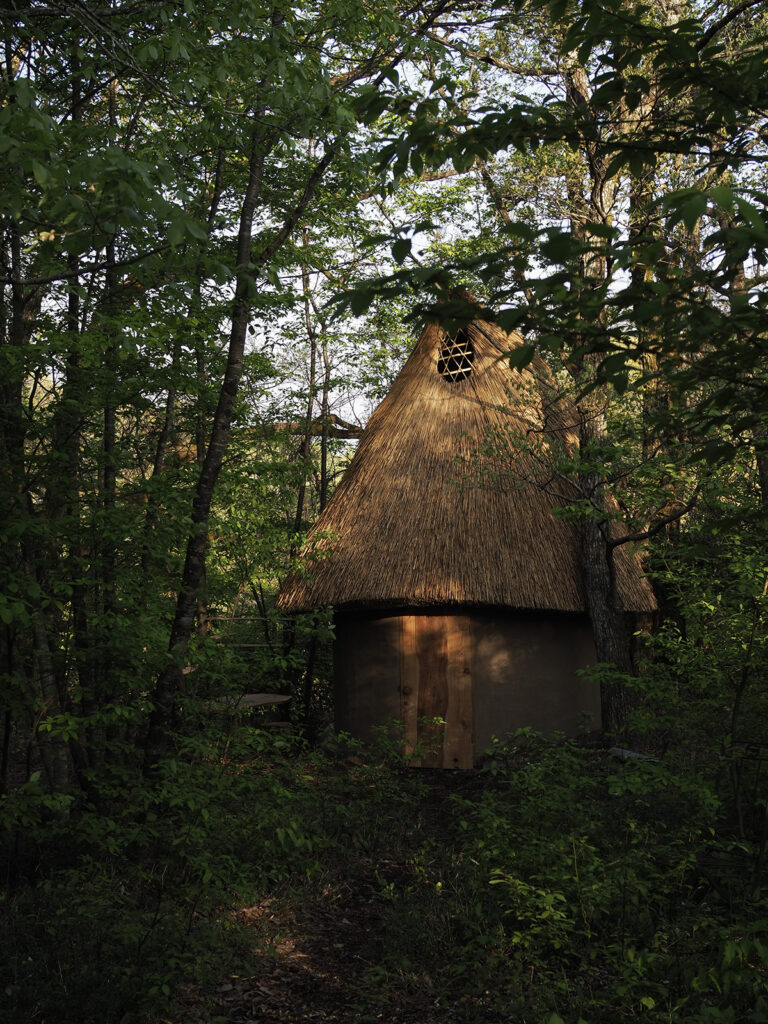
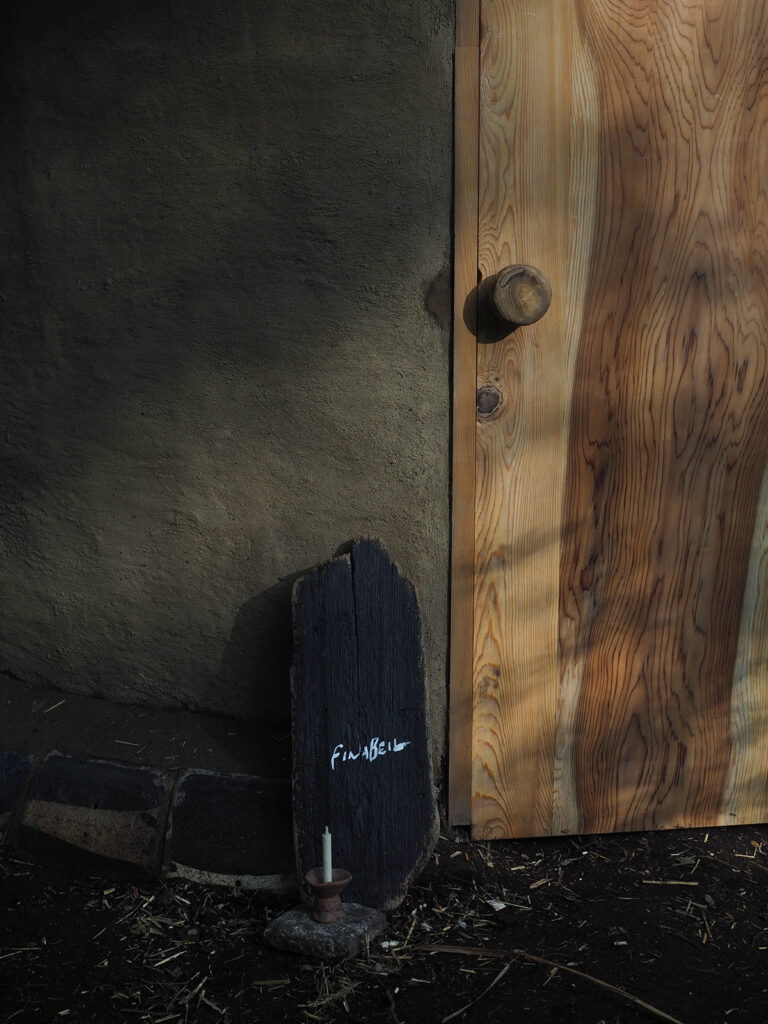
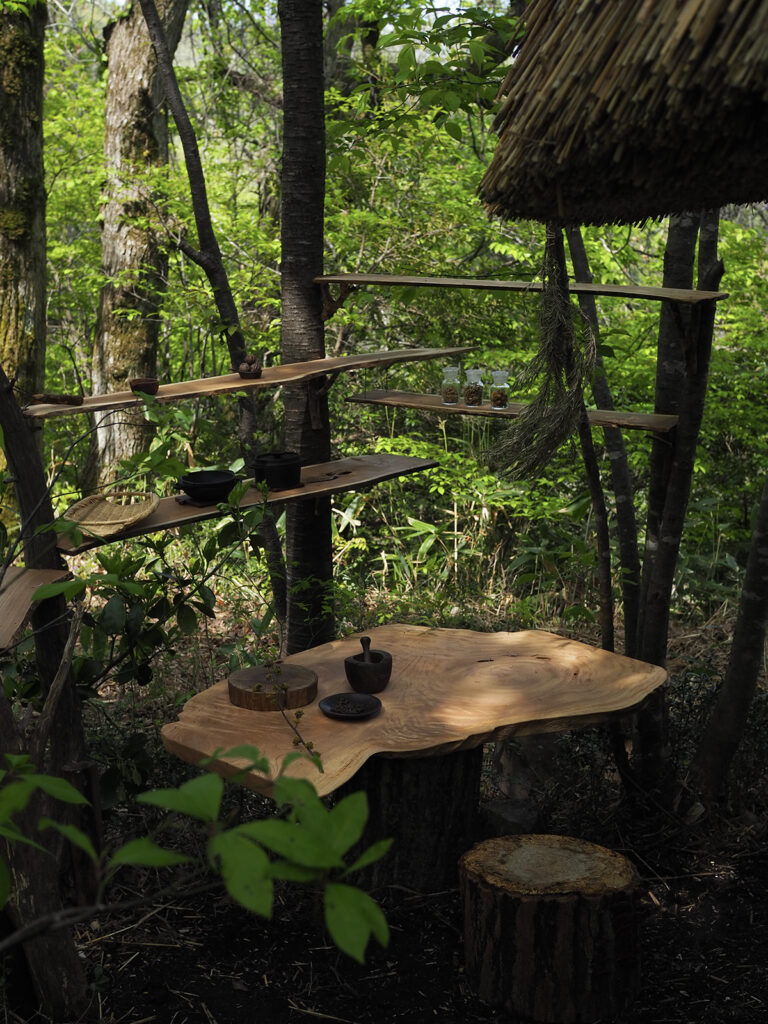
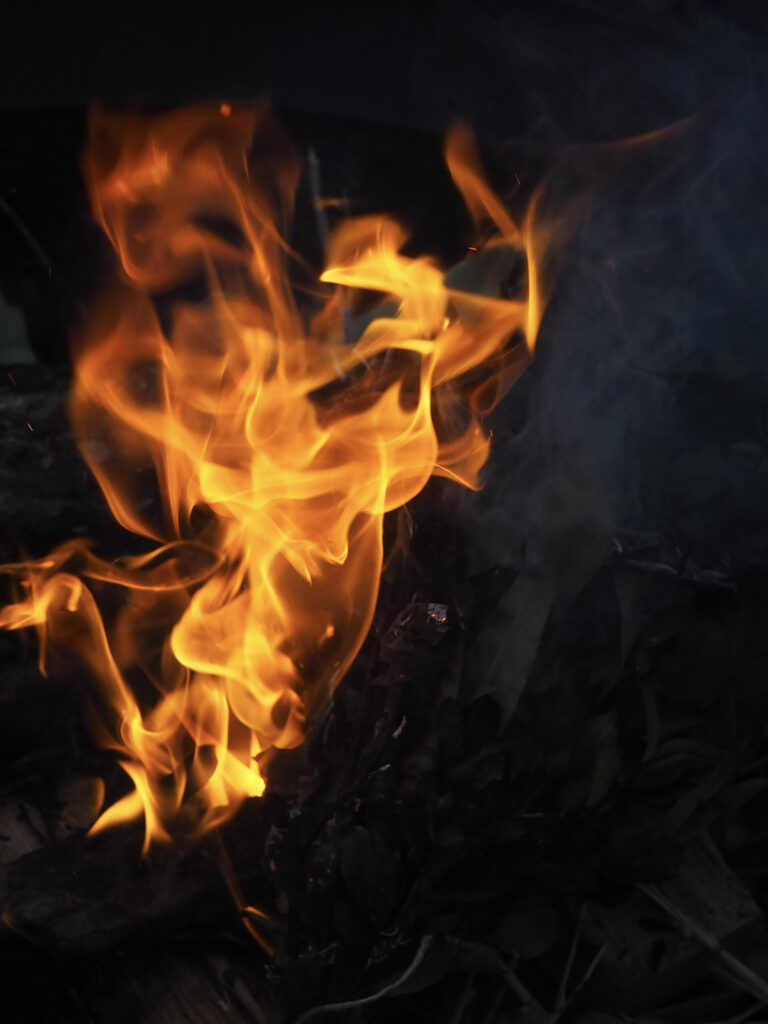
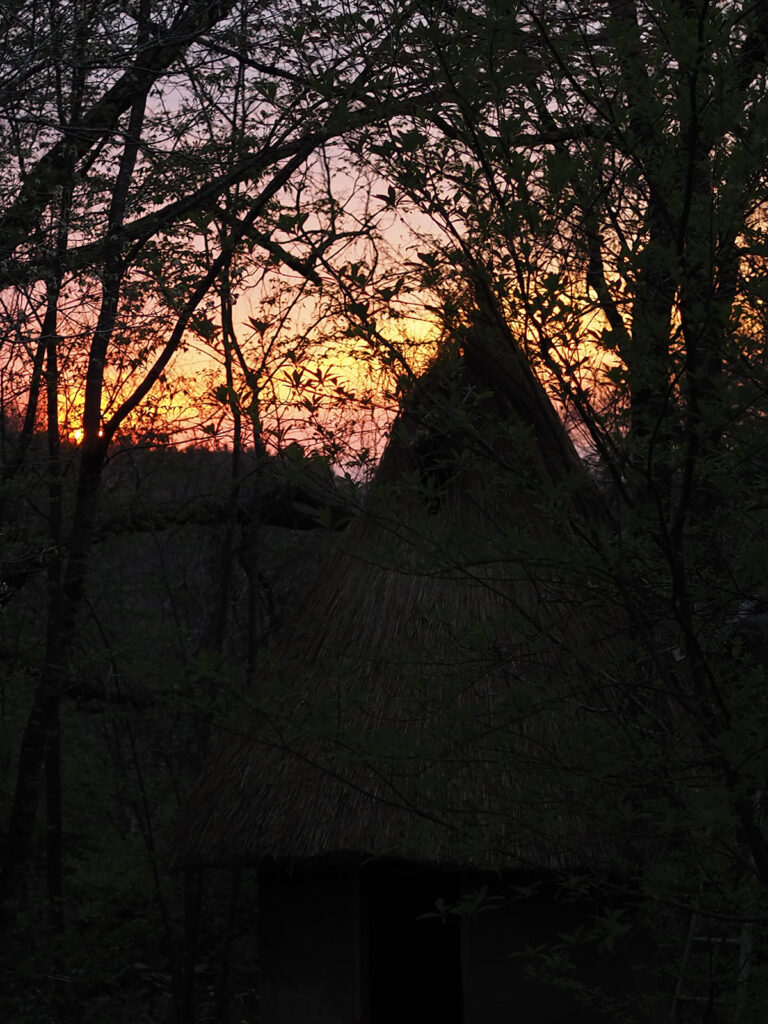
Completed at the end of April 2026, Finabell is a hut designed for fire rituals. Its tiered shelving also serves as an outdoor kitchen.
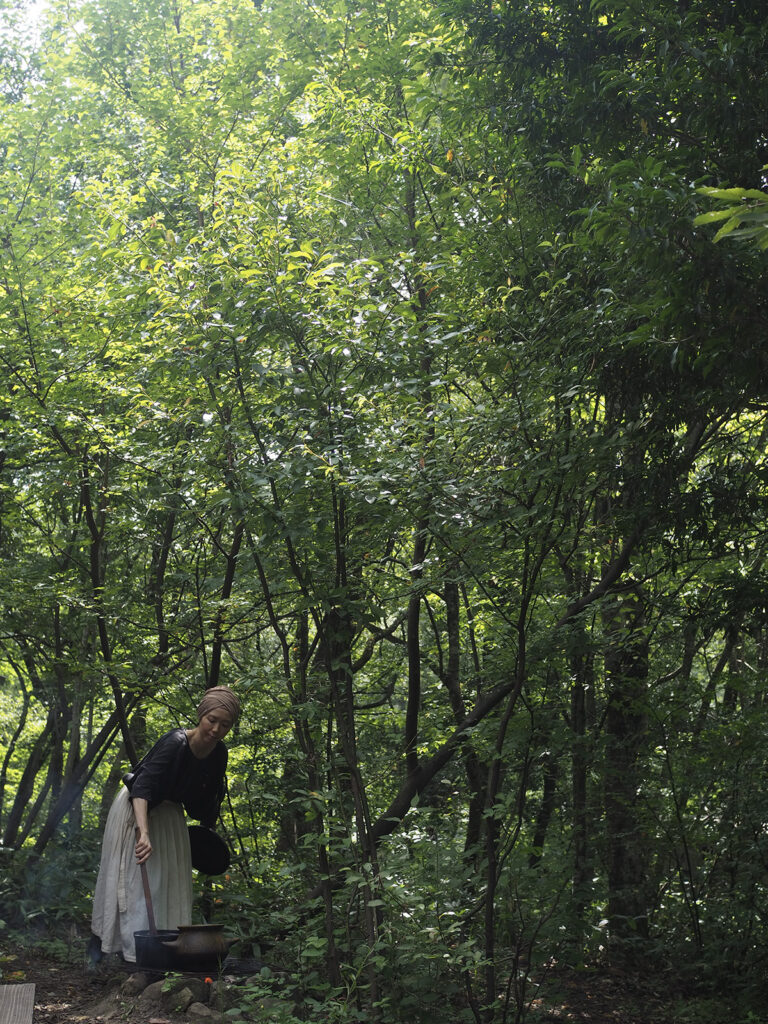
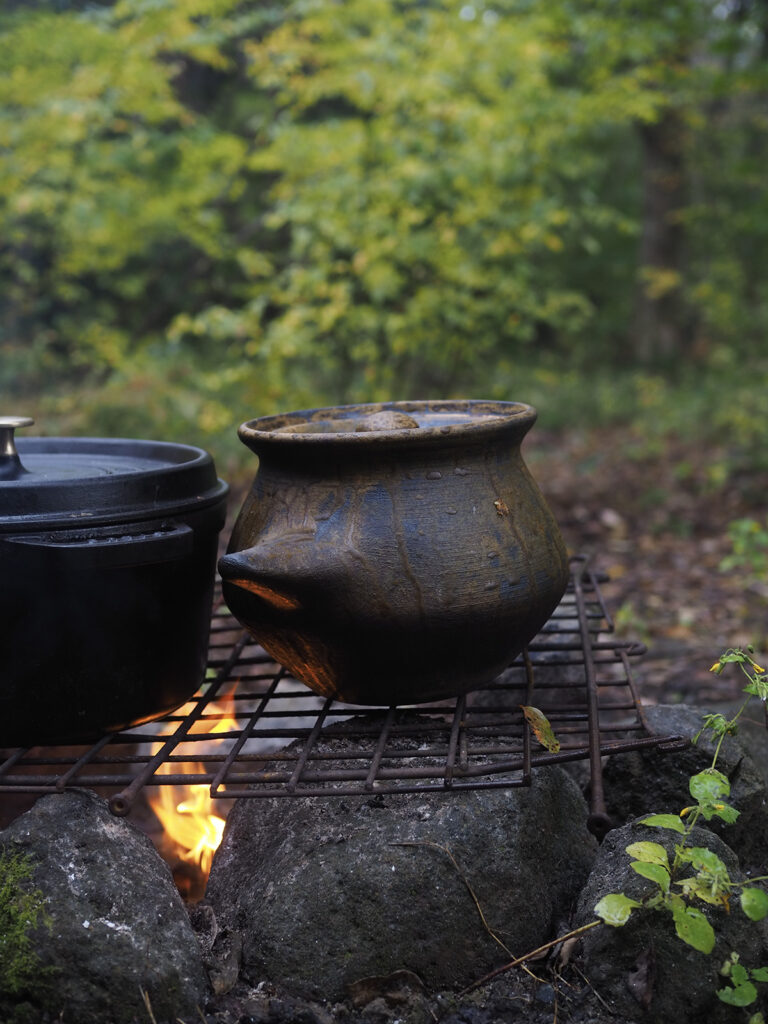
Soup-making absorbs the surrounding atmosphere, as if becoming one with the forest itself.
The long-awaited dinner takes place with the Evening Healing Soup. After a series of appetizers that each feel like a small poem, experienced through all five senses, the main soup is served.
Cooked over an open flame in an outdoor hearth, the soup combines around 20 kinds of vegetables along with medicinal herbs and nuts. It is a substantial dish that retains a slight texture in the ingredients, giving it a satisfying bite. To add further depth to the flavor, grilled vegetables are added as a topping, introducing a subtle spiced variation.
Handmade desserts, enzyme drinks, freshly roasted coffee, and kuromoji tea complete the meal. As the dining experience unfolds in the darkness of the forest, it is marked by a sense of quiet stillness and contemplation.
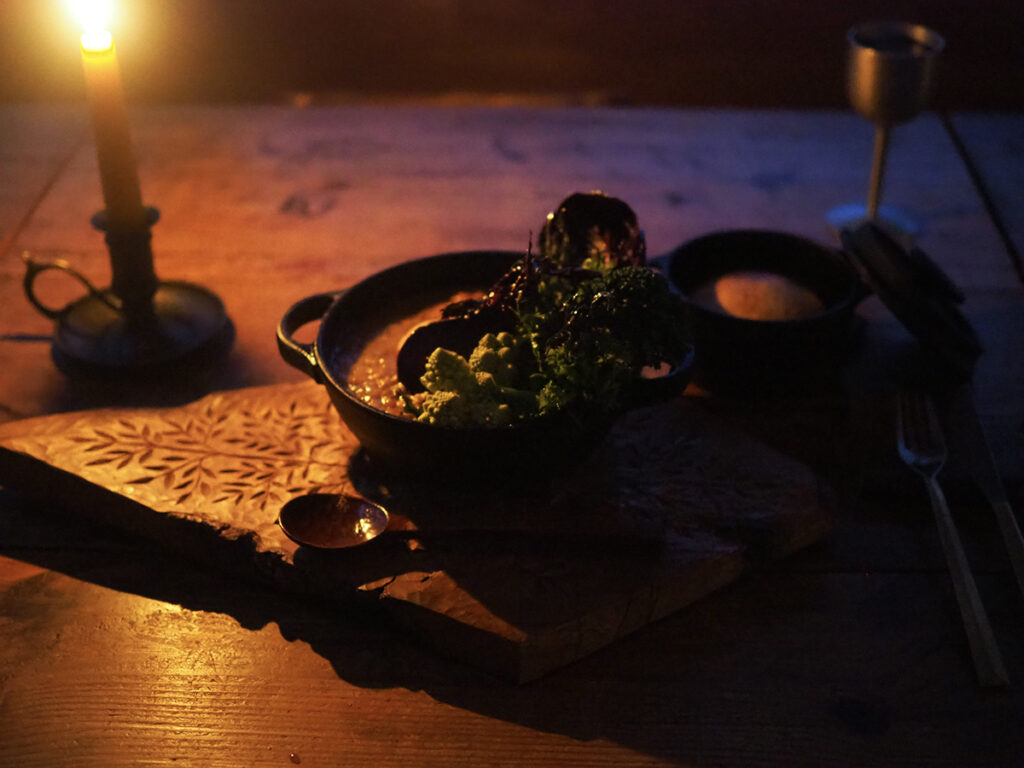
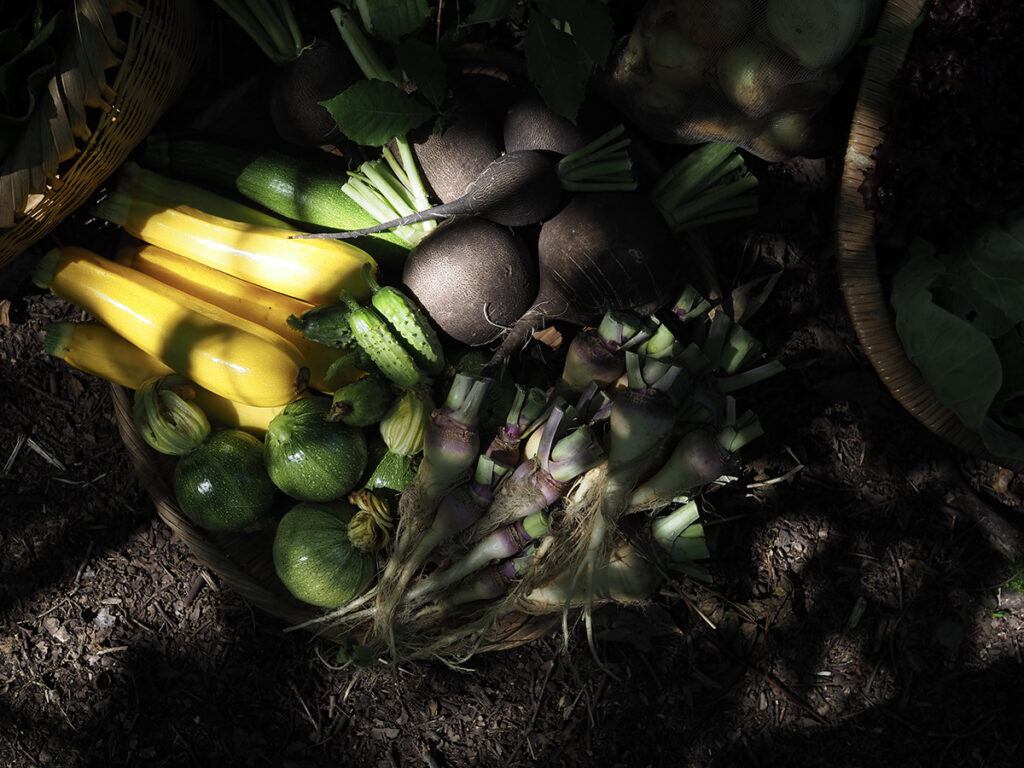
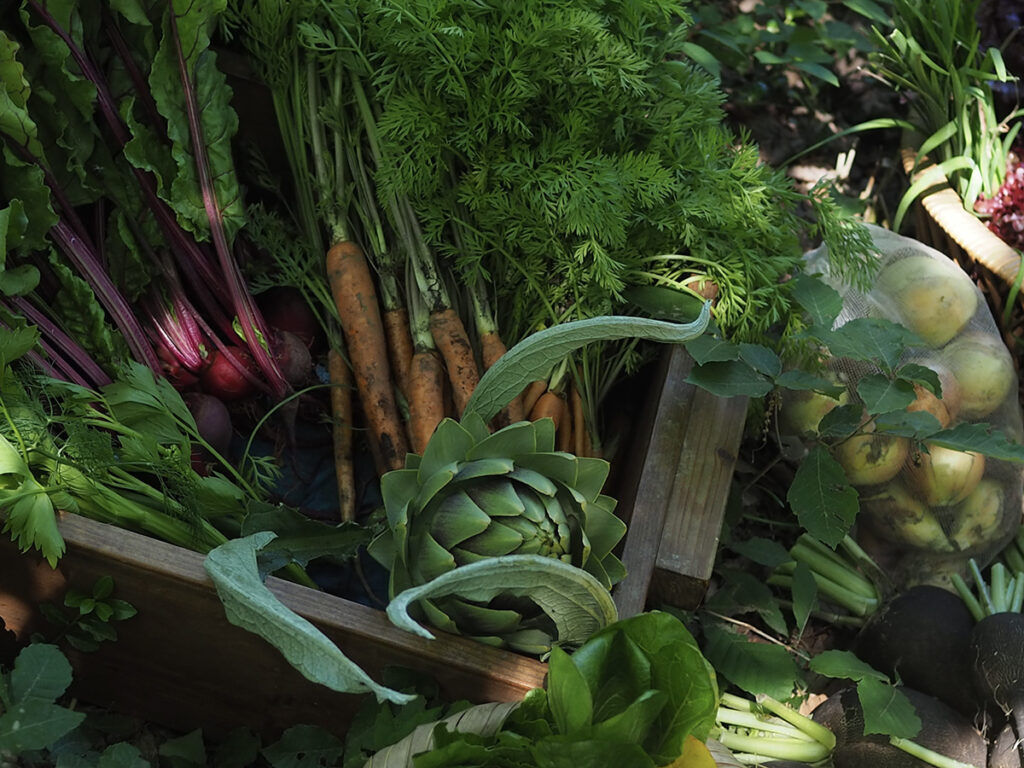
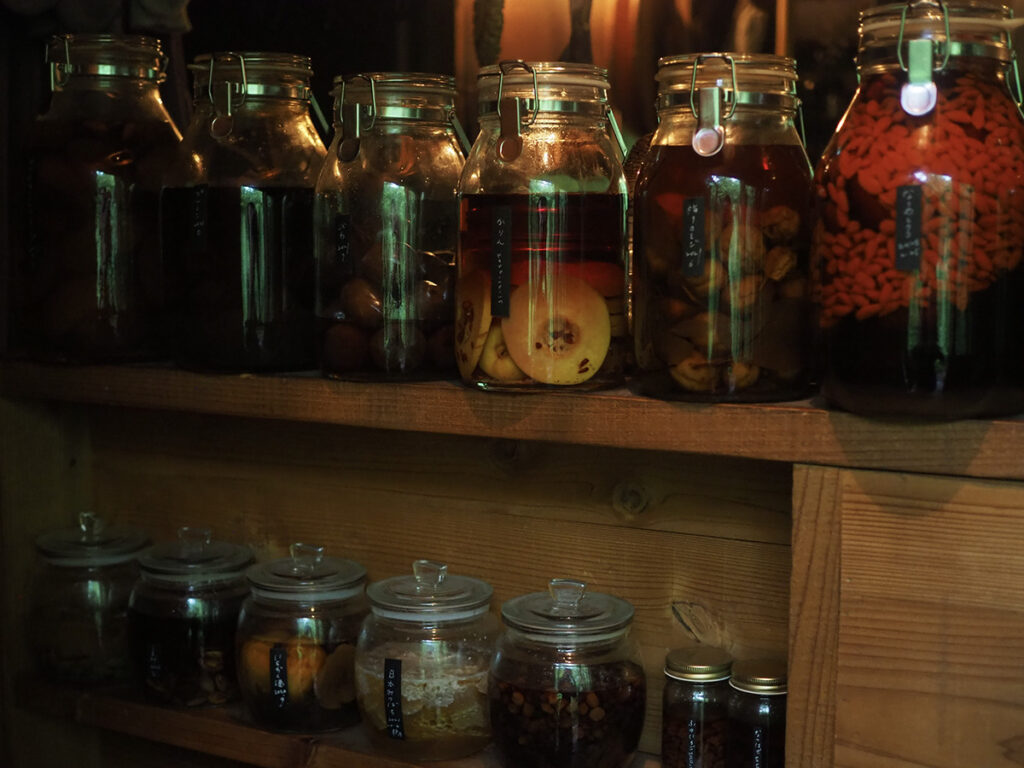
A soup that captures the rich, nourishing flavors of vegetables grown in Mount Daisen. Each season is complemented by homemade aperitifs that bring subtle color and contrast to the course.
The following morning begins with meditation in the Thatched Chapel. As guests take deep breaths, the morning forest air fills the body, followed by card reading to receive messages from the forest. Walking barefoot on the earth, lying down on the ground, or finding and touching a favorite tree, guests are free to enjoy earthing in whatever way feels natural. The experience concludes with the departure-day Morning Healing Soup, which gently nourishes both body and mind.
Made with vegetables blended with brown rice cream, and finished with edible flowers and soy milk cream, the soup is presented in a way that reflects the individual guest. It is almost like a custom-made soup for the soul.
The time spent in the forest gains even greater clarity upon returning to everyday life. conventional retreat, it leaves behind a deeply rooted sense of time, as though having received a profound and generous care from the forest itself. Without any sense of pretense, it is an invitation to experience a profoundly rich and restorative time.
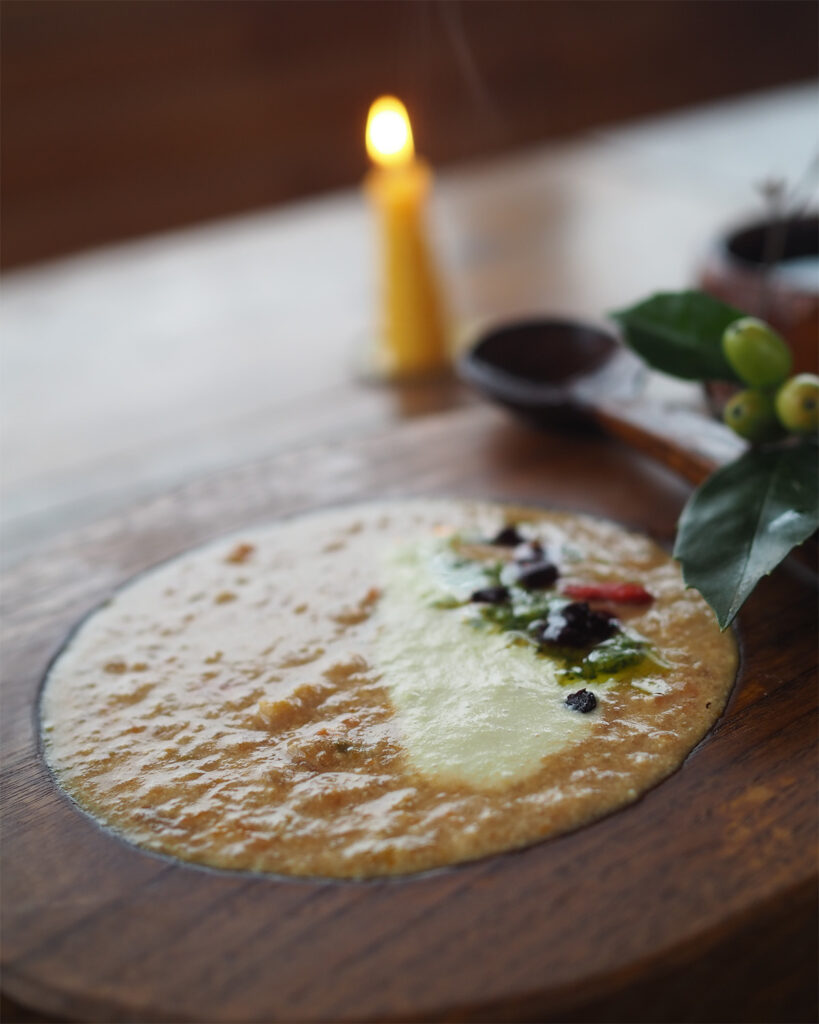
The departure-day Morning Healing Soup, made with soy milk cream and edible flowers, conveys a message from the forest to each traveler.
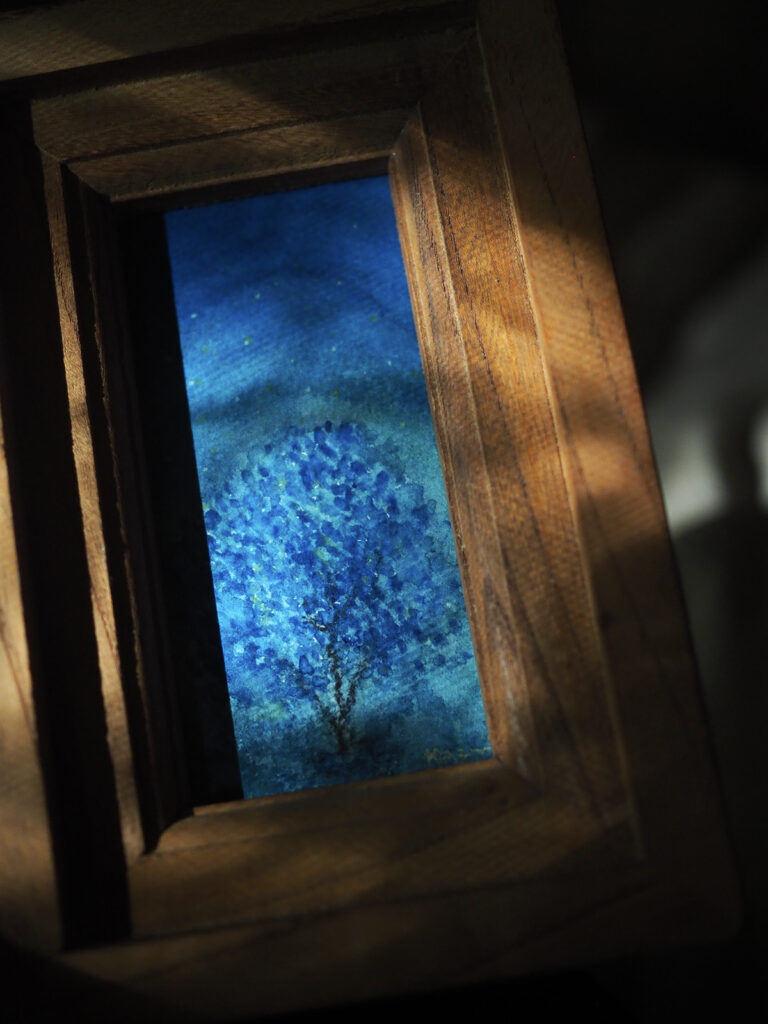
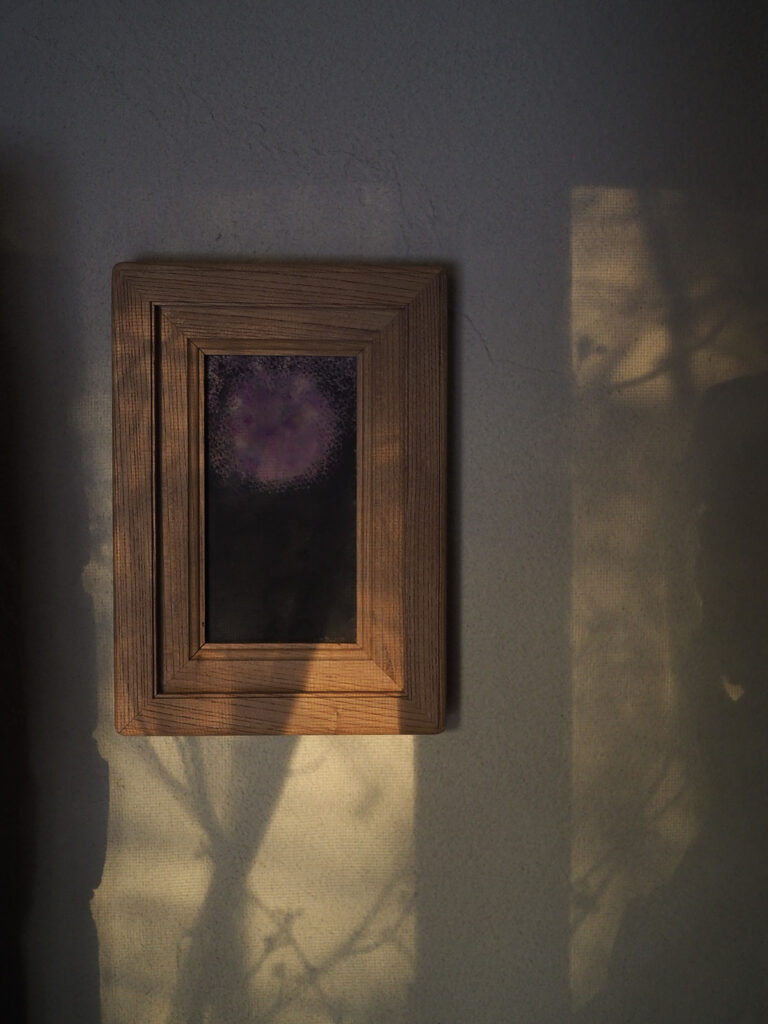
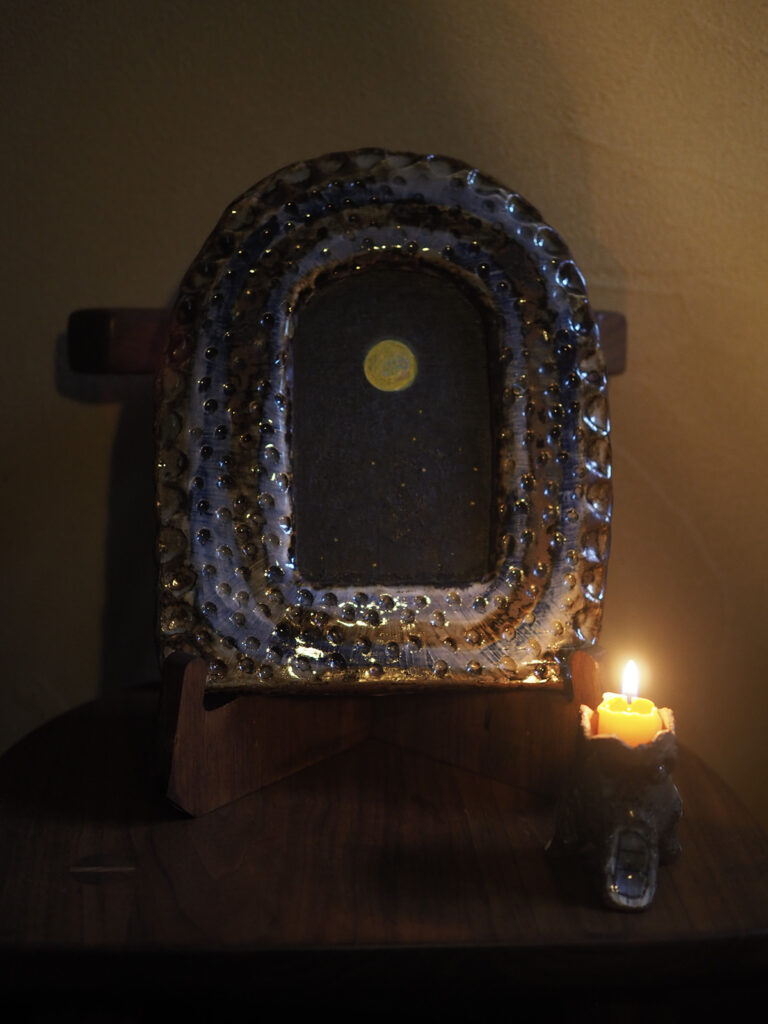
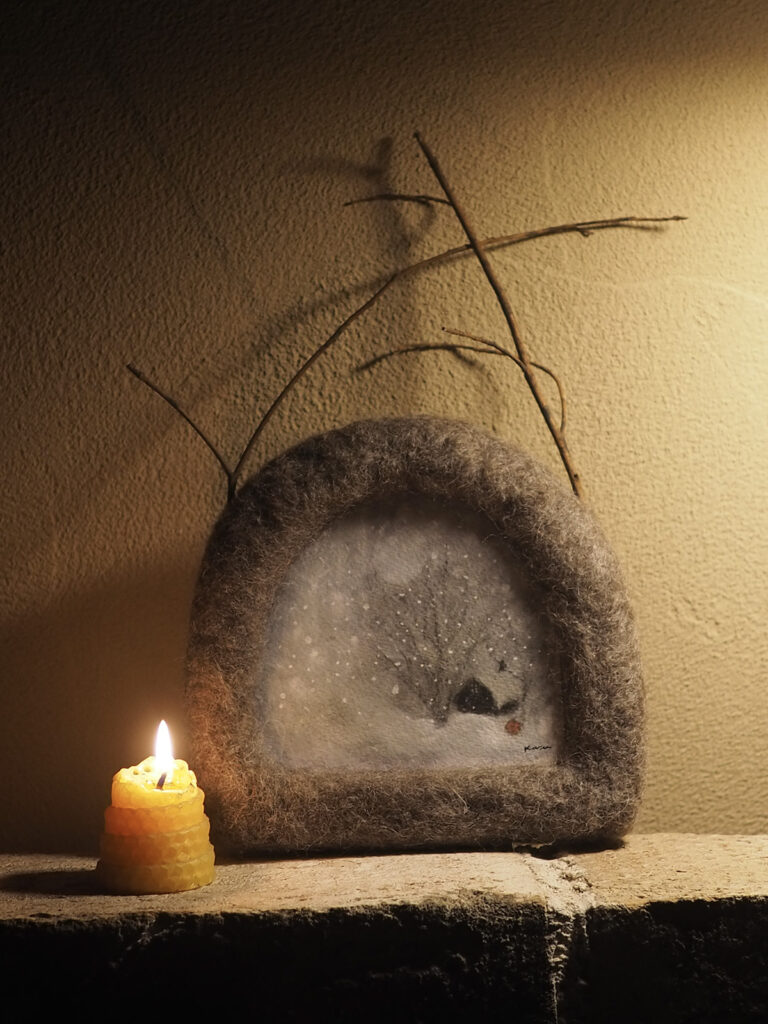
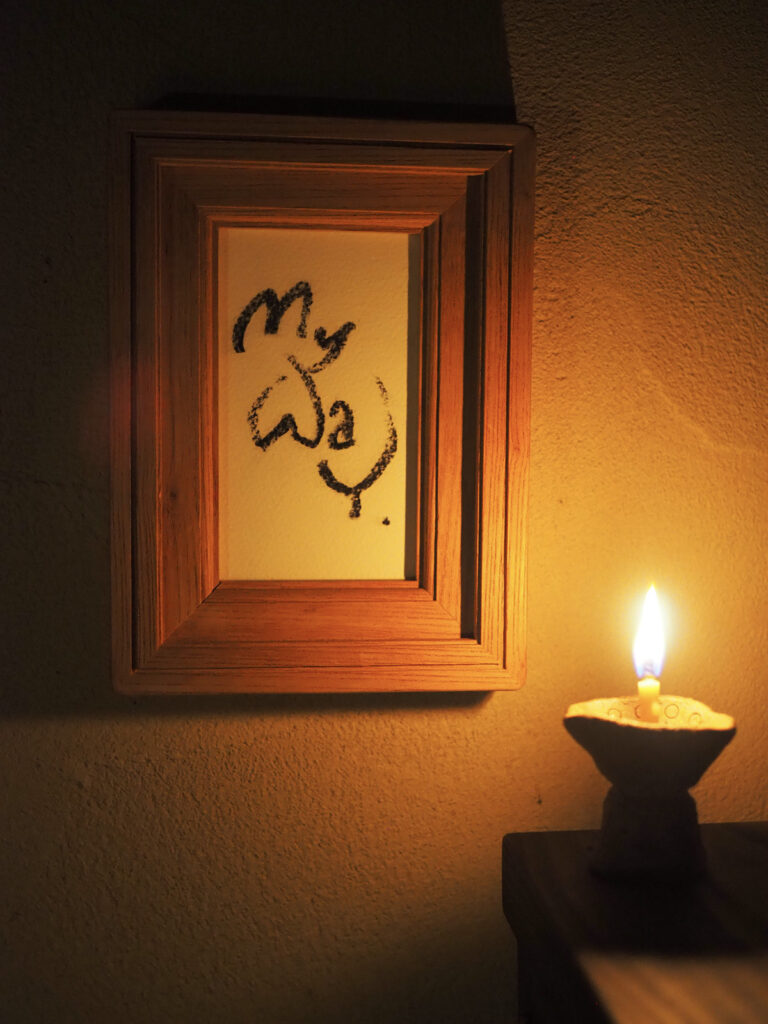
Kazuu also works as an artist and reveals another side of her practice through her work. The Thatched Chapel doubles as her studio, and the pieces displayed can be commissioned upon request.
Photo credit : “Mori no Soup-ya no Yoru,” Yuko Chiba
A Night at the Forest Soup Shop
Address: 649-19 Mano, Hōki Town, Saihaku District, Tottori Prefecture, Japan
Official website: https://cinemavalley.net/
Instagram: @soupyanoyoru