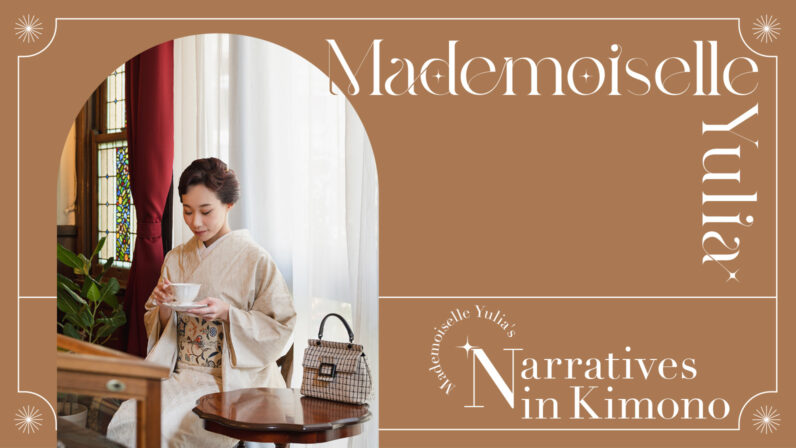
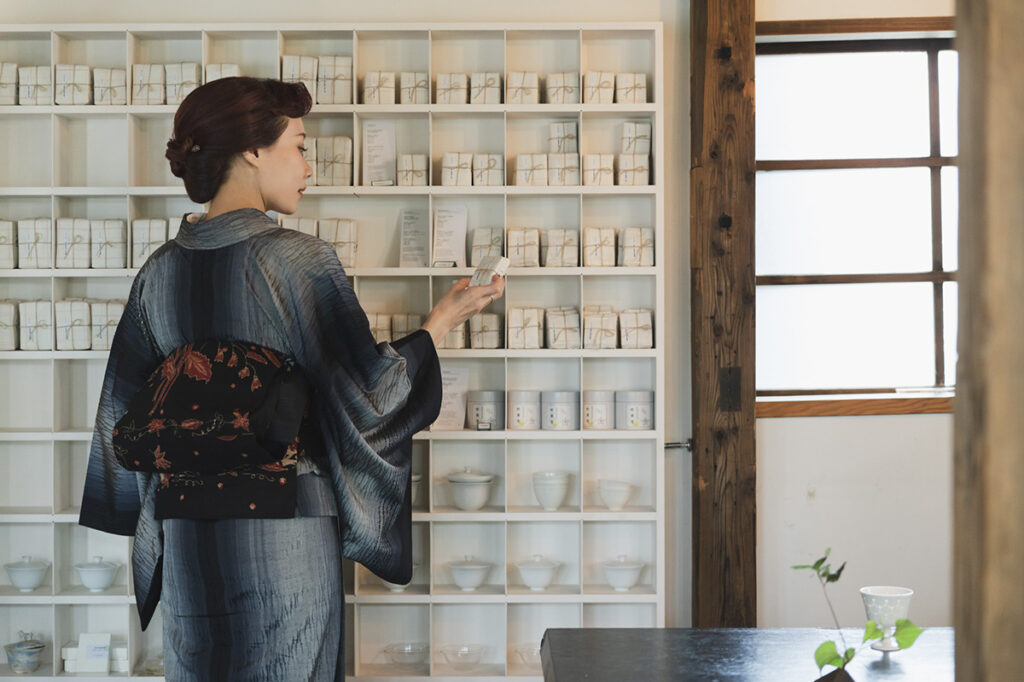
Mademoiselle Yulia is a multifaceted talent. She is active in the fashion scene as a DJ while also producing her own kimonos. In this series, she draws on her deep interest in art and architecture, visiting her favourite spaces and exploring kimono styling in dialogue with each setting. For Vol.12, she visits Seika Xiaoman Tea Experience, a serene space for Taiwanese tea set within an atmospheric wooden building. Her kimono styling, subtly layered with chinoiserie influences, beautifully echoes the lingering mood of the place.
A Tranquil Tea Space Steeped in Showa-Era Nostalgia
Drawn by the early summer breeze, Yulia makes her way to Seika Xiaoman Tea Experience, which originated in Kagurazaka. Hidden within a maze of narrow backstreets, it sits on the ground floor of a weathered wooden house where time seems to have quietly stopped. Even Yulia, well versed in architecture, is visiting for the first time, making it something of a hidden architectural treasure.
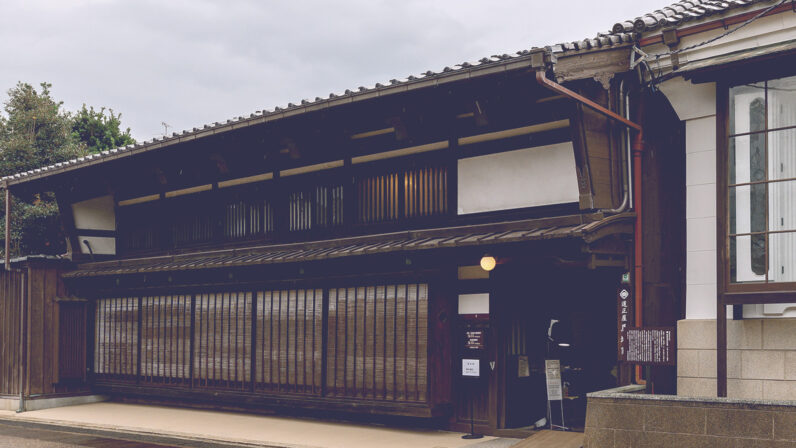
The building, known as Issuiryo, dates back to 1951. It was originally constructed as a dormitory for carpenters working at the nearby former Takahashi Architectural Office, a Registered Tangible Cultural Property. The entire complex, including the adjacent Suzuki Residence, once the home of the architect, was designed by Hiroshi Takahashi (1902–1991). Built in the early postwar years as both lodging and workspace for carpenters, it does not rely on luxurious materials. Yet subtle details such as latticework and exposed beams quietly reveal traces of hand-carved craftsmanship. The result is a space imbued with a restrained, austere beauty, where the skill of its makers is expressed through a humble and understated aesthetic.
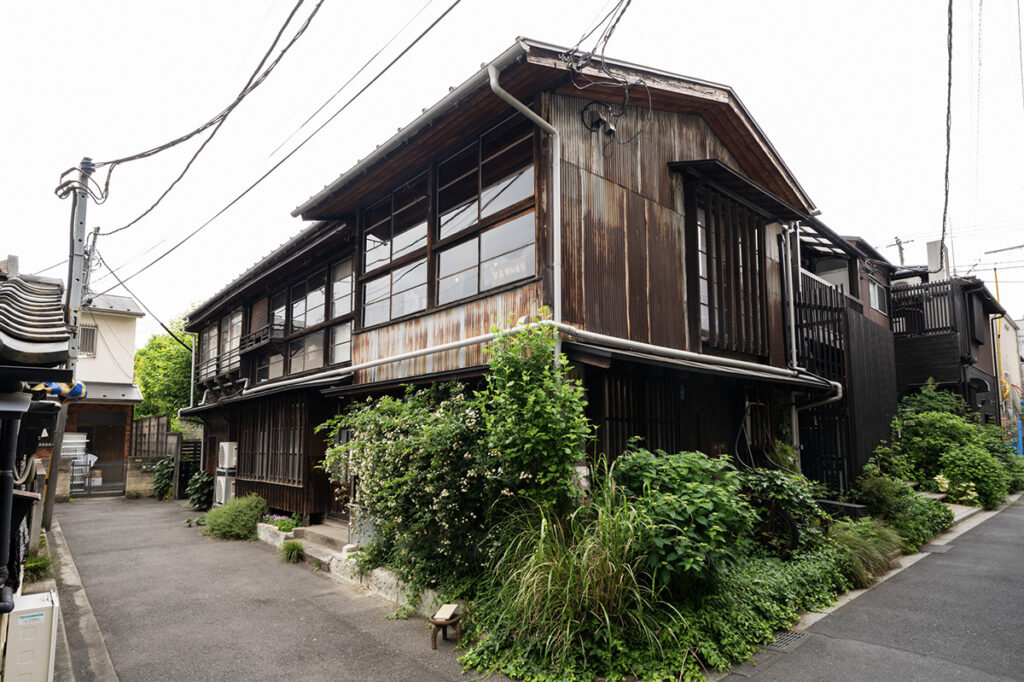
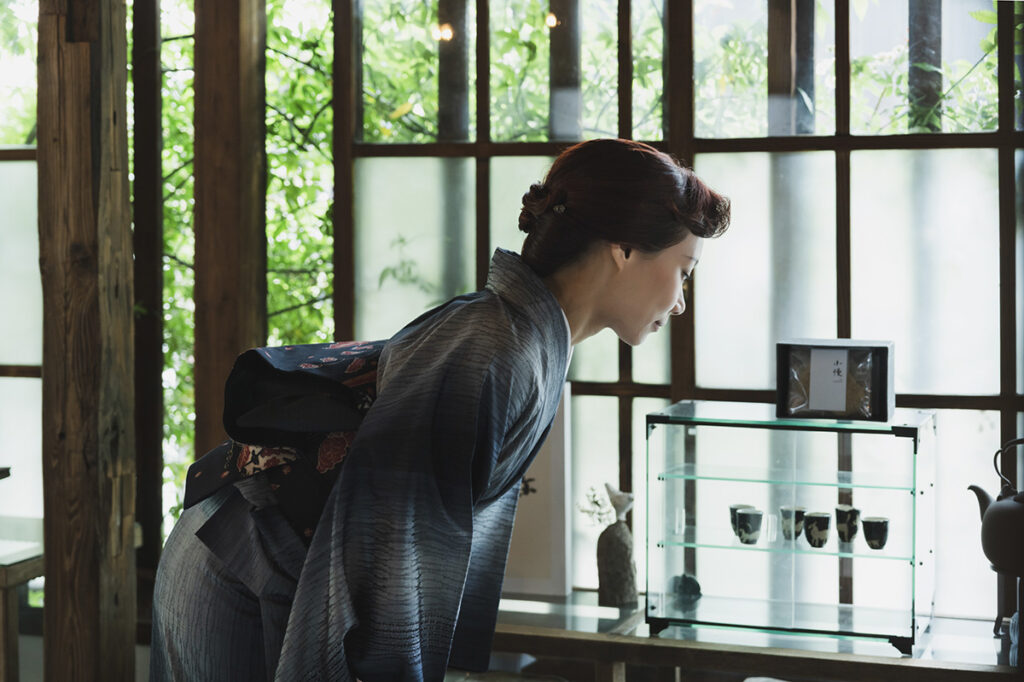
Image 1: The single-story building in front of Issuiryo was originally constructed as the main house and is also a Registered Tangible Cultural Property. It remains the family’s private residence and is not open to the public.
Image 2: The window frames and pillars still carry the patina of time, preserving a quiet sense of history.
As time passed, the building gradually outgrew its original role as a dormitory and was repurposed as a residence for creators connected to the site, including staff and students from the office of architect Kiichi Suzuki, Takahashi’s son-in-law.
In 2013, it was designated a Registered Tangible Cultural Property, and three years later it underwent a comprehensive renovation that included seismic reinforcement. Great care was taken to preserve the atmosphere of the weathered corrugated metal exterior and the overall interior character, while discreetly reinforcing areas such as plumbing, flooring, and structural pillars with new materials. Preserving its aged wooden frames and glass, the building was brought back to life as a living wooden structure, sealed against even the slightest draft. Today, it is home to workshops and offices devoted primarily to artisanal craft.
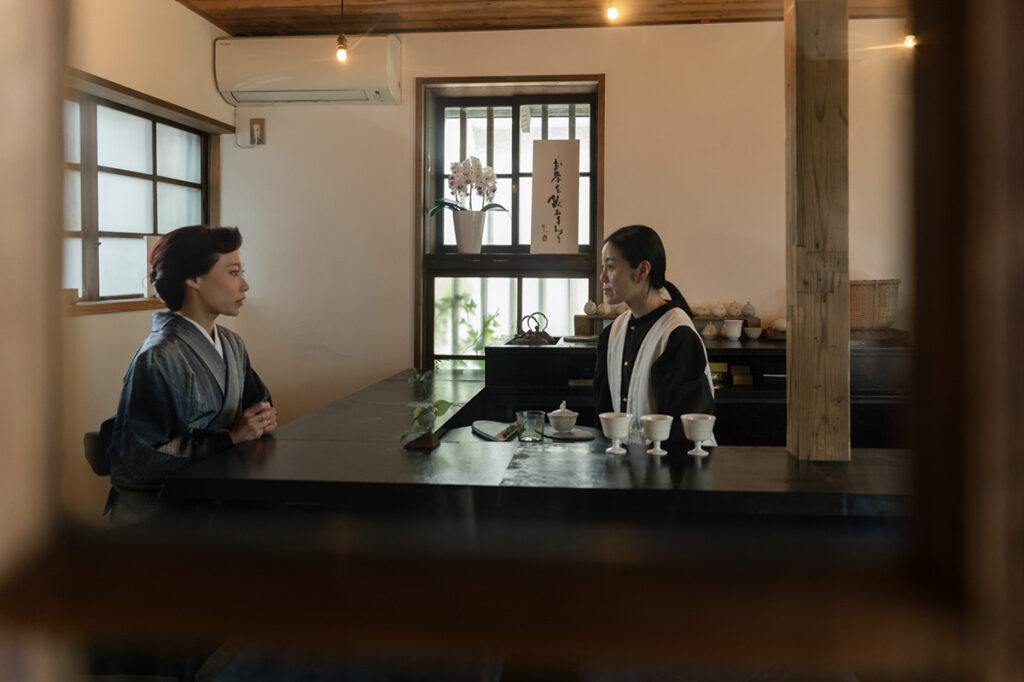
Originally, the space served as a gallery for Kōgei Seika, a magazine produced by the nearby publisher Shinchosha. The tea space was named Seika Xiaoman Tea Experience in reference to this history. On the day of Yulia’s visit, tea was served by store manager Ryoko Saito.
Seika Xiaoman Tea Experience opened on the ground floor of this historic building in March 2026. It is a tea space founded by Taipei-born Xie Xiaoman, a name widely recognised among Taiwanese tea enthusiasts.
Xiaoman’s defining strength lies in her fusion of Japanese craft and Taiwanese tea culture. About 20 years ago, she established Xiaoman Tea Experience in Taipei, where she became known for incorporating tea ware by Japanese craft artists and exploring a dialogue between Japanese craftsmanship and Taiwanese tea. “I actually visited her Taipei space before,” Yulia reflects. “On a trip through the city with friends who appreciate craft, a friend recommended it to me. I was drawn to the nostalgic atmosphere and the beautifully refined tea utensils, and I still remember ordering Alishan black tea.”
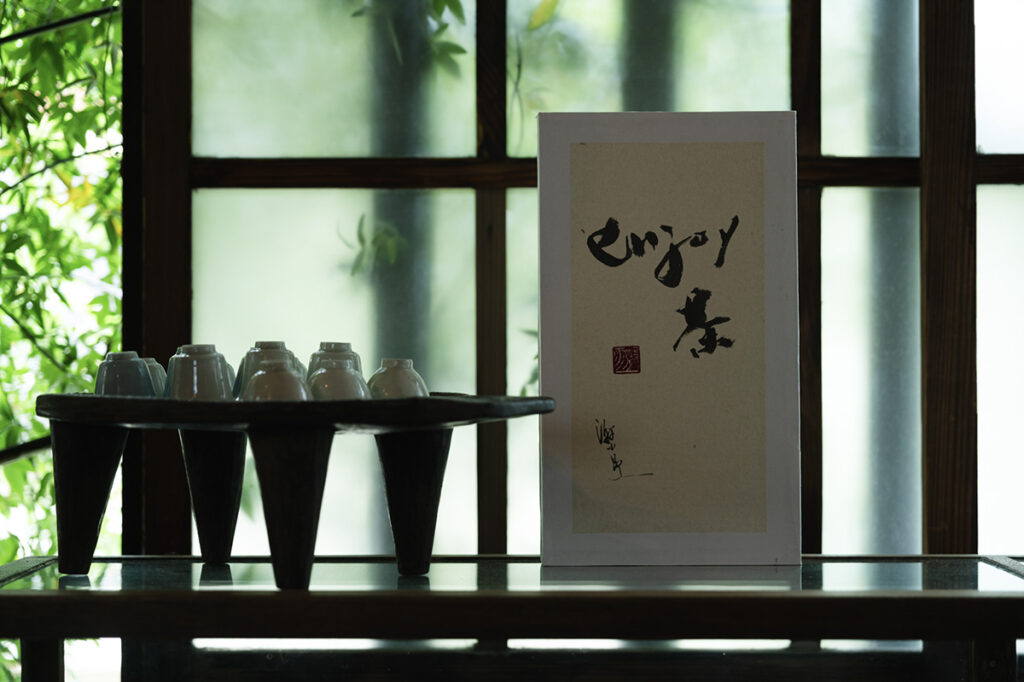
Tea utensils and calligraphy pieces carefully selected through Xiaoman’s refined aesthetic sense are also available for purchase.
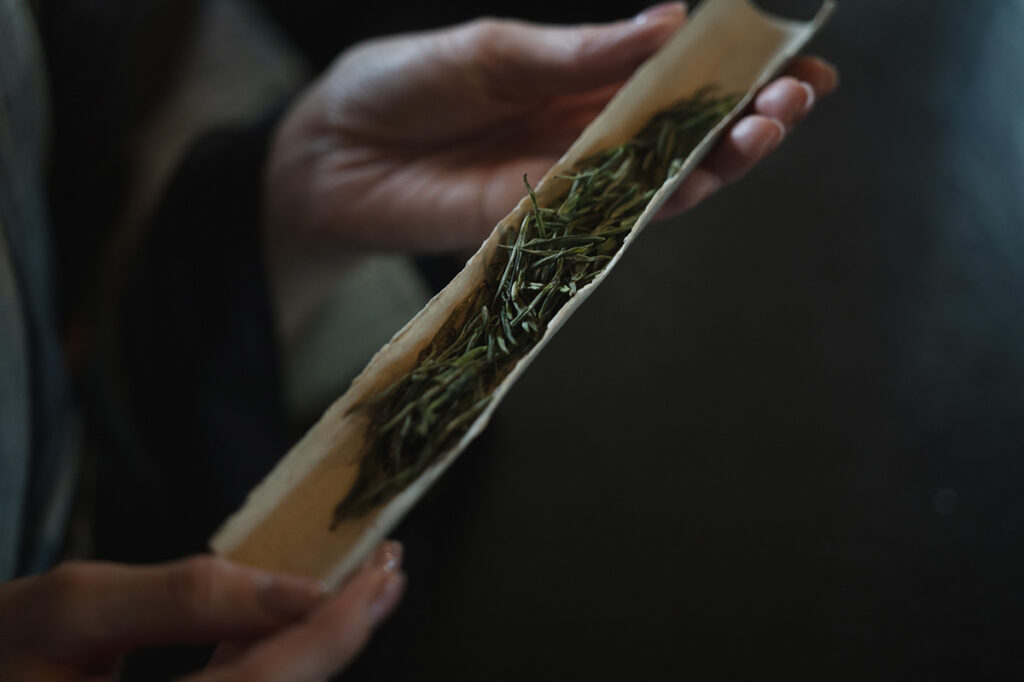
With a sense of pleasant coincidence in mind, Yulia immediately sits down to enjoy tea. The tea of the day is Anhui Yefang Yelanxiang Green Tea, carefully selected by Xiaoman from a tea garden in southern China’s Yangtze River region, in the mountainous area of Wannan. For more than 30 years, the tea trees here have been cultivated in a natural environment without fertilisers or pesticides.
“These are leaves from old tea trees whose roots extend deep into the soil, absorbing minerals and nutrients that give the tea liquor its depth and complexity. It can be enjoyed over around ten infusions,” explains store manager Ryoko Saito as Yulia takes her first sip. The moment it touches her palate, her voice brightens: “It’s completely different from the green tea I usually drink. It’s so gentle, with no bitterness at all.” She then moves on to the second infusion, said to reveal the fullest aroma, noting, “The flavour feels more structured than before,” as she savours its shifting character. Having discovered a new world in Taiwanese tea, it goes without saying that Yulia left with some of the leaves to take home.
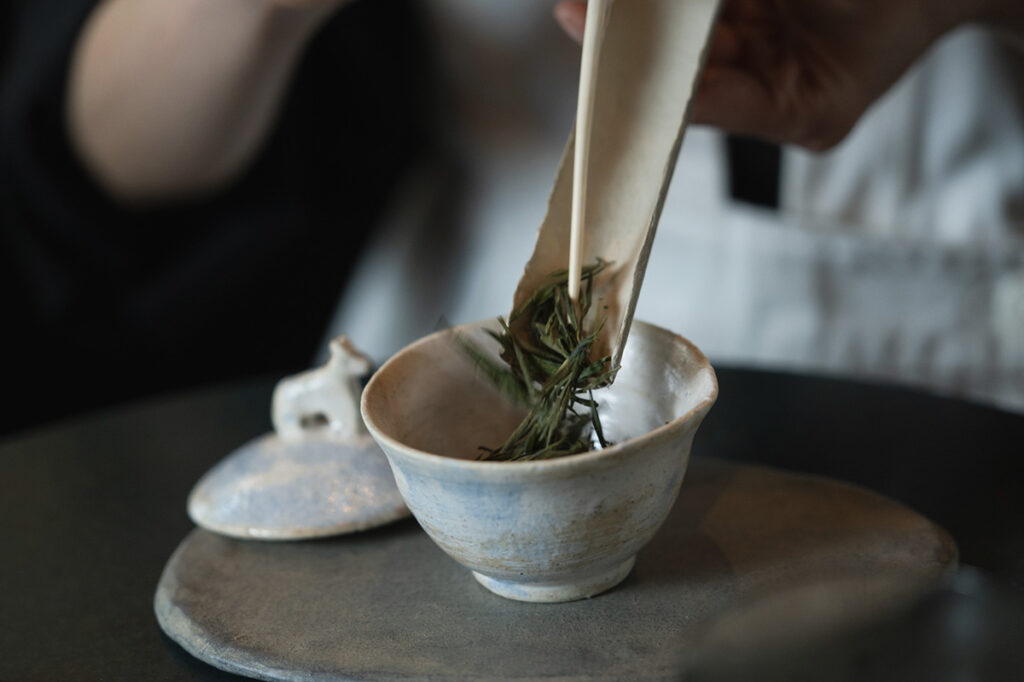
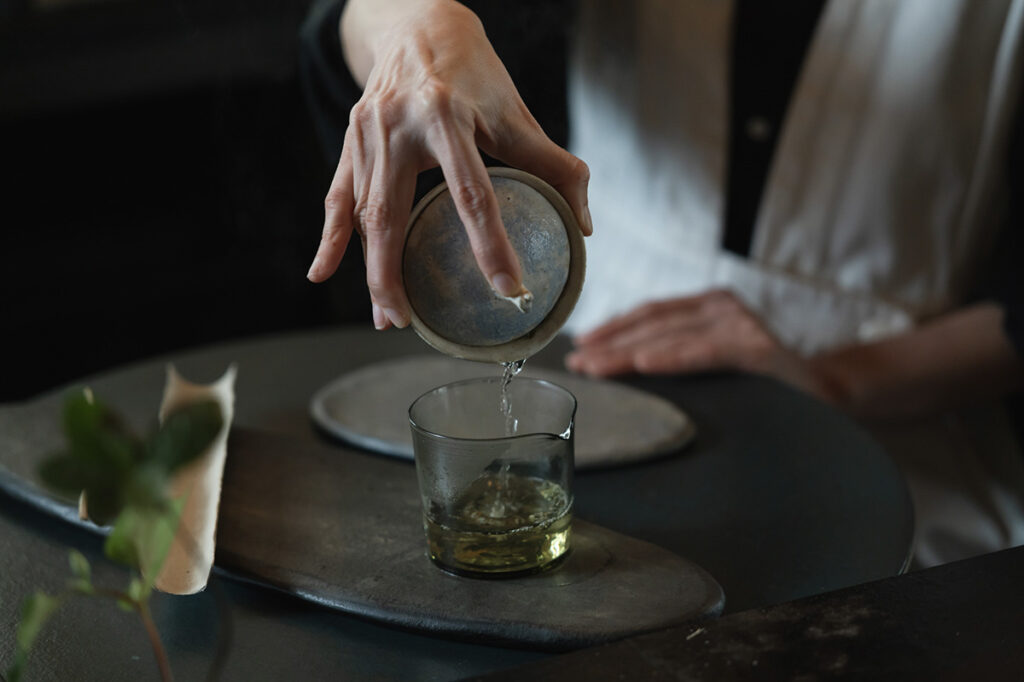
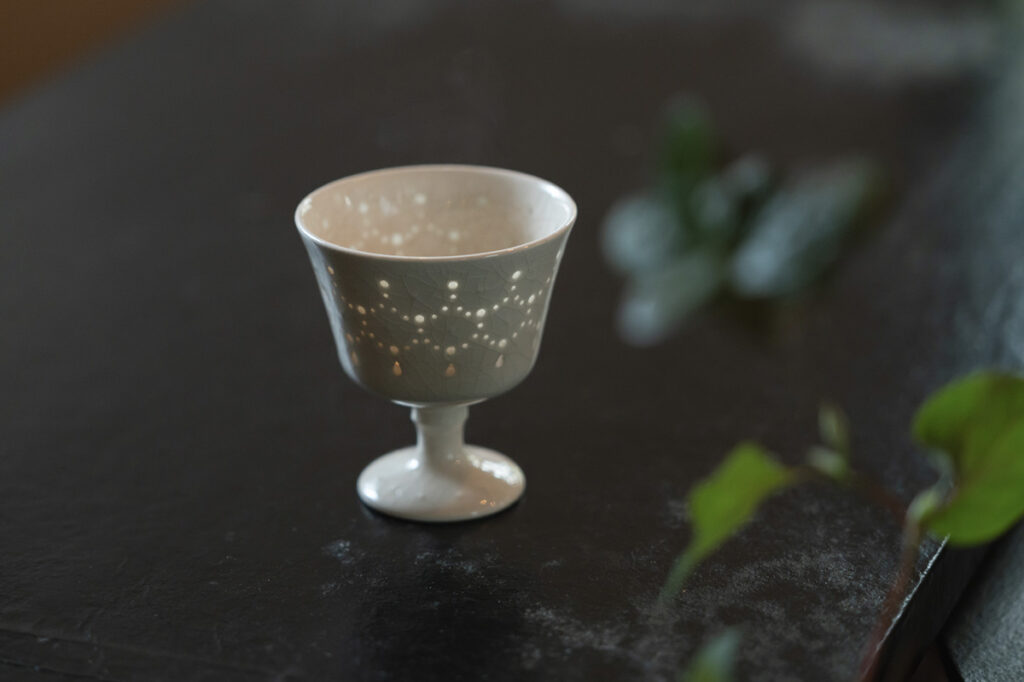
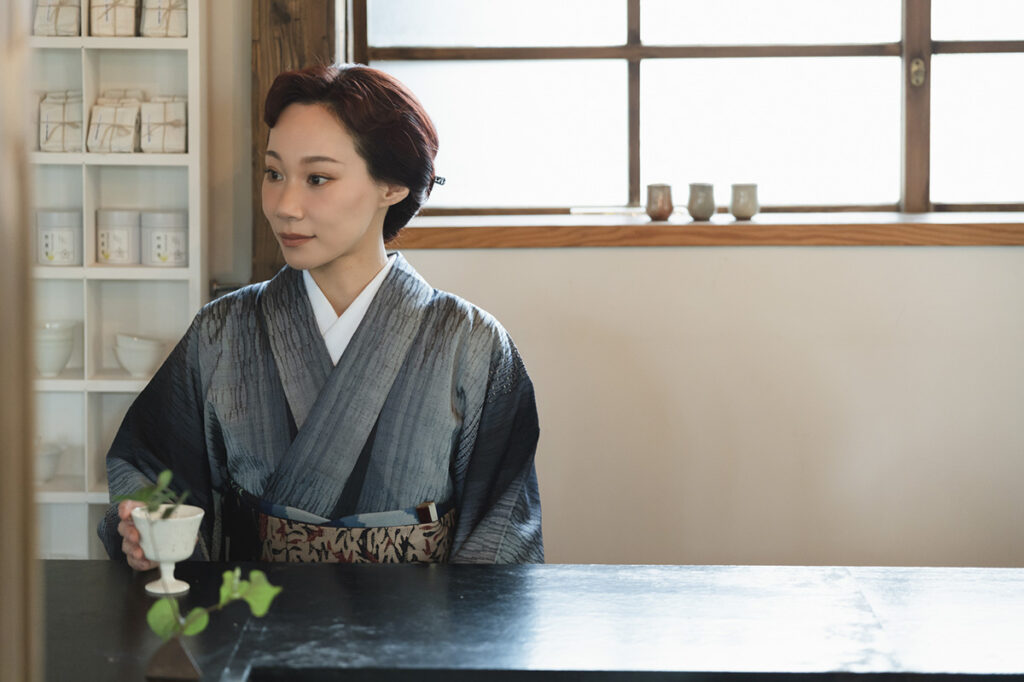
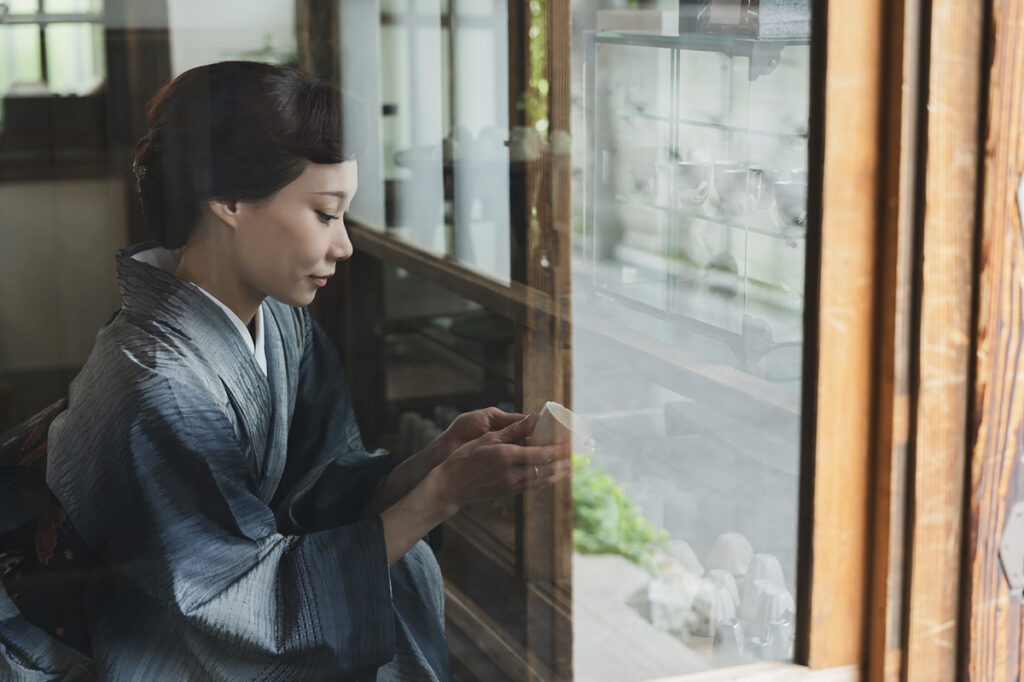
Having studied senchadō at university, Yulia observes the graceful movements of Taiwanese tea ceremony with quiet quiet fascination, even sensing a deepening calm in her own breathing.
Embodying the Beauty of Asian Craft in Profound, Layered Colour
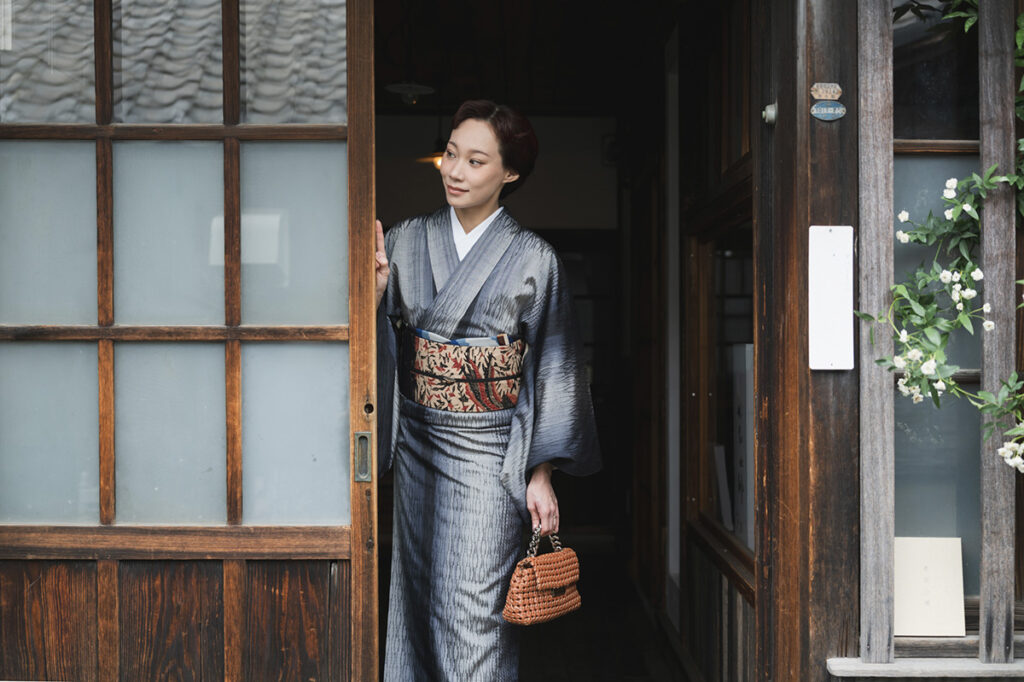
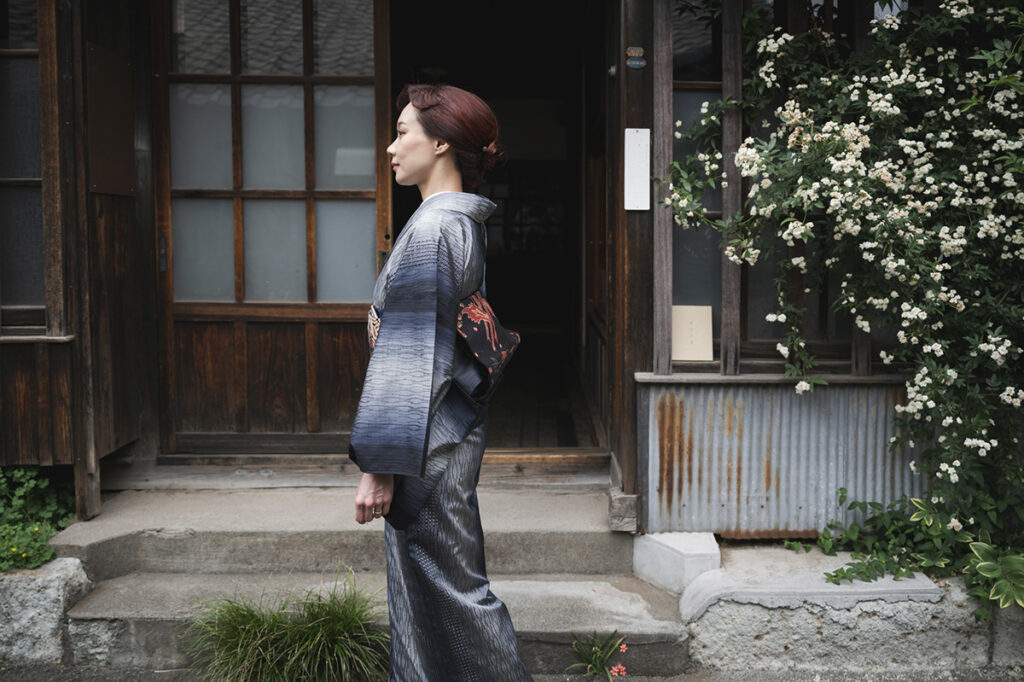
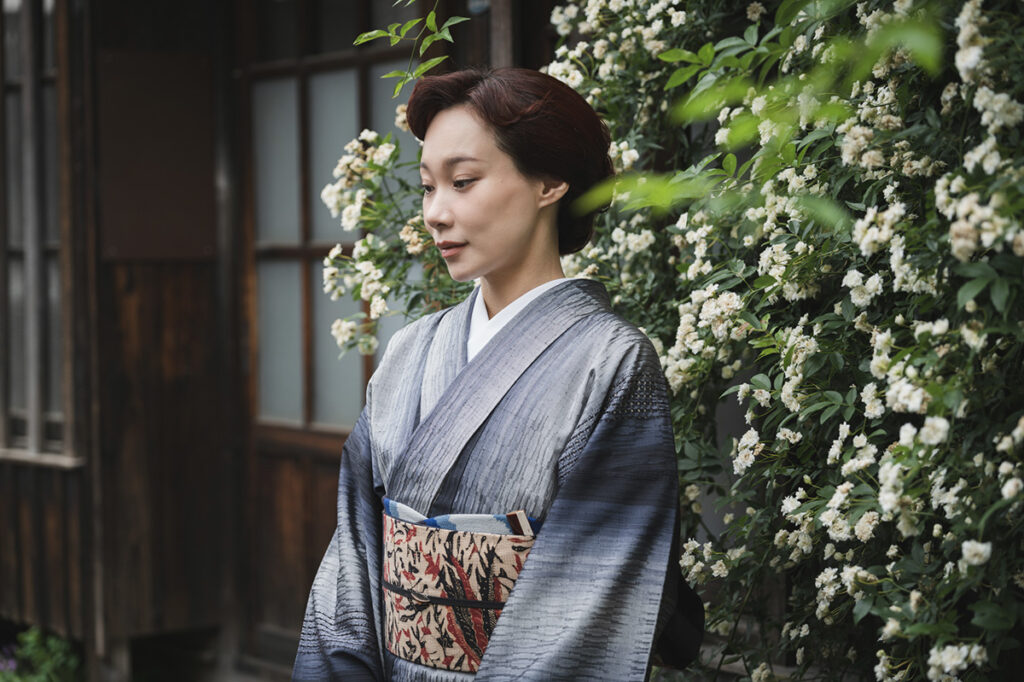
From a distance, the soft gradation of the dyeing evokes the image of a quiet, flowing stream.
On this day, the theme of the story Yulia composed within the space of wooden architecture and Taiwanese tea ceremony was chinoiserie imbued with stillness. “When I heard about the location, the first thing that came to mind was a kimono with a standing-wave (tatéwaku) pattern reminiscent of flowing water, along with the refined translucency of Shantou embroidery. I felt the depth created by the ombré dyeing would harmonise with the building’s interplay of light and shadow,” she says. Adding a lighter touch to the kimono is a Java batik obi sourced from Jidai Fu Ikeda. With differing tones and pattern density between the front and taiko sections, it creates a sense of movement. A cup-shaped obi clasp further adds a narrative detail suited to the tea space.
Having sipped through multiple infusions of pure, clear tea, Yulia herself seems to take on a lighter, more luminous presence. The smoky, gradated kimono ensemble and the tea space exist in quiet harmony, gently echoing one another, creating a scene that feels lifted from an ink wash painting.
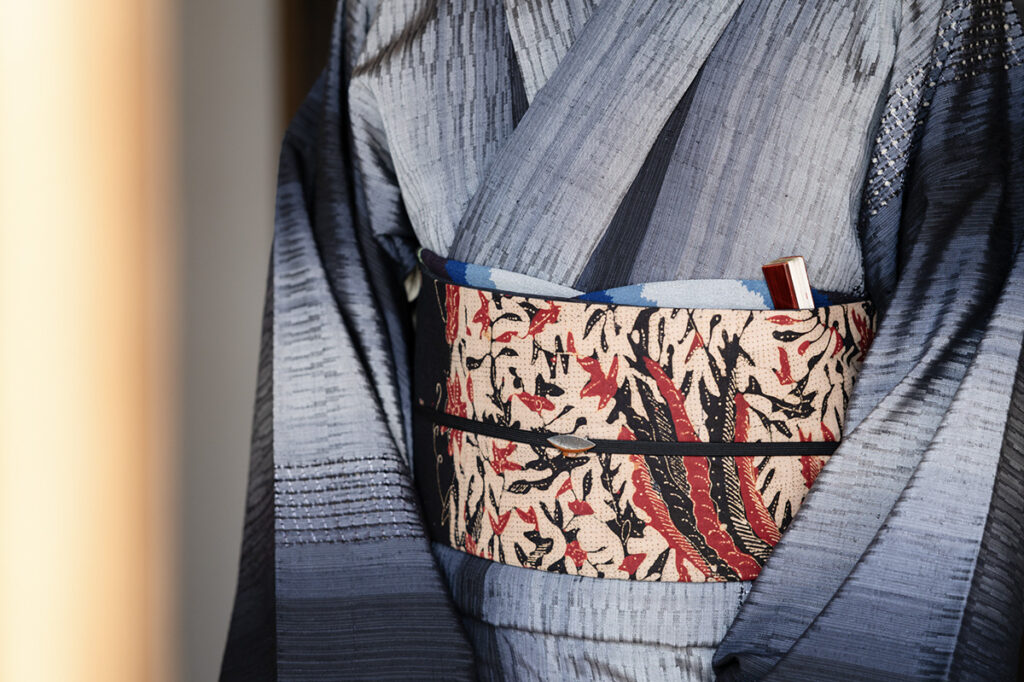
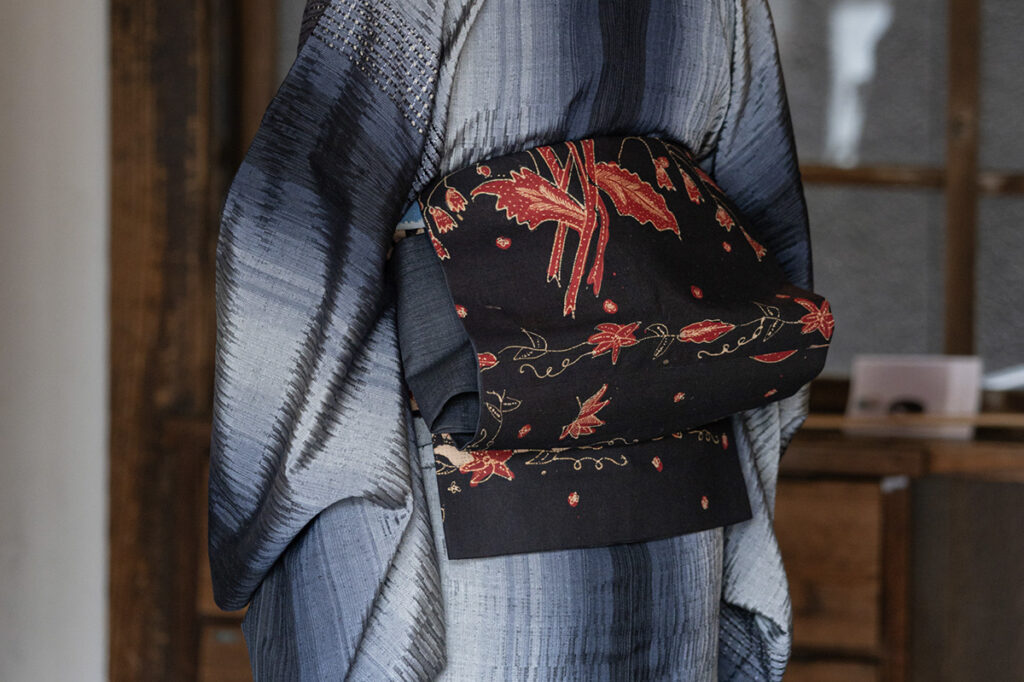
A Java batik obi with contrasting designs on the front and back.
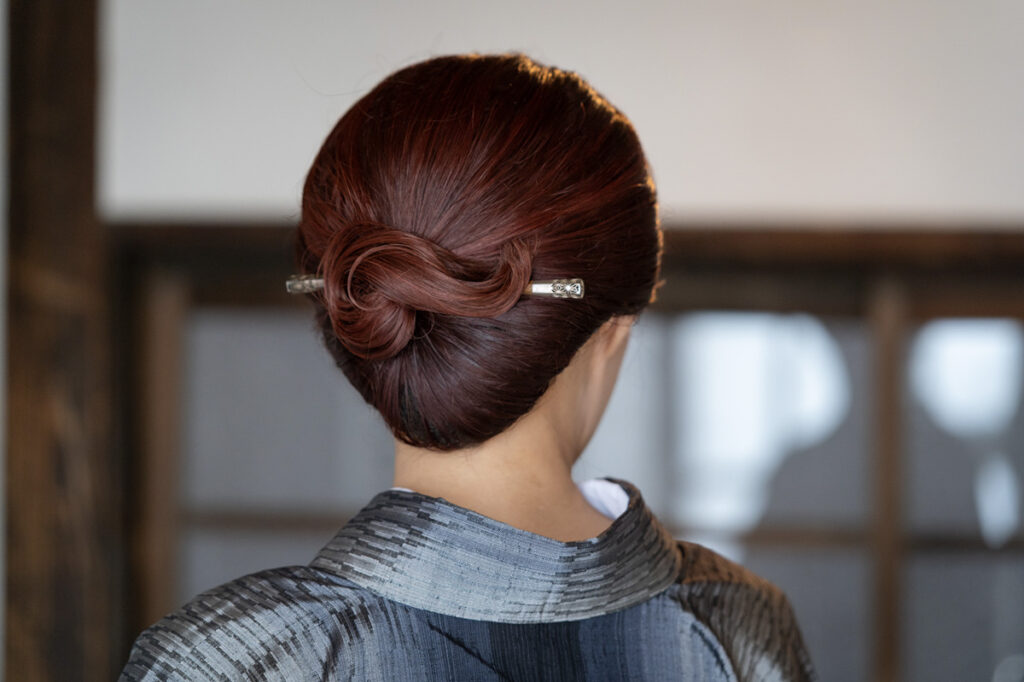
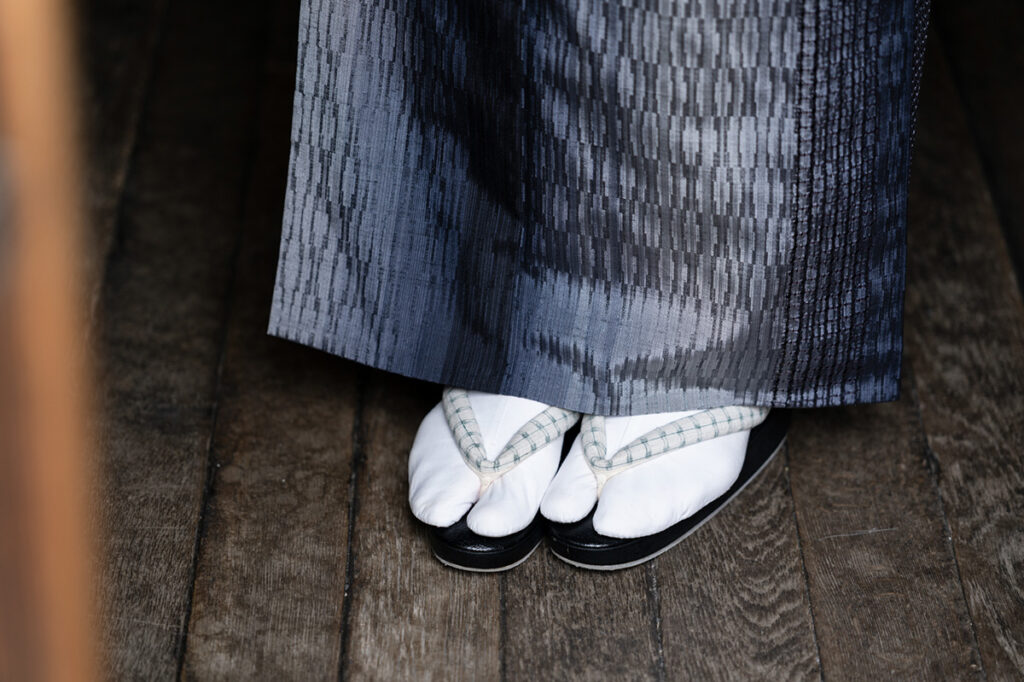
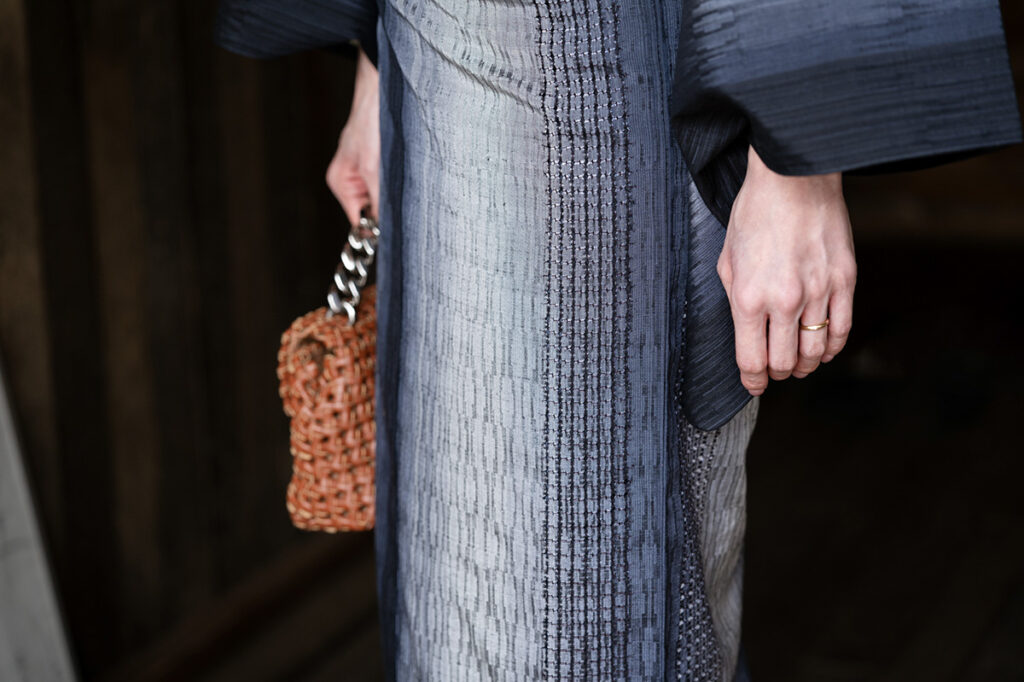
The hair ornament is a kōgai featuring an openwork interpretation of the asanoha (hemp leaf) pattern, with meticulous coordination evident in every detail, down to the footwear and bag.
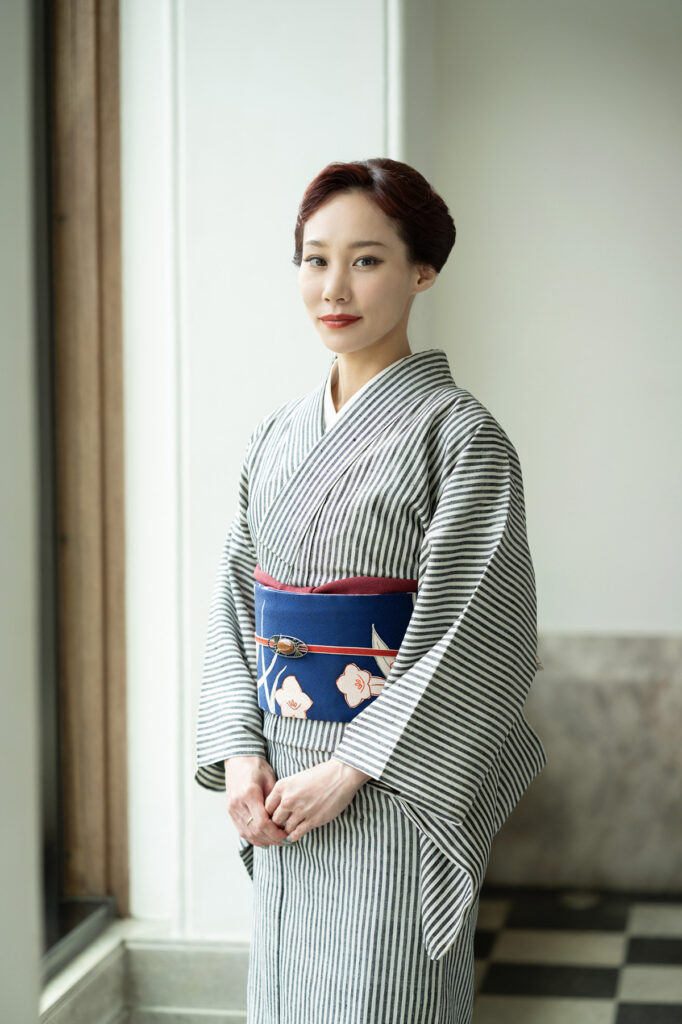
Mademoiselle Yulia
She began her career as a DJ and singer in her teens. Based in Tokyo, Mademoiselle Yulia is actively engaged globally, organizing kimono styling sessions, kimono workshops, and writing columns. In 2023, she co-founded the brand KOTOWA with friends to add stylish flair to everyday wear by incorporating kimono. She also runs a YouTube channel ‘Yulia’s Room’ where she uploads new content every week.
instagram: @MADEMOISELLE_YULIA
Seika Xiaoman Tea Experience
Address: 101 Issuiryo, 31 Yokotera-machi, Shinjuku-ku, Tokyo
Official Instagram: @seika_xiaoman
◾️Related Article