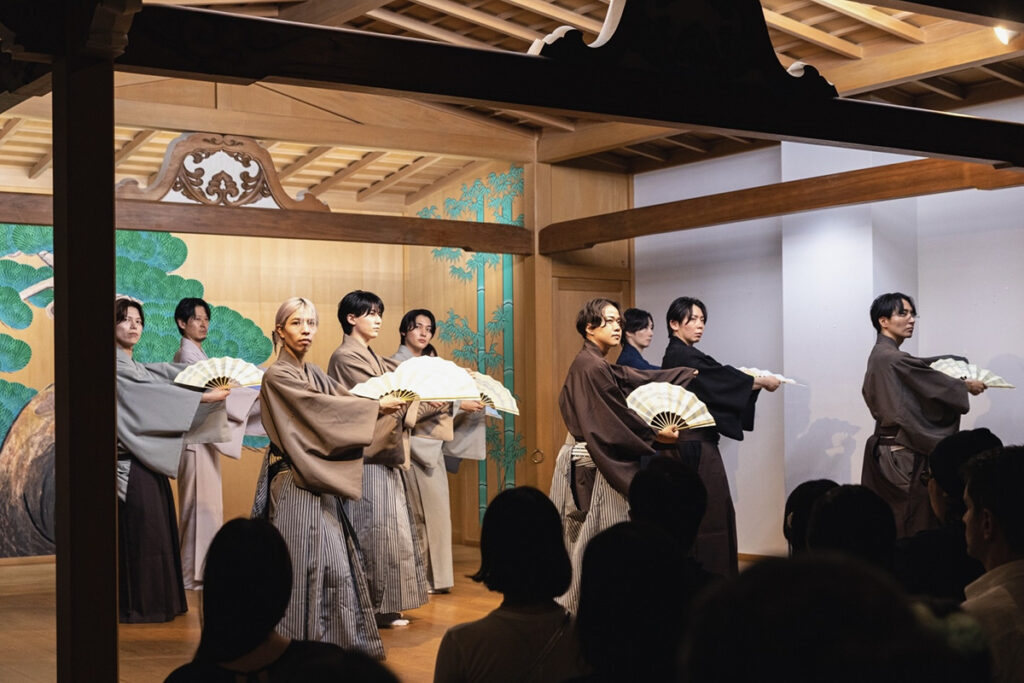
By night, the “hosts” at Kabukicho’s clubs entertain mostly female customers with drinks and conversation. On this day, however, they were dressed in traditional kimono, quietly making their way across a Noh stage with the measured steps of traditional Japanese dance.
What they were performing was a traditional Japanese dance known as nihon buyo.
In June 2026, Smappa!Group, which operates host clubs and other businesses, held the third maizarae rehearsal for its Japanese dance project, Koshoku Ichidai Otoko.
Host clubs are a uniquely Japanese part of the nightlife industry, where male hosts primarily entertain female customers. They are often associated with flashy fashion, champagne and sales rankings, while traditional Japanese performing arts seem to belong to an entirely different world. It raises the question of what brings these two seemingly distant worlds together.
Behind the project is a simple question: Can the world of hosts become a form of culture?
The Arts That Distinguish Geisha from Hosts
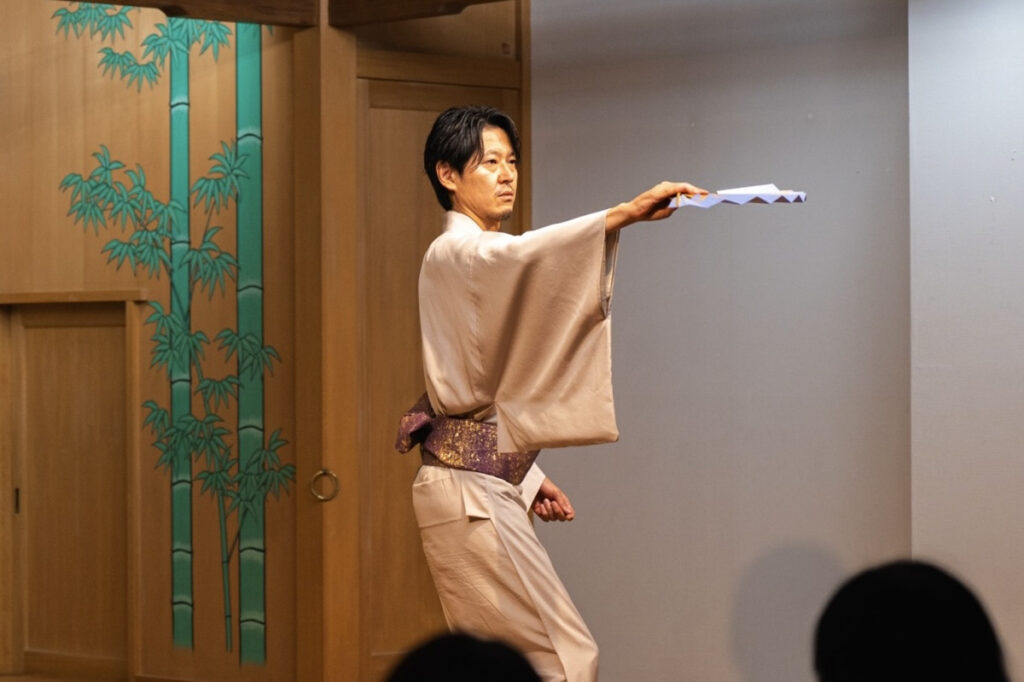
Maki Tezuka, Chairman of Smappa!Group
When thinking about the profession of hosting, Maki Tezuka, chairman of Smappa!Group, often compares hosts with geisha who work in Tokyo’s Kagurazaka and Mukojima districts. Both entertain customers by drinking with them, making conversation and enlivening gatherings. The difference is that geisha spend years mastering traditional arts such as dance, shamisen and singing.
“What sets us apart from the geisha of Kagurazaka and Mukojima? I think the decisive difference is whether or not you have these traditional arts,” Tezuka says.
When skilled artistry is added to the act of entertaining guests, could hosts, through that accumulation of experience, move beyond simply providing a service and become people who carry culture forward? Japanese dance was one of the first ways they put this idea into practice.
The project began with Smappa!Group’s Noh stage in Kabukicho and its meeting with Wakashizuki Yamamura, a master of the Yamamura school of Kamigata-mai. Developed mainly in Kyoto and Osaka, Kamigata-mai has long been closely connected to traditional zashiki entertainment culture. It may seem far removed from today’s host clubs, but the two share an unexpected connection: both are spaces where guests are entertained. That said, the hosts weren’t exactly lining up to learn Japanese dance from the start. According to Tezuka, some were initially encouraged to take part almost by force.
When we think about passing traditional culture on to the next generation, we tend to picture people who have grown up in the world of traditional arts from an early age. Here, however, young people from completely different backgrounds are stepping into that world through their training.
How Japanese Dance Is Changing Hosts
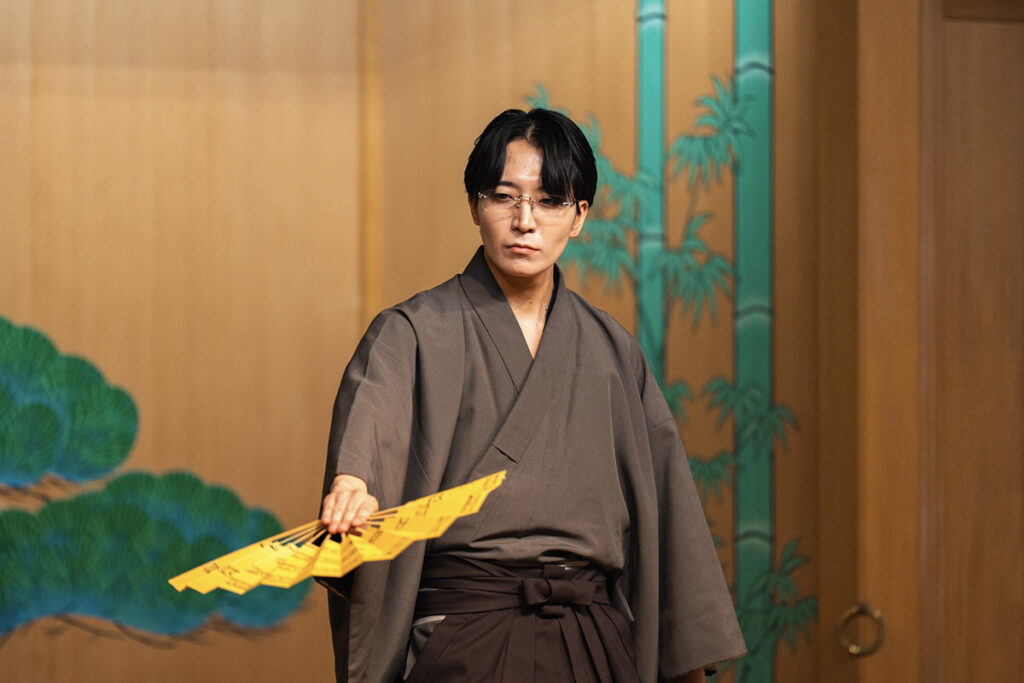
Member of Koshoku Ichidai Otoko, Uta
Uta, a member of Koshoku Ichidai Otoko, also began learning Japanese dance after being encouraged to take part by the staff. He had some dance experience already, but says Japanese dance made him pay attention to details he had never really thought about before, from the movement of his fingertips to the smallest gestures.
“I started to feel like, despite being Japanese, I wasn’t really conveying anything about what makes Japan special.”
He now hopes to become someone who can embody and express Japanese culture through Japanese dance.
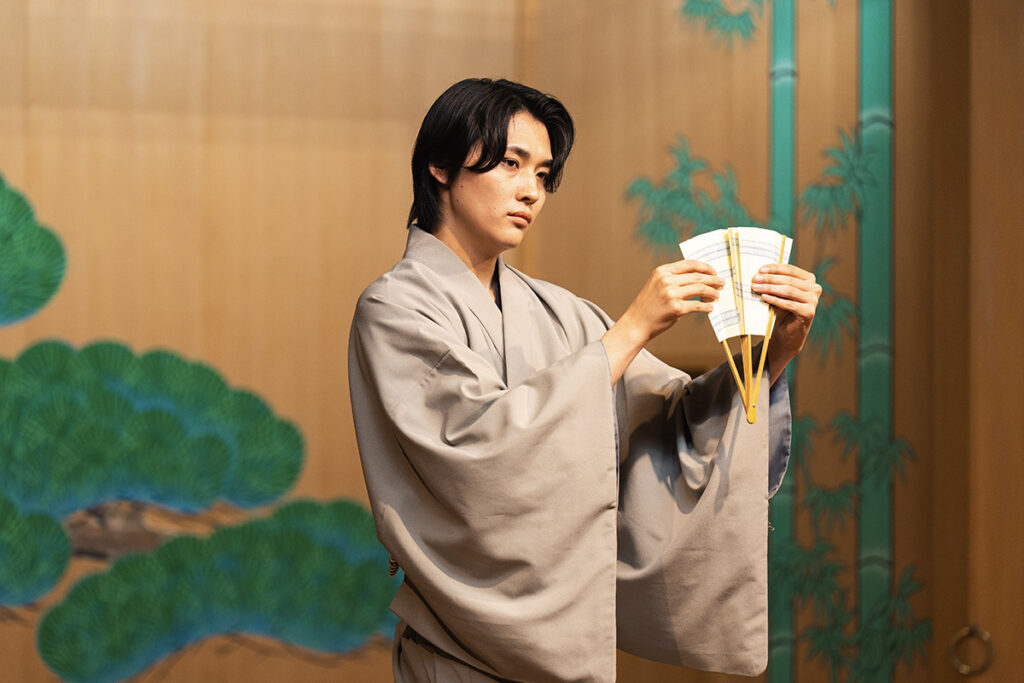
Yoshi, member of Koshoku Ichidai Otoko
For Yoshi, another member of the group, it was the importance of posture and the traditional suriashi walking style that stood out most. As he continued training, he began paying more attention to how he stands, walks and uses his body in everyday life.
The changes have also carried over into work as a host. Uta feels that Japanese dance has refined the way he moves and carries himself, and that this has helped him in his interactions with customers. He says that telling customers he is “a host who performs Japanese dance” can even change the way they see him.
For Yoshi, the training has also given him something to talk about beyond his work as a host. Customers have come to appreciate him as an individual when they see him turning up for practice even after working late into the night. That recognition has helped build his confidence, too.
What they are learning goes well beyond the choreography itself. How to stand, how to walk, how to bow. They watch their teacher closely, picking up on things that are not necessarily explained in words. These movements and forms of etiquette are just as much a part of what has been passed down through traditional performing arts.
Can Hosts Become Bearers of Culture?
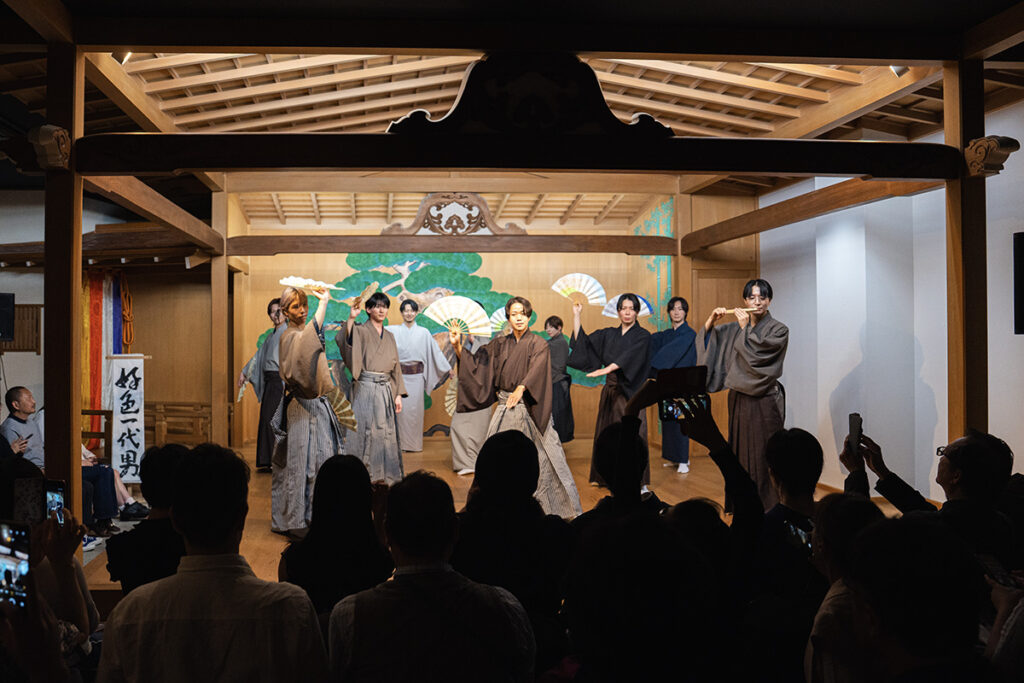
Of course, learning Japanese dance does not suddenly turn a host club into a form of traditional culture. Geisha and hosts come from very different histories, and the two cannot simply be placed on the same footing.
But the project raises another question: do the people who carry traditional culture forward have to come from within the traditional world itself?
Intangible forms of culture, such as dance, cannot simply be preserved as objects. Someone watches their teacher, repeats the movements with their own body, and eventually passes them on to someone else. That is how these traditions continue from one generation to the next. If so, there is also something meaningful about people who once seemed completely removed from traditional culture becoming part of that chain.
Looking ahead, Smappa!Group plans to expand performances of Koshoku Ichidai Otoko, while also exploring ways to combine Japanese dance, food and host clubs into experiences that introduce Kabukicho to visitors from overseas. The goal is for hosts to become cultural concierges of sorts, going beyond entertaining customers at night to introducing visitors to their neighbourhood and its culture.
At night, they share drinks with customers. During the day, they practice Japanese dance in front of their teacher. It may seem like an unlikely combination, but when we think about who will carry Japanese culture forward, the answer may come from places we would never expect, and the dance of Kabukicho’s hosts is one such possibility.
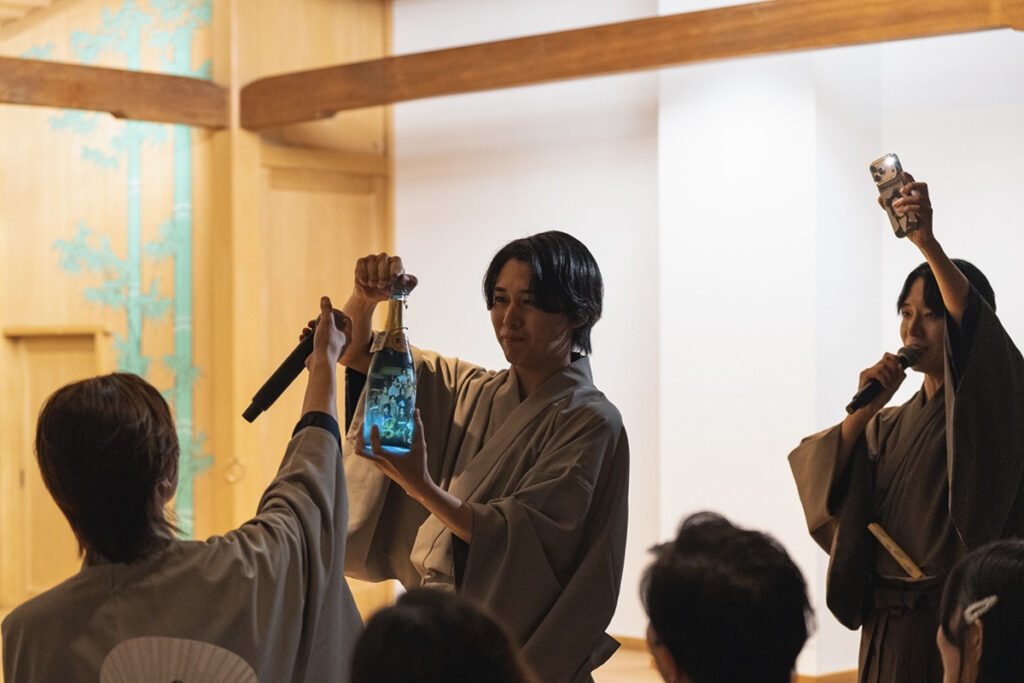
The performance also features elements unique to host clubs
Hosts × Japanese Dance: Koshoku Ichidai Otoko at Smappa!Group
Instagram : @koshoku1_smappa
◾️Related Article