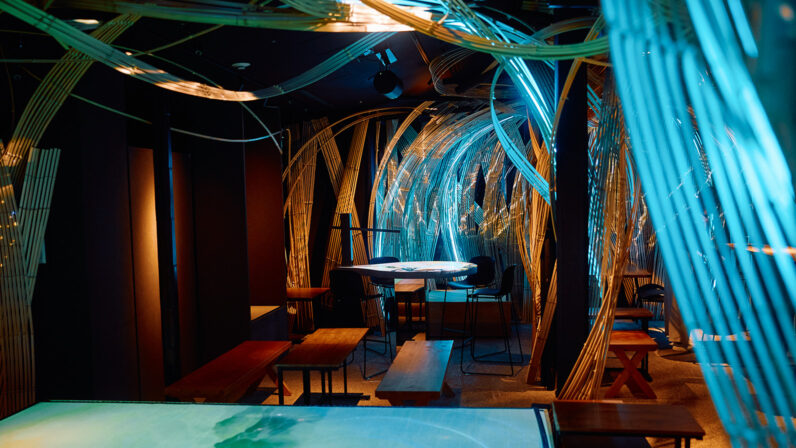
Following the A Small Love Story: The World of Mameban Shunga exhibition previously featured on ZEROMILE, a new shunga exhibition has opened at the same venue.
Titled A Contest of Allure: Katsuhika Hokusai and Keisai Eisen – Kabukicho in Full Bloom, the show spotlights two renowned ukiyo-e artists, Katsushika Hokusai, one of Japan’s most celebrated masters, and Keisai Eisen, who, while influenced by Hokusai, forged his own distinctive aesthetic. Running from April 4 to May 31, the exhibition brings together more than 130 shunga works by the two artists.
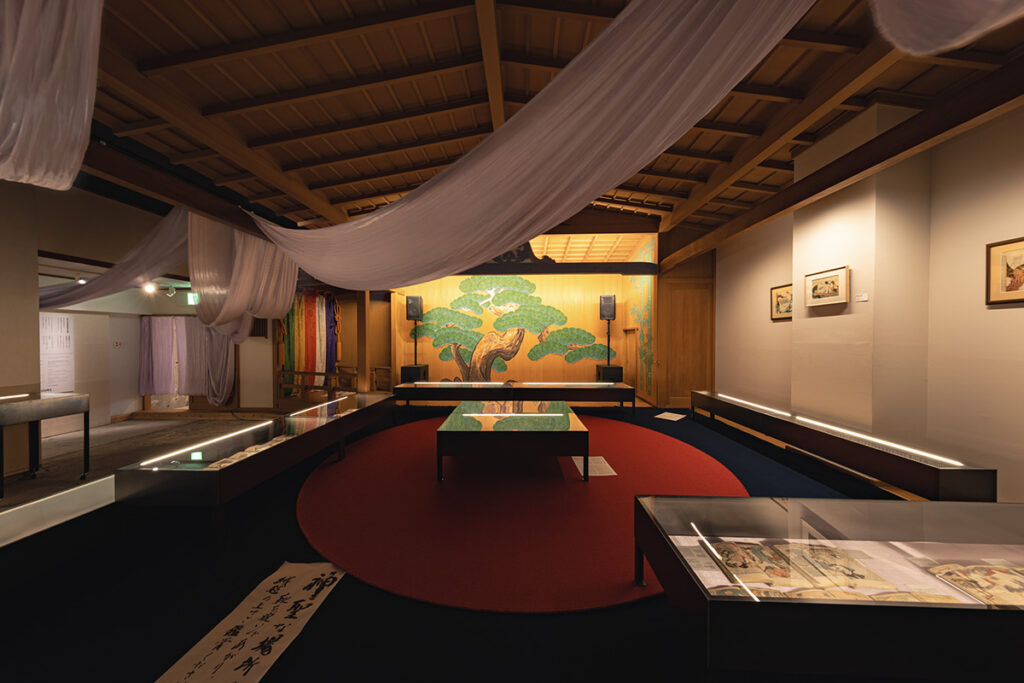
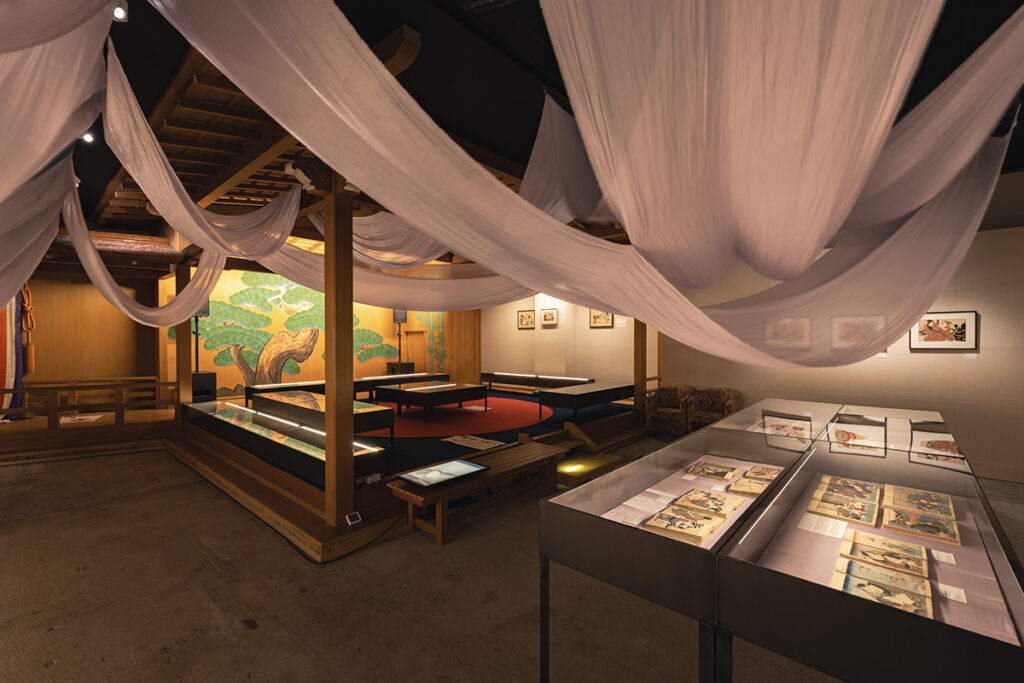
At the first venue, the Shinjuku Kabukicho Noh Stage, the space was enveloped in a veil of cherry blossom pink created for the exhibition. Art director Yasutaka Hayashi of Chim↑Pom from Smappa!Group explains that it reflects the season of spring and the sensuality of Kabukicho, while also evoking the towering octopus tentacles from Hokusai’s “The Dream of the Fisherman’s Wife“, one of the exhibition’s central works.
On View for a Limited Time: Hokusai’s The Dream of the Fisherman’s Wife
One of the most famous of Hokusai’s shunga, The Dream of the Fisherman’s Wife is a scene taken from the erotic woodblock book “Kinoe no Komatsu”. The exhibition also showcases how the “octopus and diver” motif has been reinterpreted by various artists. Contrary to popular belief, it was not originally Hokusai’s invention but a theme passed down through generations. Drawing on earlier works by Kitao Shigemasa, a close associate of his teacher Shunshō, and fellow Katsukawa school artist Katsukawa Shunchō, Hokusai developed what would become the iconic The Dream of the Fisherman’s Wife. Its roots can be traced even further back to the The story of Princess Tamatori in the Nihon Shoki, the second-oldest book of classical Japanese history. The exhibition offers a rare chance to follow the motif’s transformation across time, from medieval Noh theater to artists such as Utagawa Kuniyoshi and Tsukioka Yoshitoshi.
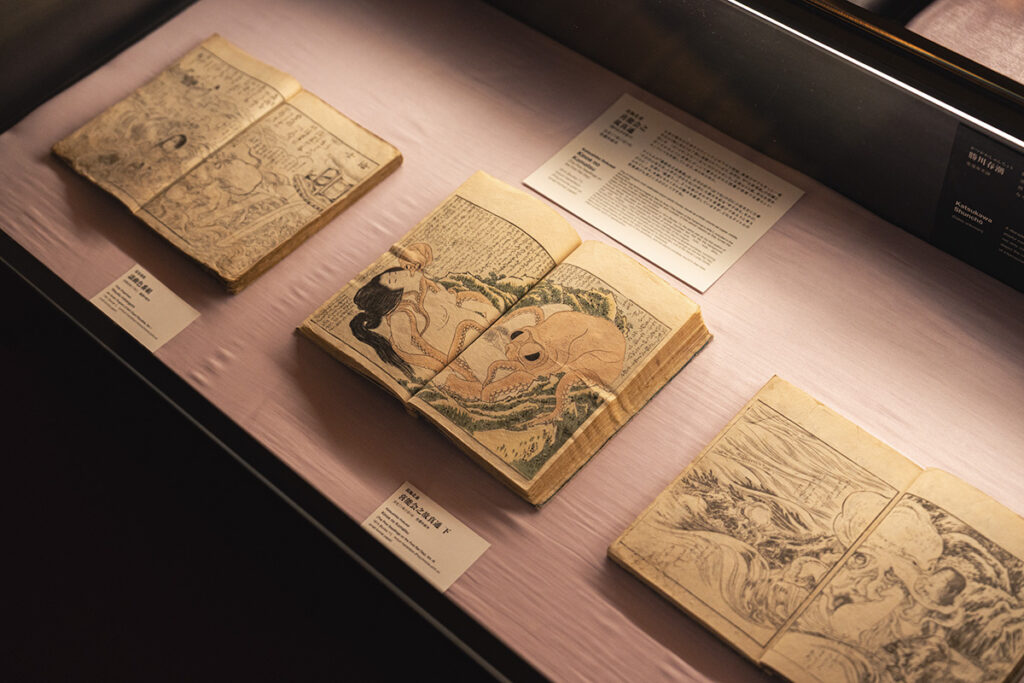
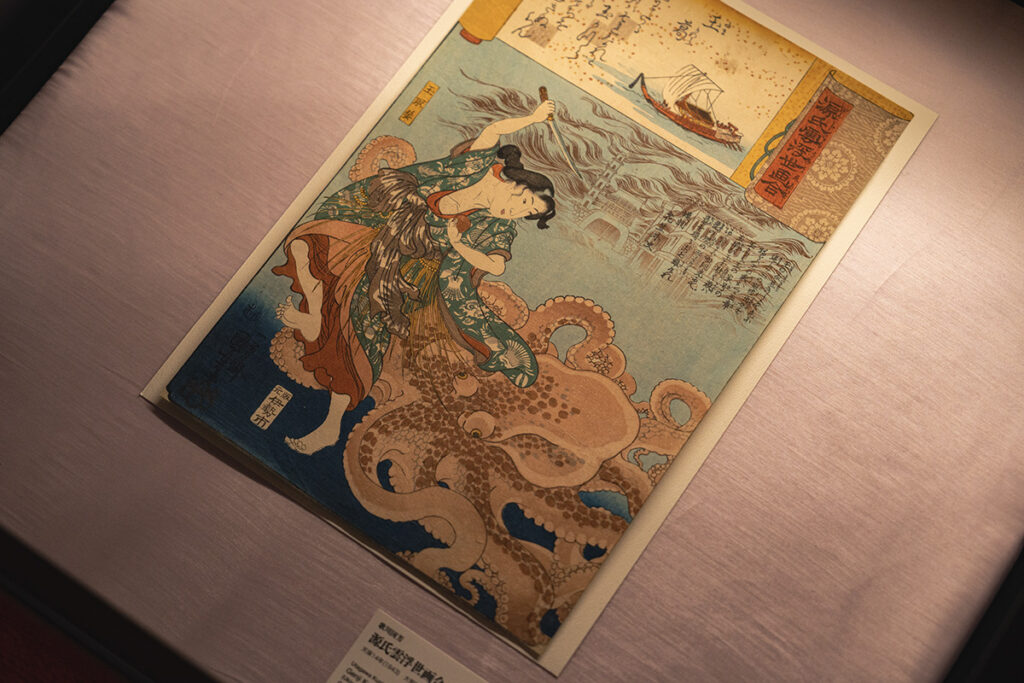
1st image: Various depictions of octopus and diver (center: Hokusai’s Kinoe no Komatsu)
2nd image: Utagawa Kuniyoshi, Genji Clouds Matched with Ukiyo-e Pictures: “Tamakazura”
On view: The Dream of the Fisherman’s Wife
First half: April 4 – April 12
Second half: May 1 – May 10
Elsewhere, “Ehon Sase mo ga Tsuyu” reveals compositions likely inspired by Kitagawa Utamaro’s “Utamakura“. Even Hokusai, renowned for his originality, absorbed influences from other artists and transformed them into his own. Originality, after all, is often shaped by influence, not born from nothing.
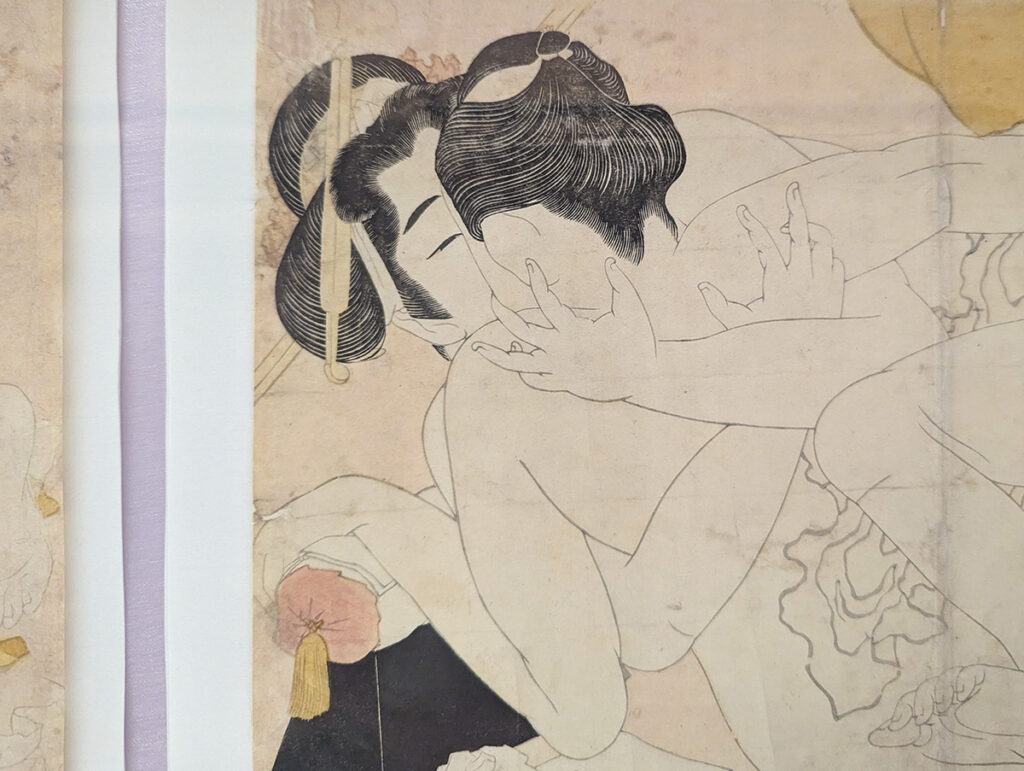
Katsushika Hokusai, “Ehon Sase mo ga Tsuyu“
Keisai Eisen’s Makura Bunko: An Encyclopedia of Sexuality from the Edo Period
Although inspired by Hokusai, Keisai Eisen made a name for himself with bijin-ga that captured a more decadent sense of beauty. Despite the significant age gap between them, both were leading ukiyo-e artists of the same era. Compared side by side, the women in Hokusai’s works often have soft, gentle expressions, while those depicted by Eisen possess sharper gazes and a more sensual, alluring presence.
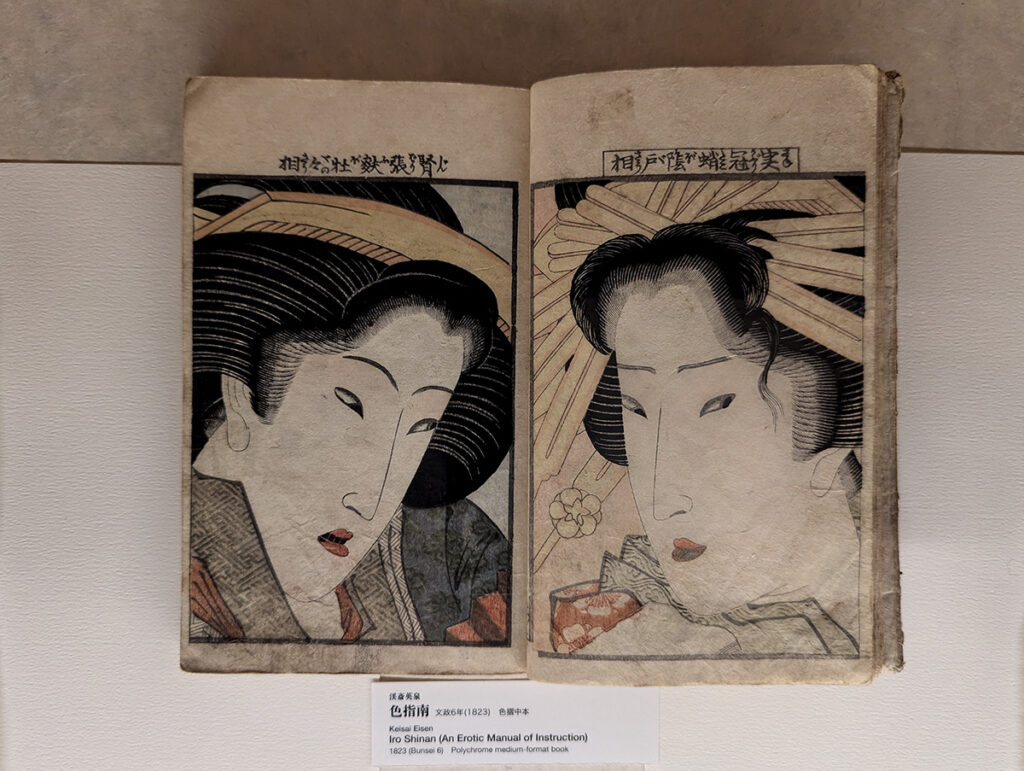
Keisai Eisen, “Iro Shinan”
Born into a samurai family, Eisen’s life was anything but stable. He lost his mother at a young age, and after a dispute at his place of service, he became a wanderer at just fifteen. By around the age of twenty, he had also lost his father, and in order to support his three younger sisters, he began working as an ukiyo-e artist under Kikukawa Eizan. Perhaps shaped by these hardships, he became known for his erratic lifestyle, frequenting the pleasure quarters and occasionally disappearing on long, impulsive journeys.
Knowing this background, the mysterious gaze of the courtesans in Eisen’s work seems to capture something of the emotional depths of women living in the harsh realities of the pleasure quarters.
Eisen, who came from a samurai background and received a high level of education, was also active as a writer. One work that fully showcases both his artistic and literary talents is “Makura Bunko”. Comprising four volumes in eight books, this erotic work is often described as an Edo-period encyclopedia of sexuality. Styled like a medical text, its blend of knowledge and sensuality appealed to readers’ intellectual curiosity and made it a bestseller. The work is on display at the second venue, BOND.
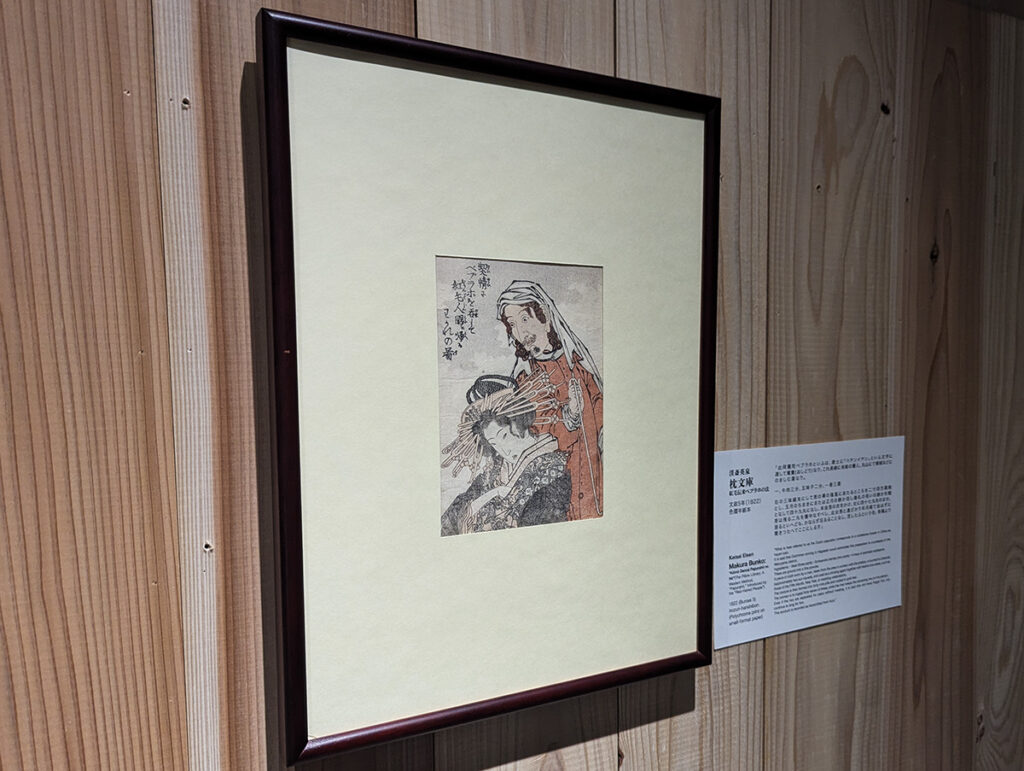
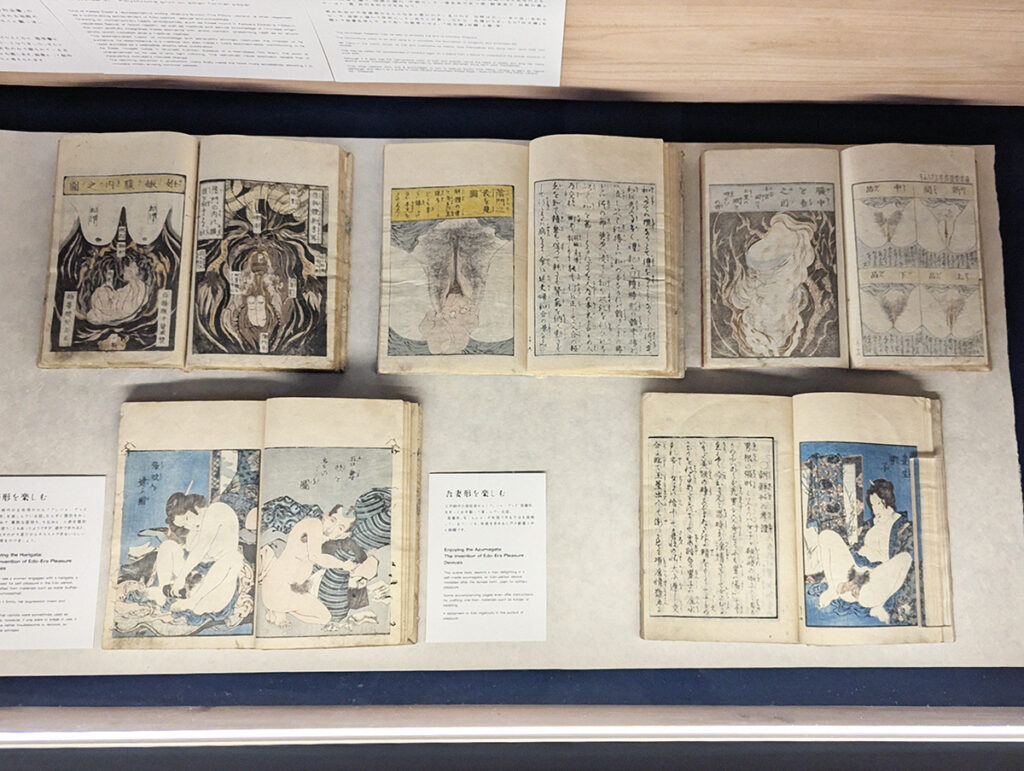
1st image: A page from Makura Bunko, which even includes instructions for making a mysterious love potion called ‘Pepuraho’
2nd image: Diagram-like illustrations, presented in the style of a medical text
Even for ukiyo-e enthusiasts, chances to see shunga are rare, and few have experienced original works firsthand, even those by globally renowned artists like Hokusai. At the same time, for those new to ukiyo-e, shunga’s exploration of sexuality, a universal human theme, makes it accessible and engaging even without prior knowledge, offering an inviting entry point into the subject.
Encountering these works up close creates a quiet sense of connection across time. The idea that someone, two centuries ago, once held these same pages and took similar pleasure in them brings the people of the Edo period strikingly close.
If you visit during the display period of The Dream of the Fisherman’s Wife, it’s worth viewing the work alongside the modern Japanese translations provided. Perhaps those encountering the book for the first time in the Edo period would have had reactions not so different from your own.
A Contest of Allure: Katsuhika Hokusai and Keisai Eisen - Kabukicho in Full Bloom - Shinjuku Kabukicho Shunga Exhibition WA
Venue: Shinjuku Kabukicho Noh Stage / BOND
Exhibition Dates: April 4 – May 31, 2026
 First period: April 4 – April 30
 Second period: May 1 – May 31

*Special display: The Dream of the Fisherman’s Wife
  First period: April 4 – April 12
  Second period: May 1 – May 10

Website: https://www.smappa.net/shunga/en/exhibition/ex20.html