For those who have carved out their own “Zero Mile”, a world uniquely their own, where have they encountered new possibilities, and what choices have shaped their journeys? In this interview series, ZEROMILE editor-in-chief Ayako Inaba takes on the role of a fellow traveller, tracing the paths that have brought her guests to where they are today.
For the first instalment, she meets Yoshitaka Tsuchiya, the man who brought American outdoor brand CHUMS to Japan and helped establish it as a popular name. Surprisingly, he never intended to pursue a career in fashion, and even his introduction to CHUMS happened entirely by chance. In 2025, Tsuchiya launched Chamberfellows, his first brand of his own, while in his sixties. Having spent much of his life simply ‘going with the flow’, Tsuchiya is now setting something new in motion. We explore what inspired him to take this step.
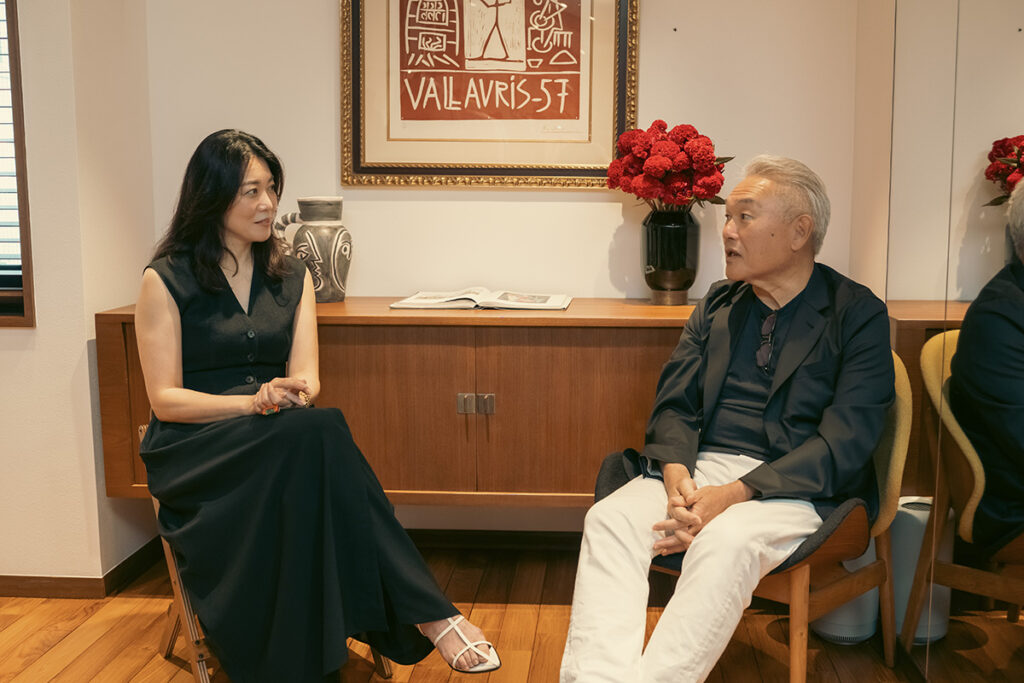
Left: Ayako Inaba (Editor-in-Chief, ZEROMILE)
Right: Yoshitaka Tsuchiya (President and Representative Director, Landwell Inc. / Director, Chamberfellows)
Born in Tokyo’s Koiwa neighbourhood, Tsuchiya enjoyed a relatively comfortable upbringing. His father ran a metalworking company as its second-generation president, and his mother was enthusiastic about education, if a little overprotective. She tended to take care of things before he even had to ask, and Tsuchiya grew up following her lead rather than making decisions for himself.
He sat the entrance exams for junior high school at his mother’s urging but didn’t pass. High school came and went without him finding anything that truly interested him. After spending two extra years preparing for university entrance exams, he eventually got in, but barely attended classes. Within a year, he had dropped out and decided to study abroad in the US.
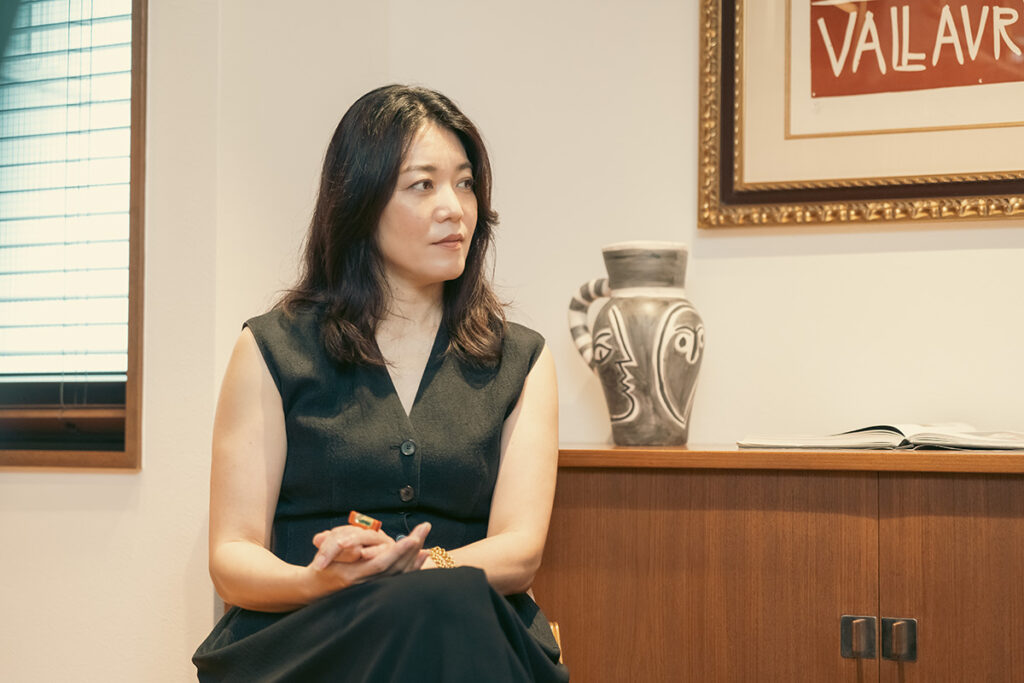
Inaba : Did you have a particular goal in mind when you decided to study in the US?
Tsuchiya : Not at all, actually! (laughs) Back in university, I had no idea what I wanted to do, and I spent most of my time feeling pretty lost. At one point, I started having chest pains and went to the hospital, but all the tests came back normal. The doctor asked me if anything was troubling me, and that’s when it finally clicked that it was probably stress. I suppose I was anxious about my future because I had no idea where I was heading.
Eventually, I realised I couldn’t just carry on like that, so I decided to go to America to study. My reasons weren’t exactly admirable, though. I figured that going to America might somehow help me brush those wasted years under the rug! (laughs) And there was no special reason I picked the University of Denver. It was just somewhere the study abroad agency suggested.
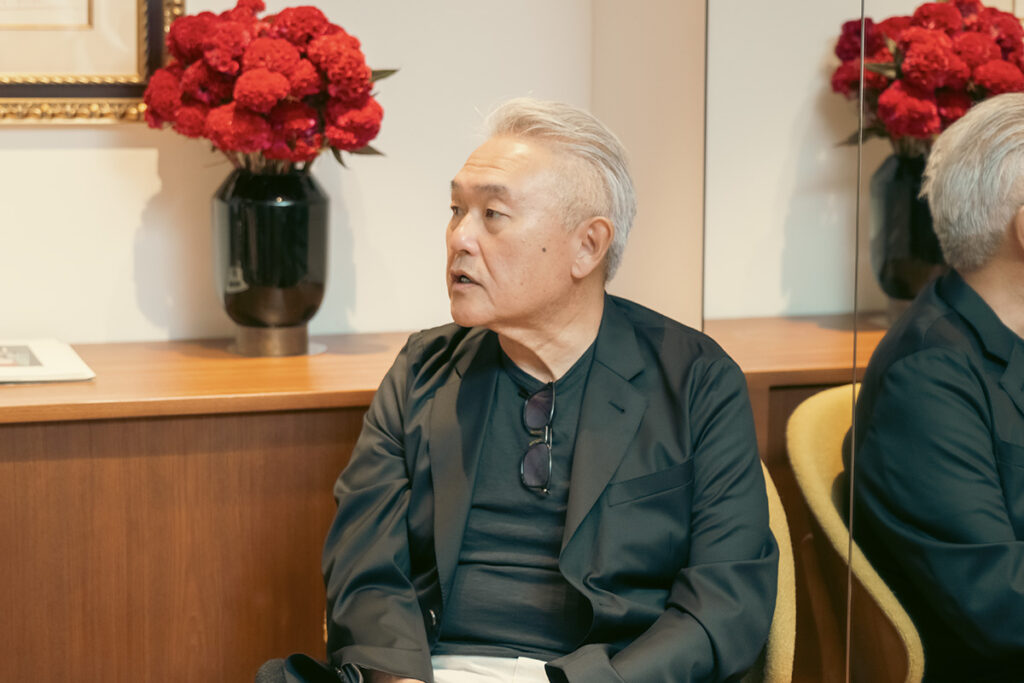
Inaba : So more than anything, you just wanted to get away from where you were. (laughs) But as it turned out, studying abroad was what eventually led you to CHUMS, wasn’t it?
Tsuchiya : That’s right. After graduating from the University of Denver, I returned to Tokyo and worked for a company for a few years before going independent and working as an agent. Then one day, a friend I’d met in Denver got in touch and said, Tsuchiya: That’s right. After graduating from the University of Denver, I returned to Tokyo and worked for a company for a few years before going independent and working as an agent. Then one day, a friend I’d met in Denver got in touch and said, “There’s this brand called CHUMS that wants to sell more of its products in Japan. Interested?” I had absolutely no experience in apparel, but something about it sounded interesting, so I thought I’d give it a try.
Drifting Along, Finding Your Flow
In 1994, Tsuchiya began bringing CHUMS to the Japanese market. What started as a sales agency operation eventually grew into a much larger role, with Tsuchiya taking ownership of the brand in Japan and overseeing everything from product planning and development to production and promotion. Through new initiatives, including collaborations with other brands and events, he steadily established CHUMS as a popular brand.
Inaba : It’s impressive you were able to jump straight into an industry you had no experience in.
Tsuchiya: I wouldn’t say I jumped in. It was more like swept along! (laughs) That’s pretty much how my whole life has been. You know the story of Momotaro? I’m like the peach floating down the river, bobbing along until someone picks it up and cracks it open! (laughs)
When I was younger, I used to feel uneasy about always letting life carry me along. But looking back, that’s exactly what allowed me to meet so many different people and stumble upon opportunities I never expected. If I didn’t go to Denver, I wouldn’t have met that friend, and I certainly wouldn’t have ended up working with CHUMS. Maybe just letting things unfold naturally was the way of life that suited me best.

Chamberfellows Minami-Aoyama Store
Inaba : But being fortunate enough to stumble upon an opportunity and building a brand over more than 30 years are two very different things, right? What have you focused on over the years to keep CHUMS a brand that people continue to love?
Tsuchiya : I think we managed to find the right balance between what we kept the same and what we changed. At its core, CHUMS has always been about colour, fun and a sense of playfulness. That’s something we’ve never wanted to lose. But if you only stick to the same things, people eventually lose interest. Times change, and so do customers. You have to hold on to what makes the brand what it is, while gradually adapting everything else to keep up with the times.
Inaba : It must be a challenge knowing what needs to change and how much to change it. How do you decide where to draw the line?
Tsuchiya : We do market research, of course, but we don’t approach things by thinking, “This looks like it’ll sell well right now, so let’s make that.” We start with what we want to create and what excites us. Then we look at whether there’s a place for it in the current market. That’s something I want to stay true to.
Between Conviction and Letting Go: The Art of Iki
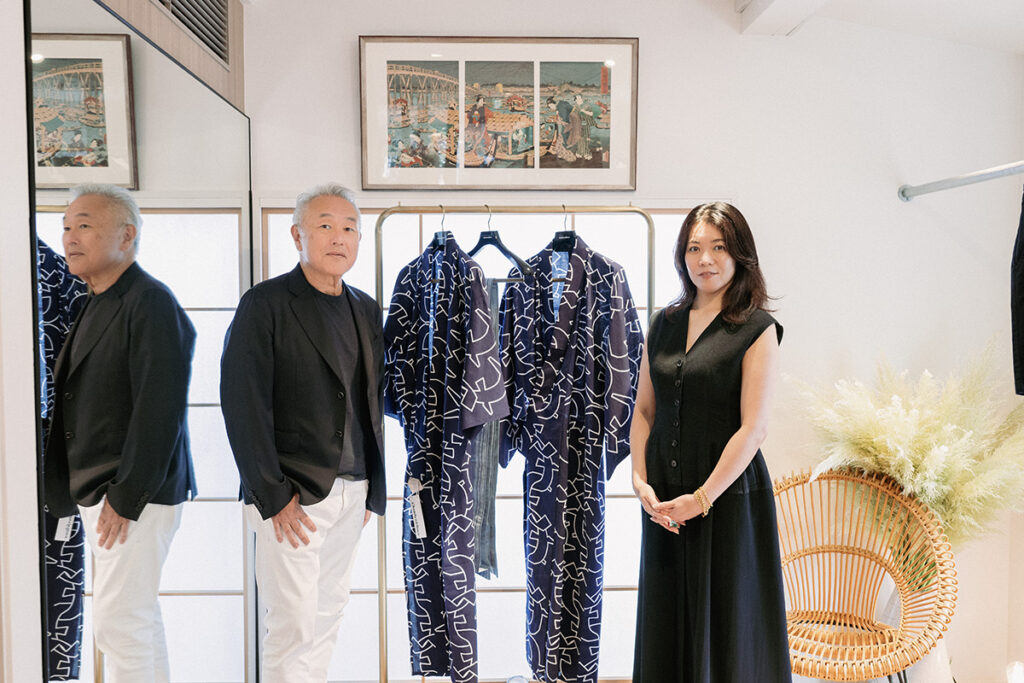
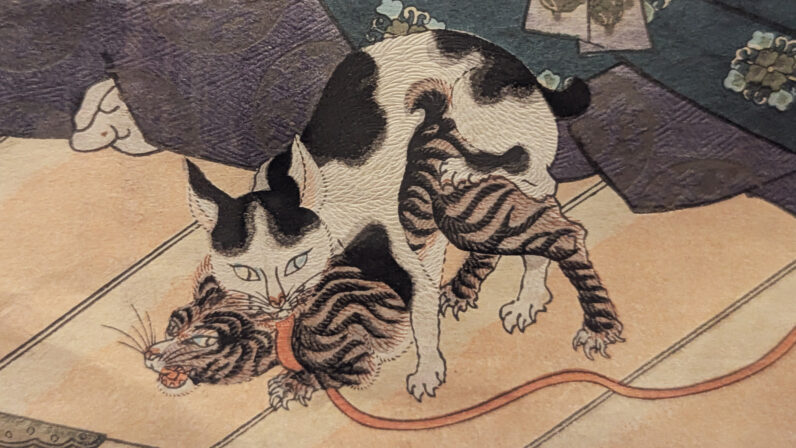
The store also features artwork personally selected by Tsuchiya, including an ukiyo-e print by Utagawa Kunisada displayed alongside the yukata.
Inaba : You’ve described the concept behind Chamberfellows as the art of Iki* . Having spent so much of your career working with international brands, what drew you to this distinctly Japanese aesthetic philosophy?
Tsuchiya : I’ve always liked the freedom of American style, and I also love the elegance and sensuality of Italian fashion. For me, somewhere between the two is where I’m most comfortable. When I started thinking about how to bring a Japanese element into that mix, the word iki came to mind. I didn’t just want to make Japanese-inspired clothing. I wanted to create clothes that embody iki, reflecting not only how people dress, but also how they live their lives.
*Iki is a traditional Japanese aesthetic concept associated with understated elegance, sophistication and a sense of effortless style. Beyond appearance, it also reflects a particular attitude towards life.
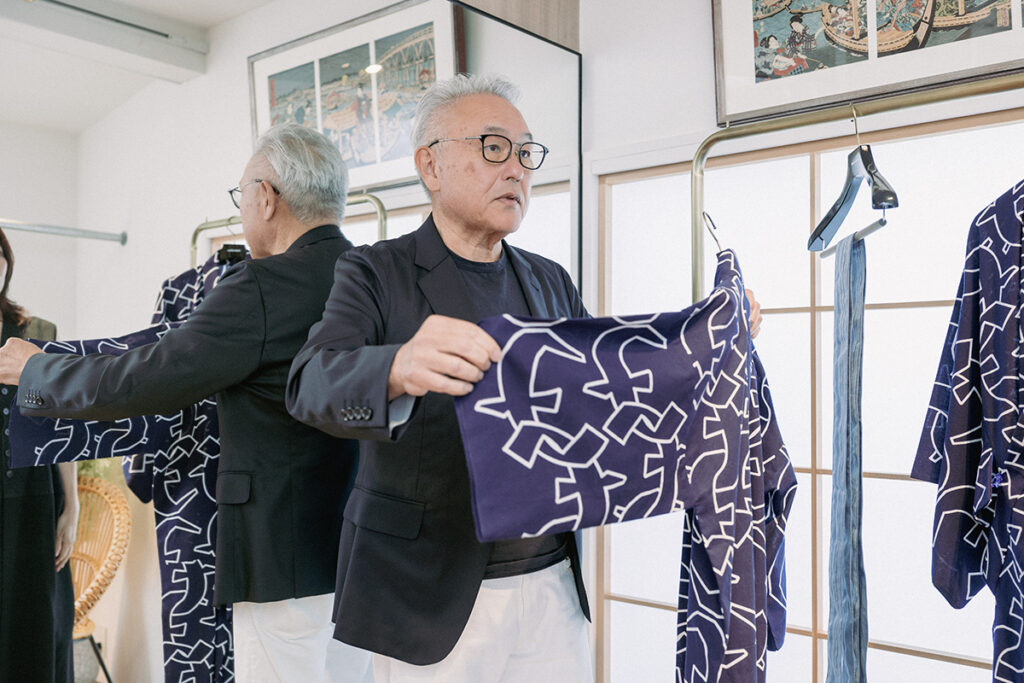
The yukata are also popular with international visitors, featuring updated designs that make them easy to incorporate into modern lifestyles.
Inaba : But iki is a difficult concept to put into words, isn’t it? It’s like, the moment you declare, “I’m iki,” you’re no longer iki. (laughs)
Tsuchiya : Exactly! (laughs) Everyone probably has their own interpretation of iki, but the one that comes closest to mine is found in Shūzō Kuki’s The Structure of Iki. He describes three ideas: bitai, or allure; ikiji, a sense of pride and determination; and akirame, the ability to accept things as they are.
Bitai is about the attraction or chemistry that develops between people. But rather than becoming completely absorbed in one another, there’s still a certain distance or tension between them. Ikiji is about having your own principles and not giving them up easily. And akirame is about recognising that some things are simply beyond your control.
So, you don’t have to be so stubborn about doing everything on your own. It’s fine to ask for help or lean on someone from time to time. But at the same time, you still have your own values and convictions, while knowing when to let go of things you can’t change. To me, that’s the kind of balance that defines iki.
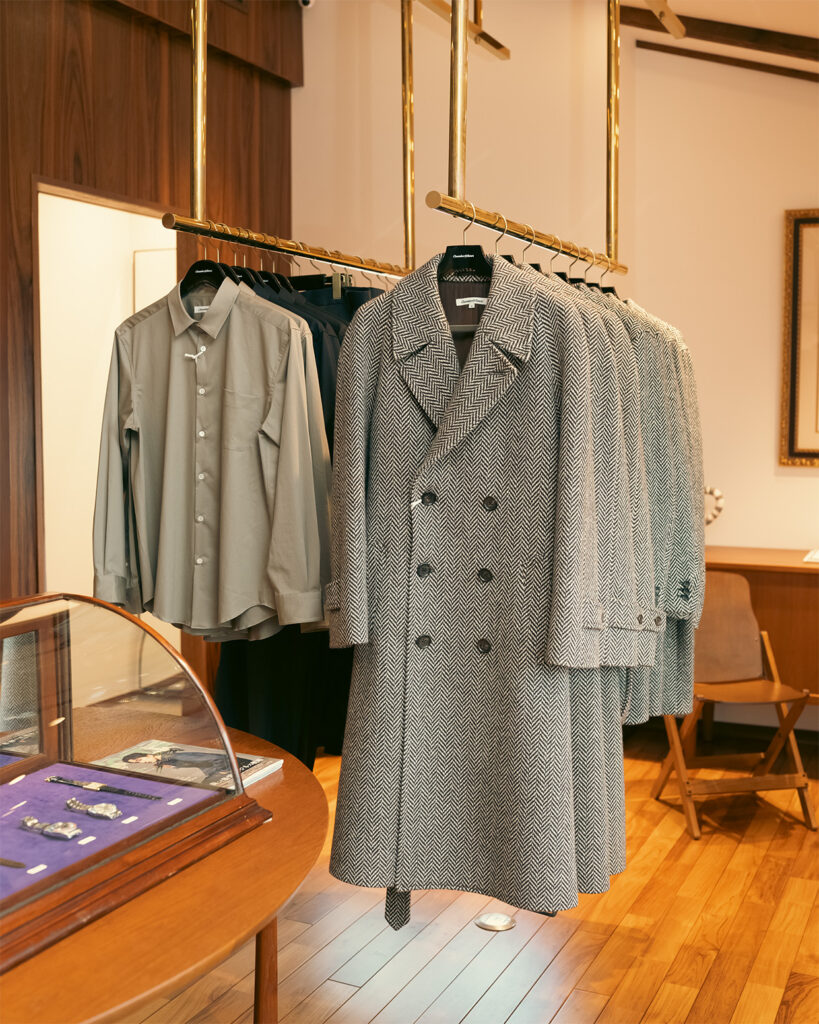
The Ginza Chester Coat, a signature Chamberfellows piece designed to evoke the understated elegance of a stylish individual walking through Ginza.
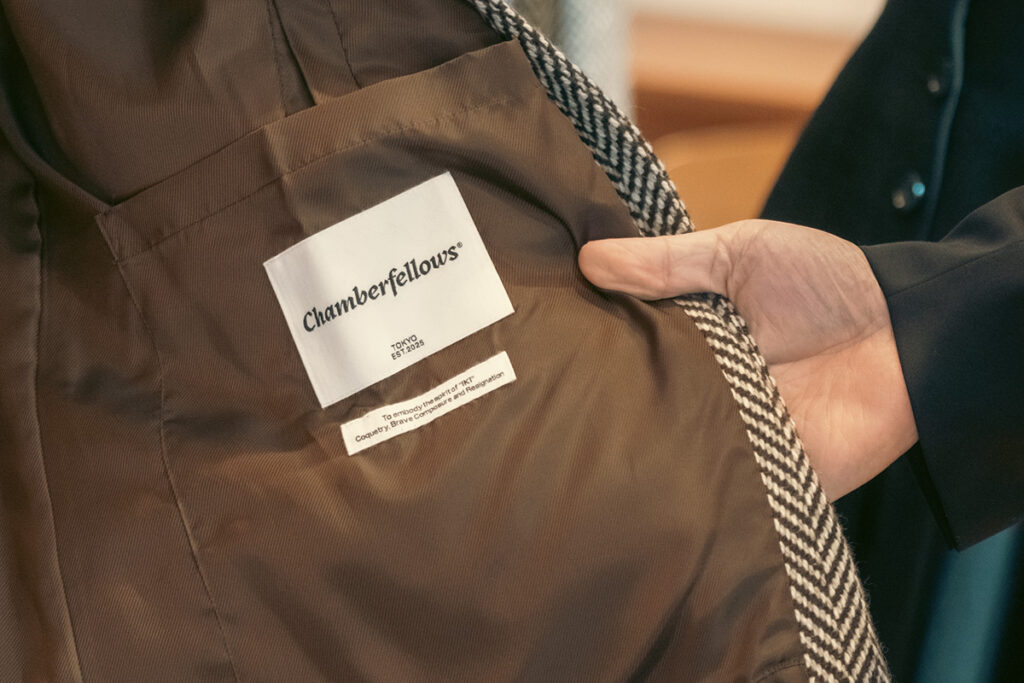
The products also feature an explanation of iki in English.
Inaba : So it’s no longer just about clothing. It’s really about a way of life?
Tsuchiya : I think so. It’s about not always insisting on having things your own way, but not simply going along with everyone else, either. You have certain things you won’t compromise on, but when something doesn’t work out, you can also say, “Well, that’s just how it goes,” and let it go. When people see someone like that, they think, “There’s just something about that person I like.” I think that’s what makes someone truly iki. It’s the kind of person I’d like to be myself, and with Chamberfellows, I want to create clothes that appeal to people who share that outlook on life.
Inaba : Enjoying the connections you make with people without getting completely swept up in them. Holding on to your own values, but not dwelling on things you can’t control. In a way, that seems to tie in with how you’ve lived your own life, doesn’t it? Drifting along, but finding your flow along the way.
Creating a Place Where New Connections Begin
Chamberfellows takes its name from two words: “chamber”, meaning a small room, and “fellows”, meaning friends or companions. Rather than simply selling clothes, Tsuchiya wants to create a space where people can meet and share their interests and discoveries. To bring this idea to life, the second floor of the Minami-Aoyama store hosts events such as vintage watch study sessions.
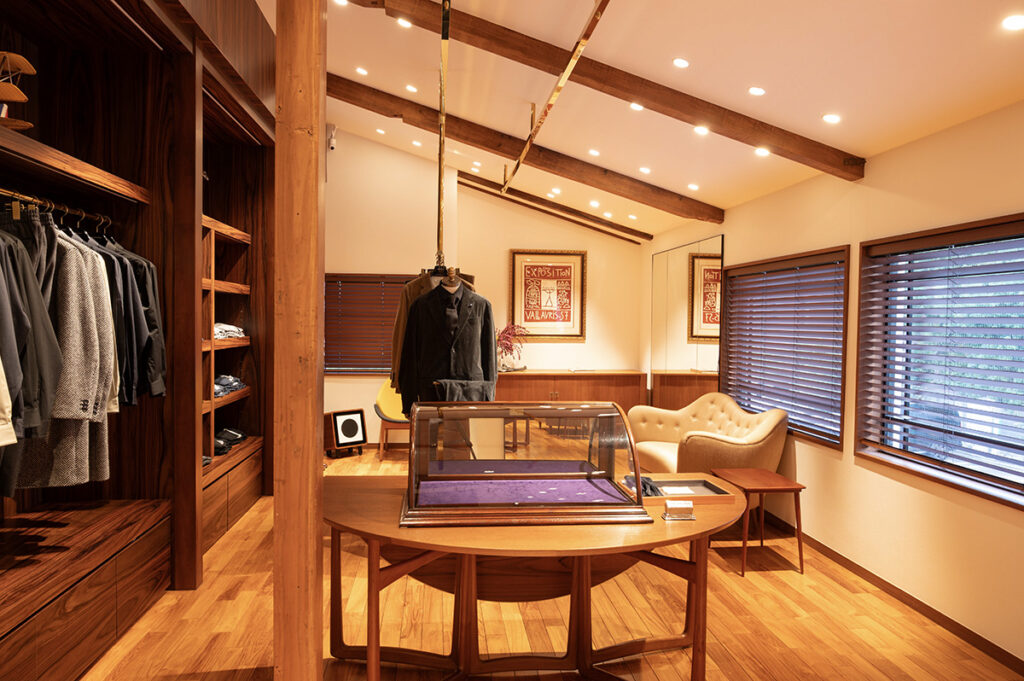
The store’s second floor has the atmosphere of a cosy hideaway. (Photo courtesy of Landwell Inc.)
Tsuchiya : The last thing I want is for these events to feel like sales pitches. People shouldn’t feel like they have to buy something. I’d rather they come because something sounds interesting, meet new people and leave thinking, “Wow, I never knew there was a whole world like that out there.” That’s all I really want.
Inaba : So, you started out simply going with the flow, but now you’re creating a place where people can come together and new currents can emerge. It’s really interesting how things have come full circle.
Tsuchiya : Well, when you put it like that, it sounds much more impressive than it really is! (laughs) I don’t think it’s anything quite so grand. I have no idea where Chamberfellows will go from here, but that’s part of what makes it exciting. There are so many possibilities, and I’d rather not rush things. I just want to have fun with it and see where it goes.
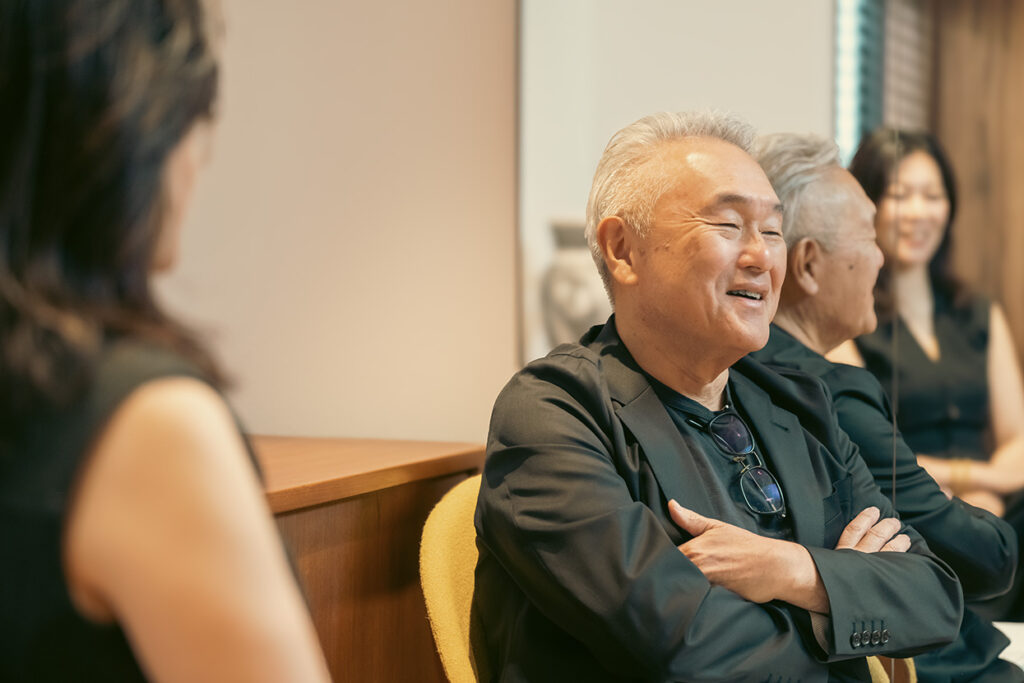
Not knowing what lies ahead is all part of the fun. It was a fitting way to end our conversation, reflecting Tsuchiya’s easygoing approach to life and his willingness to see where things take him.
A new journey doesn’t necessarily need a fixed destination. Sometimes, following the current is enough to discover something unexpected. Tsuchiya’s experiences offer a reminder that there’s value in simply seeing where life takes you.
◾️Yoshitaka Tsuchiya’s ZEROMILE
One place I’ve been enjoying lately is Soho House Tokyo, a private members’ club that recently opened in Aoyama. It’s a lovely, laid-back place to enjoy some food, have a drink and just unwind. On weekends, I’m usually either in Karuizawa, where I have a holiday home, or Atami, where I keep my yacht.
As for my next overseas trip, I’m thinking of Istanbul. I’m fascinated by places where different civilisations have emerged and come together over time. I’d love to see somewhere like that with my own eyes.
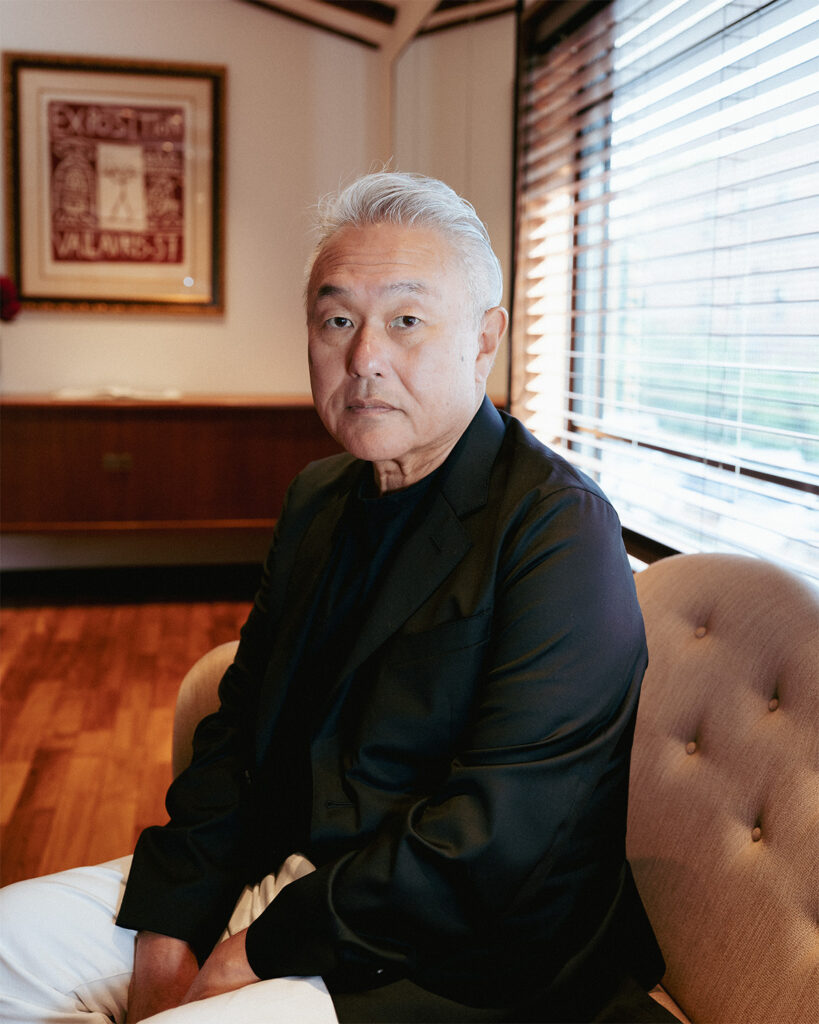
Yoshitaka Tsuchiya
(President and Representative Director, Landwell Inc. / Director, Chamberfellows)
Tsuchiya began his career in the securities and trading industries before establishing his own company, Landwell Inc. In 1994, he began introducing American outdoor brand CHUMS to the Japanese market, initially selling its signature eyewear retainers. After acquiring CHUMS’ trademark rights in Asia, he expanded beyond import distribution to become a brand owner overseeing everything from product planning and development to production and promotion. Built around the values of fun, friendship and playfulness, CHUMS has since established a distinctive identity combining fashion and outdoor culture, and continues to expand into new markets across Asia.
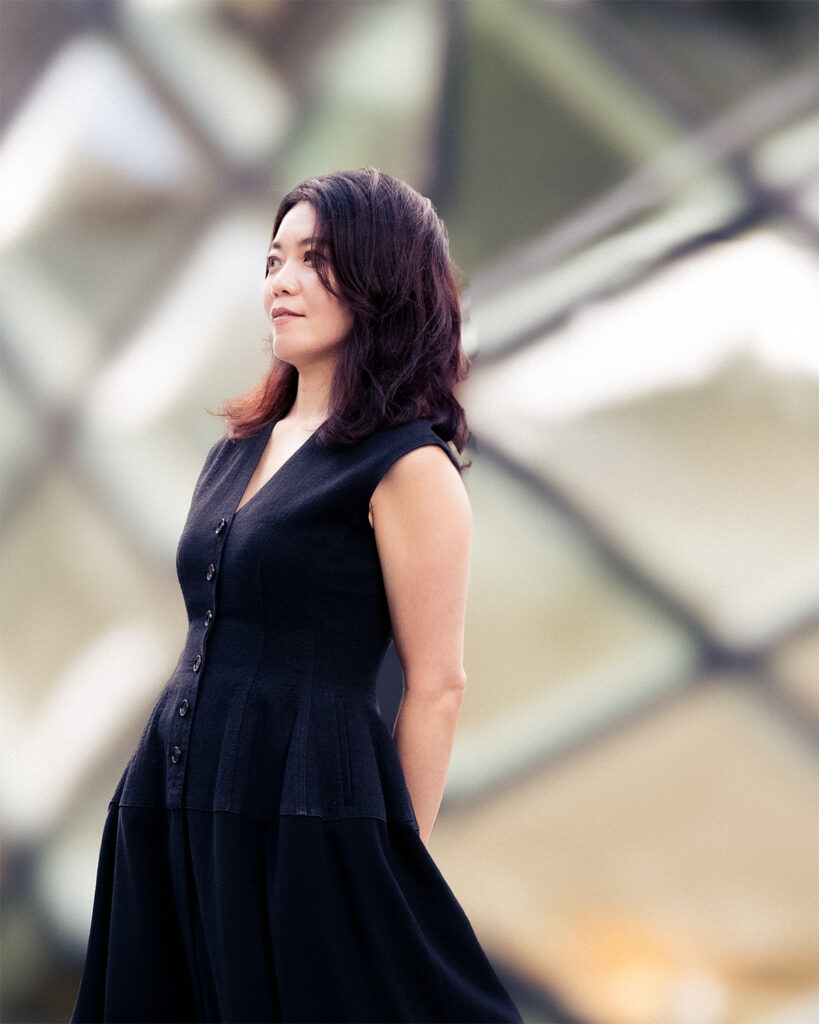
Ayako Inaba
ZEROMILE editor-in-chief / president of Private Concierge, Inc.,
ZEROMILE editor-in-chief and president of Private Concierge, Inc., providing luxury concierge services to introduce the best of Japan. Ayako is passionate about sharing Japanese culture and values both pop and sophistication. Her current focus is on nurturing the next generation.
Chamberfellows
5-4-47 Minami-Aoyama, Minato-ku, Tokyo (5-minute walk from Omotesando Station)
Website: https://www.chamberfellows.jp/
Photo : Sachiko Nishioka