The fourth edition of the Shinjuku Kabukicho Shunga Exhibition WA is currently being held in Tokyo’s Kabukicho district. This time, the exhibition focuses on works by Utagawa Kunisada and Utagawa Kuniyoshi, two leading ukiyo-e artists of the late Edo period.
(*For exhibition details, see here.)
The Shinjuku Kabukicho Shunga Exhibition WA series is fast becoming a fixture of the neighbourhood’s cultural scene, and this marks my third visit. I’ve previously written about the humour of shunga, Japan’s traditional erotic art, and the relatively open attitudes towards sexuality in Edo-period Japan. But after several visits, there’s one thing I’ve become convinced of.
You can’t appreciate even half the beauty of ukiyo-e through photographs alone, they’re a must-see in person.
If you’re anything like me, and have mostly encountered ukiyo-e in books or as images on a screen, you might have wondered what makes these prints so internationally acclaimed. This time, though, I want to focus on something that really needs to be seen in person: the astonishing technical skill behind them.
The True Brilliance of Ukiyo-e That Photographs Can’t Capture
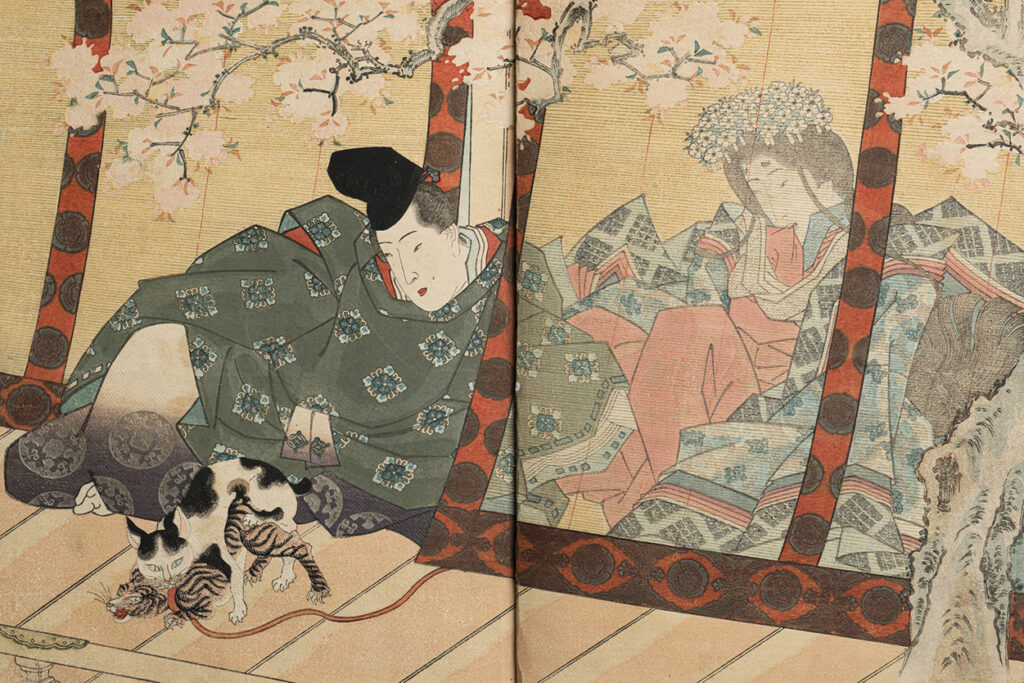
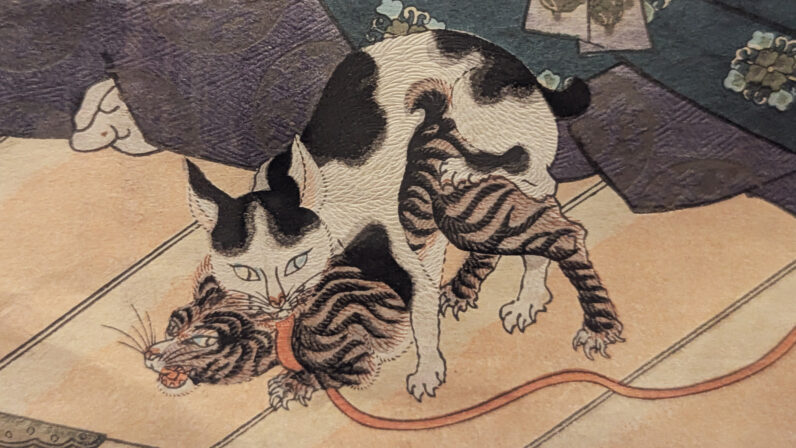
Utagawa Kunisada, Kachō Yojō: Azuma Genji (Vol. 1), colour-printed illustrated book, 1837 (Tenpō 8). Collection of Uragami Sōkyūdō.
One of the exhibition’s standout works is Utagawa Kunisada’s Kachō Yojō: Azuma Genji. It’s easy to appreciate the beauty of the artwork at first glance, but get up close and you’ll notice just how much extraordinary craftsmanship has gone into even the smallest details.
The pink cherry blossoms have subtly raised outlines that give the petals a soft, rounded appearance. This effect is achieved through a technique called karazuri, a form of blind embossing that creates texture without ink. Even the cat in the lower-left corner has its fur rendered using the same technique, adding another layer of detail beyond its printed markings.
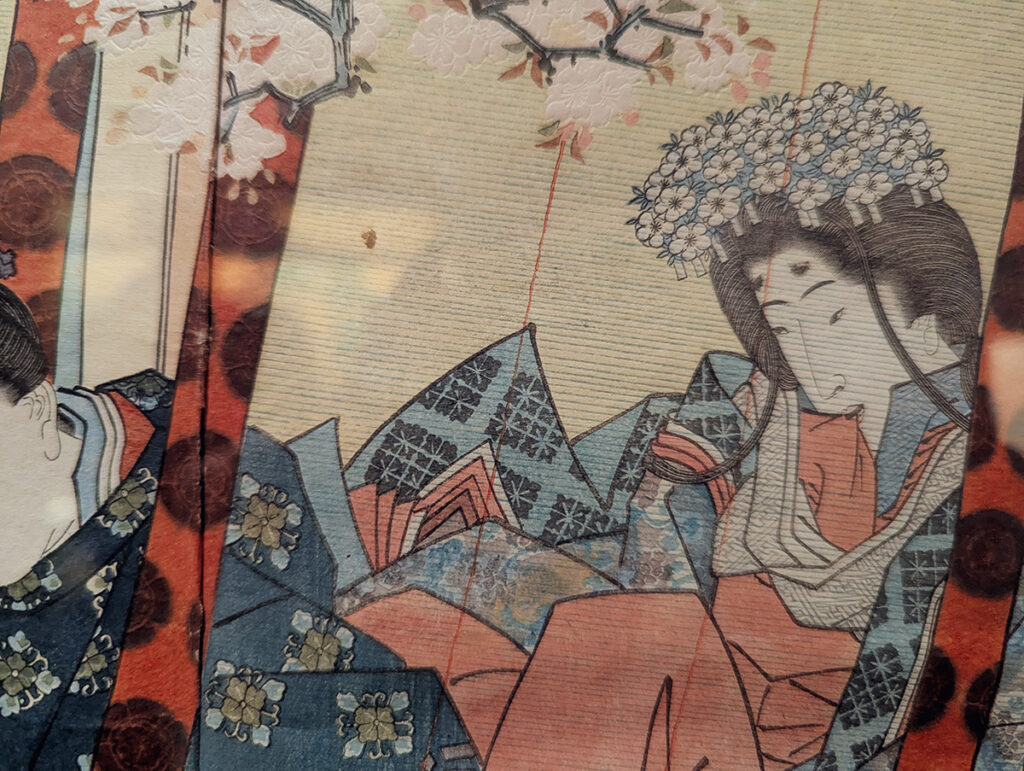
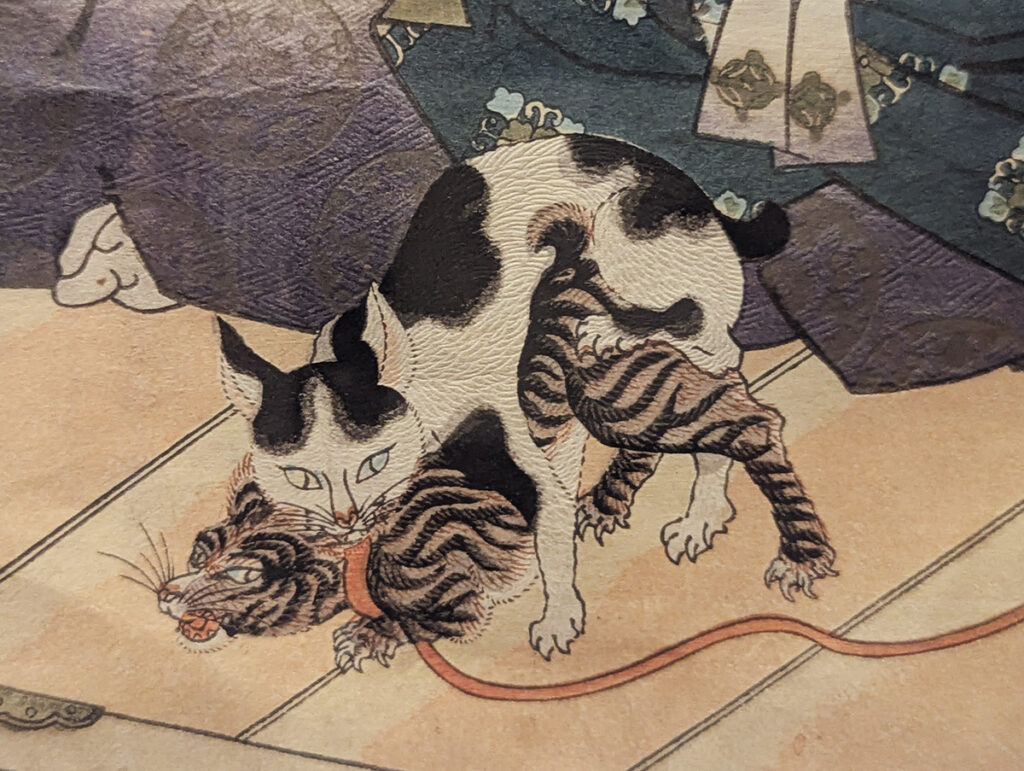
Generally speaking, ukiyo-e prints produced closer to the first printing are considered more valuable. This is because the woodblocks gradually wear down with repeated use, causing fine lines and intricate details to disappear. Some techniques may also be omitted in later printings.
The shunga we’re looking at here belong to Uragami, one of the world’s leading ukiyo-e collectors, and they’re among the finest examples you could hope to see. They’re so precious that I can’t help thinking, “Shouldn’t these be roped off, with a security guard standing nearby?” Then again, it’s precisely because we can get so close to them that we’re able to appreciate just how extraordinary ukiyo-e really is.
The Unsung Masters of Edo-Era Printmaking
Mention ukiyo-e, and names like Hokusai and Hiroshige immediately come to mind. But the artists were only part of the story. Producing a single ukiyo-e print required more than just an artist. It also depended on the skills of specialist craftsmen, including woodblock carvers (horishi) who carved the printing blocks and printers (surishi) who brought the images to life.
The masterpieces we admire today were probably the result of some of the most talented craftsmen of the Edo period giving everything they had to their work. Yet no matter how extraordinary their craftsmanship, their names rarely survived in the same way as those of the artists. It makes you wonder what motivated them to put so much effort into their work.
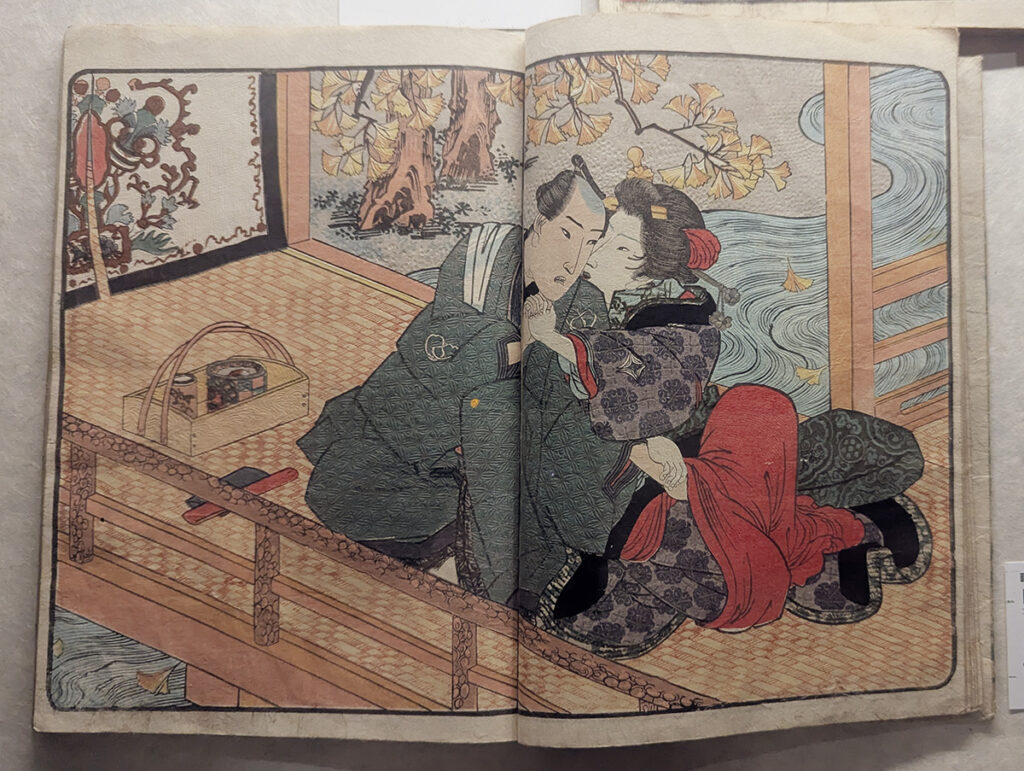
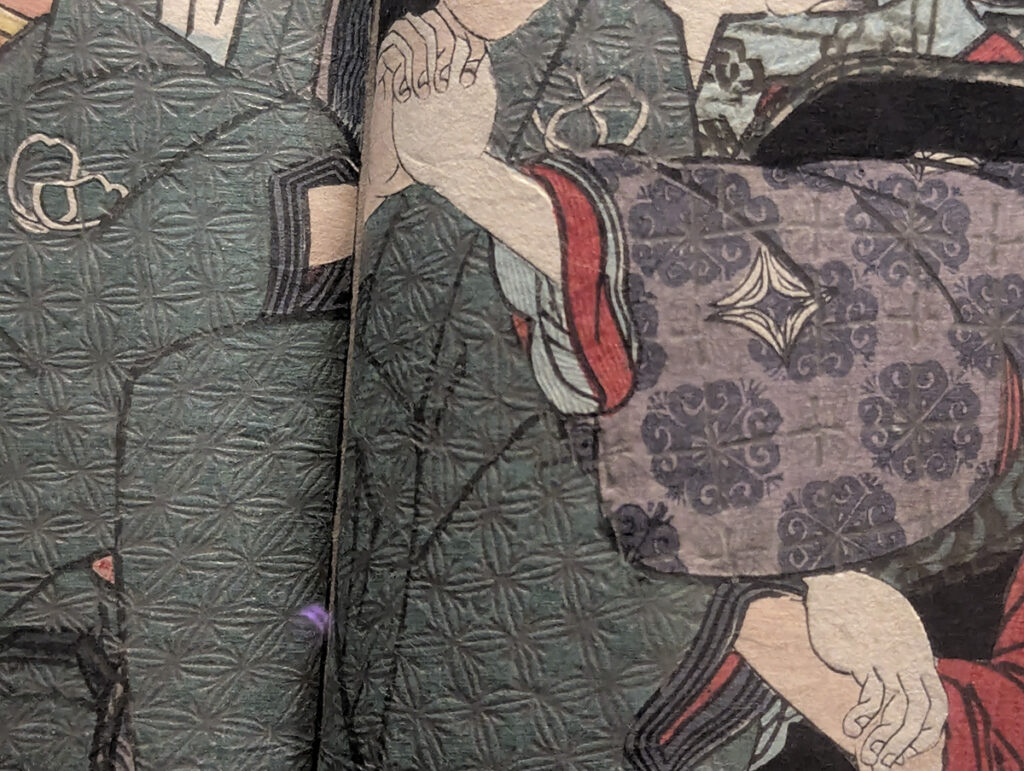
Each kimono features a unique karazuri embossed pattern, with exceptional craftsmanship evident in every detail.
What’s even more remarkable is that so much skill went into works created simply for people’s enjoyment, rather than religious paintings or art intended to demonstrate power and authority. Perhaps it was about taking pride in their work, striving to make something better than the day before, and having that little bit of playful ambition to surprise and delight whoever saw the finished piece.
Of course, we can’t know what these craftsmen were actually thinking. But imagining that a combination of professional pride and playful creativity helped sustain such a rich culture is genuinely moving.
More than anything, this exhibition left me in awe not only of the artists, but also of the craftsmen and their relentless pursuit of perfection.
Something for Everyone, from Beginners to Ukiyo-e Enthusiasts
Whenever I visit an art museum, I feel like I have to switch into a serious, intellectual mindset, and I often leave feeling a little exhausted. Shunga exhibitions, on the other hand, don’t have quite the same effect, which is why I’ve been recommending them to just about everyone I know.
One moment, I’m carefully studying the prints, thinking, “Wow, that embossing is incredible… Wait, they even did it there?” Then I’ll take a step back, relax for a moment and suddenly notice something completely ridiculous happening in the picture thinking “Hang on, what’s going on here? How does that even make sense?” It’s this constant mix of admiration and amusement that keeps things entertaining.
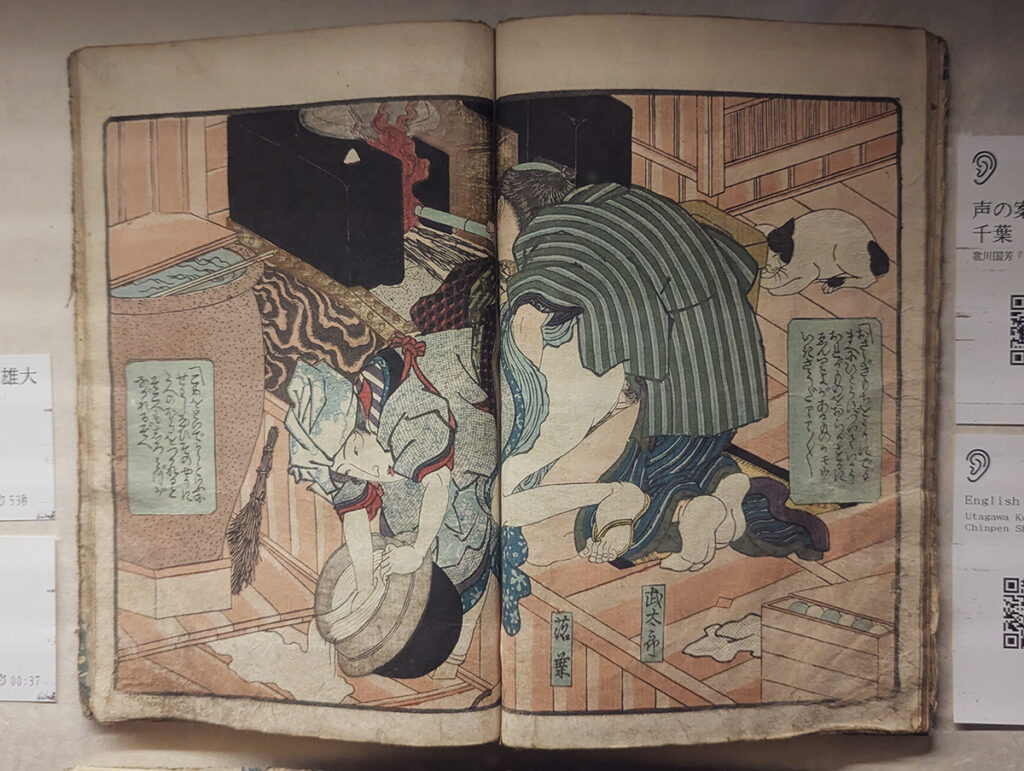
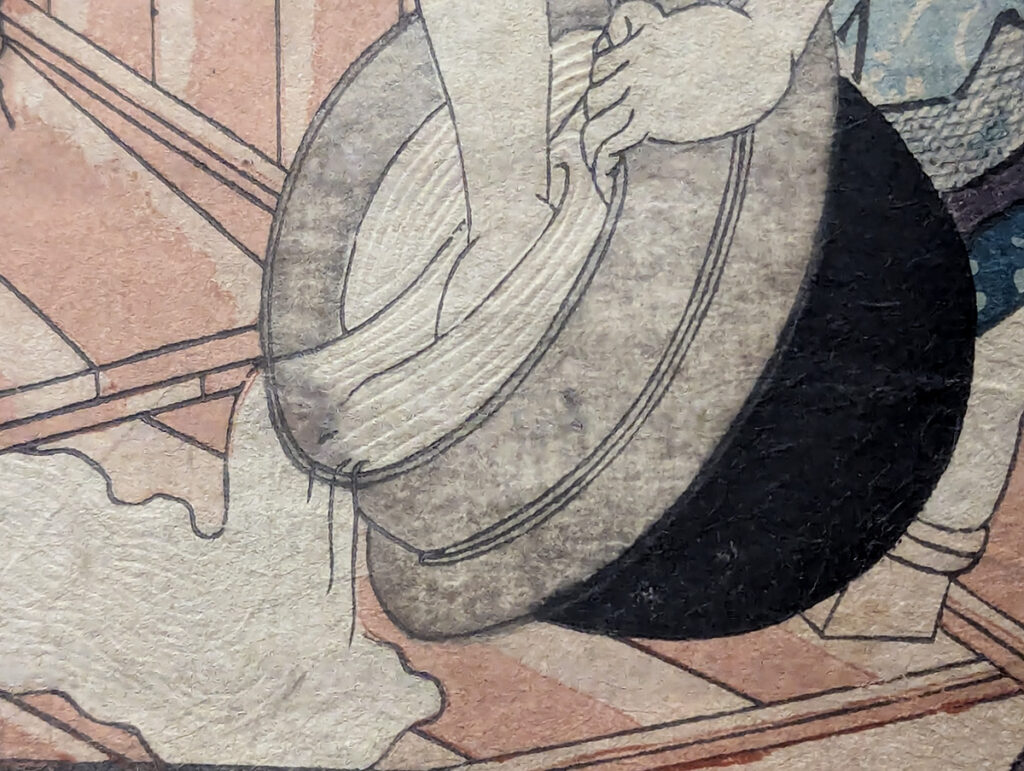
I couldn’t stop laughing at how seriously they’re washing the rice, but then I noticed the embossed rice water and the silver printing on the pot. They even went to all that trouble for this, the attention to detail is almost absurd.
High art and lowbrow humour, intellectual curiosity and sexual interest all become so intertwined that eventually, you stop trying to make sense of it all and realise that, well, perhaps this is simply what human beings have always been like. And it’s hard to imagine a more fitting setting for this exhibition than Kabukicho, a neighbourhood where the refined and the risqué have always existed side by side.
The exhibition brings together rare works that would impress even the most knowledgeable ukiyo-e experts. But you don’t need any background in the art form to have a great time. If anything, I’d recommend it most to people who’ve never been particularly interested in ukiyo-e. Seeing the originals up close is the best way to appreciate just how remarkable they are.
Utagawa Kunisada & Utagawa Kuniyoshi: Shinjuku Kabukicho Shunga Exhibition WA
Tickets: https://www.smappa.net/shunga/ticket.html
Exhibition Dates: October 3 (Sat) – November 29 (Sun), 2026
First Half: October 3 (Sat) – November 1 (Sun)
Second Half: November 3 (Tue, public holiday) – November 29 (Sun)
Closed on November 2 (Mon) for exhibition changeover.
Opening Hours: 11:00 AM – 9:00 PM (last admission at 8:30 PM)
Venue: Shinjuku Kabukicho Noh Theatre / Host Club BOND
Exhibits: Approximately 100 shunga and ukiyo-e works by Utagawa Kunisada and Utagawa Kuniyoshi
Admission: General: ¥1,900 advance / ¥2,200 at the door Students: ¥1,200 advance / ¥1,500 at the door
Visitors must be 18 or older.
Free audio guides available in Japanese and English.
◾️Related Article