Perrotin has long stood at the forefront of innovation in the contemporary art world. Its Japan outpost, Perrotin Tokyo in Roppongi, continues to push beyond the traditional boundaries of a gallery, emerging as a platform for cultural exchange. With over 30 years of global perspective intersecting with Japanese culture, what story is taking shape here today? Guided by insights from Japan Senior Director Stéphanie Vaillant, we trace the evolution of Perrotin Tokyo and explore how it continues to expand its presence.
From Humble Beginnings in Paris to a Global Mega-Gallery
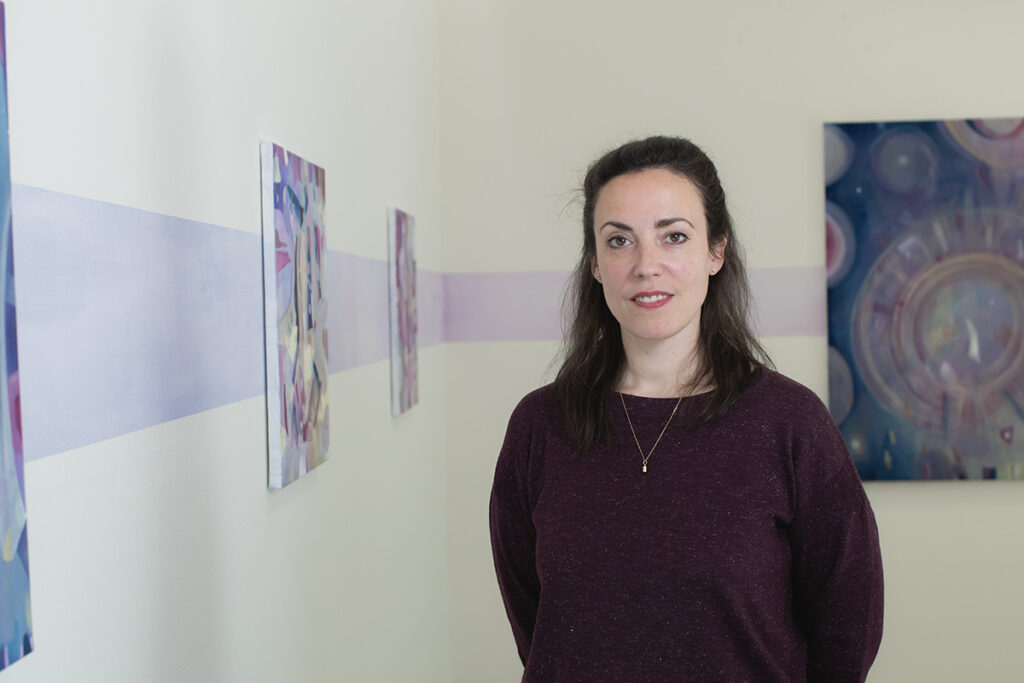
Stéphanie Vaillant, Senior Director of Perrotin Japan
Perrotin’s story began in Paris, France, in 1990. Its founder, Emmanuel Perrotin, was just 21 at the time. What started as a venture driven by youthful passion has, over more than three decades, grown into one of the leading mega-galleries in the contemporary art world, with spaces in major cities including Paris, New York, Hong Kong, Seoul, Tokyo, Shanghai, Los Angeles, London, and Dubai.
At its core, Perrotin is defined not simply by the exhibition and sale of artworks, but by a continued commitment to exploring the “possibilities of art” beyond established boundaries. As Vaillant explains, this ethos is clearly evident in its activities in Japan.
“Driven by a desire to explore the possibilities of art across disciplines, we have expanded our activities in Japan to offer more diverse experiences. In 2020, we opened the Perrotin Tokyo Bookstore, followed by the launch of the Perrotin Salon in 2024, creating a truly borderless environment for our audiences.”
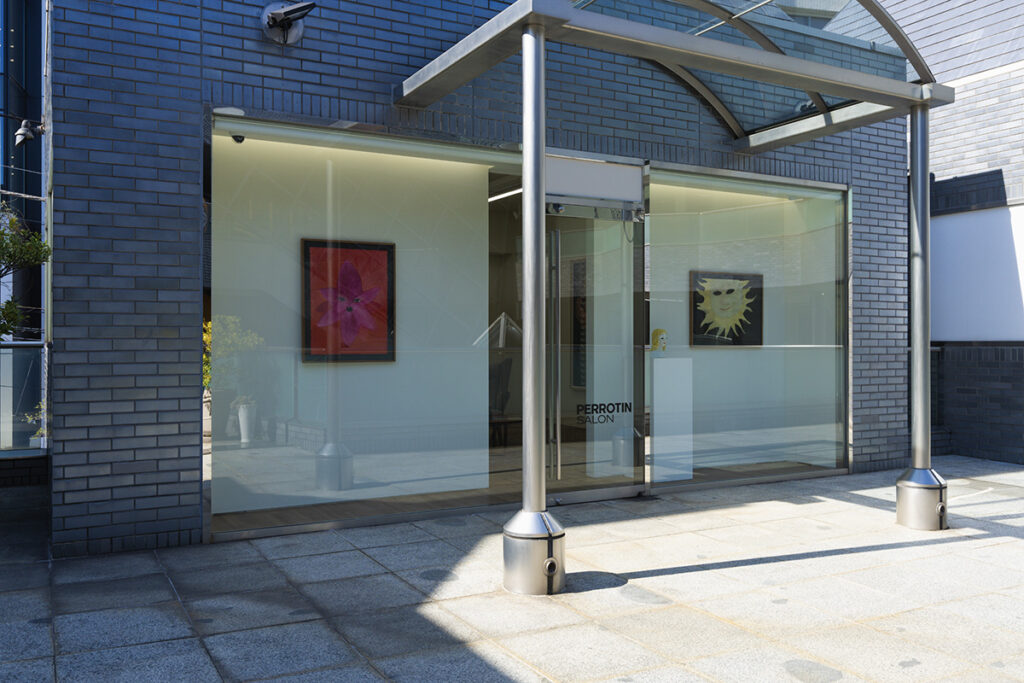
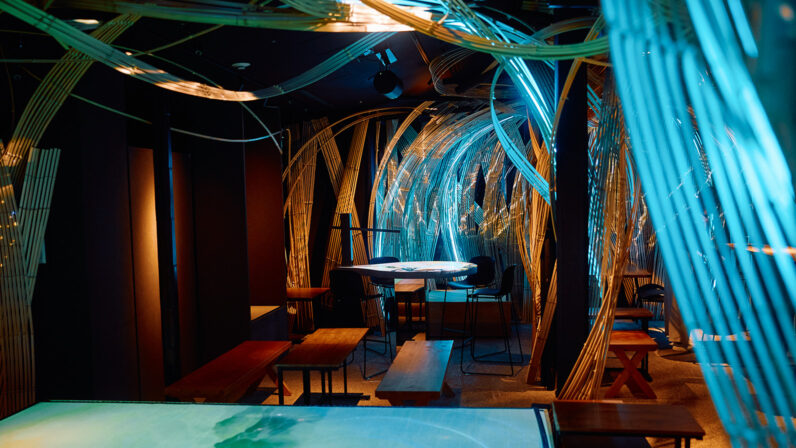
The Perrotin Salon functions as a hub for exchange among artists, creators, and collectors.
Choosing Roppongi, and Piramide Building
Perrotin Tokyo is located within Piramide Building, a multi-tenant complex that houses a number of art galleries. The decision to establish a presence here was driven by a desire to engage with the cultural fabric of the city.
“When Perrotin Tokyo opened in Piramide Building around ten years ago, the area was still somewhat untapped in terms of its potential as an art destination. For us, however, it was the ideal place to put down roots. Situated in the heart of Roppongi, it is surrounded by major institutions that form the so-called ‘Roppongi Art Triangle,’ the Mori Art Museum, the Suntory Museum of Art, and The National Art Center, Tokyo.”
Since then, Roppongi’s art scene has evolved rapidly, with the area around Piramide Building developing into one of Tokyo’s leading cultural hubs.
“Over the past decade, as we’ve deepened our engagement with the local scene alongside other galleries, Piramide Building, Complex 665, 21_21 DESIGN SIGHT, and Azabudai Hills have brought renewed creative energy to the neighborhood. Today, Piramide Building has cultivated its own dynamic ecosystem and stands as an integral part of Tokyo’s wider cultural landscape. At Perrotin Tokyo, we are proud to grow alongside it and contribute to both its history and its future.”
The Philosophy Behind a Mega-Gallery
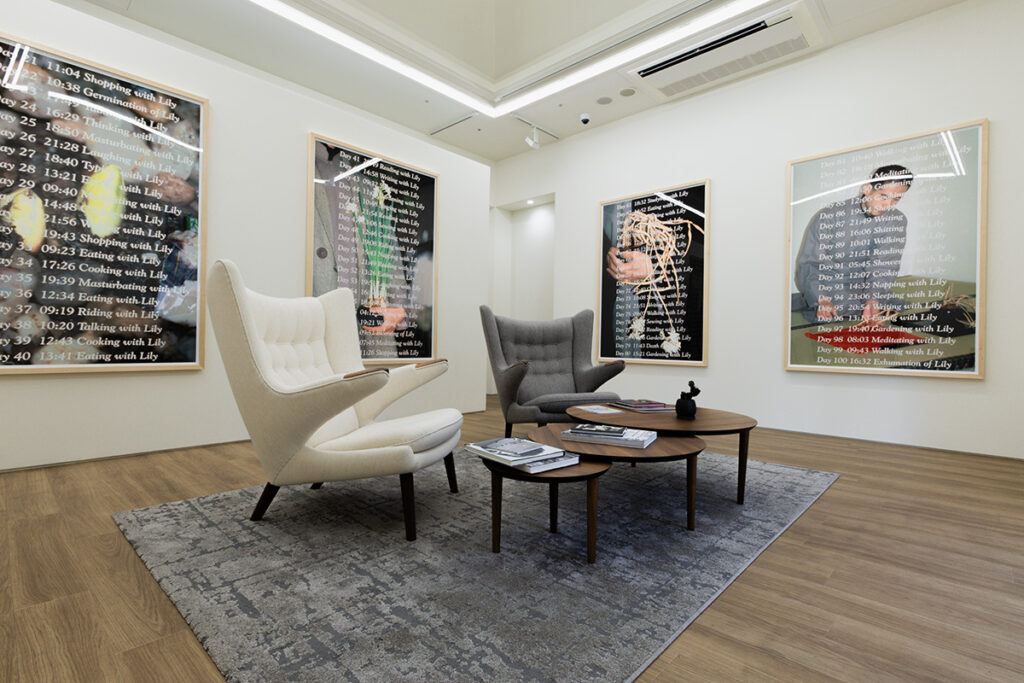
While Perrotin stands at the forefront of the global art world as a mega-gallery, the core of its philosophy lies in a sense of freedom. Perrotin Tokyo is not an exclusive space reserved for specialists or authorities. Instead, it aspires to be an open hub filled with unexpected encounters that continue to surprise and engage its visitors.
“We don’t believe there is a single correct way or set of rules for engaging with art. Rather, we aim to create an environment where anyone can discover a personal connection with the works. Our use of diverse layouts is intentional. Each space is given its own character, allowing visitors to engage with artists and fellow enthusiasts in a way that feels natural to them.”
Curation Through an Eclectic Lens
Perrotin’s roster of artists is remarkably diverse. It includes leading Japanese figures such as Takashi Murakami, Izumi Kato, and AYA TAKANO, alongside internationally acclaimed names ranging from Jean-Michel Othoniel and Sophie Calle to Pierre Soulages, Maurizio Cattelan, and Emma Webster. The lineup spans both established masters and emerging talents on the global stage.
Today, the gallery represents 76 artists, while also collaborating with a further 37 artists and estates.
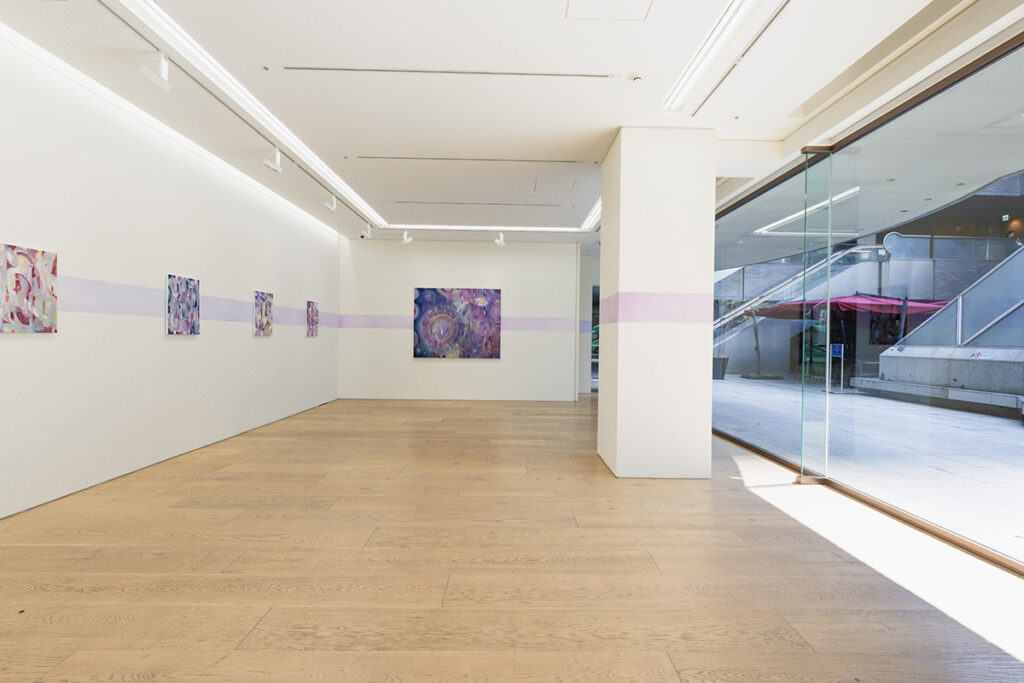
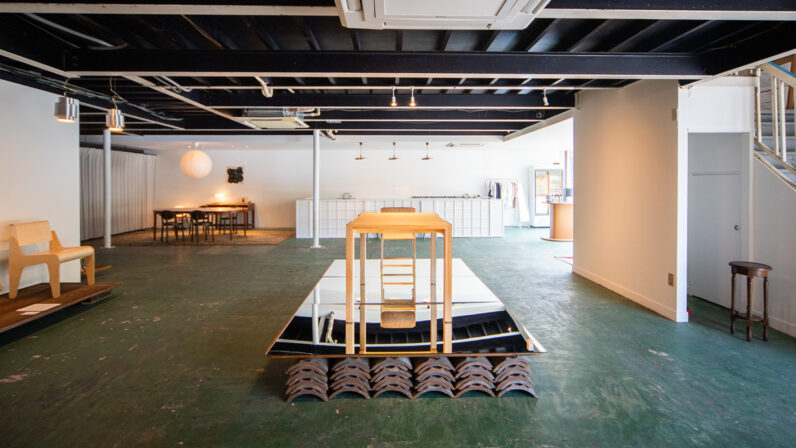
Though minimal, the space is softened by warm wood elements that draw attention to the artworks.
Vaillant explains that at the core of Perrotin’s curatorial approach lies its founder’s eclectic perspective.
“We work with artists from a wide range of backgrounds, ages, and career stages, and their approaches and materials are just as diverse. As our founder, Emmanuel Perrotin, often says, his taste is ‘consistently eclectic,’ and that really defines who we are. We’re not tied to any one movement, generation, or aesthetic. Instead, we draw on a global network that spans multiple continents, supporting artists we’ve worked with for decades while also championing new voices today.”
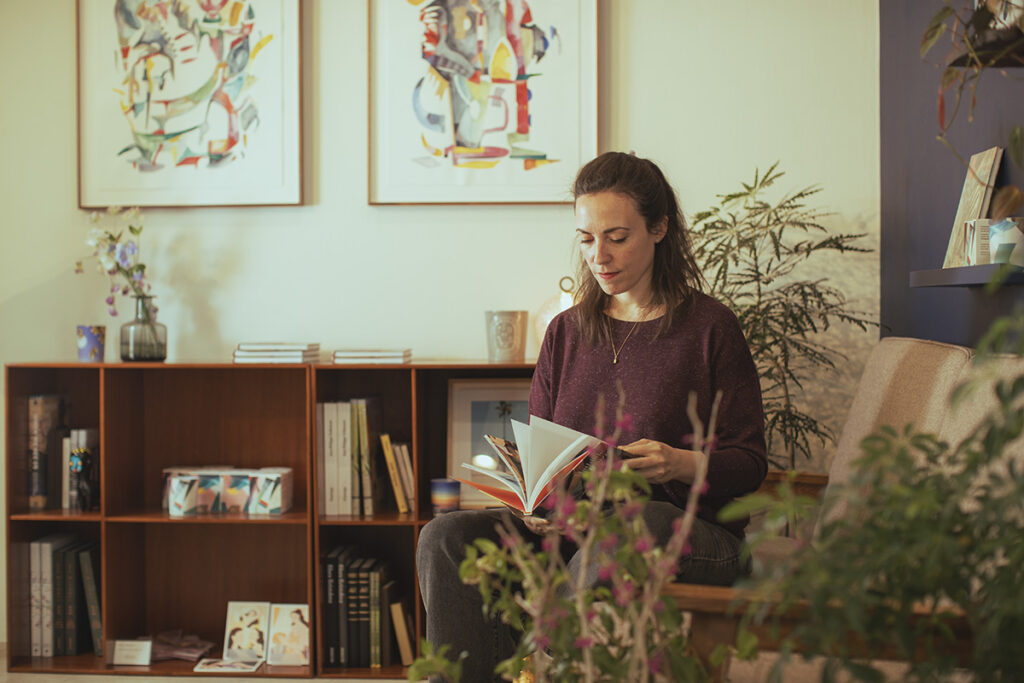
This diversity of perspectives aims to offer audiences an experience that goes beyond mere beauty.
“Introducing a diverse range of artists is essential to what we do, because diversity is at the core of Perrotin’s DNA. Through that range of work, we hope to offer new perspectives that audiences can connect with or draw inspiration from. Because we welcome people from around the world, each with their own identities and ways of thinking, we want to present art that speaks in different languages and tells different stories. Ultimately, our aim goes beyond art itself. It’s about creating connections between people and showing the true potential of human creativity.”
Inside the Space Designed by André Fu
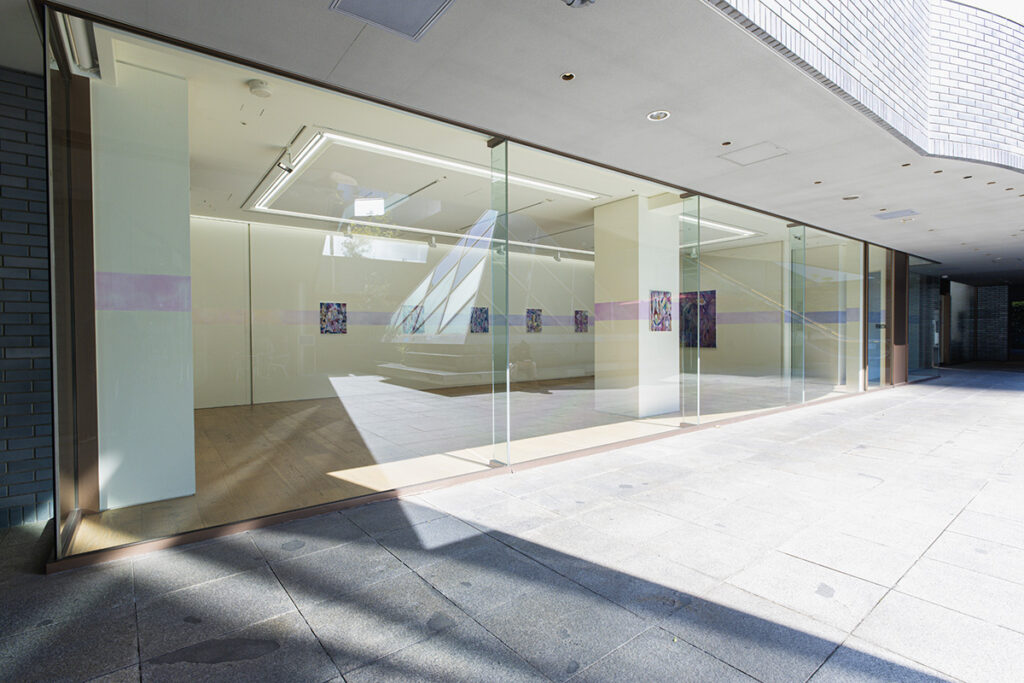
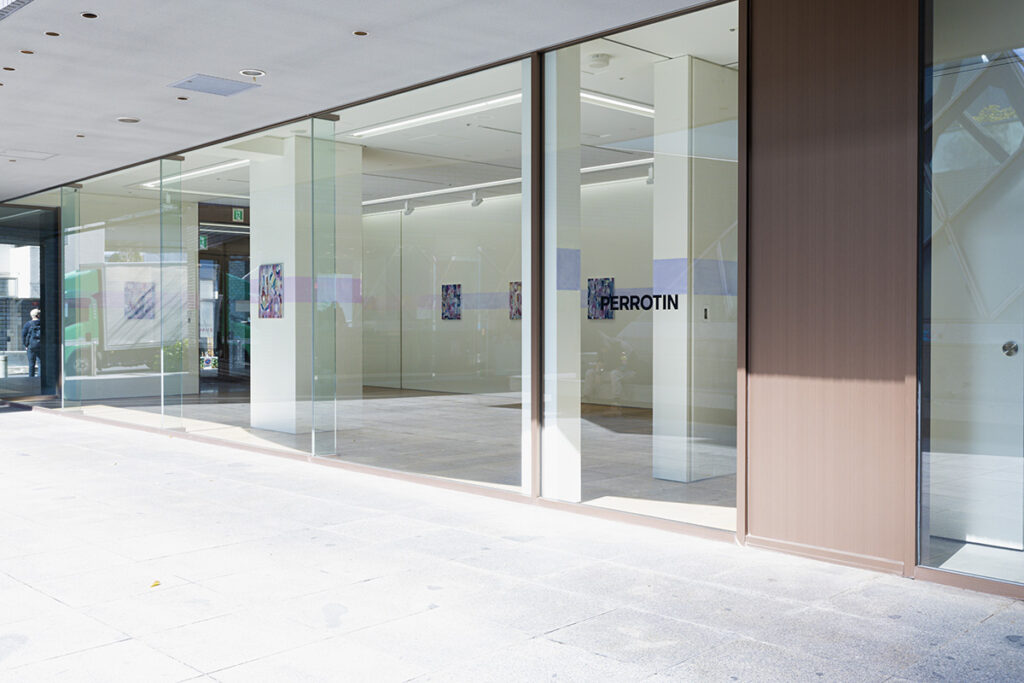
With floor-to-ceiling glass, the gallery remains visible from the street, inviting passersby inside.
The exhibition space itself is also an essential element in defining Perrotin Tokyo’s identity. The interior was designed by Hong Kong–based architect André Fu, who has also worked on other Perrotin galleries across Asia and has a deep understanding of the brand’s aesthetic.
“André’s design is characterized by its sense of openness, with an entrance that faces the street and feels easy to step into. From there, visitors move through an ‘liminal space’ inspired by the traditional Japanese tea room before entering the main gallery, creating a more immersive viewing experience. The large, floor-to-ceiling windows are also intentional, allowing people passing by to engage with the art from outside.”
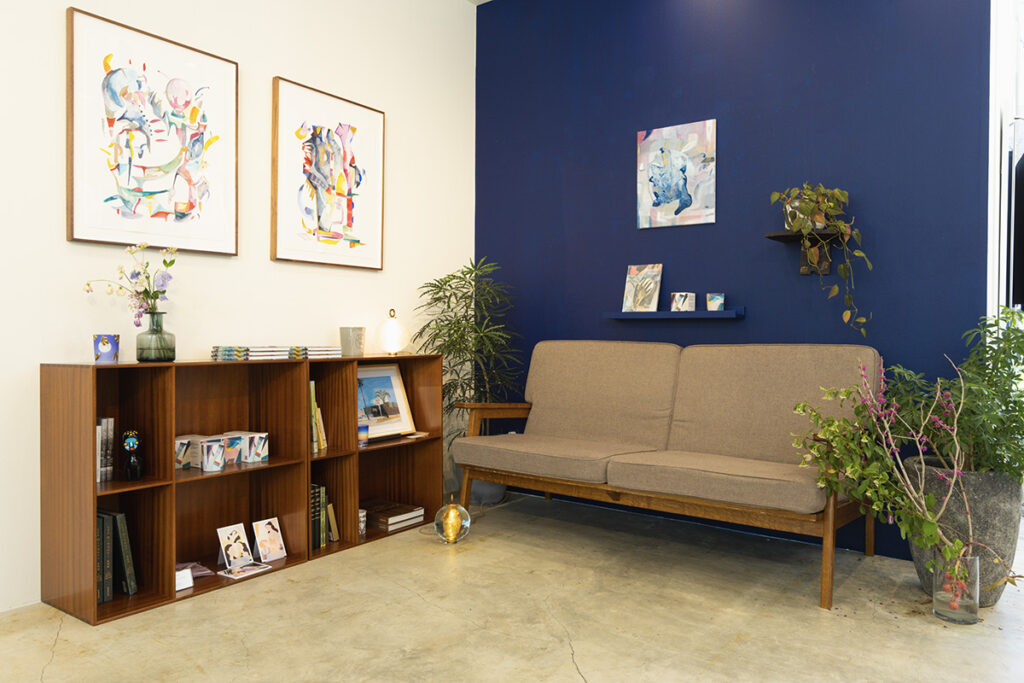
In an age of accelerating digitalization, Perrotin is deliberately reexamining the value of physical space. Rather than viewing the gallery as a mere sterile white cube, it is conceived as a place where people and ideas intersect.
“We believe it is our responsibility to preserve spaces where people can step away from their screens and connect with art through a real, sensory experience.”
Time and Light: Mathilde Denize’s First Solo Exhibition in Japan
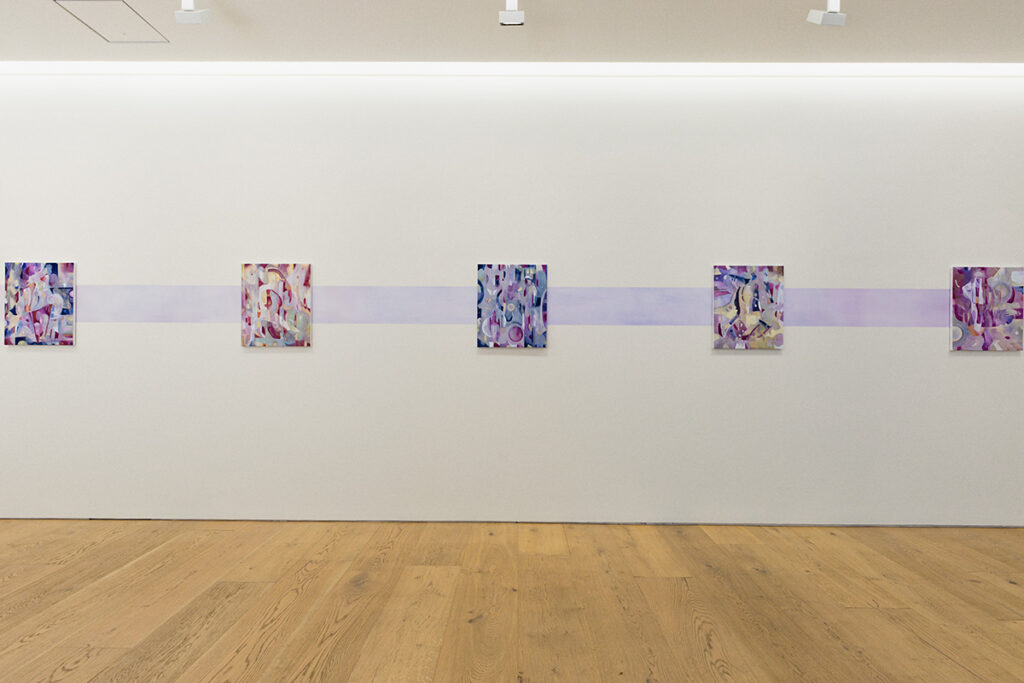
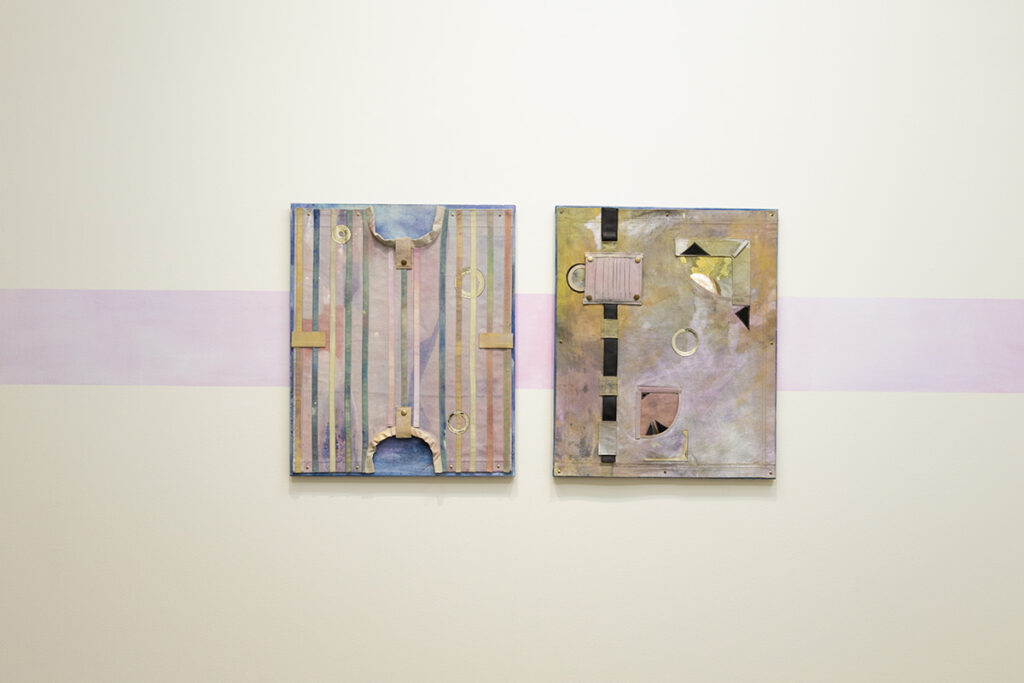
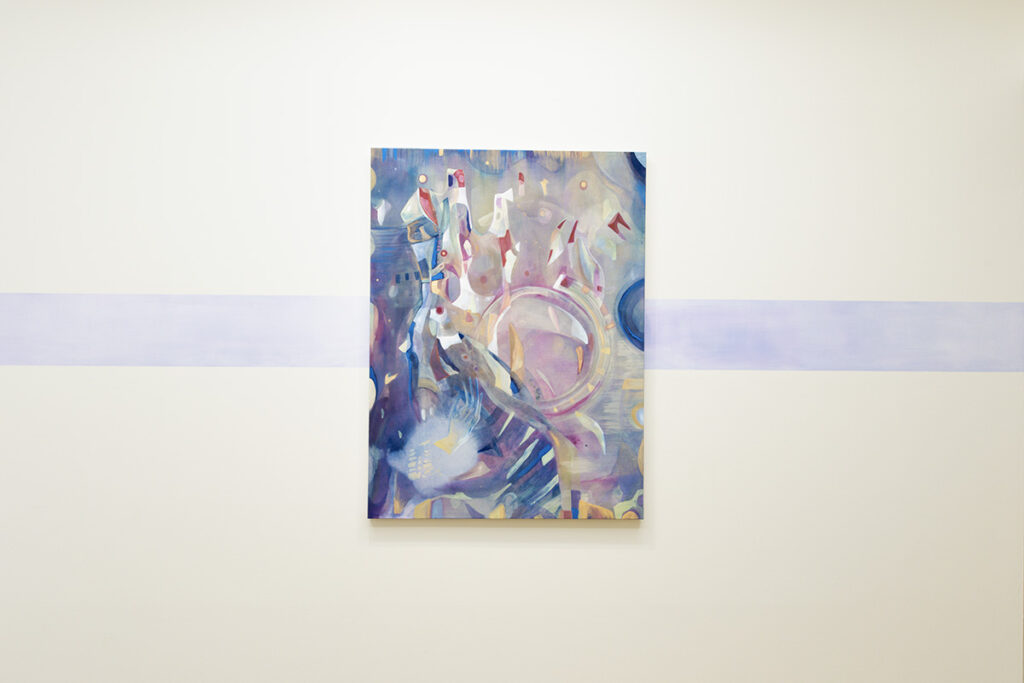
Finally, for those looking to visit Perrotin Tokyo, the gallery is currently presenting Time and Light, the first solo exhibition in Japan by Mathilde Denize. The exhibition marks a new stage in her practice, as she reworks fragments to explore connections between seemingly disparate elements.
In her new Contours series, Denize brings the sculptural and bodily qualities seen in her earlier “Costume Paintings” back into the language of painting. Using colors derived from discarded film paint, the works echo the simultaneity of Sonia Delaunay and the poetic structures of Stéphane Mallarmé, creating a sense of rhythm and layered time within the space. Rather than presenting painting as a fixed image, these works treat it as something in flux. An event shaped by light and perception, offering viewers a constantly shifting, fluid landscape.
In 2027, Perrotin Tokyo will mark a major milestone, its 10th anniversary. Reflecting on the journey so far, Vaillant also shared her vision for the future.
“Our goal is to foster meaningful dialogue within the local art community through exhibitions and events. From collectors and curators to art students and families, we want to create an open space where everyone can have their own unique experience. Perrotin Tokyo aims to strengthen its connections with cultural institutions across different regions and contribute to the development of a more vibrant and diverse art scene.”
Perrotin Tokyo
Address: Piramide Building 1F, 6-6-9 Roppongi, Minato-ku, Tokyo 106-0032
Hours: 11:00–19:00
Closed: Sundays, Mondays, and public holidays