Opened in March 2026, BASEGATE Yokohama Kannai is a large-scale mixed-use development directly connected to JR Kannai Station and Yokohama Stadium. Combining a hotel, offices, and commercial facilities, it has quickly gained attention as a new hub showcasing Yokohama’s evolving character.
The site was once home to the former Yokohama City Hall, designed by master architect Togo Murano and cherished by local residents for more than 60 years. Preserving the legacy of this historic building while giving it a new purpose as accommodation is OMO7 Yokohama by Hoshino Resorts (hereafter, OMO7 Yokohama).
Yokohama’s History and Culture Expressed Through the Building
The urban hotel brand OMO by Hoshino Resorts operates across Japan with the concept of developing exciting city-centre hotels. OMO7 is a full-service format featuring cafés, restaurants, and buffet-style breakfasts, and it marks the brand’s second property in Yokohama following OMO5 Yokohama Bashamichi.
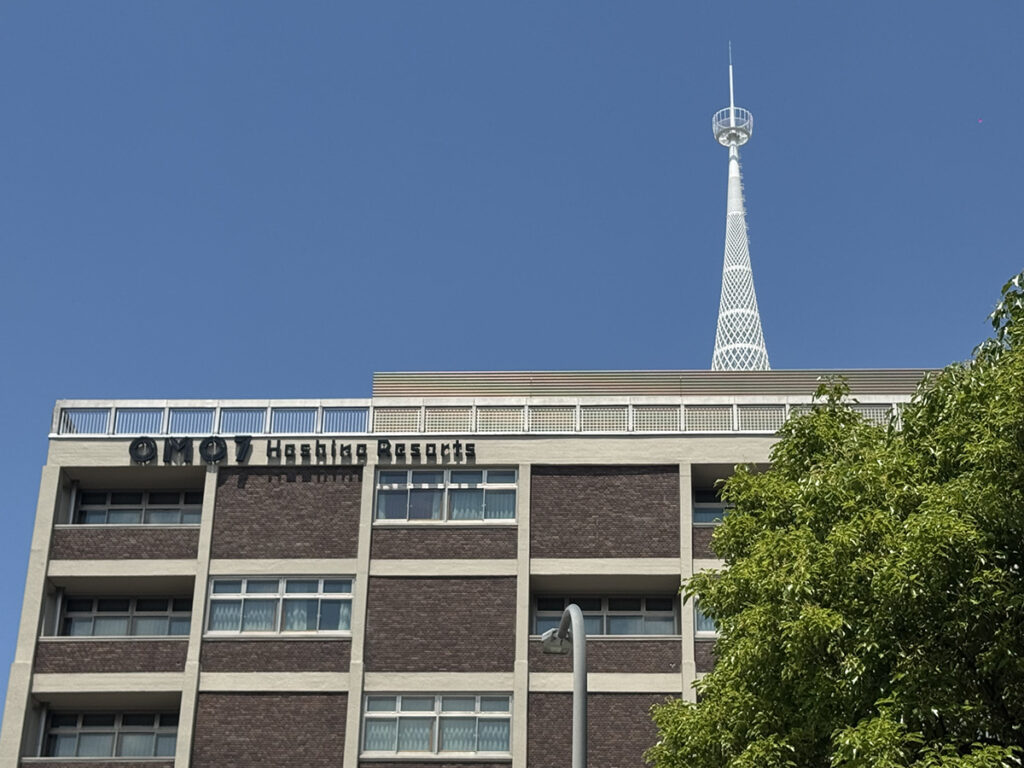
In the postwar years, much of Yokohama was placed under GHQ control. As reconstruction gathered pace, the building was completed in 1959 as the seventh generation of Yokohama City Hall since the city system was established. Designed by architect Togo Murano, it stands as a landmark of postwar modernist architecture. While its exterior appears simple and functional, it is widely regarded by experts as a culturally significant work that preserves the atmosphere of Japan’s postwar recovery.
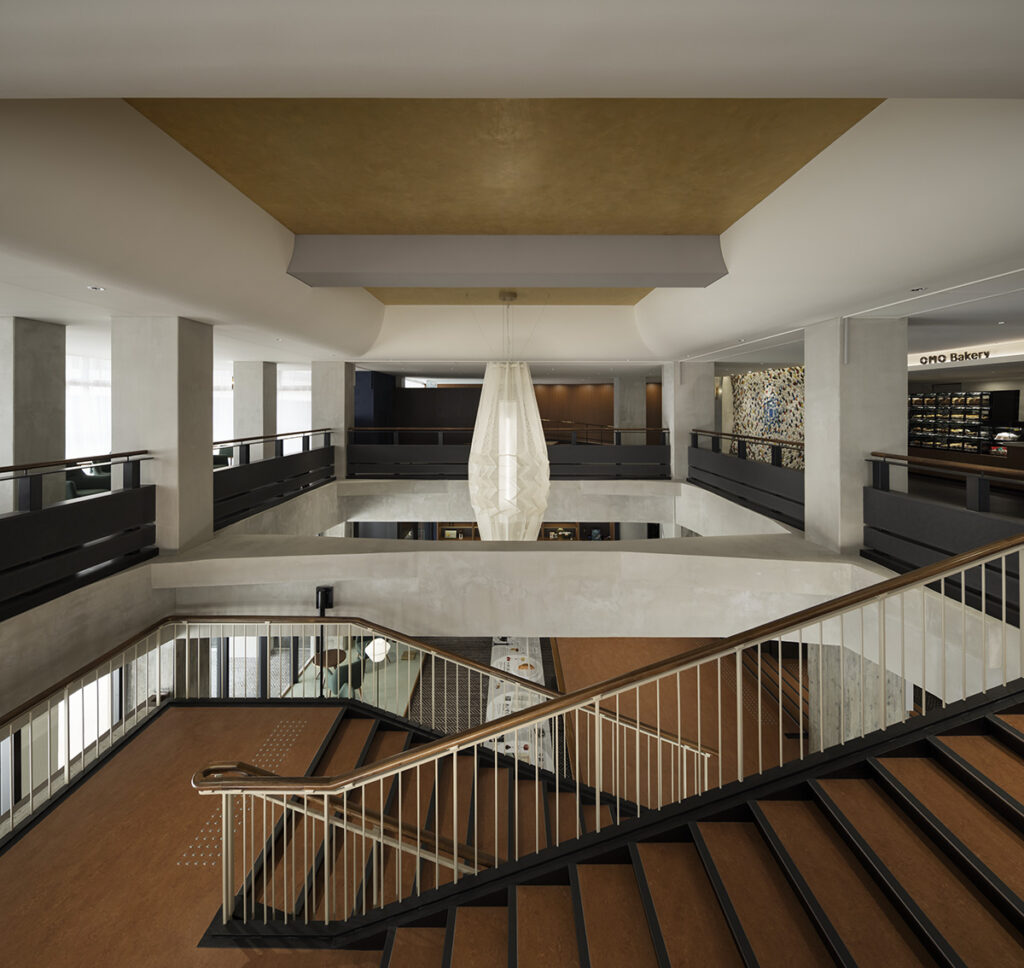
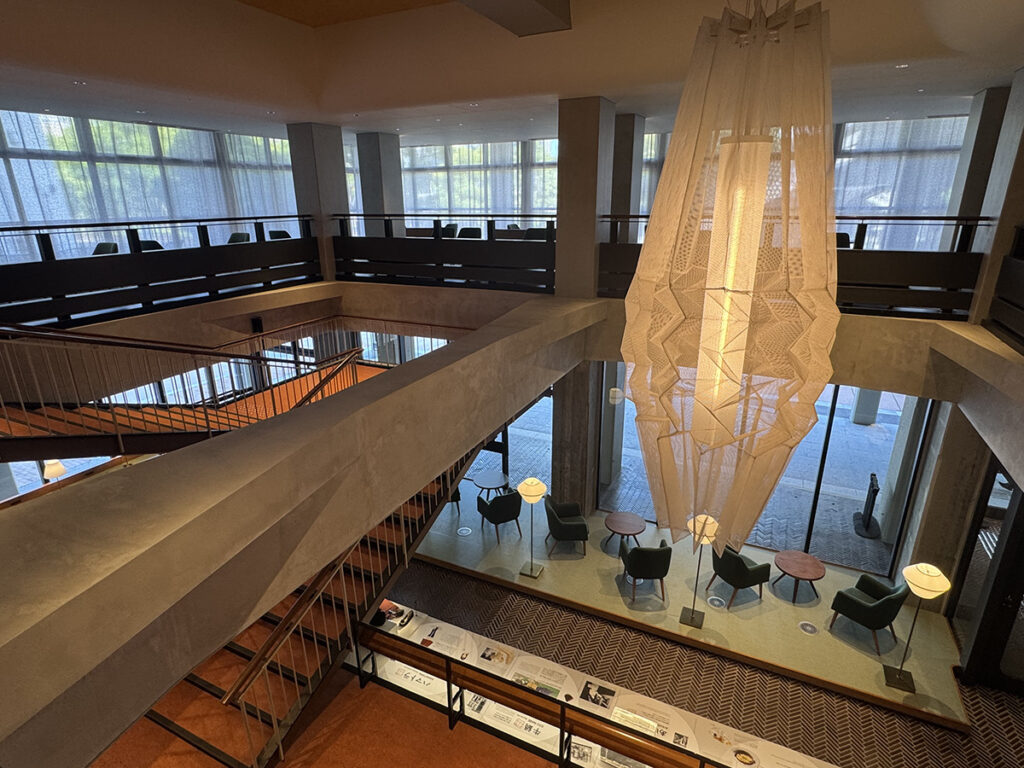
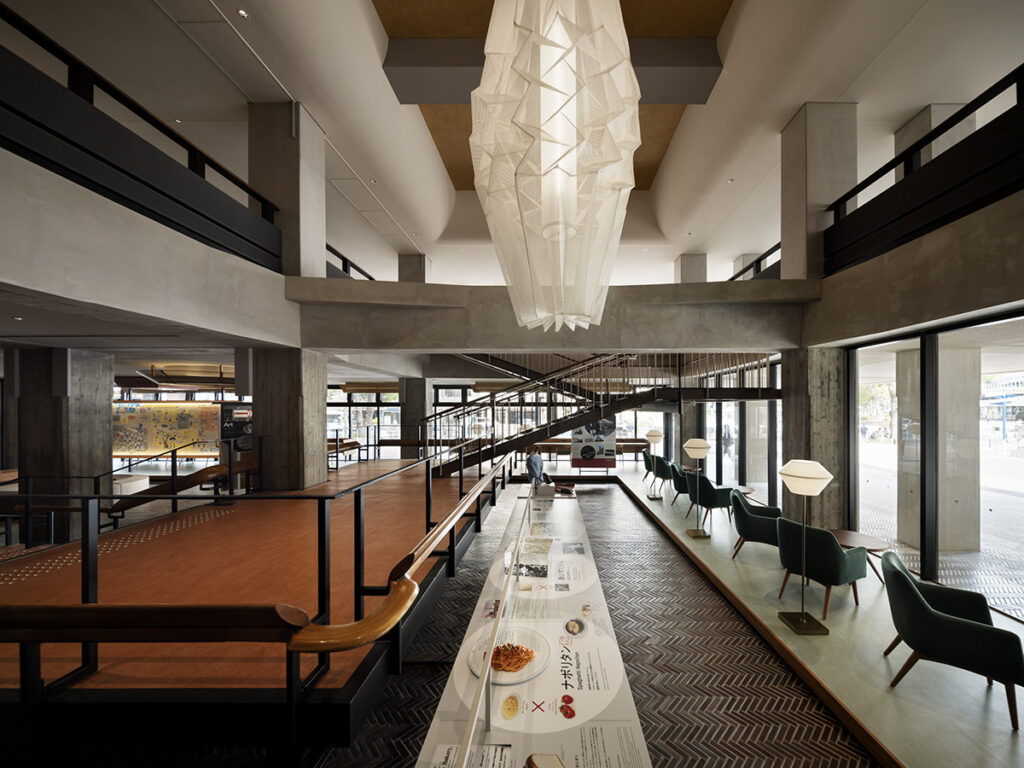
Beyond the entrance, visitors are greeted by a dramatic double-height staircase at the centre of the lobby (OMO Base). Recreated and relocated from the former Citizens’ Hall, it serves as a defining feature of the hotel. The first eight steps from the ground level are original, preserved from the historic structure. The handrail, with its graceful and finely balanced curves, has also been retained, reflecting Murano’s celebrated sensitivity to detail.
The exterior retains traces of its original form, including dark brown brick tiles. An irregular composition of walls, windows, and balconies creates a varied rhythm, giving the building a distinctly modern presence.
Discovering Beauty in the Details, from Floors and Walls to Furniture
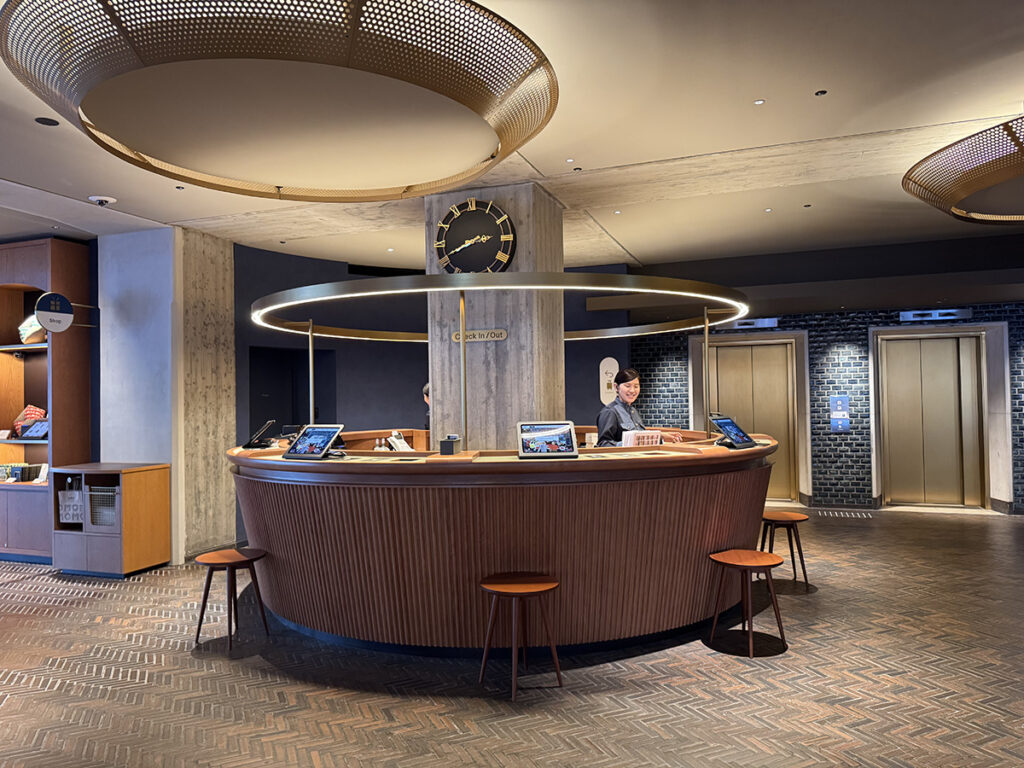
Across the building, details from the former city hall have been skillfully preserved and repurposed. In the entrance lobby, lighting reminiscent of a UFO has been reinterpreted from fixtures once used in the former council chamber of the city assembly building. A large clock mounted on a column has been repurposed from the Citizens’ Hall, while sections of the patterned floor tiles from the former administrative wing have been carefully preserved and reused in their original form.
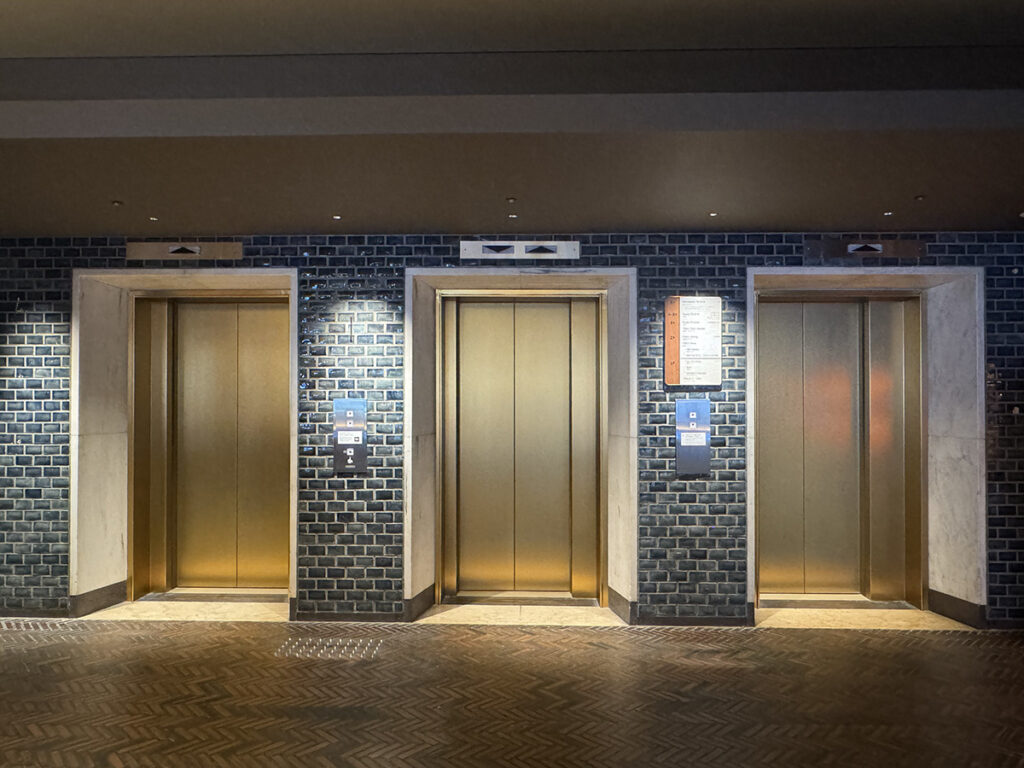
On the first and second floors, elevator lobbies still feature original blue ceramic tiles and white marble three-sided frames from the former city hall. Above, the lift indicators have been newly fabricated based on the original design, lending the space a subtle retro sensibility.
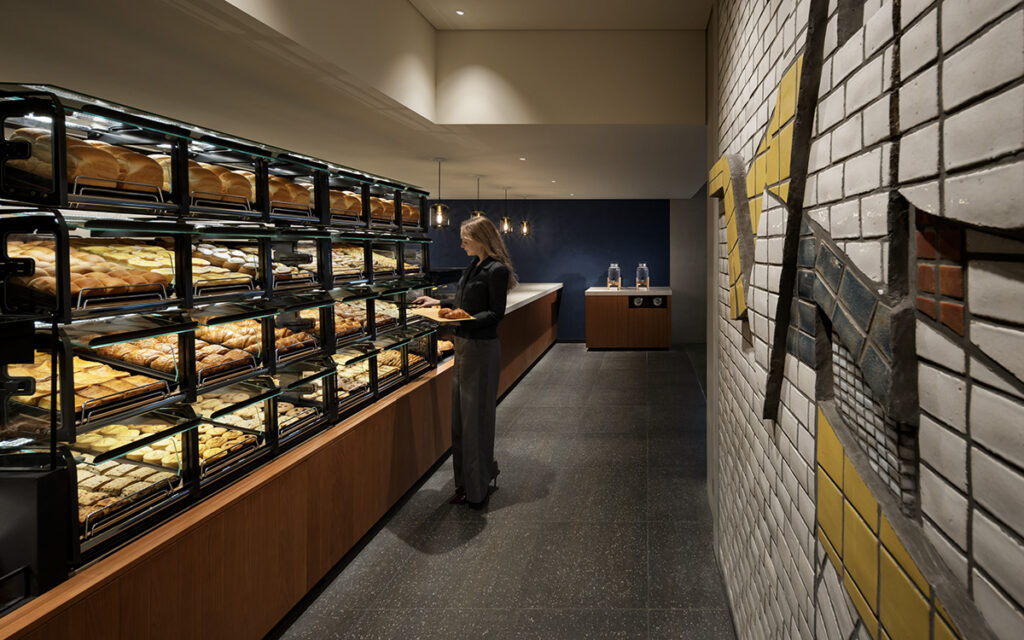
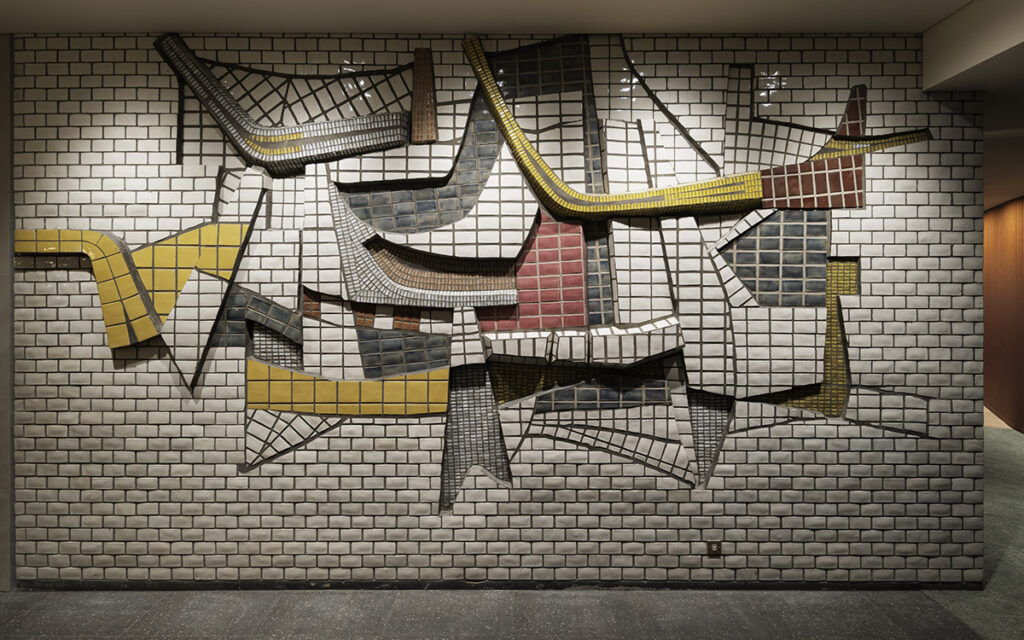
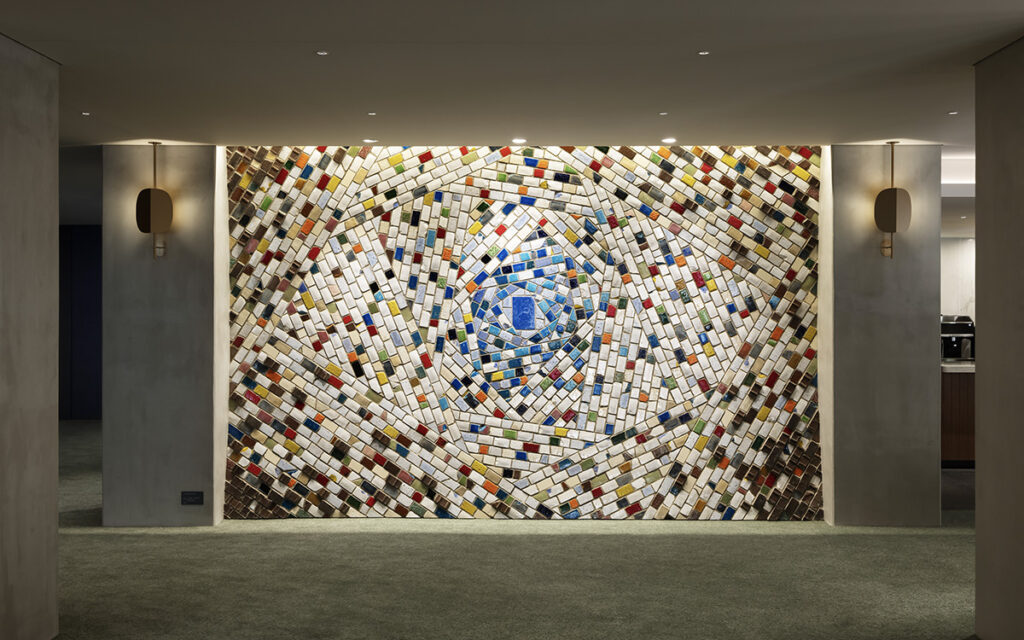
On the second floor, the wall of OMO Bakery features a preserved tile relief, Sea, Waves, Ship, by sculptor Shindo Tsuji, retained in its original location from the former city hall. Made with Taizan tiles, celebrated for their handcrafted quality, the relief remains a landmark work with strong three-dimensional presence.
Opposite it, one of Shindo Tsuji’s new artworks incorporates repurposed materials into a contemporary composition. The bakery is open to outside visitors and is particularly popular for its selection of five curry breads. The hotel also offers OMO Dining, serving Yokohama-inspired Western and Chinese-style cuisine.
Photos courtesy of OMO7 Yokohama by Hoshino Resorts
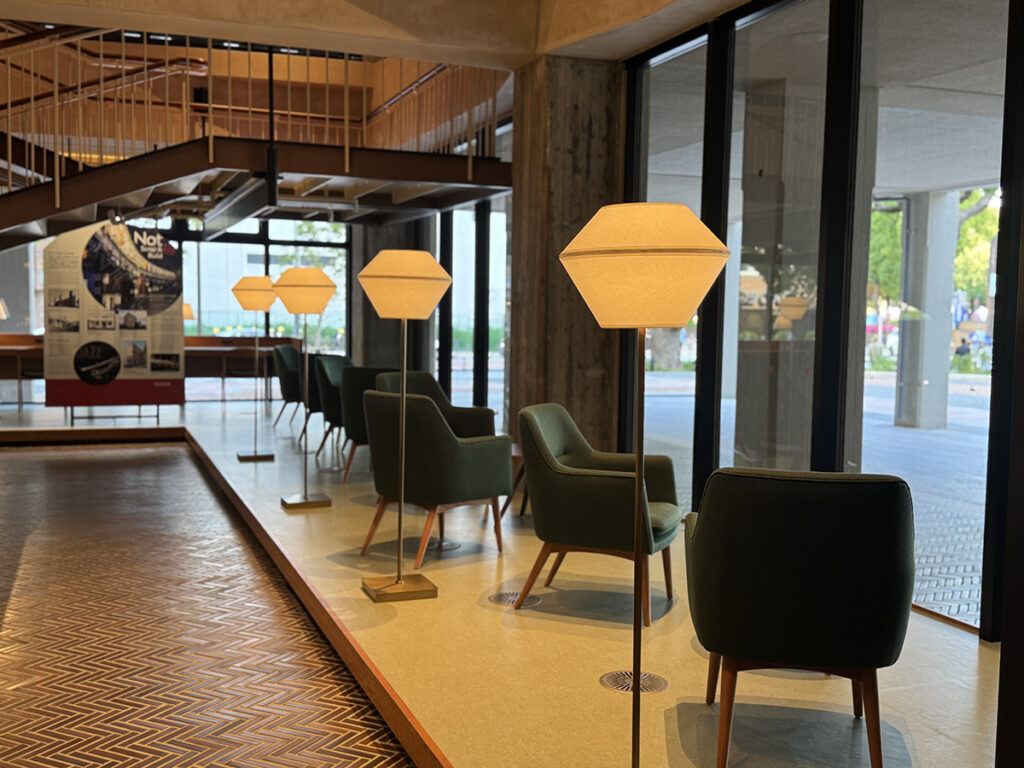
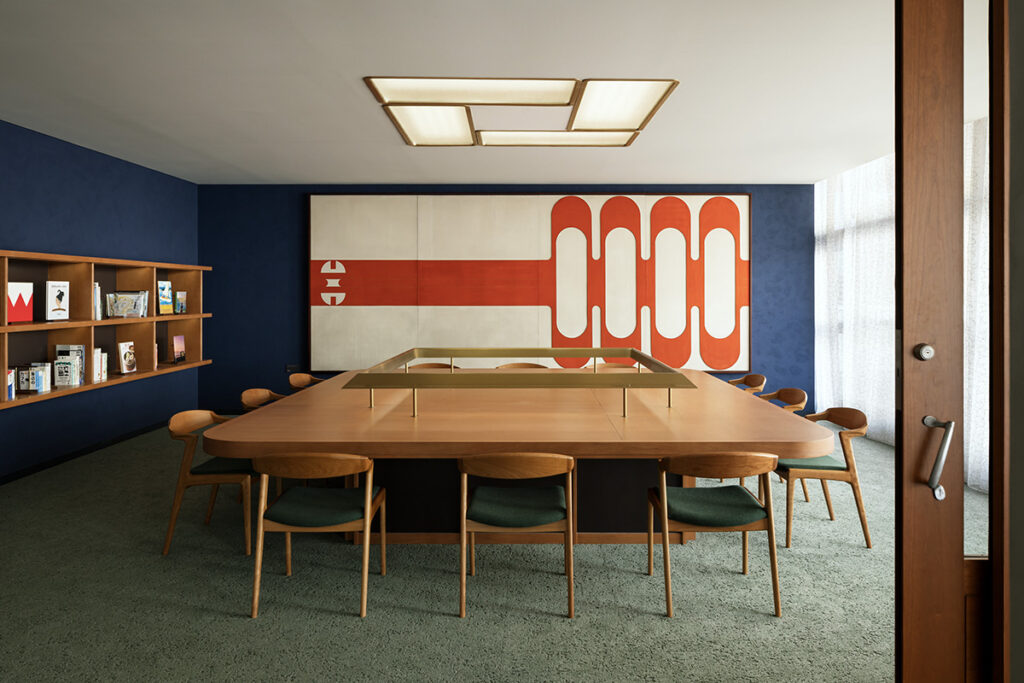
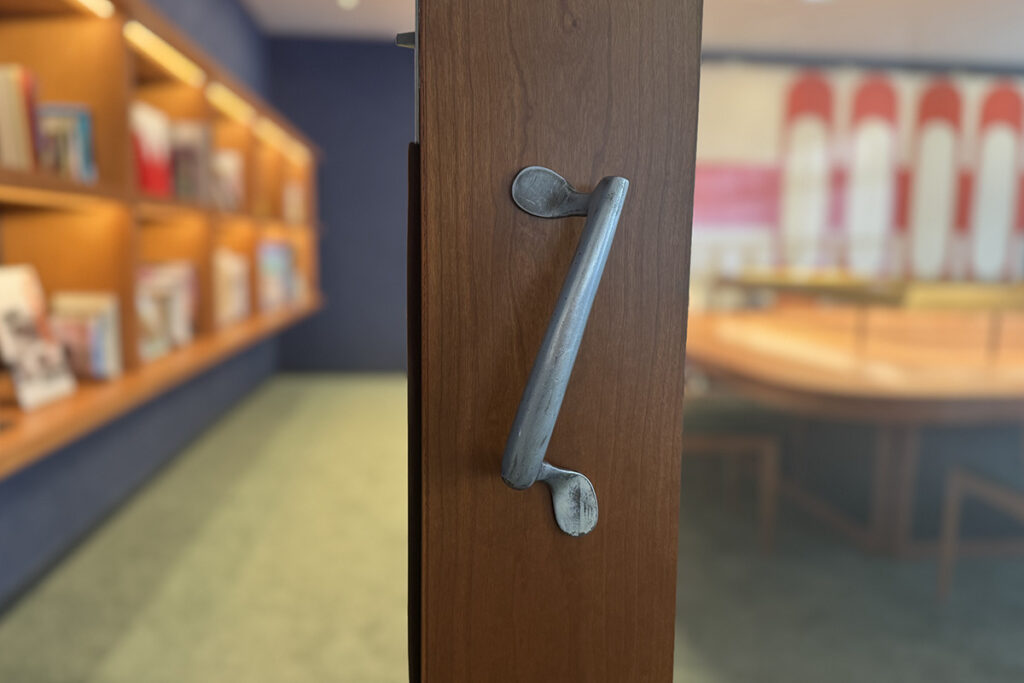
The chic dark green chairs by the lobby windows were once seating from the former main assembly hall, now given new life with redesigned legs and upholstery. In addition, the door handles in the second-floor library lounge were also relocated from the doors of the former assembly chamber. Their simple, unembellished curves embody Togo Murano’s meticulous attention to detail.
Photos courtesy of OMO7 Yokohama by Hoshino Resorts
A Stay Immersed in Landmark Architecture and Its History
The hotel comprises 276 guest rooms in total, ranging in size and layout to create a wide variety of spatial experiences. Dog-friendly rooms are also available for guests travelling with pets. The interiors are themed around three colours drawn from the former city hall: red from the former speaker’s office carpets, blue from ceramic tiles, and green from the carpets and seating of the former assembly hall, resulting in a calm, softly toned atmosphere.
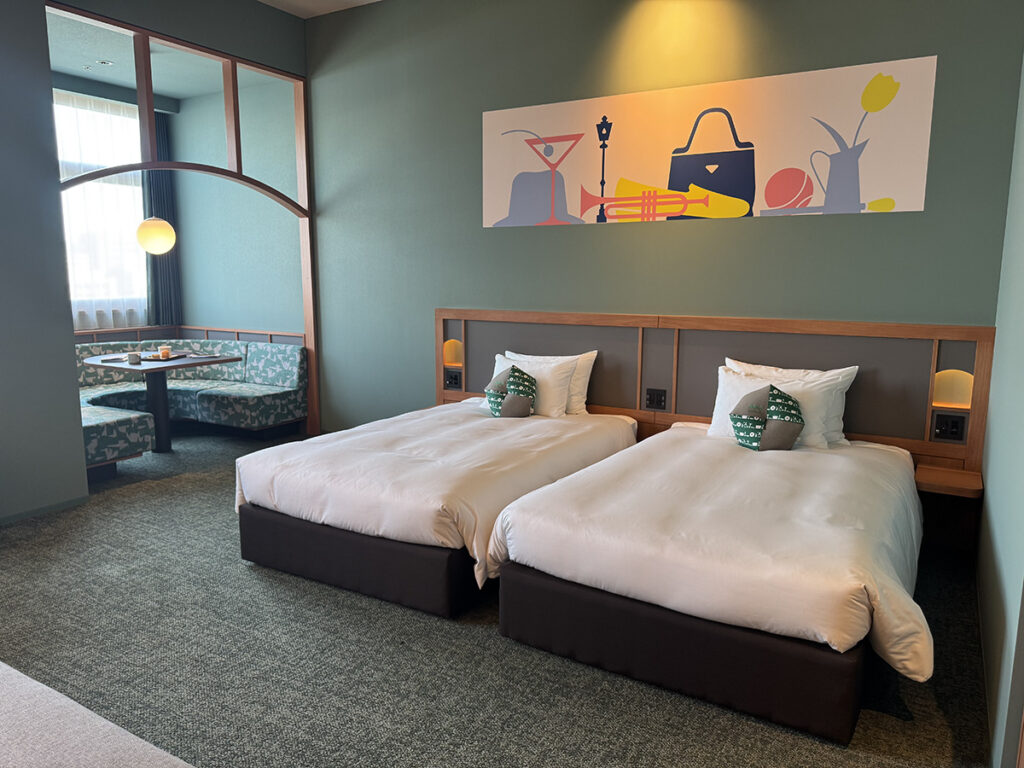
However, the conversion from city hall to hotel was marked by a series of significant challenges. “The reinforced concrete structure had columns fixed at five-metre intervals, and could not be altered. This made it extremely difficult to adapt the layout to hotel use,” explains general manager Minoru Haketa. In addition, because the building is nearly 70 years old, there were discrepancies of several centimetres between the original drawings and the actual structure. Every room therefore had to be re-measured using advanced 3D scanning technology, with floor plans carefully redrawn one by one.
“At first it seemed like everything about the renovation was impossible. But the more I understood the building, the deeper my respect for it became. Some former city halls were lost to disasters and war, but this seventh-generation building survived for around 70 years in a peaceful, democratic era. Preserving it as a record of that history is highly meaningful,” Haketa reflects.
Photos courtesy of OMO7 Yokohama by Hoshino Resorts
On the first floor, the Hama-ism Collection presents exhibitions on Yokohama’s history and the work of Togo Murano. Haketa notes that the team is still experimenting with operations that allow guests to appreciate even the building’s original constraints. Aspects such as narrow elevators and long corridors shaped by its original structure are part of its unique charm.
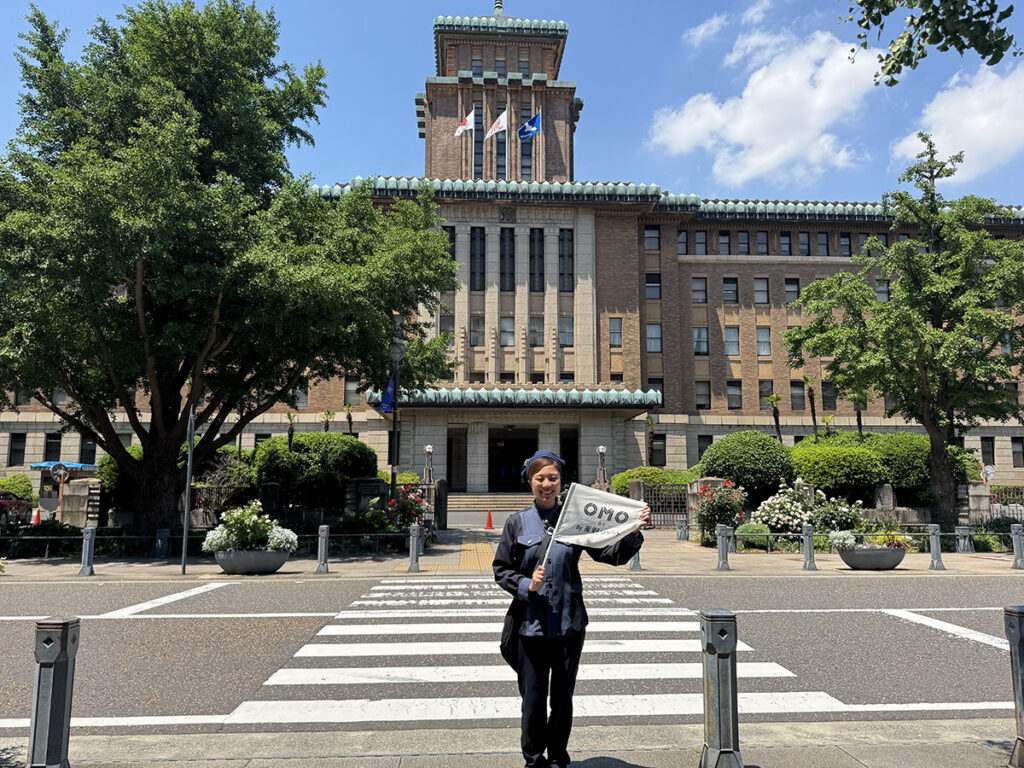
Within the OMO brand’s signature Go-KINJO programme, staff members known as OMO Rangers lead guided walking tours of the neighbourhood. For architecture-focused guests, the Yokohama Legacy Walk offers a curated route through the city’s landmark buildings, presented with distinctive commentary, before returning to explore the Murano-designed architecture within the hotel. The tour is supported by real-time translation devices, making it accessible to international visitors.
The hotel is located just steps from JR Kannai Station, providing easy access to Yokohama Chinatown, Noge, and the Red Brick Warehouse. The rooftop overlooks Yokohama Stadium. Staying in a landmark building is more than an encounter with history, it also supports its continued preservation. With time, guests may discover a different side of Yokohama, beyond the familiar cityscape.
OMO7 Yokohama by Hoshino Resorts
TEL: 050-3134-8095 (OMO Reservation Center)
Address: 1-1-1 Minatomachi, Naka-ku, Yokohama-shi, Kanagawa 231-0017, Japan
Website: https://hoshinoresorts.com/en/hotels/omo7yokohama/