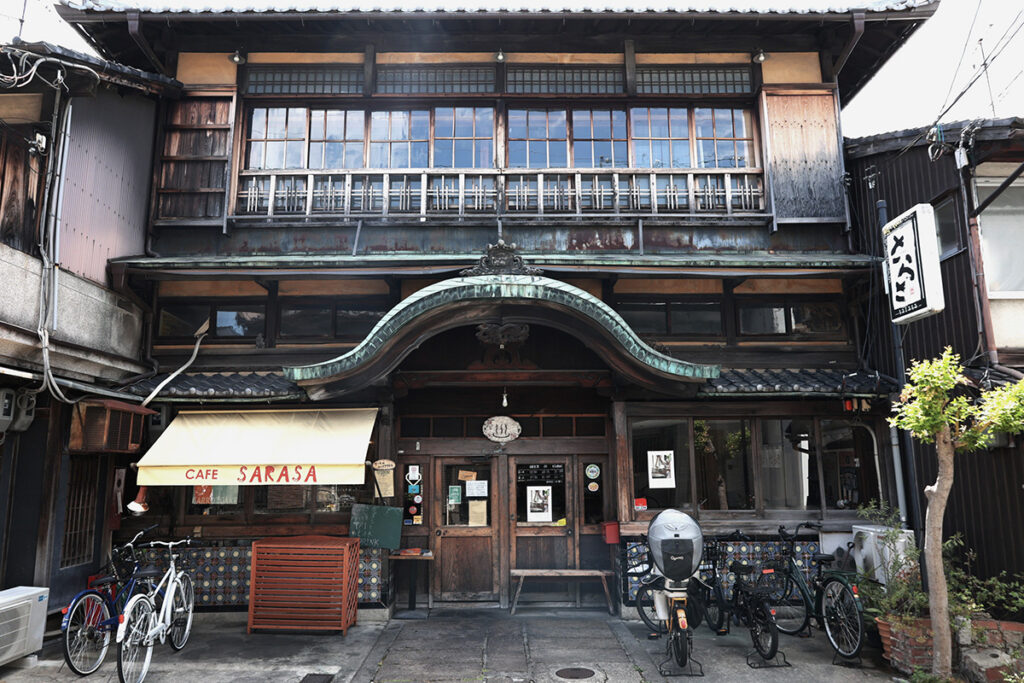
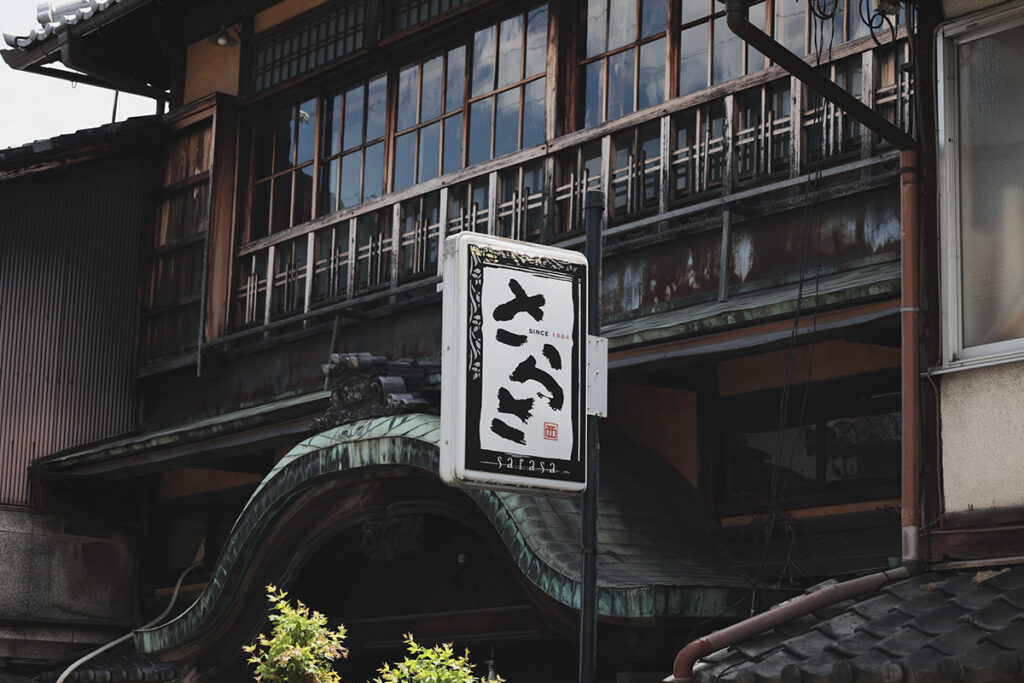
Walk about 20 minutes west from Kuramaguchi Station on the Kyoto City Subway and, tucked away in a residential neighbourhood, you’ll come across a café crowned by a distinctive karahafu curved gable roof.
This is Sarasa Nishijin, a café created from Fujinomori-yu, a public bathhouse built in 1930, with traces of its former life as a sento still visible throughout the interior.
From 1930s Bathhouse to Café: The Story of Sarasa Nishijin
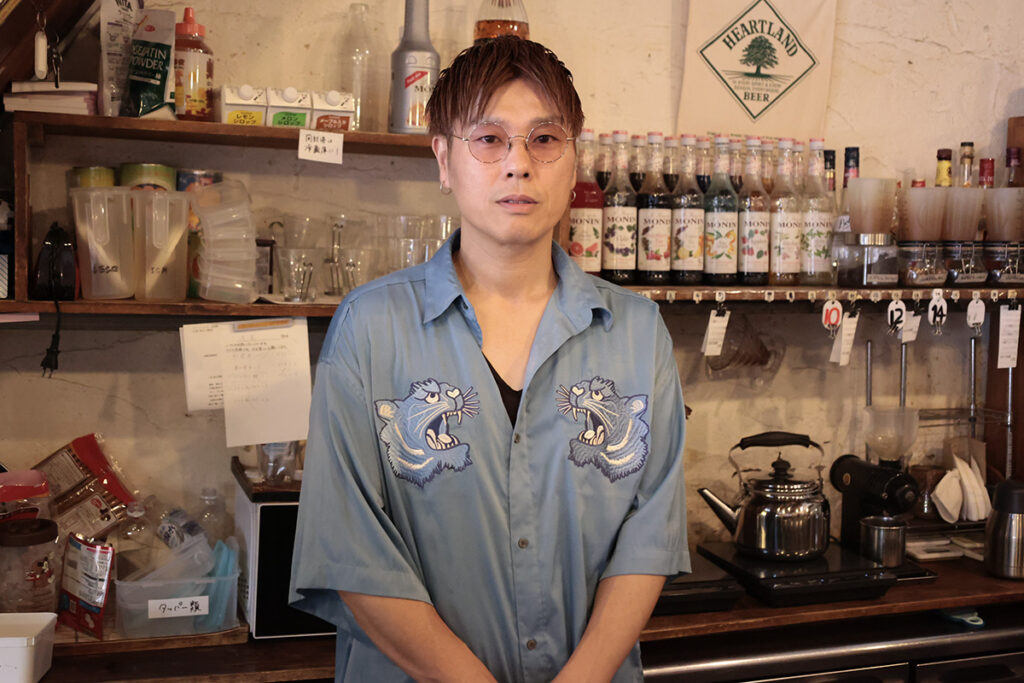
We spoke with Tomoya Ozaki (pictured below), president of Sarasa Co., Ltd., which operates five venues including Sarasa Nishijin. Despite being the company president, he has a gentle, approachable manner. He first started working at Sarasa Nishijin as a part-timer around 20 years ago and has come to know the place better than almost anyone.
While cafés housed in renovated machiya townhouses have become a familiar sight in Kyoto, Sarasa Nishijin has a very different story. The building was once a neighbourhood sento, transformed into a café after the bathhouse closed.
As Ozaki explains:
“Just nearby is Funaoka Onsen, which opened in 1923 and is still operating today. Its owner also built Fujinomori-yu in 1930. For decades it was an everyday part of life for people in the neighbourhood, but times changed and it closed in 1999. The building survived, though, and the head of Sarasa at the time saw its potential. He thought, ‘It’s such a wonderful building. Why not make use of the space and turn it into a café?’ Much of the renovation was done DIY, and that’s how Sarasa Nishijin got its start.”
Once an essential part of daily life in Japan, sento reached their peak in 1968. But as private bathrooms became standard in Japanese homes, fewer people relied on public baths, and today fewer than 1,500 remain nationwide, less than a tenth of the number at their height. Kyoto held onto its sento culture longer than many other parts of Japan, but by the end of the 20th century, bathhouses here too were closing one after another. Transforming one into a café, however, was likely something that had never been tried before.
Original Majolica Tiles and Remnants of the Bathhouse Past
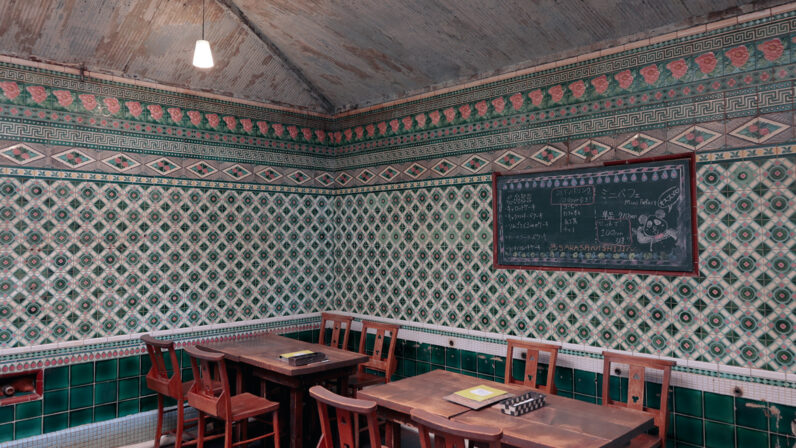
Look around the café and remnants of its bathhouse past are everywhere, from the nostalgic furnishings to the original decorative details. Wherever practical, elements from the building’s former life have been preserved and incorporated into the café. Most striking are the Japanese Majolica tiles covering the walls. Particularly impressive are the Japanese-made Majolica tiles covering the walls.
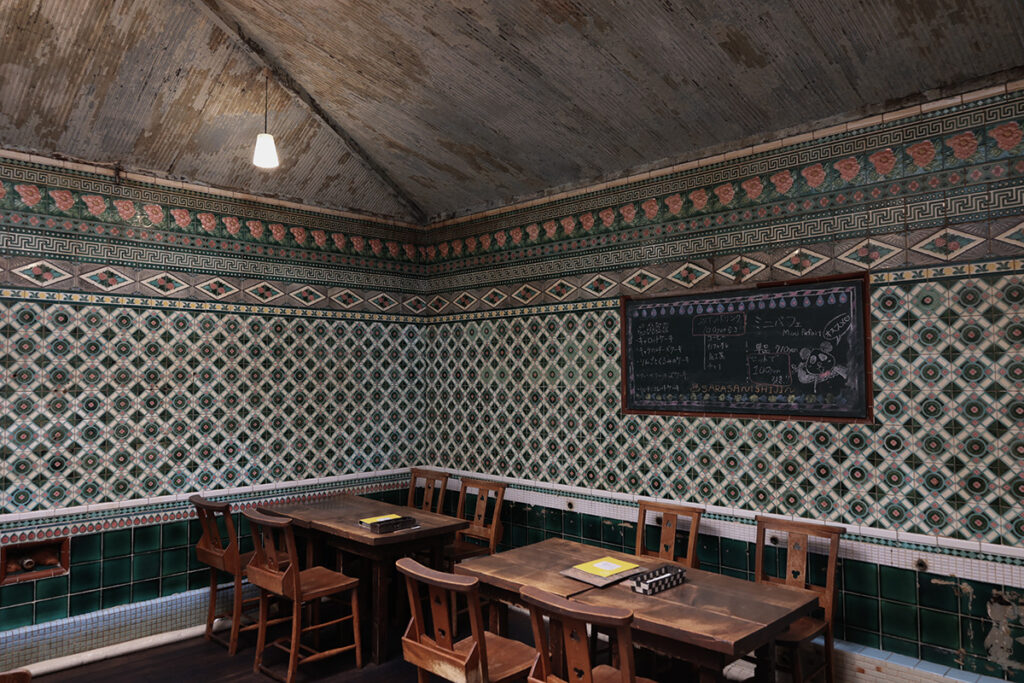
Majolica tiles originated in 19th-century Britain and are distinguished by their colourful relief patterns. Introduced to Japan during the Meiji era, they went on to inspire countless uniquely Japanese designs. Thanks to their water resistance, they were also commonly used in old public bathhouses, and at Sarasa Nishijin, the original tiles remain in place today.
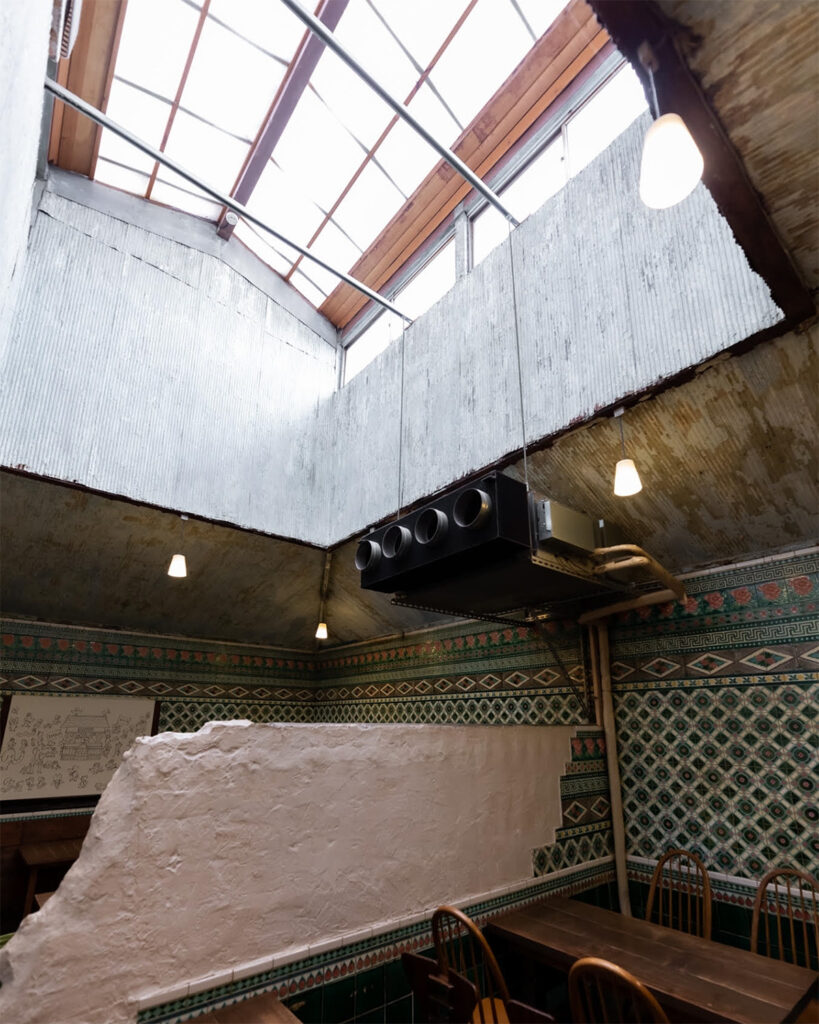
Look up and you’ll find a soaring glass ceiling overhead, a practical feature designed to prevent steam from collecting during the building’s bathhouse days. Today, soft daylight filters through the glass, giving the interior an almost dreamlike atmosphere.
“Nowadays, the building itself has become something of a tourist attraction,” says Ozaki. Given that it is also a nationally registered Tangible Cultural Property, it’s easy to see why.
A Taste of the Past : Sarasa Nishijin’s Famous Toruko Rice
When I visited around lunchtime, the café was almost full. Despite being well away from Kyoto’s main sightseeing areas, the chance to eat inside a former sento seems to be more than enough to draw a crowd.
“But it wasn’t always like this,” Ozaki recalls. “When I started working here 20 years ago, there were so few customers that we often found ourselves with nothing to do.”
A turning point came in 2009, when the café appeared as one of the settings in the anime K-On!. Fans began visiting as part of seichi junrei, or anime pilgrimages to real-life locations featured in their favourite shows. Their visits attracted media attention, bringing coverage in print and on television and, eventually, a much wider audience beyond anime fans.
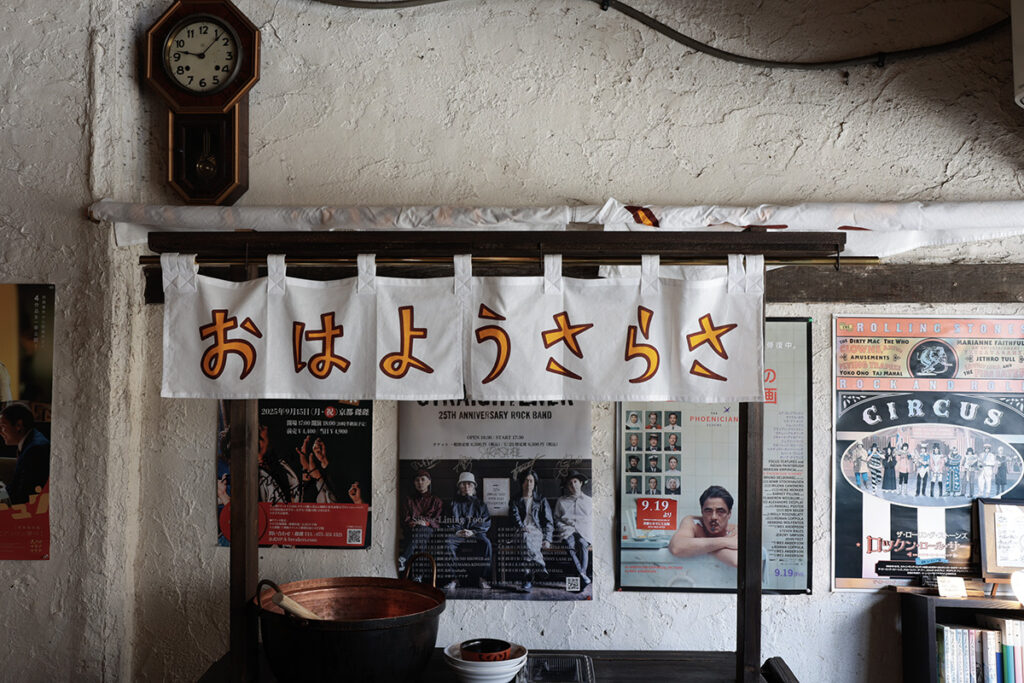
That attention alone could easily have faded, and Ozaki continued working steadily to improve the menu and atmosphere, helping turn Sarasa Nishijin into the popular café it is today. One more recent addition is “Sarasa Breakfast,” available on weekend mornings. For ¥580, it features a meat-topped rice bowl accompanied by an onsen tamago soft-cooked egg and miso soup. It’s a simple, old-fashioned meal and a fitting way to start a weekend morning in the café’s retro surroundings.
So what should you order at Sarasa Nishijin? According to Ozaki, the answer is Toruko(Turkish) rice. Despite what the name suggests, the dish has no connection to Turkish cuisine. Rather, it originated in Nagasaki Prefecture and is considered a form of gotochi gourmet, a term for local specialty dishes with relatively modern origins.
There are plenty of variations, but Toruko rice typically brings together rice, tonkatsu or fried shrimp, demi-glace sauce and a side of spaghetti, all on a single plate. Sarasa Nishijin’s version goes even further, adding a soft-cooked omelette and house-made tartar sauce to create a particularly indulgent-looking dish.
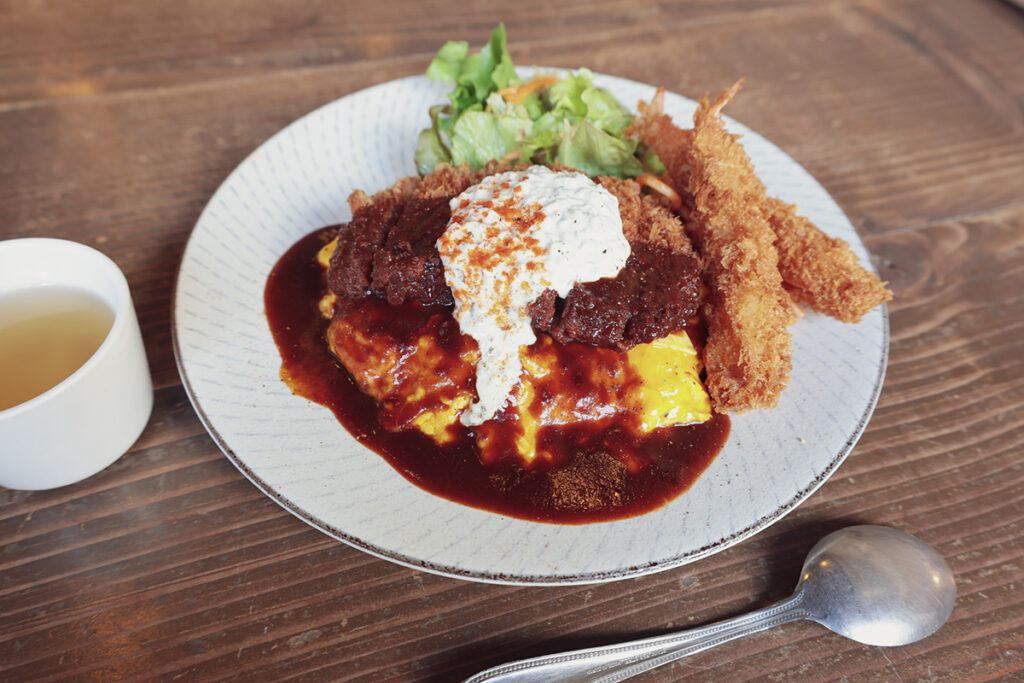
I ordered the Turkish rice and dug in. The flavours were as rich as its appearance promised, yet somehow the dish never felt overly heavy. Freshly fried tonkatsu and shrimp brought a satisfying crunch, and as I ate, I began to feel the nostalgic appeal of yoshoku, Japan’s own style of Western-influenced comfort food. Despite never having eaten this particular combination before, there was something strangely familiar about it.
Nearby, conversation and laughter mingled with the aroma of freshly brewed coffee. Time seems to move a little slower here, and before long, the tensions of everyday life begin to fade. The clouds of steam from its bathhouse days may have disappeared, but Sarasa Nishijin still offers its own kind of warmth and comfort. When you need a break from the everyday, it’s just the right place to linger.
Sarasa Nishijin
Address: 11-1 Murasakino Higashifujinomori-cho, Kita-ku, Kyoto
Hours: Sun–Thu 11:30–21:00 (L.O. 20:15); Fri 11:30–22:00 (L.O. 21:00); Sat 7:00–10:30 (breakfast menu), 11:30–22:00 (L.O. 21:00)
Closed: Wednesdays
Website: https://www.cafe-sarasa.com/shop/nishijin.html
Instagram: @sarasa_nishijin
◾️Related Article