In Japan, there are coffee shops dedicated to exploring the art of home roasting raw coffee beans, and using the hand-drip method to extract maximum flavor. This series takes you on a journey to discover these exceptional spots, where the owners’ passionate philosophy adds an extra layer of flavor. For the 10th installment, we turn the spotlight on a master of siphon brewing, the first in this series, whose precise technique and deep understanding of coffee reveal just how extraordinary a single cup can be.
PROFILE
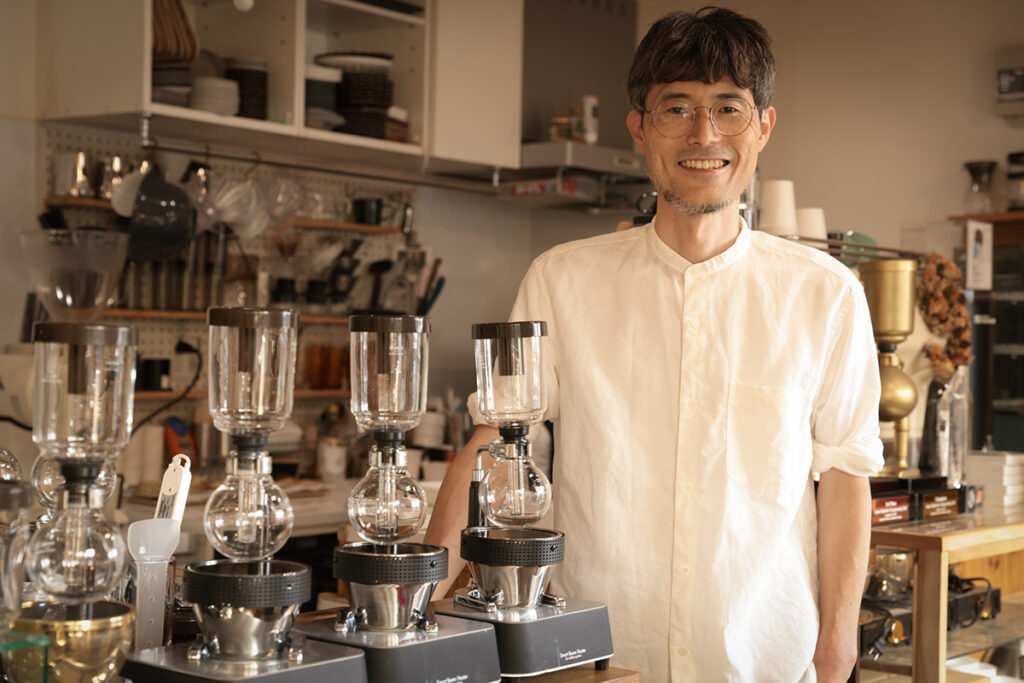
Hiroyuki Kondo was born in 1980 in Saitama Prefecture and opened his own coffee shop in 2015. A master of siphon brewing, he claimed the top spot at the Japan Siphonist Championship in 2022 and has remained a regular on the podium ever since, finishing 3rd in 2023, 2nd in 2024, and 3rd again in 2025. Known for his skill and dedication, Kondo has become one of the most respected figures in Japan’s specialty coffee scene.
The Perfect Cup, Discovered Through the Siphon
This is the 10th stop on our journey discovering Japan’s finest drip coffee. From roasting the beans to selecting the right equipment and perfecting the pour, each coffee master has shown how these three elements combine to bring out the unique character of an exceptional cup. For this installment, we meet the series’ first siphon specialist, Hiroyuki Kondo of Kondo Coffee Stand.
Siphons gained popularity in Japanese cafés during the coffee boom of the 1970s and 80s, introduced as an alternative to the traditional nel drip. Brewing at high temperatures allows the coffee to develop as it cools, offering a dynamic range of flavors, while delivering a consistently balanced cup. It’s this combination of precision and nuance that makes siphon coffee endlessly fascinating.
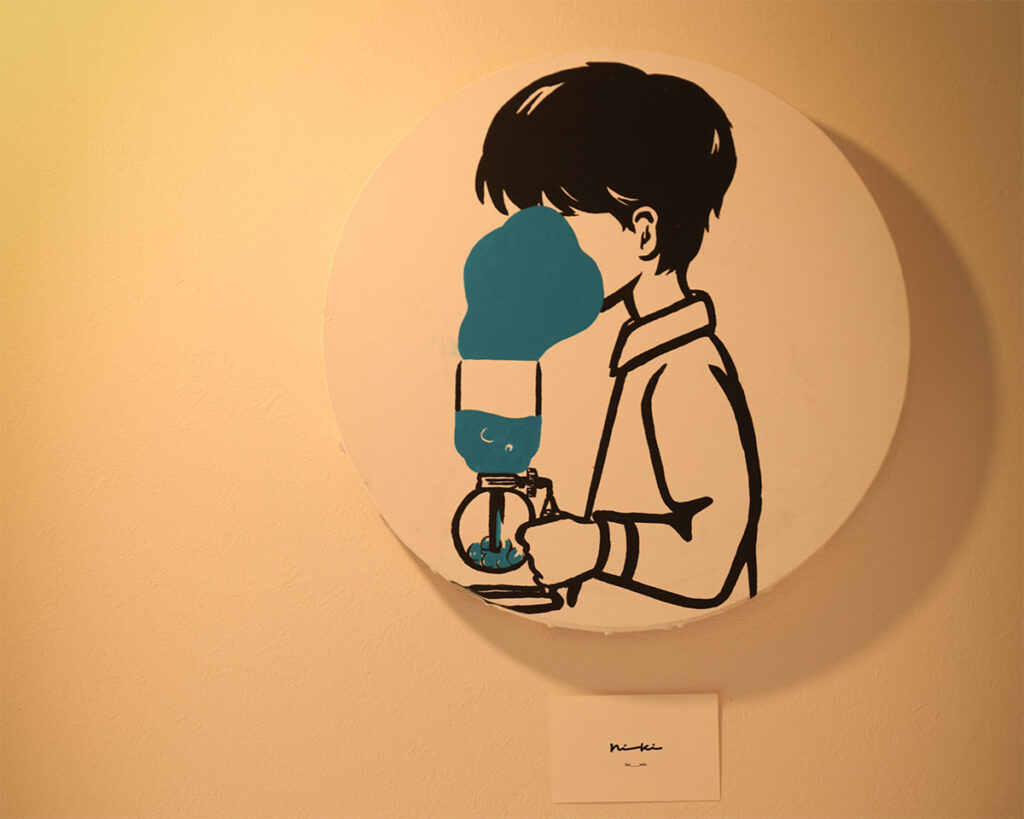

The shop’s logo illustration, which closely captures Kondo’s likeness, was commissioned from the artist NIKI.
Though Kondo is now an award-winning siphon brewer, he began by serving hand-drip coffee when he first opened his shop. Driven by a desire to learn, he attended competitions hosted by the Specialty Coffee Association of Japan, where he encountered a guiding principle that would shape his approach. It came from Tetsu Kasuya of PHILOCOFFEA, the reigning champion at the time. He declared in his presentation that he wanted to create a method for brewing delicious coffee that anyone could prepare with ease.
Those words stayed with Kondo. From that point on, he committed himself to delivering an exceptional cup that could be enjoyed consistently by anyone, and it was in the pursuit of that ideal that he discovered the siphon.
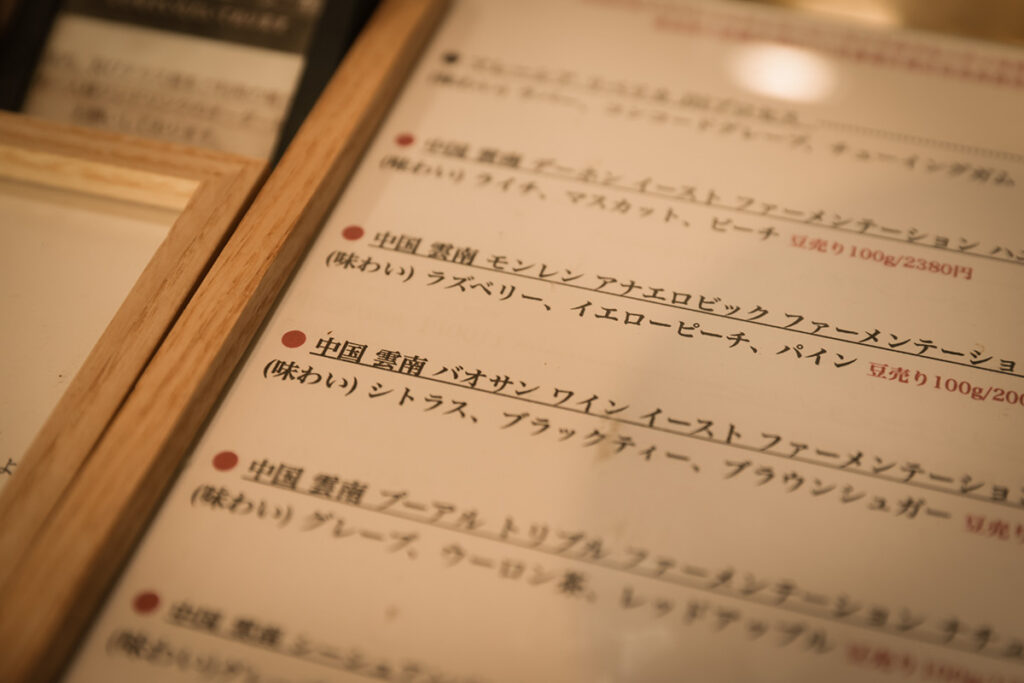
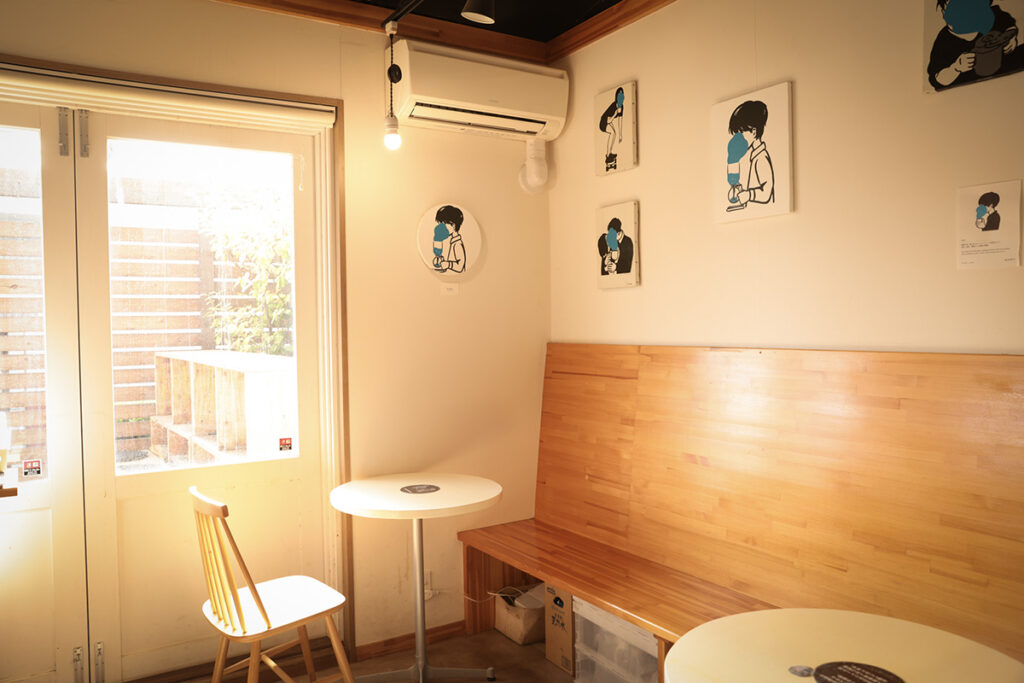
Image 1: The menu features only single-origin beans, with customers able to choose between siphon or hand-drip brewing.
Image 2: The café is a bright, natural space bathed in sunlight.
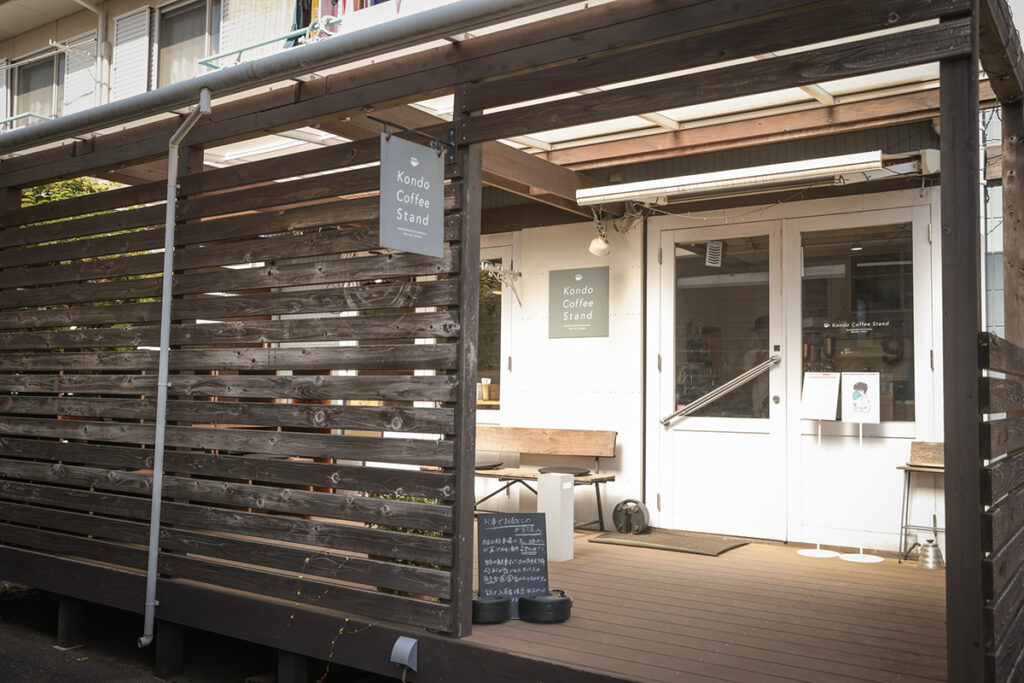
The neighborhood café features a terrace and is easily identified by the sign along the street.
“The appeal of siphon brewing lies in its ability to extract coffee quickly and consistently. That’s why it is especially well suited to expressing the delicate flavors and aromas of lightly roasted specialty coffee,” says Kondo. Aroma, in particular, begins to turn into gas the moment the coffee is brewed and quickly escapes into the air, making it essential to capture it efficiently within the cup.
Kondo sees aroma as something that evolves in three distinct stages, shaped by the temperature of the liquid. At its hottest, when the beans first meet the water, bright floral notes rise up. As the temperature settles, fruity aromas begin to bloom. Finally, as the coffee fully stabilizes, those scents give way to a deeper, chocolate-like richness.

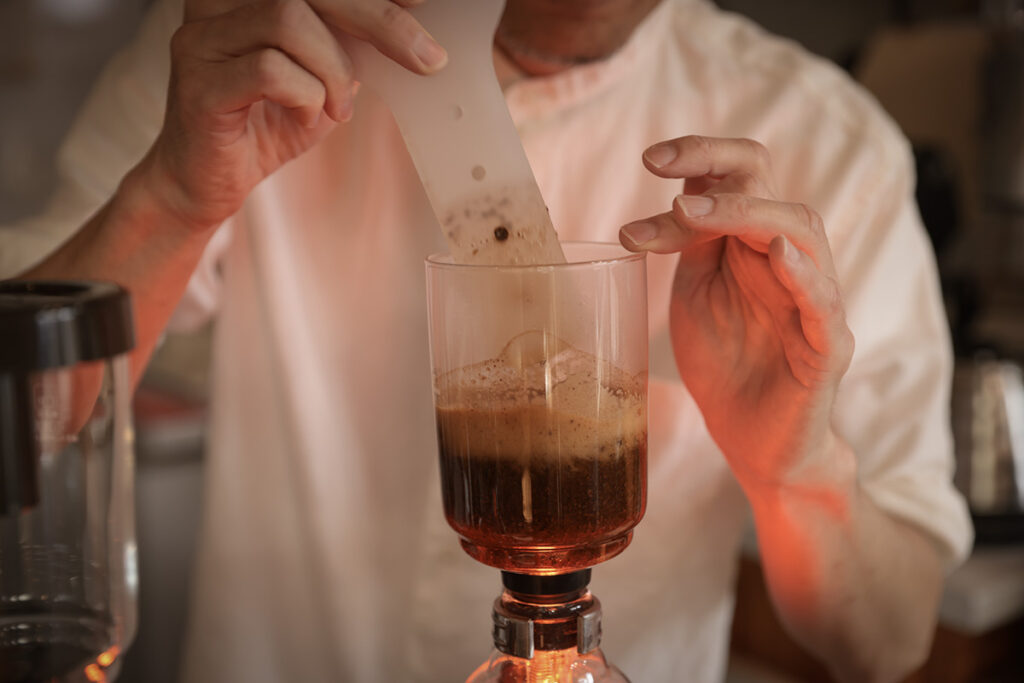
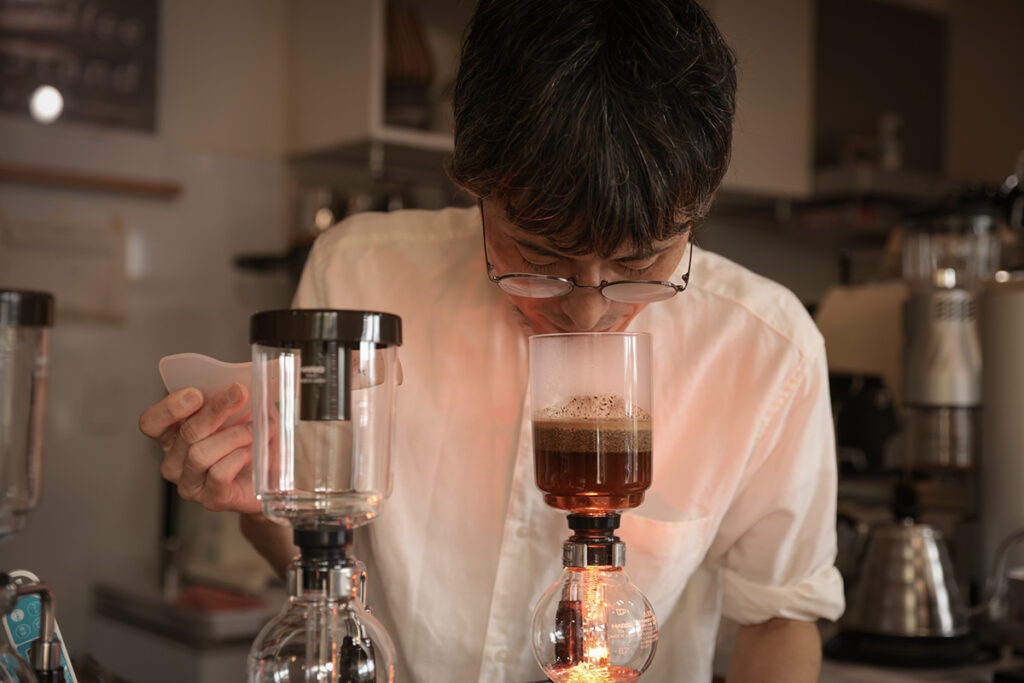
Kondo draws out the coffee’s aroma by gently stirring it inside the siphon funnel.
According to Kondo, mastering siphon brewing means knowing exactly when aroma shifts through its three stages and stirring the coffee in the funnel at just the right moments. At higher and mid-range temperatures, aromas are especially volatile, requiring intense concentration. In the final, cooler stage, the coffee is stirred gently, echoing the structure established earlier.
“Ninety percent of what we perceive as flavor comes from aroma,” he explains. “Since aroma begins turning into gas the instant coffee is brewed, a siphon allows you to capture it fully in a short amount of time.”
The cup ordered that day was a Malaysian Liberica, processed using the JH method. Its crystal-clear profile was layered with delicate aromas that shifted like a fragrance, evolving seamlessly from top notes to a lingering finish.
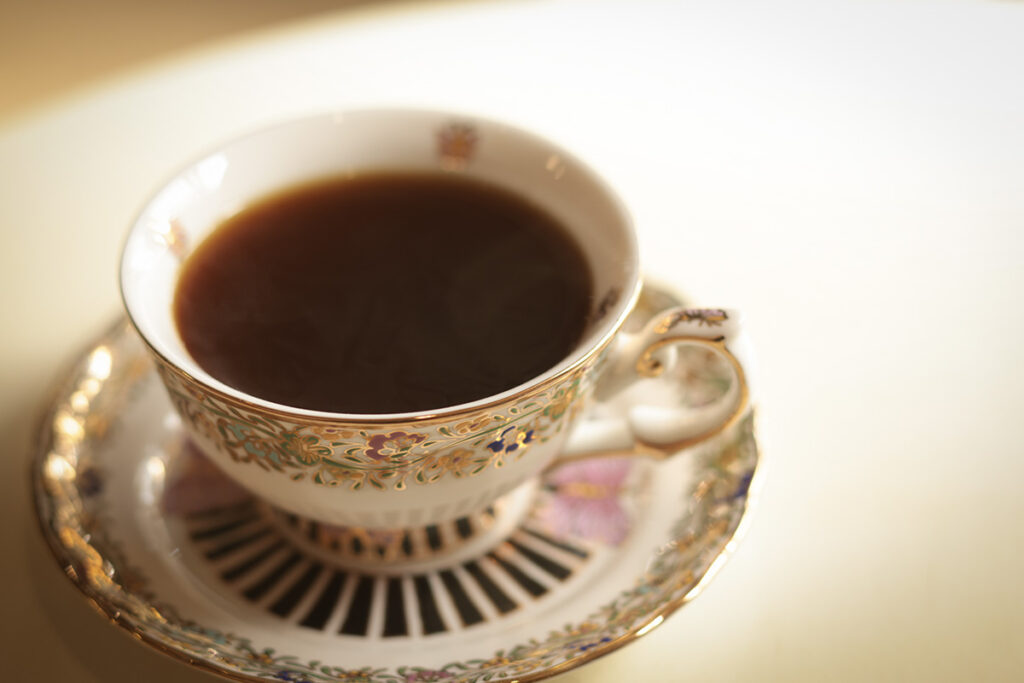
He notes that the aroma is best enjoyed when served in the beautifully hand-painted cup.
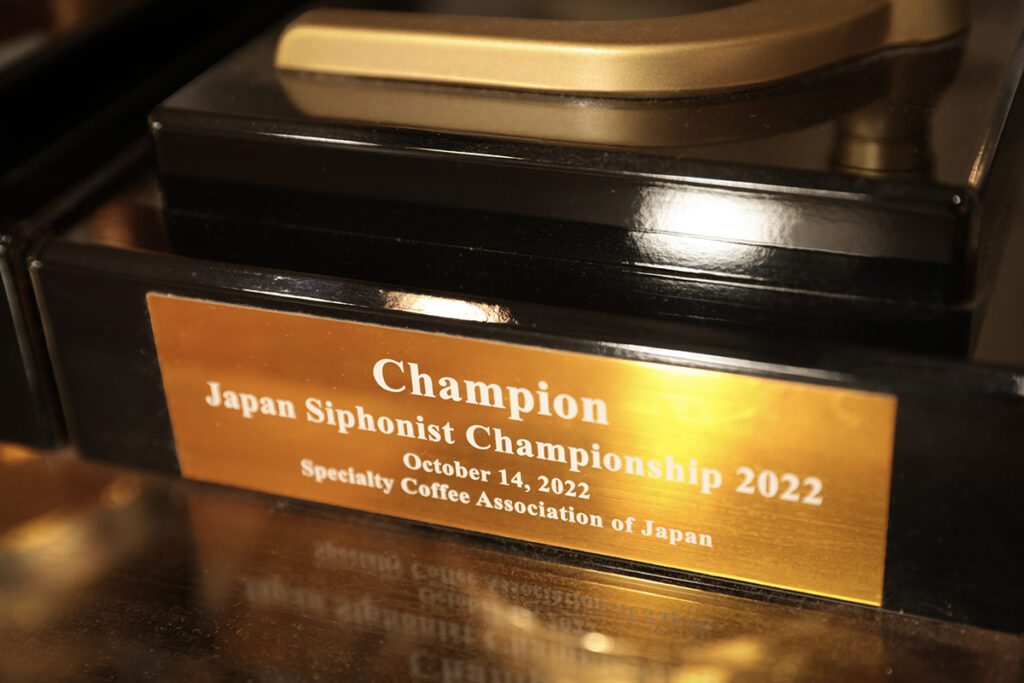
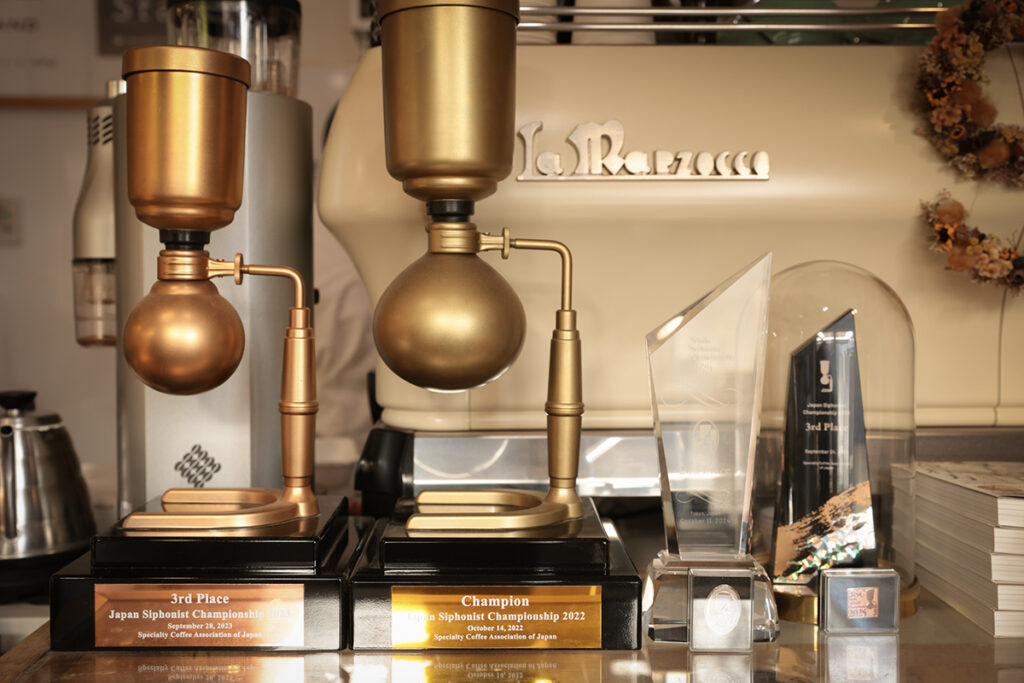
The trophies he has collected over the years are shaped like siphons, doubling as eye-catching accents within the space.
Honed Through Persistence and Dedication
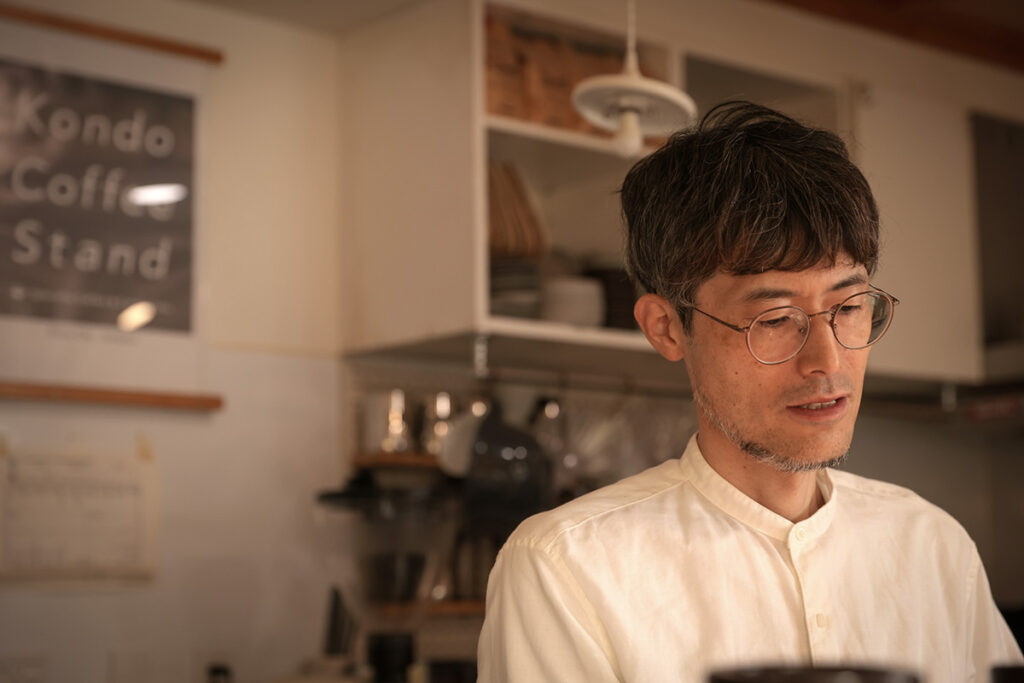
In contrast to his passionate discourse on coffee, he spoke about his own life in a calm, measured way.
Kondo’s journey with coffee began while he was still working an office job. After work, he would often stop by a retro café in Asakusa, where he found himself drawn not only to the coffee, but to the calm, welcoming atmosphere created by its owner. Those evenings planted the idea that he, too, might one day want to run a place like that.
As he set his sights on independence, Kondo continued working while attending pastry school, where he was introduced to the world of specialty coffee. Its bright, fruity flavors were unlike anything he had tasted before, and within a year, he opened his own shop. Looking back, he reflects, “When something truly moves me, I pursue it until I’m satisfied. Through repeated trial and error, I gradually built up my skills.”
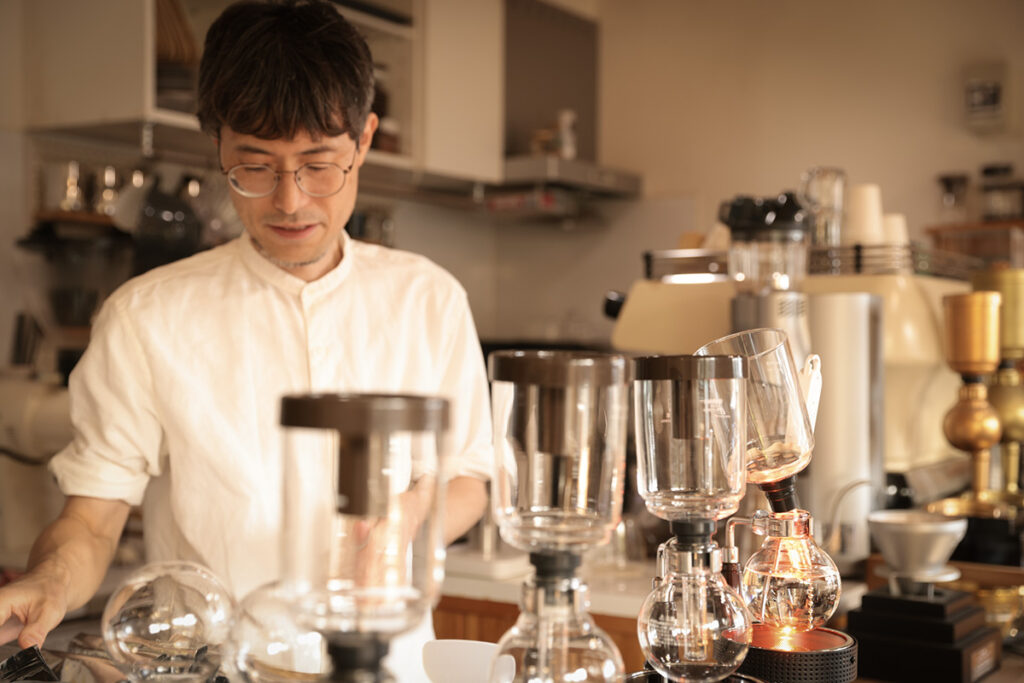
Even in his smallest gestures, his meticulous nature comes through.
One of the experiments that ultimately shaped his current style was siphon brewing. Until then, Kondo had relied on purchased roasted beans, but in pursuit of his ideal of making great coffee accessible to anyone, he began roasting his own beans in 2024.
“I’m still at the beginning when it comes to roasting, so I use a test roaster,” he says modestly. The Norwegian-made ROEST, however, is a quiet favorite among those in the know. Compact and box-shaped, it sits neatly on a shelf, yet offers highly precise temperature control and flexible profiling powered by advanced technology. It has proven to be the perfect partner for carefully roasting small batches of rare beans.

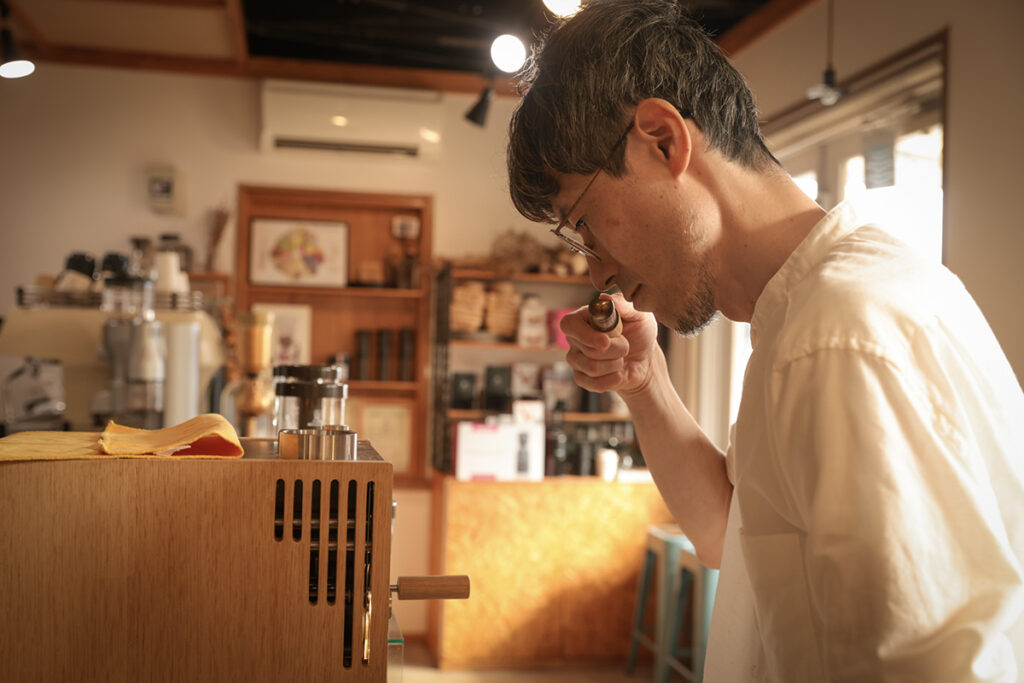
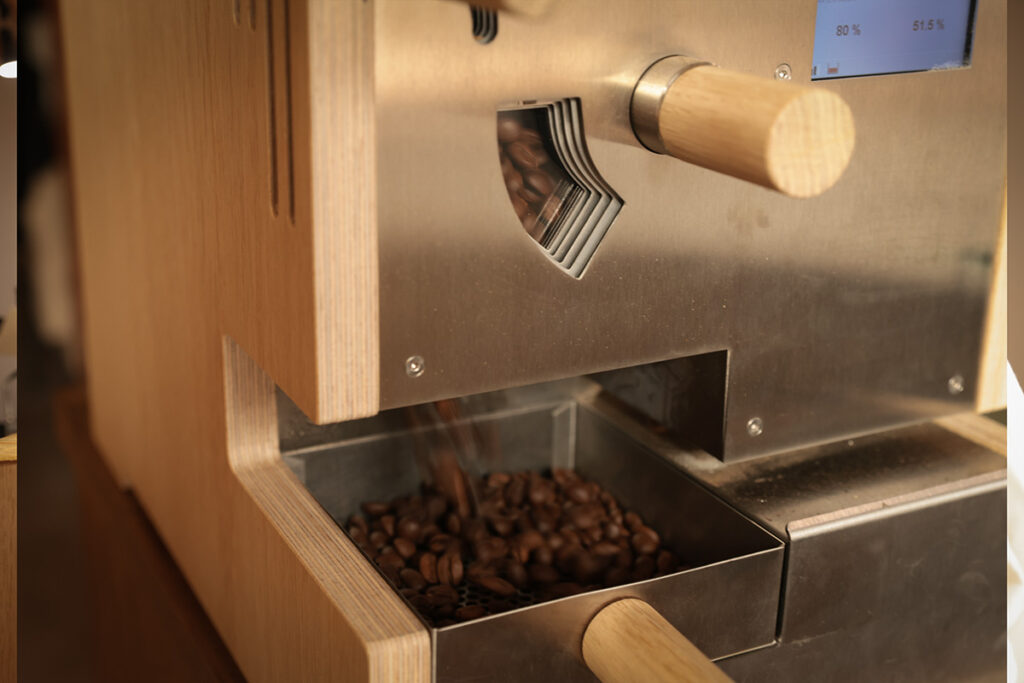
Its compact, elegant design blends seamlessly into the interior.
Beyond coffee, the scones and custard pudding he bakes fresh each morning have also become an essential part of Kondo’s craft. “I tend to obsess over things, so I’m still refining them,” he says, yet the scone we ordered far exceeded its modest price. The Earl Grey scone is studded with white chocolate and topped with caramelized lemon peel and cacao nibs. Free of the dryness often associated with scones, its rich texture pairs beautifully with fruity coffee. The steamed pudding, which he honed during the pandemic, follows with a gentle nostalgia before giving way to a deep, lingering richness.

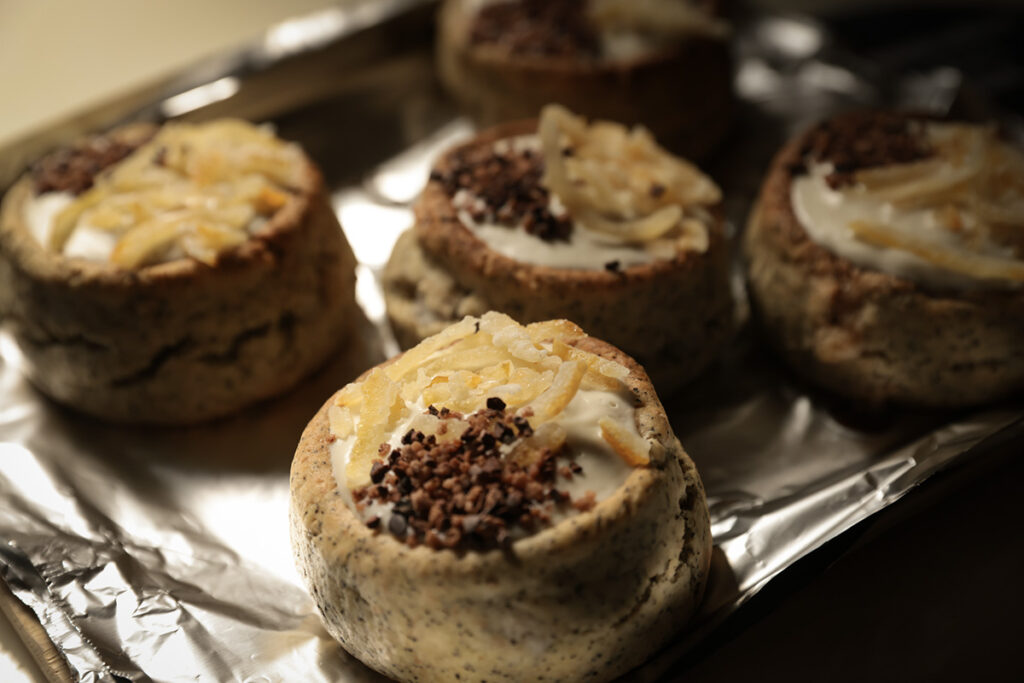
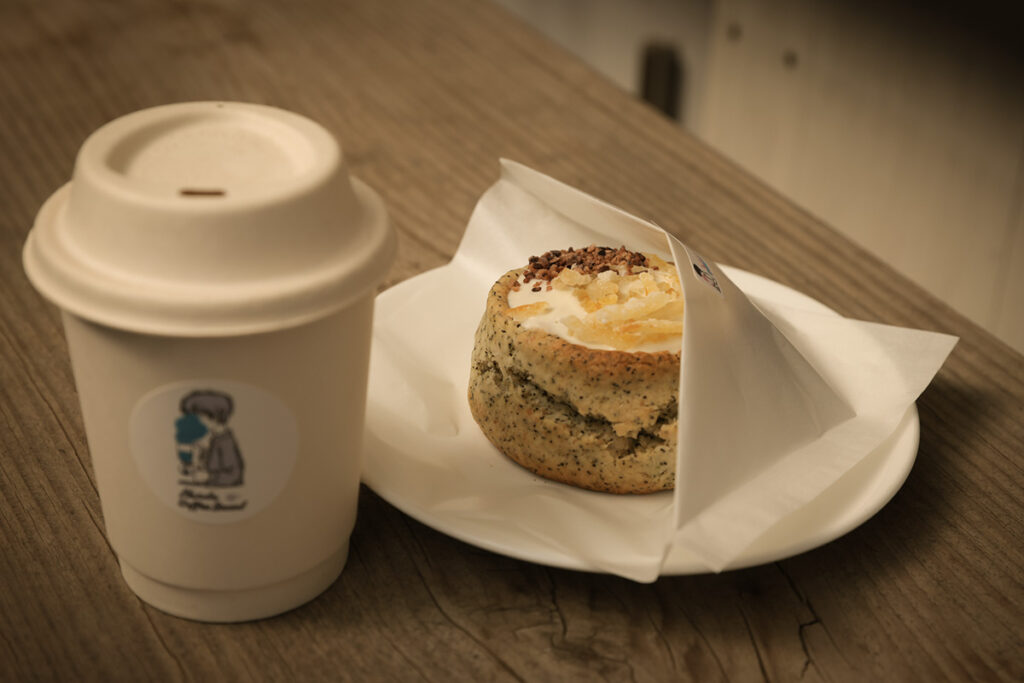
The rich custard pudding accompanies a leisurely coffee moment, while the scone is served like a burger for easy enjoyment.
While admiring the freshly baked scones, my eye drifts to a photograph on the counter. It shows Kondo’s father, who has since passed away. He speaks little about his personal life, yet everything in the space feels quietly connected: the way he handles the siphon while gauging aroma, the handmade sweets, and the timeworn snapshot on display. Together, they create a cup of coffee that can only be found here. Enjoyed in a quiet residential neighborhood just beyond the city’s bustle, it becomes a moment of calm, tinged with nostalgia.
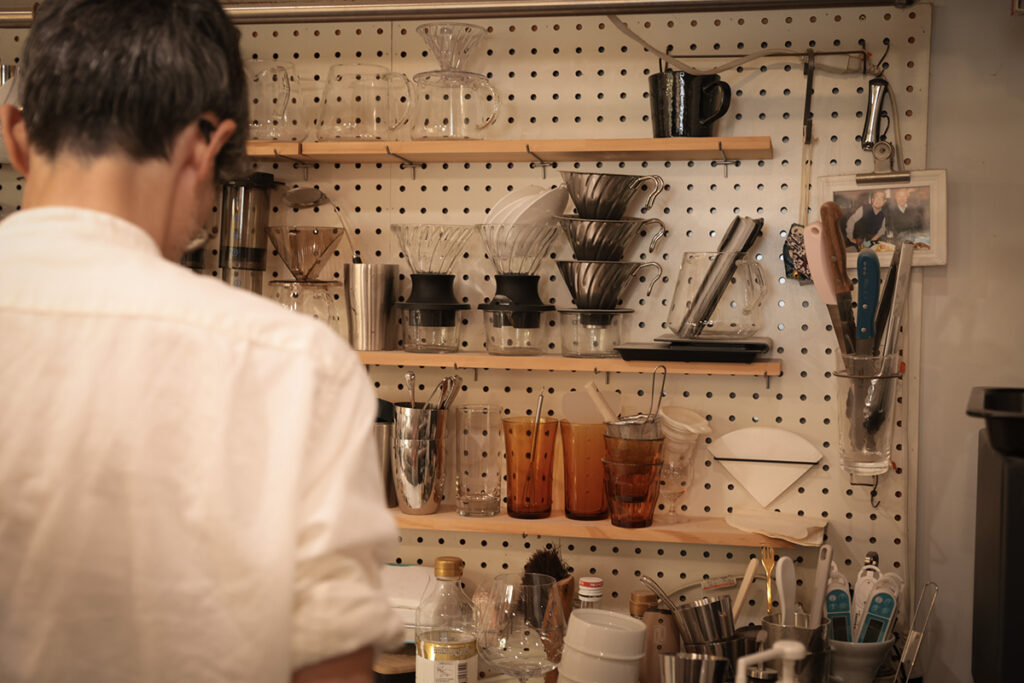
A photograph of his father, spotted beyond Kondo’s shoulder. It is likely a presence that brings him back to his roots.
◾️SHOP
Kondo Coffee Stand
Address: 5-11-54 Nobidome, Niiza, Saitama
Instagram : @kondocoffeestand

◾️COFFEE
Roast level: Light roast
Roaster: ROEST (Norway), 50g
Grinder: Mahlkönig
Brewing method: HARIO siphon brewer, Smart Beam Heater
Selection: Approximately seven single-origin coffees only
Serveware: Coffee is typically served in mugs, with hand-painted cups and saucers reserved for select beans