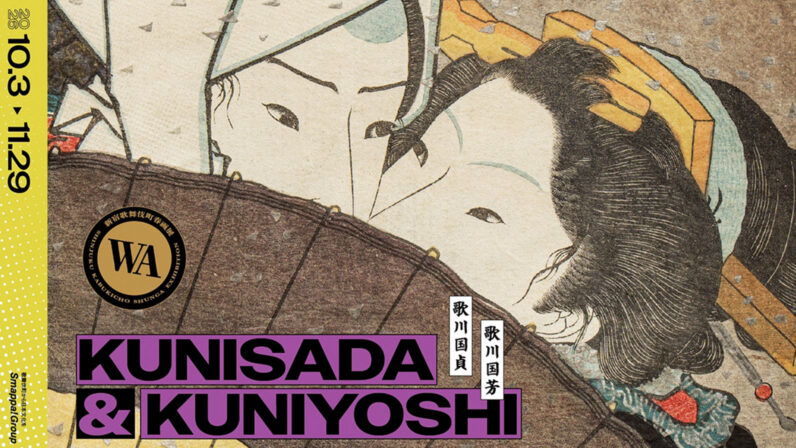
Among the great names of ukiyo-e, Utagawa Kunisada and Utagawa Kuniyoshi stand out as two of the most popular artists of the late Edo period. Utagawa Kunisada won acclaim for his yakusha-e actor portraits and bijin-ga images of beautiful women, while Utagawa Kuniyoshi made his name with dynamic musha-e warrior prints. Now, a new exhibition in Shinjuku’s Kabukicho offers the chance to compare these two ukiyo-e masters who captivated late-Edo Japan through a very different side of their work: shunga, or erotic ukiyo-e. “KUNISADA & KUNIYOSHI — Shinjuku Kabukicho Shunga Exhibition: WA” runs from October 3 to November 29, 2026.
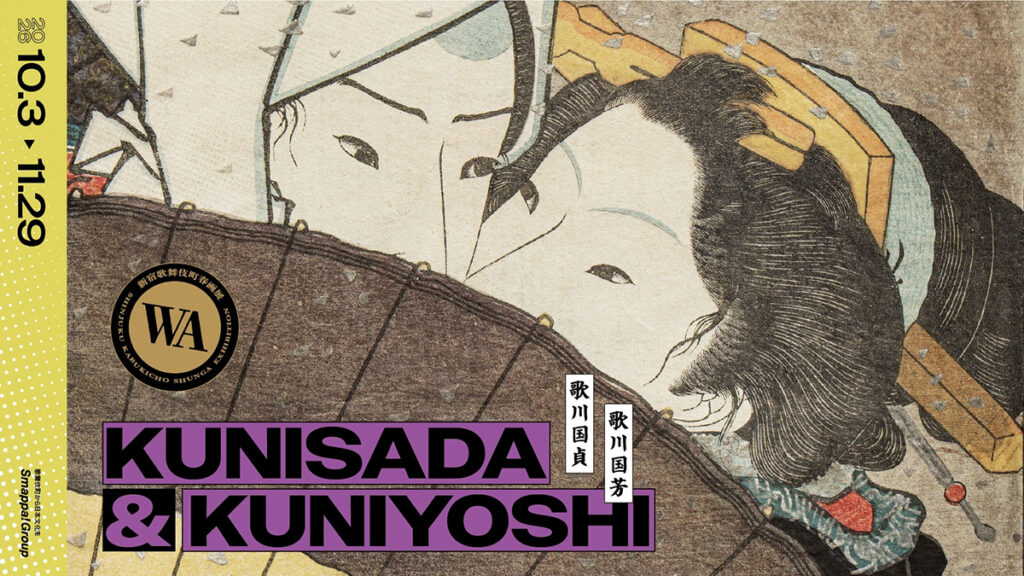
Two Ukiyo-e Masters, Two Distinct Styles of Shunga
“Toyokuni for portraits, Kuniyoshi for warriors, Hiroshige for famous places.”
A popular late-Edo guide summed up the era’s leading ukiyo-e artists in just a few words. Kunisada, who later assumed the name Toyokuni III, had become synonymous with portraits, while Kuniyoshi was renowned for his warrior prints.
The two artists came from the same artistic lineage, having both studied under Utagawa Toyokuni I. Kunisada was the senior of the two pupils.
Kunisada specialised in yakusha-e actor prints and bijin-ga images of beautiful women, and was extraordinarily prolific, with more than 10,000 works attributed to him over his lifetime. He also found great success illustrating the Edo-period bestseller Nise Murasaki Inaka Genji. At the height of the work’s enormous popularity, he created three works of shunga that would later become collectively known as the “Three Genji.”
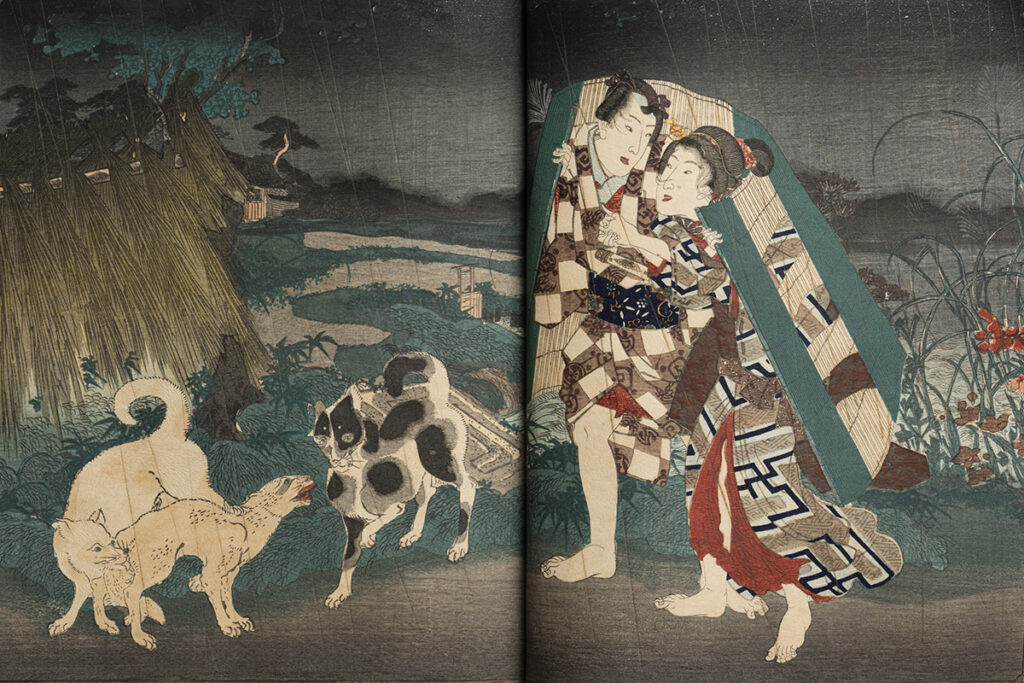
Utagawa Kunisada, Shōutsushi Aioi Genji, Vol. 1. Colour woodblock print, c. 1851 (Kaei 4). Collection of Uragami Sokyu-do.
Kuniyoshi, the younger of the two pupils, rose to fame at around the age of 31 with his famous woodblock print series One of the 108 Heroes of the Popular Suikoden, earning him a reputation as the master of warrior prints. Beyond his bold musha-e, he was known for his playful imagination, creating everything from unconventional composite pictures to humorous prints depicting cats as people. His shunga, however, reveals a different side of his work, with the elegance and beauty more commonly associated with bijin-ga coming to the fore.
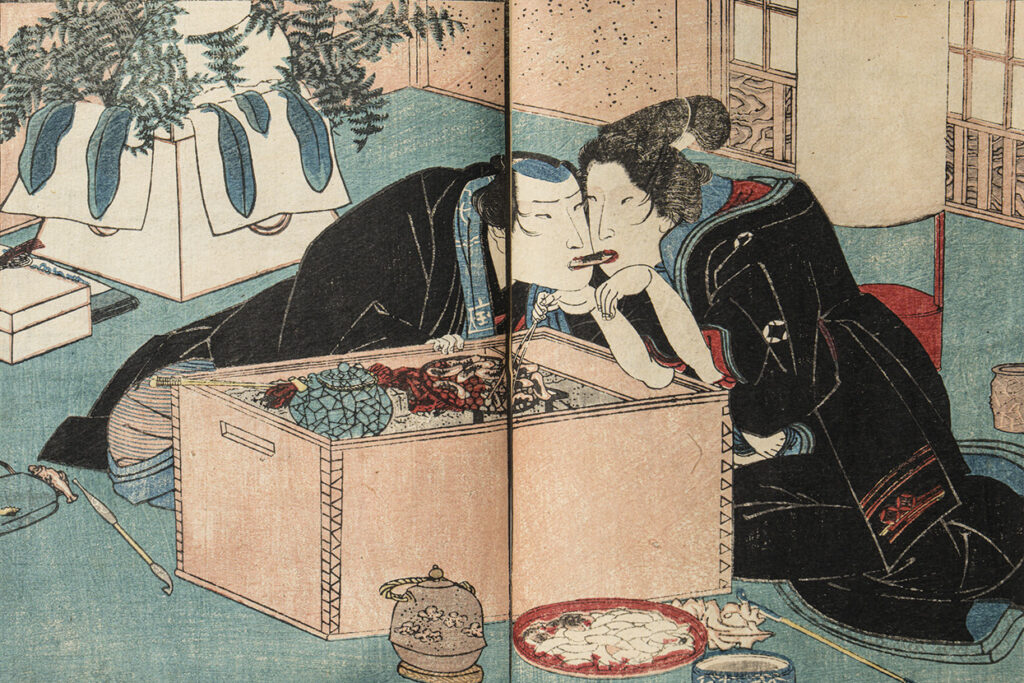
Utagawa Kuniyoshi, Aki no Nanakusa Zokuhen, Vol. 2. Colour woodblock print, 1832 (Tenpō 3). Collection of Uragami Sokyu-do.
The exhibition presents shunga by both artists alongside the actor prints and warrior prints that were their respective specialties. By placing their shunga side by side, it reveals how differently each artist approached the same genre, and the individual character each brought to it.
The Extraordinary Craftsmanship of the Three Genji
A major highlight of the exhibition is the chance to see all three works in Kunisada’s celebrated shunga trilogy, known collectively as the Three Genji, displayed together.
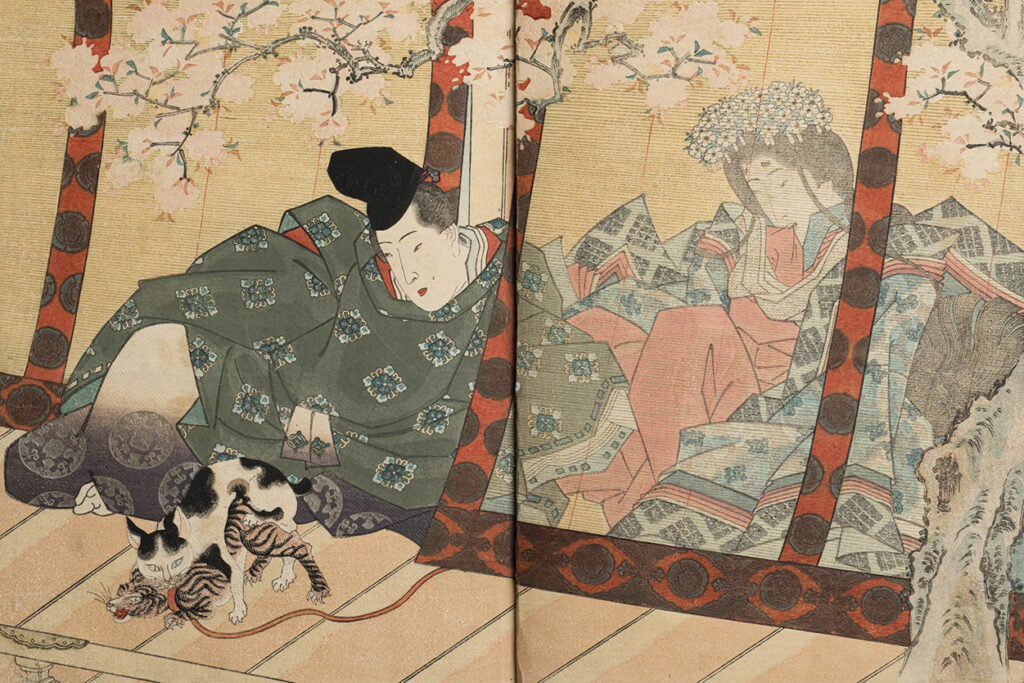
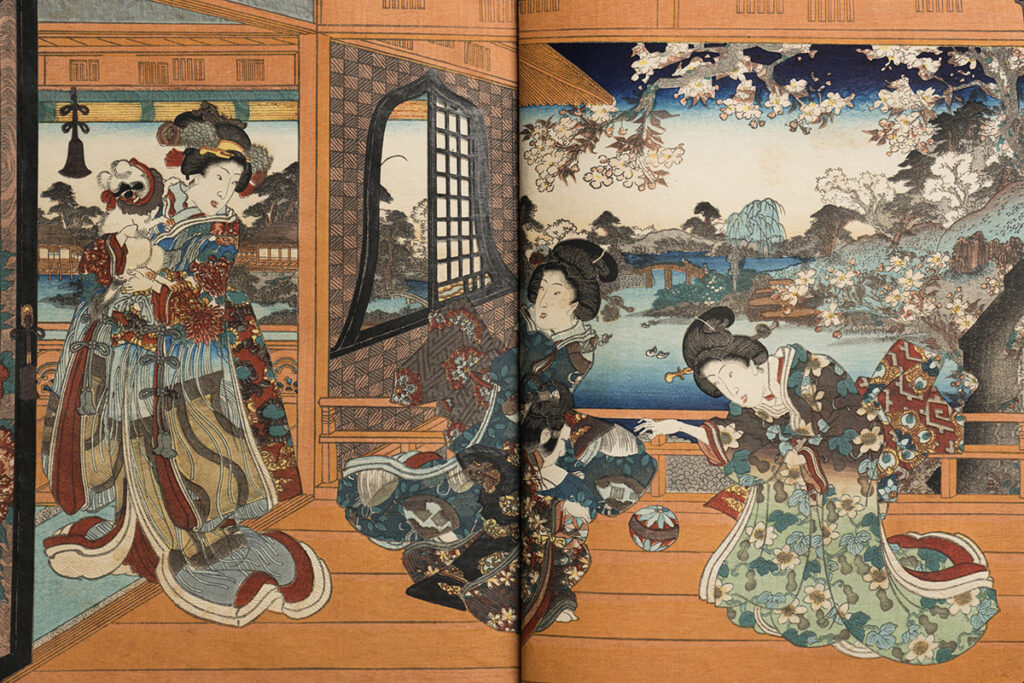
Their origins can be traced to the immense popularity of Nise Murasaki Inaka Genji, a bestselling adaptation of the classic The Tale of Genji that set the story in the Muromachi period. Its success sparked a wave of Genji-inspired ukiyo-e known as “Genji-e,” and it was amid this boom that Kunisada created Enshi Gojūyojō, Kachō Yojō Azuma Genji and Shōutsushi Aioi Genji.
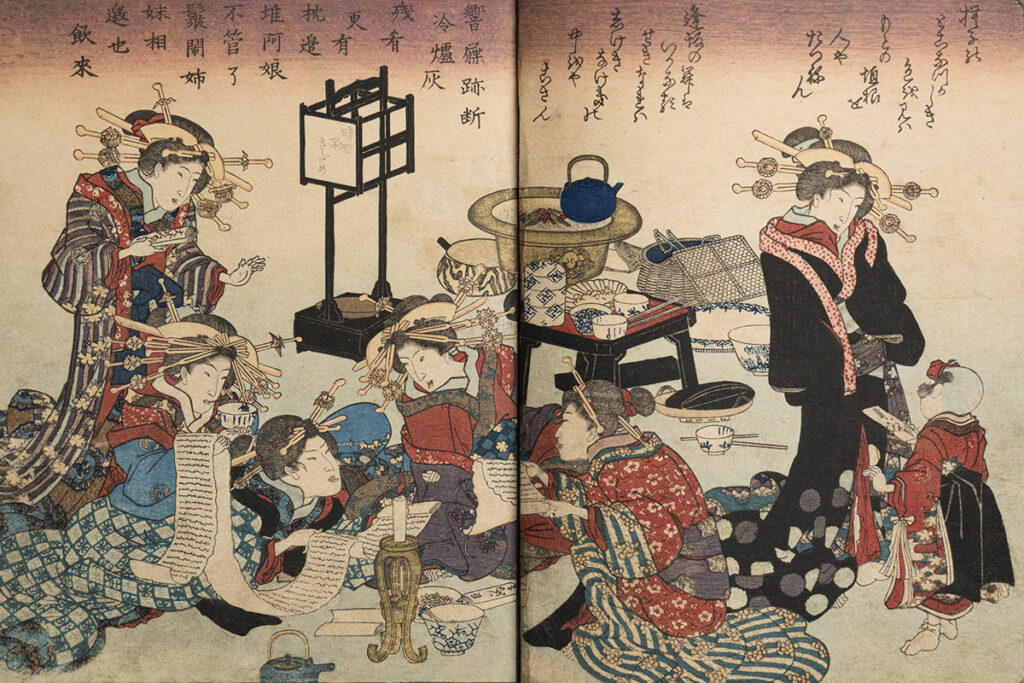
First image: Enshi Gojūyojō, Vol. 2. Colour woodblock print, c. 1835 (Tenpō 6).
Second image: Kachō Yojō Azuma Genji, Vol. 1. Colour woodblock print, 1837 (Tenpō 8).
Third image: Shōutsushi Aioi Genji, Vol. 1. Colour woodblock print, c. 1851 (Kaei 4).
All works: Collection of Uragami Sokyu-do.
But the imagery itself is only part of what makes the Three Genji remarkable. Look closely and you’ll find some of the most technically accomplished ukiyo-e printmaking of the Edo period. There is kebori, capable of rendering three individually carved strands of hair within a width of just 1 mm; karazuri, which embosses texture into the paper; tsuyazuri, which creates areas of gloss; and even gold and silver printing.
Producing such works demanded extraordinary skill from everyone involved, from Kunisada himself to the carvers and printers responsible for bringing his images to life. It is little wonder that the Three Genji have been described as a pinnacle of ukiyo-e woodblock printing.
Particularly lavish is Shōutsushi Aioi Genji, created around 1851. Mica, gold and silver were used extensively throughout the work, making it perhaps the most sumptuous of the three.
With shunga, it is easy for the subject matter to command most of the attention. Look closely at the details, however, and these works reveal the remarkable sophistication of Edo-period ukiyo-e printmaking. The exhibition offers a chance to look beyond their erotic imagery and appreciate shunga anew as works of ukiyo-e.
Machi Tawara and Yudai Chiba Lend Their Voices to the Audio Guide

This exhibition also marks the first time the Shinjuku Kabukicho Shunga Exhibition WA series has introduced an audio guide.
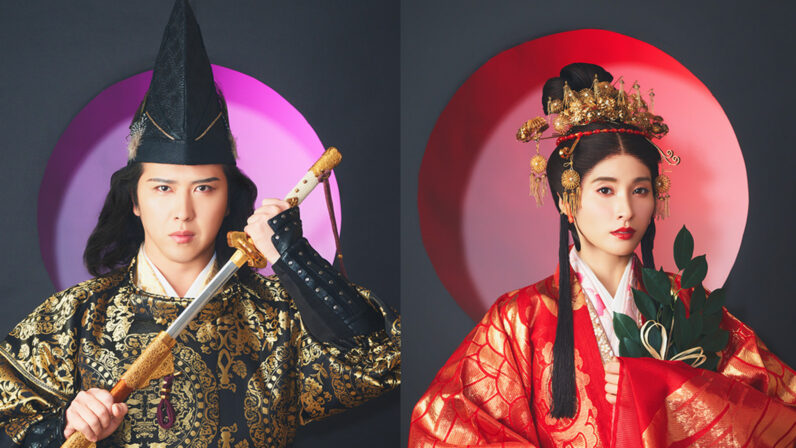
Poet Machi Tawara and actor Yudai Chiba serve as its two guides, each approaching the exhibition from a different perspective. Tawara explores the connections between The Tale of Genji and Nise Murasaki Inaka Genji, which are thought to have provided the basis for Kunisada’s Three Genji, while explaining the scenes depicted and the poetry that accompanies them. Chiba provides a broader introduction to the exhibition, guiding listeners through its shunga, artists and individual works.
Visitors can access the audio guide free of charge on their own smartphones by scanning QR codes at the venue. An English-language version will be available, and all exhibition information will also be displayed in both Japanese and English.
The programme extends beyond the exhibition itself, with 15 events across six different programmes scheduled throughout its run. These include guided tours by Shungirl, workshops on reading kuzushiji (historical cursive Japanese) led by Kabukicho hosts, traditional rakugo storytelling and katsuben, the art of live narration traditionally performed alongside silent films.
Full details, schedules and booking information can be found on the official website below.
KUNISADA & KUNIYOSHI — Shinjuku Kabukicho Shunga Exhibition: WA
Official Website and Tickets: https://www.smappa.net/shunga/en/exhibition/ex30.html

Dates: October 3–November 29, 2026
First Exhibition Period: October 3–November 1
Second Exhibition Period: November 3–29
Closed November 2 for exhibition changeover.
Hours: 11:00–21:00 (last admission 20:30)
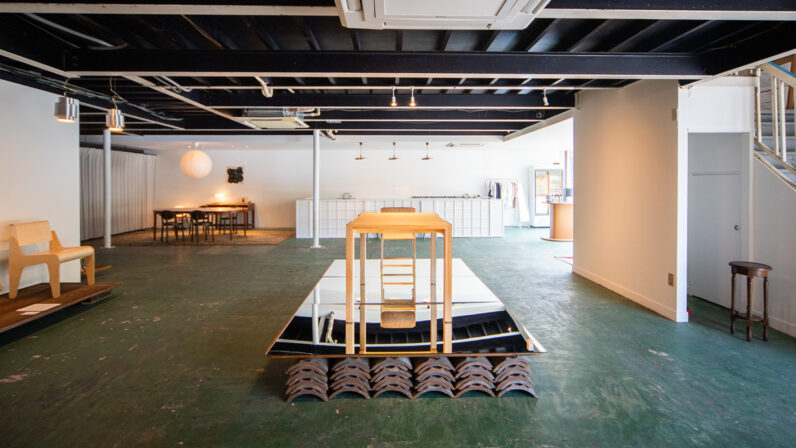
Venues: Shinjuku Kabukicho Noh Stage / Host Club BOND
Admission: General ¥1,900 advance / ¥2,200 same-day; Students ¥1,200 advance / ¥1,500 same-day
Admission restricted to ages 18 and over.
Free audio guide available in Japanese and English.