Yamato Takeru is a legendary prince whose story appears in the Kojiki and Nihon Shoki, Japan’s oldest surviving historical chronicles. His journeys across the country and battles against his enemies have inspired countless works of performing art and storytelling over the centuries.
This October, the ancient legend takes on a new form in Kumamoto, with a bold reinterpretation of Yamato Takeru’s story taking to the stage on October 3 and 4, 2026.
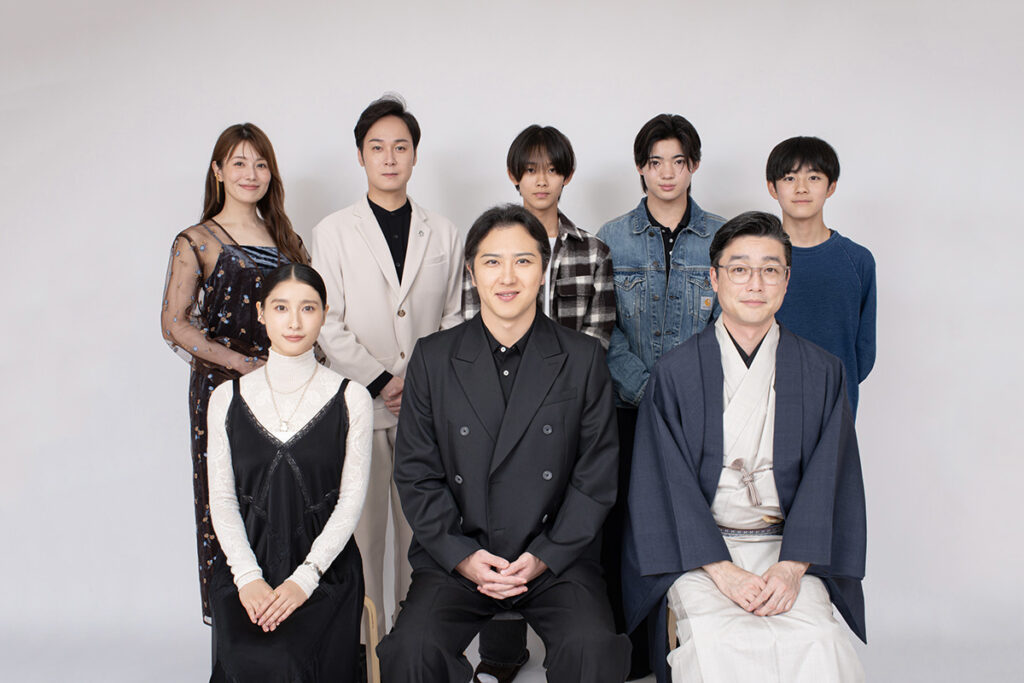
At the September press conference, the production’s star-studded cast came together ahead of a performance that returns to the roots of Japan’s traditional performing arts.
Front row, from left: Tao Tsuchiya, Matsuya Onoe, Kikunojō Onoe
Back row, from left: Minami Maihane, Yuki Hayashi, with fiest/TRAINEE (Hikaru Matsuzaki, Yu Kosukegawa, Taiga Shimada)
Rather than telling the story of a single hero, Takeru to Takeru: Hi no Kuni no Mahoroba introduces two protagonists, a man and a woman whose names are written with different kanji but are both pronounced “Takeru.”
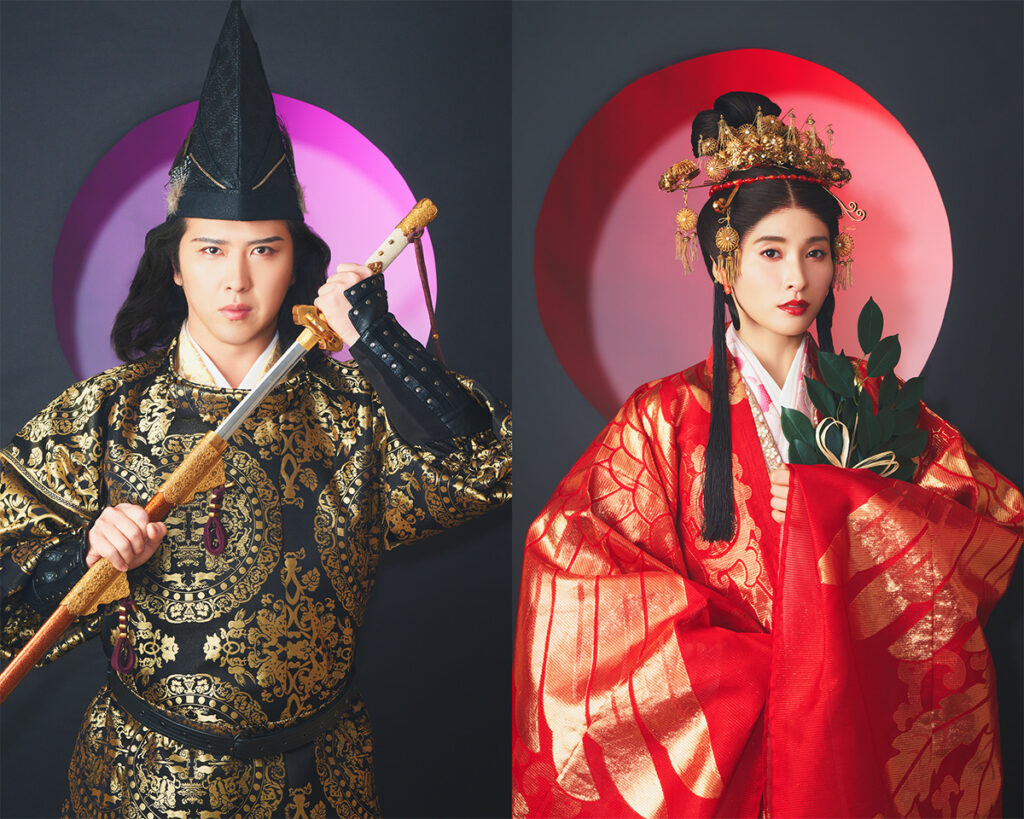
Matsuya Onoe plays the prince Takeru (武), who is sent by the Imperial Court to conquer the Kumaso. Tao Tsuchiya plays Princess Takeru (建), a princess of the Land of Fire born among the Kumaso, placing the two on opposing sides of the conflict.
They first encounter one another as enemies, only to gradually fall in love. Their eventual union gives rise to Yamato Takeru, the figure destined to become a legendary hero. Based on ancient mythology but reinterpreted through a contemporary lens, the production transforms their conflict into a new story of love and coexistence across opposing sides.
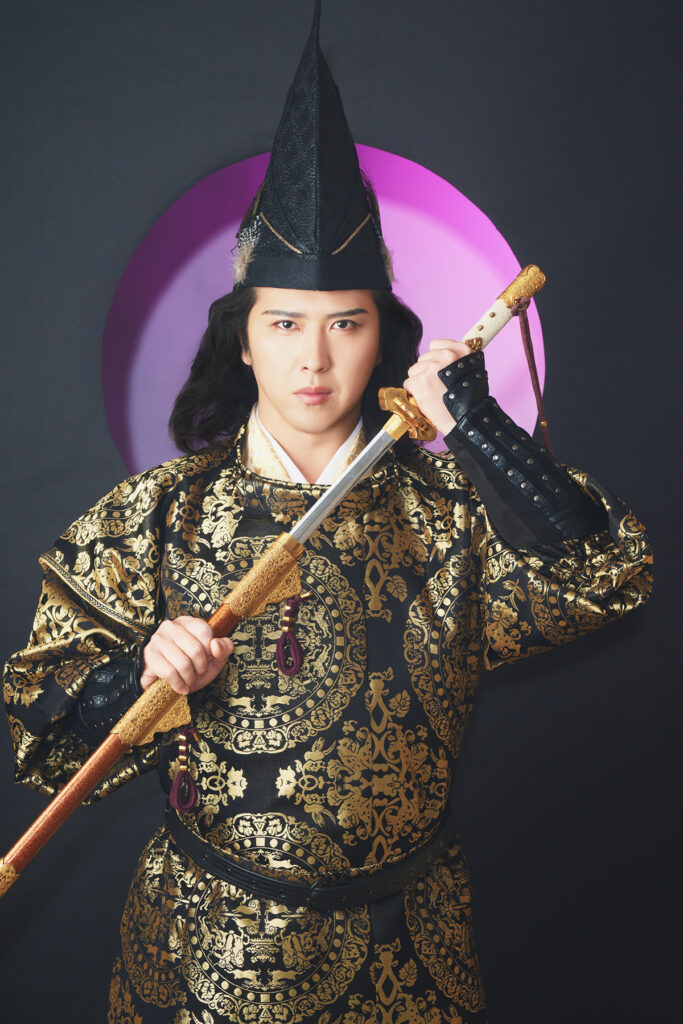
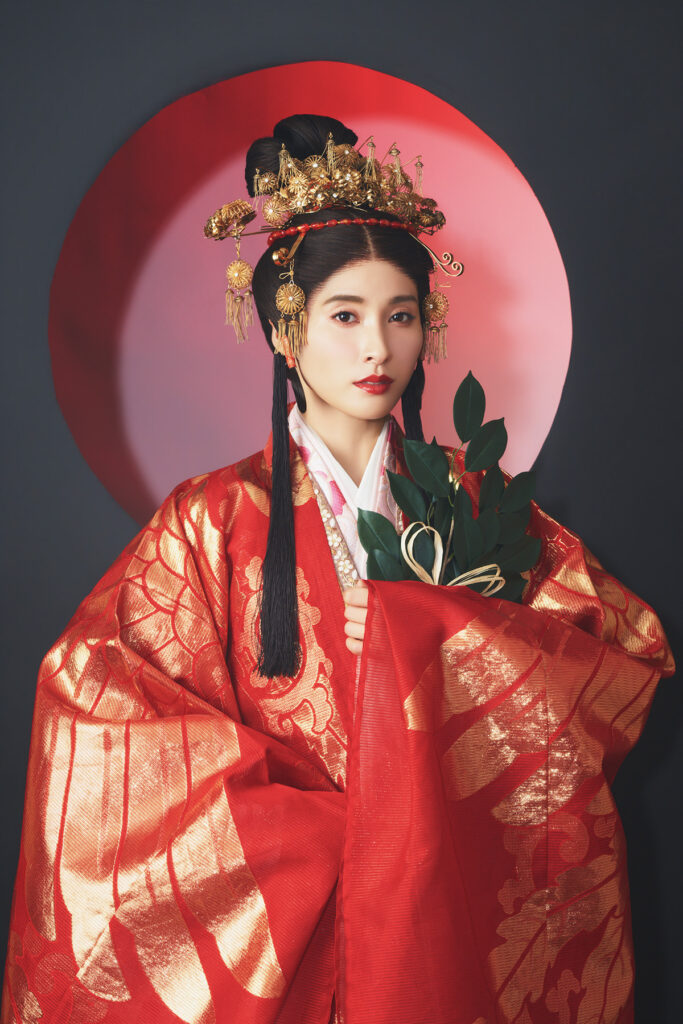
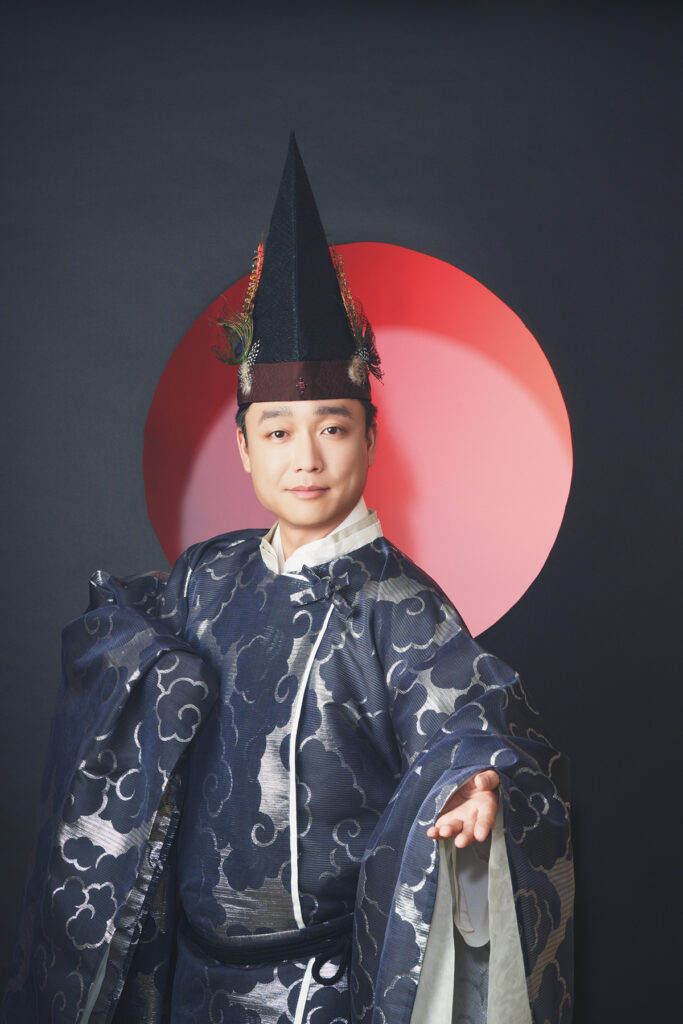
The vibrant colours and intricate patterns of the traditional costumes add an otherworldly splendour to the stage.
First image: Matsuya Onoe as Takeru, the hero of the ancient myth
Second image: Tao Tsuchiya, an accomplished contemporary dancer, as Princess Takeru
Third image: Kikunojō Onoe, who oversees the production’s structure and direction, also appears as Emperor Keikō, father of Yamato Takeru
One of the production’s defining features is that, rather than faithfully reproducing the old story, it reinterprets the myth itself from the perspective of contemporary values.
Kabuki, Nihon Buyo and Contemporary Dance: Bringing Myth to Life Across Genres
The production is also distinguished by its use of shigekigeki, a style that crosses the boundaries between different Japanese performing arts.
Matsuya Onoe, who plays Takeru, comes from the world of kabuki, one of Japan’s best-known traditional performing arts. Tao Tsuchiya, who plays Princess Takeru, is known not only for her acting but also for her background in contemporary dance.
Overseeing the production’s structure, choreography and direction is Kikunojō Onoe, the fourth-generation head of the Onoe school of Nihon Buyo, or classical Japanese dance. He also appears on stage as Emperor Keikō, Yamato Takeru’s father.
Shigakugeki is a form of stage performance that centres on the beauty of Japanese language and poetry, bringing together drama, dance and music. In this production, traditional Japanese instruments such as the shakuhachi bamboo flute and biwa lute are joined by marimba and percussion.
Rather than presenting kabuki, Nihon Buyo, contemporary dance, traditional music and modern music as separate forms, the production allows them to intersect within a single work, bringing an ancient myth to life through contemporary stage expression.
Yamato Takeru also holds special significance for Matsuya Onoe. Although the legendary hero has been portrayed many times in kabuki, this will be Onoe’s first time taking on the role, one he says he had long hoped to play.
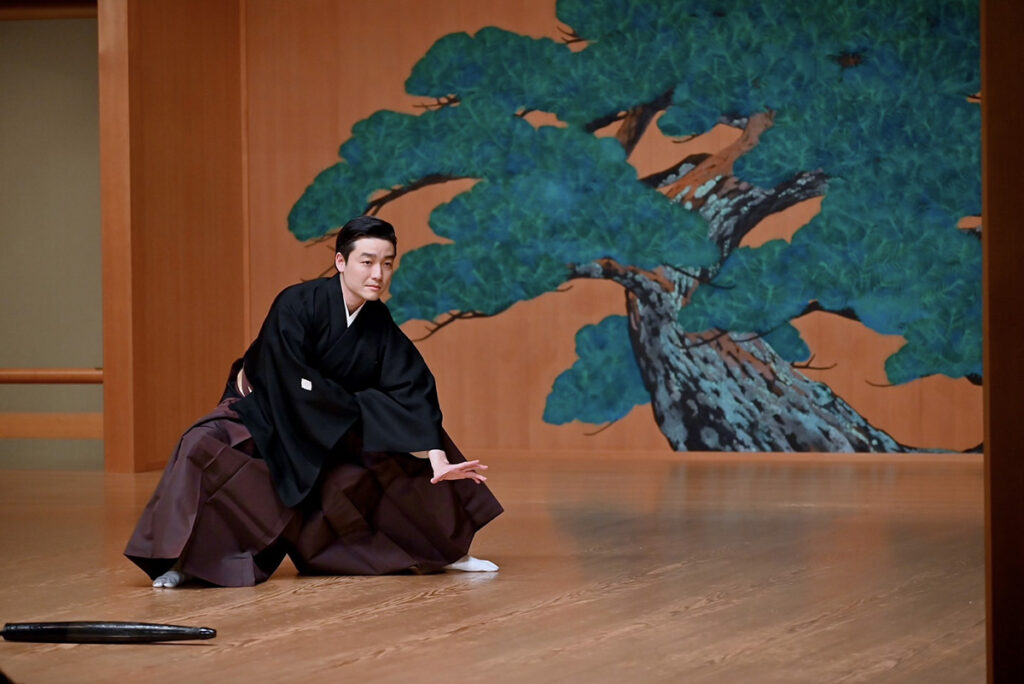
Kikunojō Onoe, fourth-generation head of the Onoe school of classical Japanese dance, is responsible for the production’s structure, choreography and direction.
Ten Years After the Kumamoto Earthquakes: A New Myth Born in the Land of Fire
Just as important to the production is its setting: Kumamoto.
Known since ancient times as the “Land of Fire,” the region has deep ties to Japan’s mythology, an identity echoed in the production’s title, Takeru and Takeru: Hi no Kuni no Mahoroba. The subtitle roughly translates as “Mahoroba of the Land of Fire,” with mahoroba being an old Japanese word for an ideal or beautiful place, particularly a cherished land or place to call home.
The timing carries further significance. In 2026, Kumamoto marks ten years since the devastating earthquakes that struck the region.The performance will take place in a hall beside Kumamoto Castle, one of the symbols of the region’s recovery and reconstruction. It is here that the production explores themes of remembrance and prayer, alongside coexistence and love.
Tao Tsuchiya says she hopes audiences will feel the energy created when the power of Kumamoto as a place comes together with the arts. Matsuya Onoe similarly hopes that this new story from the Land of Fire will leave audiences with a sense of courage and hope.
This is not an attempt simply to preserve a myth passed down over centuries. Instead, performers from different artistic traditions are looking at it anew through contemporary values, transforming an ancient story into something new.
And so, in Kumamoto in 2026, the legend of the ancient hero Yamato Takeru is reborn as a new myth, one that begins with two Takerus destined to meet.
Photos courtesy of: TAILUP / Izutsu Kikaku
Takeru and Takeru: Hi no Kuni no Mahoroba
Dates: October 3 (Sat)–October 4 (Sun), 2026
Venue: Kumamoto-jo Hall, Main Hall
Address: 3-40 Sakuramachi, Chuo-ku, Kumamoto City, Kumamoto
Official Website: https://takerutotakeru.com/