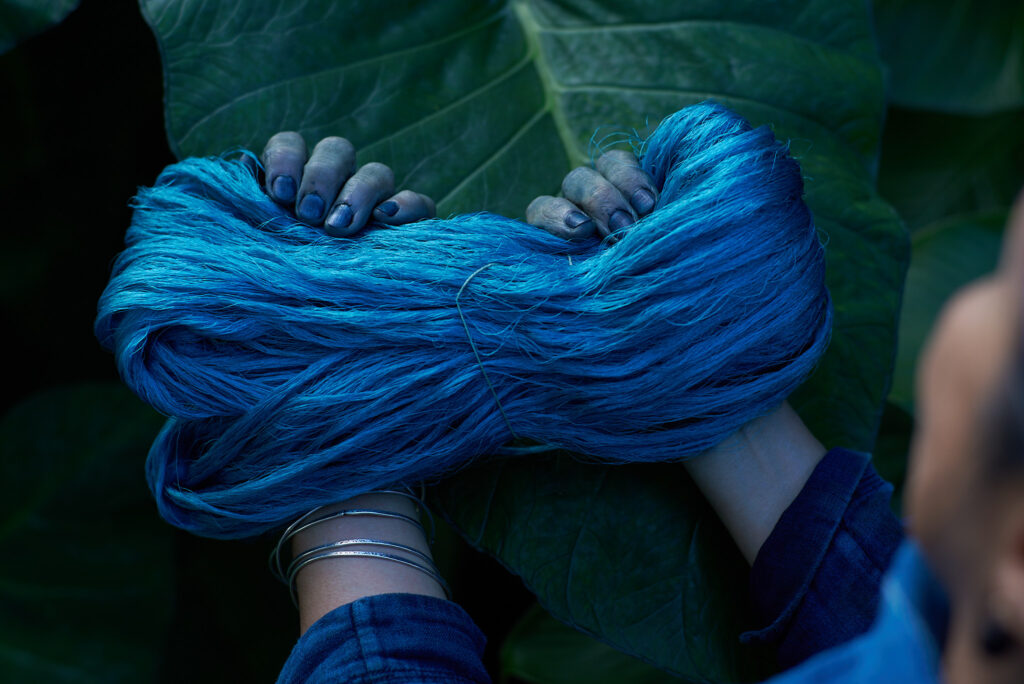
Silk threads dyed with Japanese indigo draw the eye with their quiet, refined sheen.
For nearly three decades, textile artist Chiaki Maki has journeyed to India, dedicating herself to the art of weaving. This April, she brings her world to Tokyo with the exhibition CHIAKI MAKI & ganga maki: “Voice of Nature,” held at the Hillside Forum in Daikanyama Hillside Terrace.
On view for the first time in Japan are approximately 40 textile works created at her studio ganga maki, which is nestled at the foot of the Himalayas in northern India. Each piece emerges from a life lived in close rhythm with the land.
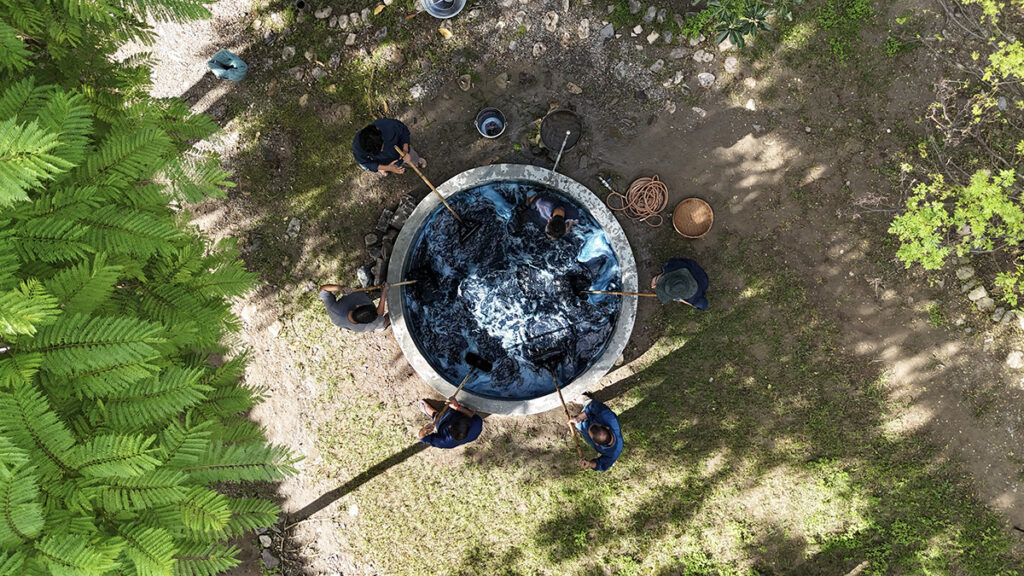
A large water vessel that mirrors the moon and stars, emblematic of ganga maki.
In search of the roots of dyeing and weaving, Chiaki Maki arrived in 2009 in Dehradun, at the foothills of the Himalayas. For nearly 17 years, she created at her ganga studio there, before seeking materials even more deeply connected to the earth, and acquired a new plot of land in 2012.
The space was designed by internationally renowned Indian architect Bijoy Jain, founder of Studio Mumbai. Touring the vast 3,000-tsubo site, Jain observed the subtle rhythms of the landscape and the contours of the land. At the center of the building, he envisioned a pond-like water vessel reflecting the moon and stars. Around it, he planted young trees over two years so they would one day cast gentle shade.
Every material, from soil and stone to lime, brick, and bamboo, was sourced within a two-kilometer radius of the studio. Crafted with traditional methods in harmony with the surrounding environment, the new ganga maki studio was completed in 2017, five years after construction began.
Moving counter to the pace of modern time, the architecture embraces materials gifted by nature and brings them into the present through traditional techniques. This philosophy closely mirrors Chiaki Maki’s own creative practice, where every thread and dye carries the quiet pulse of the earth.
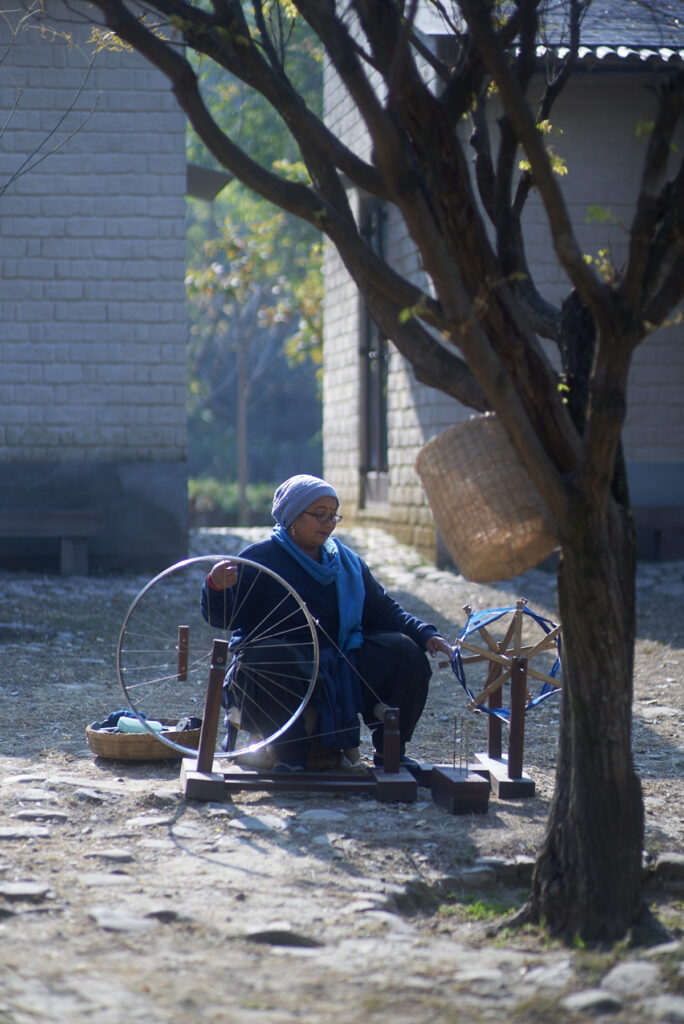
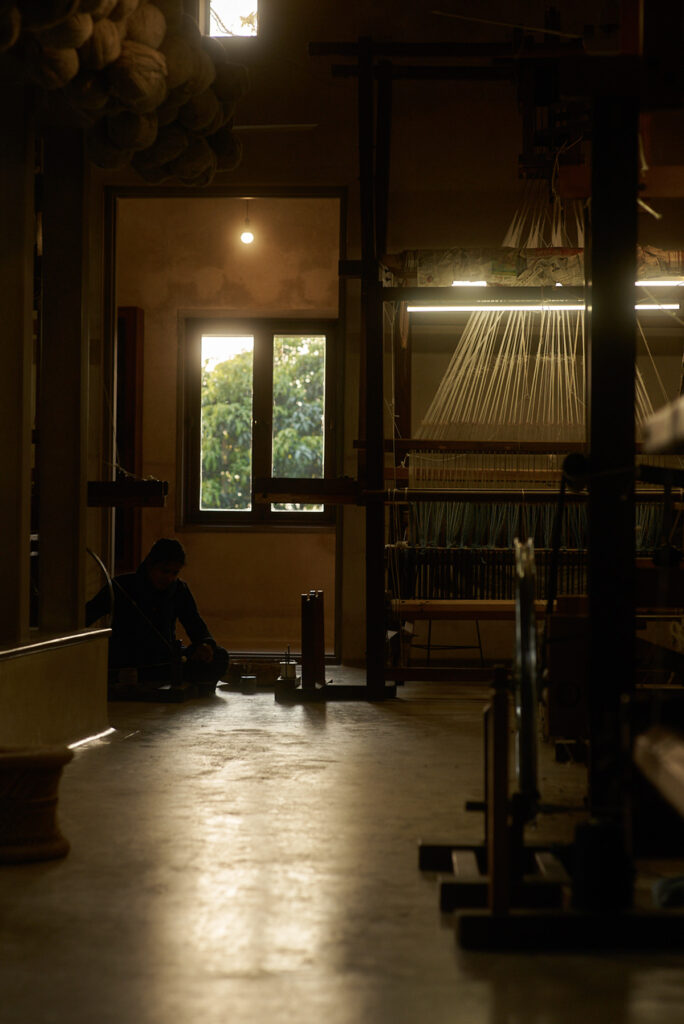
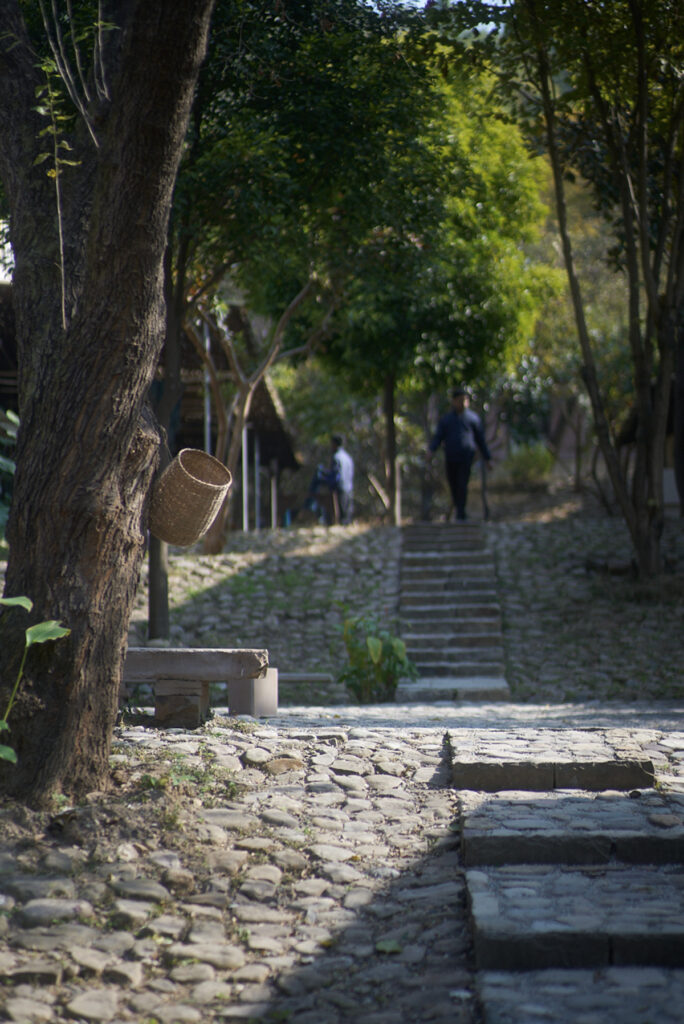
The ganga maki studio is built entirely from Earth’s natural materials. Watching threads being wound by hand using traditional tools, without any reliance on machinery, feels like glimpsing the very origins of dyeing and weaving.
Chiaki Maki believes that “textiles live in everyday life, and those made to be used are the most beloved.” Guided by this philosophy, she creates functional woven works such as clothing, scarves, and interior fabrics. On the grounds of the ganga maki studio and the surrounding farmland, she grows fiber plants including banana and ramie, alongside dye plants such as Indian indigo, Indian night-flowering jasmine, pomegranate, and henna. Inside the studio, raw silk is hand-spun using a traditional method called zuridoshi, while indigo ferments slowly in large vats. Natural fibers come from silkworms, wild silkworm cocoons, and Himalayan wool hand-harvested in nomadic villages. These fibers are then carefully spun, dyed, and woven. By living this way and continuously growing, harvesting, and transforming plants into materials, she discovers moments of unexpected beauty in even the most routine steps of her process.
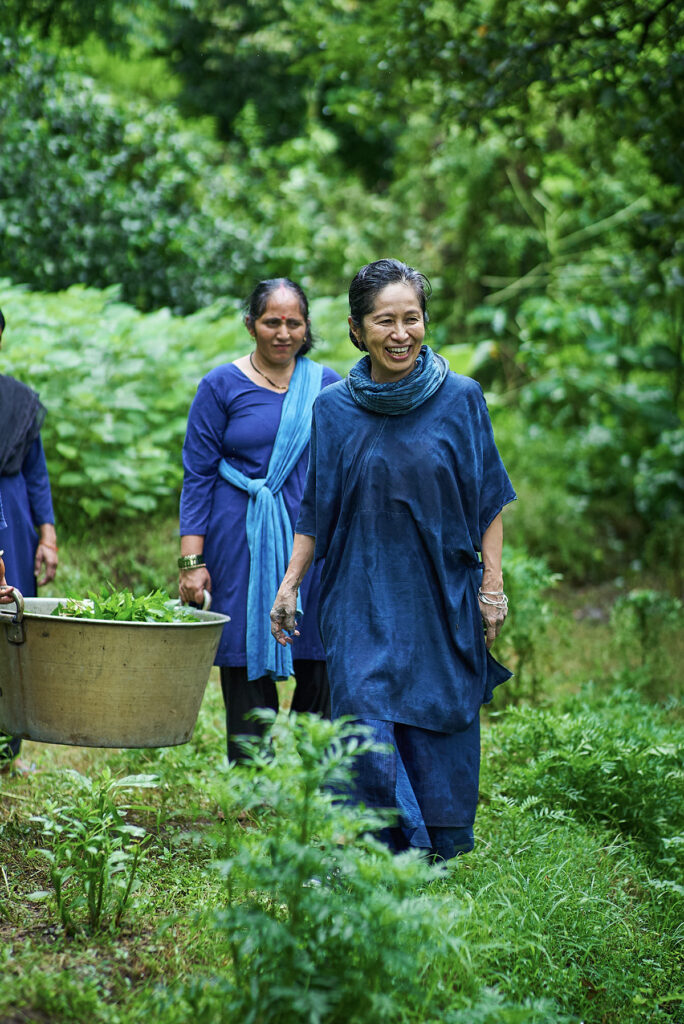
1st image: Chiaki Maki harvesting indigo.
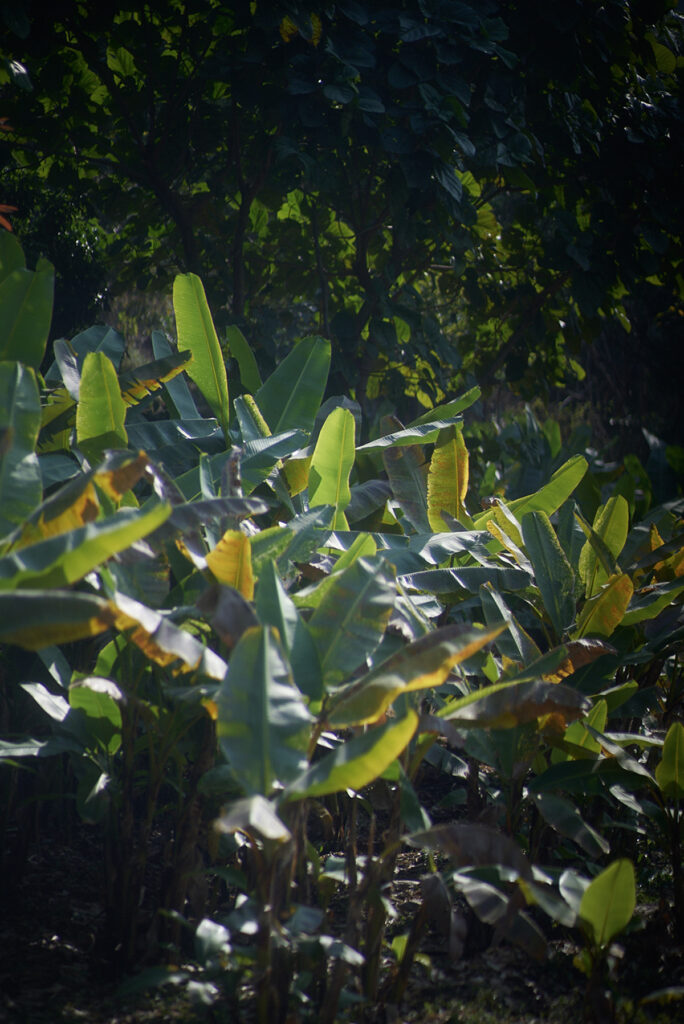
2nd image: Over a thousand banana plants grow on the studio’s farmland.
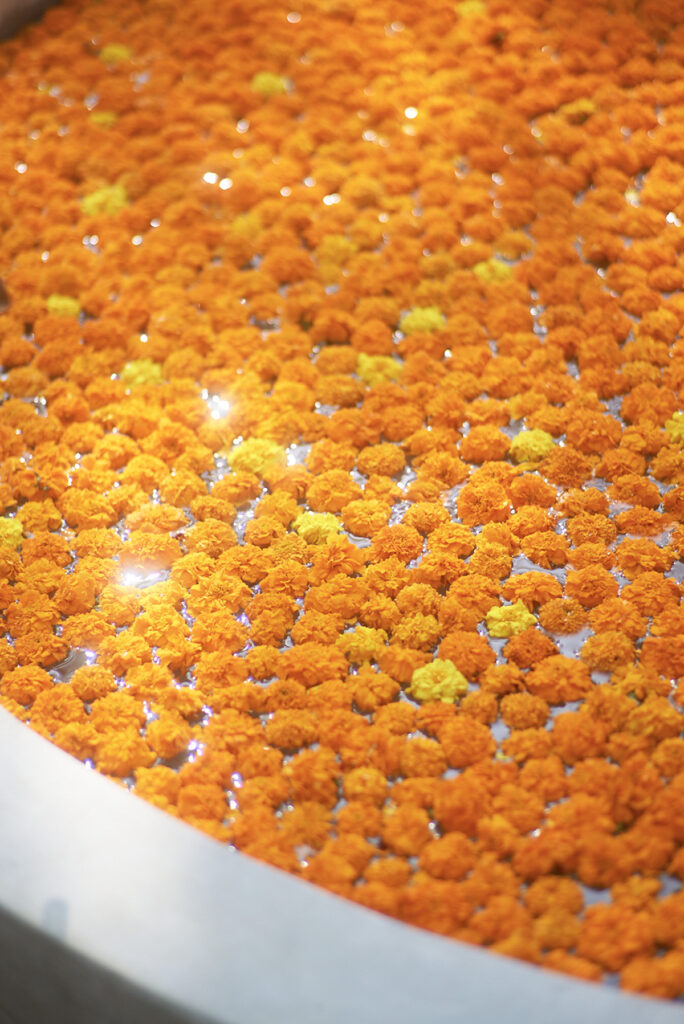
3rd image: Marigolds, used as dye.
“Calling it art feels a little embarrassing, but these insights, like byproducts of material-making, became seeds of creation, and gradually the textiles and fibers began to take form themselves,” she explains. These works, created in collaboration with Indian artisans, first appeared in an exhibition at Studio Mumbai in December 2024 and later at Art Motif in Delhi in January 2025. They are now being presented in the Voice of Nature exhibition.
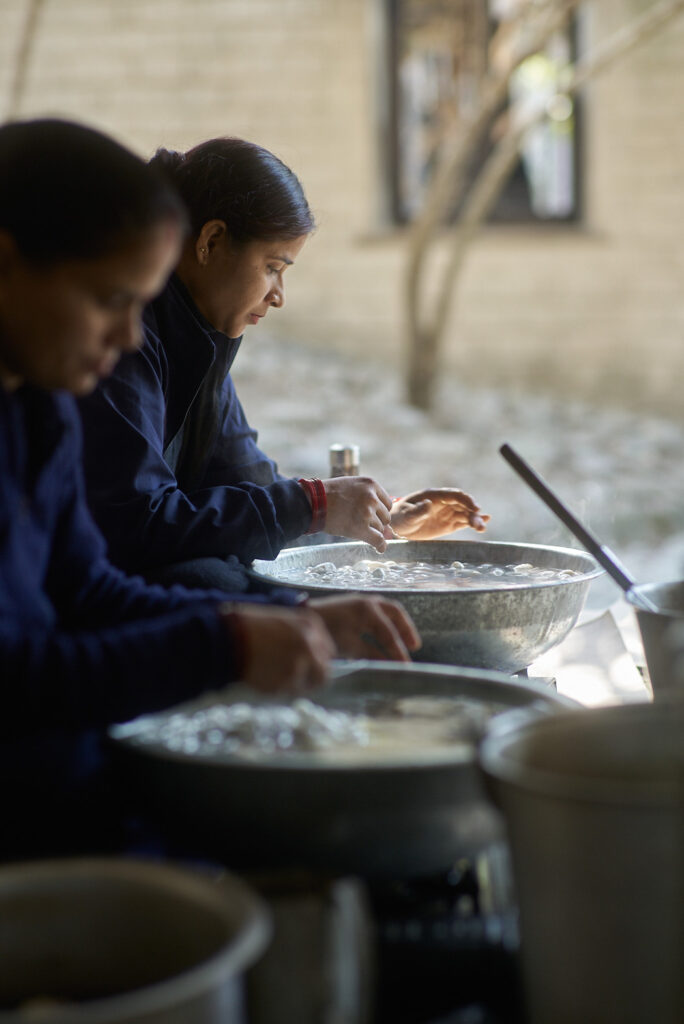
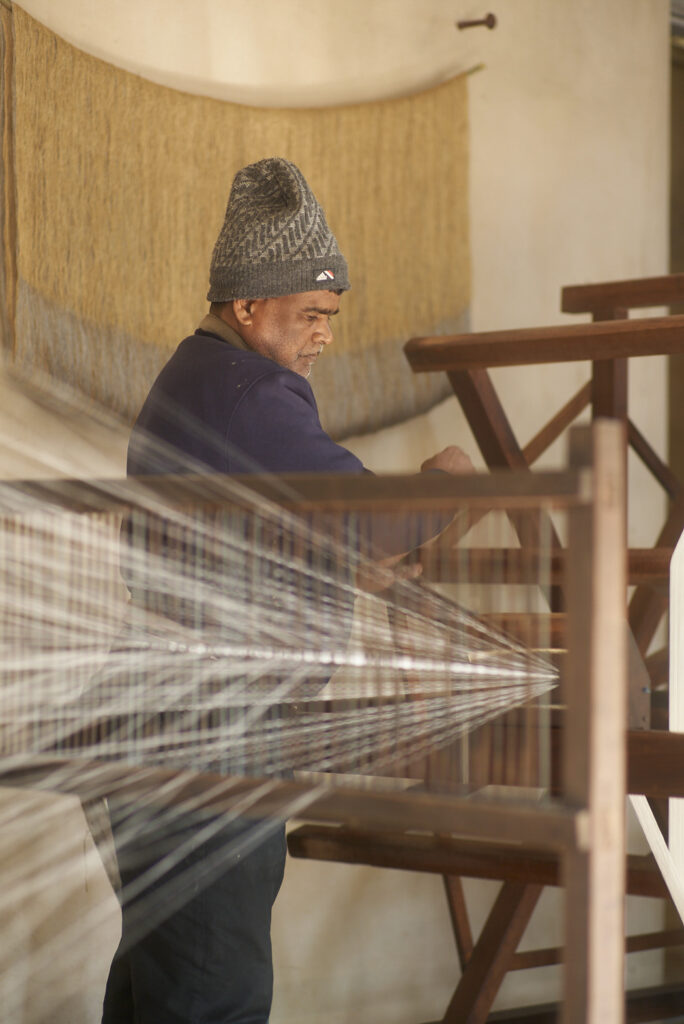
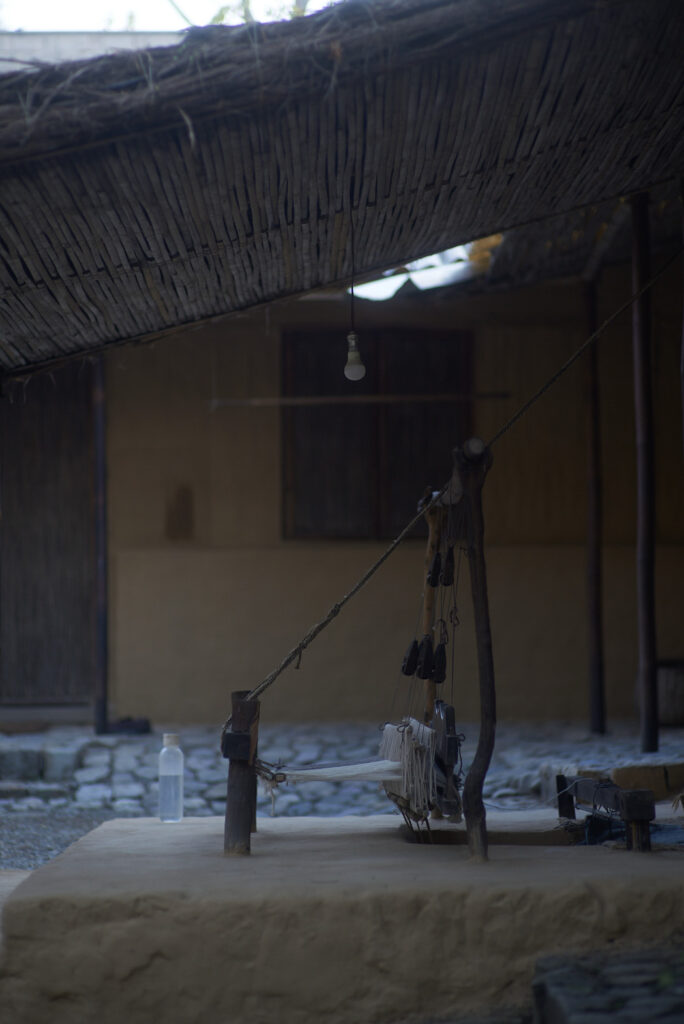
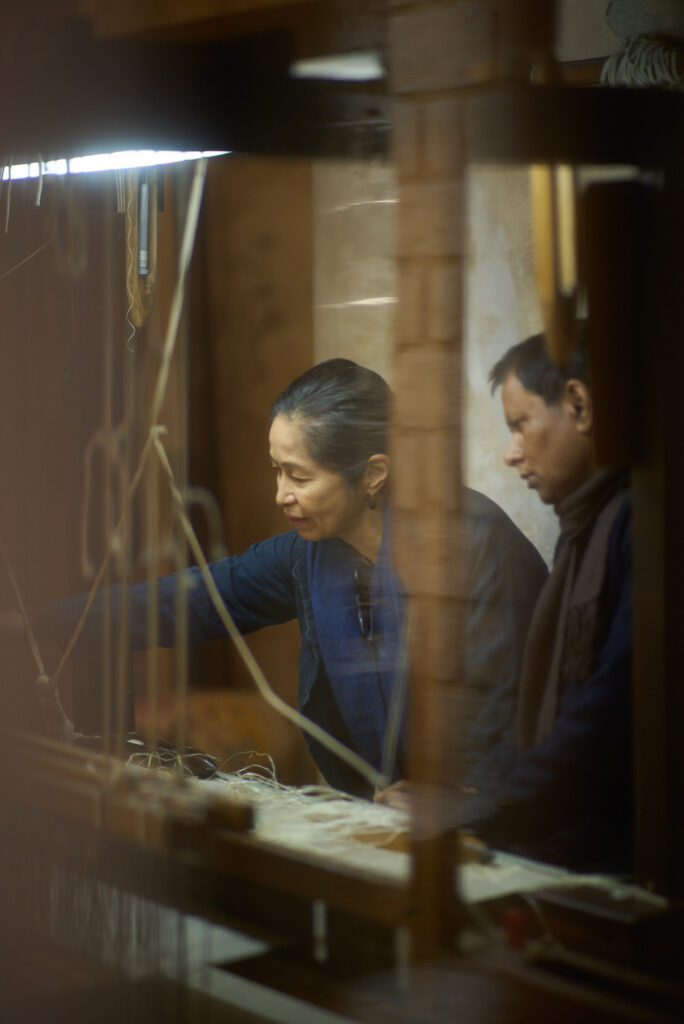
Spinning, dyeing, and weaving while living close to nature, Chiaki Maki captures the sudden moments of wonder that arise from these calm, methodical processes and translates them into the world of textiles.
When asked why she chose to bring the exhibition to Tokyo after the warm reception in India, Chiaki Maki explained, “It was not about sending a strong message as an individual artist. Rather, I wanted people in Japan to see what I have discovered in my daily life as a maker and how I approach the process of creating today.”
One of the major tasks in her studio is cultivating and dyeing indigo. The soil is tilled, seeds are sown, the grown Indian indigo is harvested, and from its leaves, mud indigo is made in the water vats. From this cycle, Indigo Galaxi was born, reflecting the changing climate and the land’s breath. Another monumental piece is Sacred Skirt which draws inspiration from the banana trees growing on the studio grounds. It transforms the vitality and grandeur of nature not just into skirt but a garment of Mother Earth.
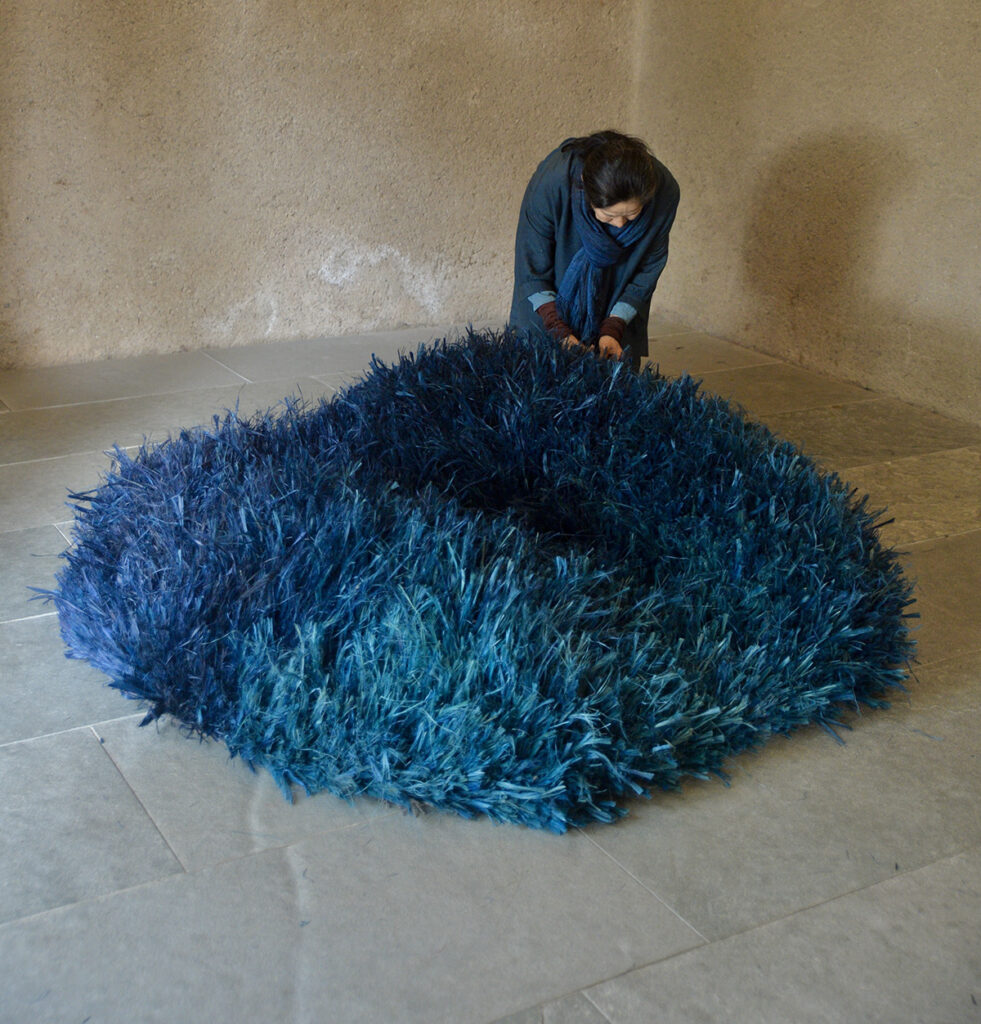
Indigo Galaxi (Bimal Himalayan wool, 150 × 160 × 50 cm). The work evokes the cycle of indigo’s color, imagined as a spiral with subtle fluctuations.
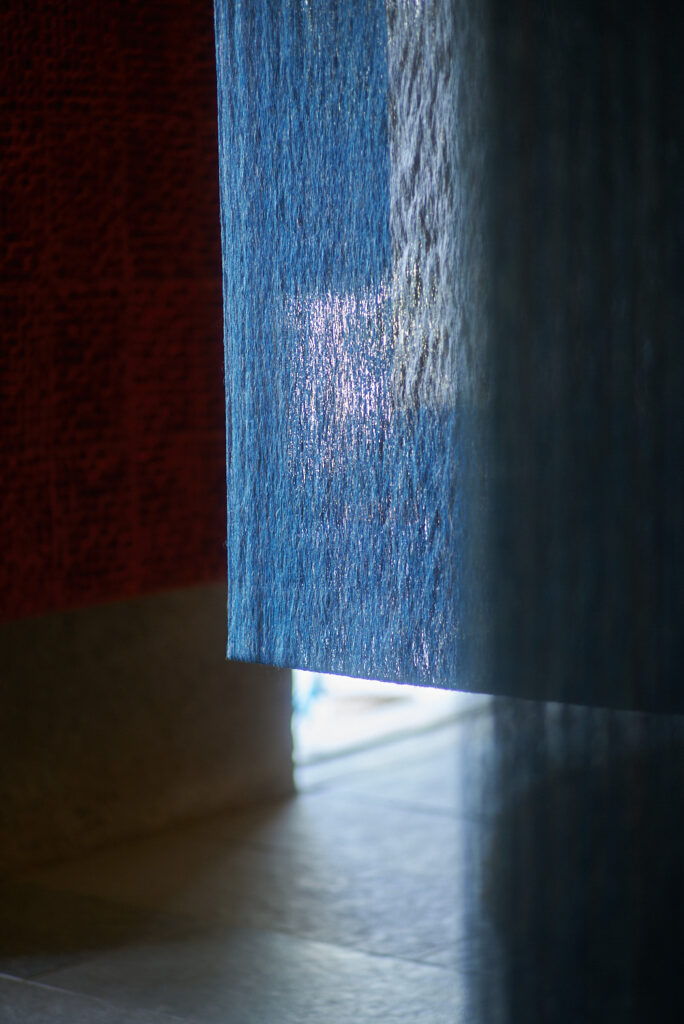
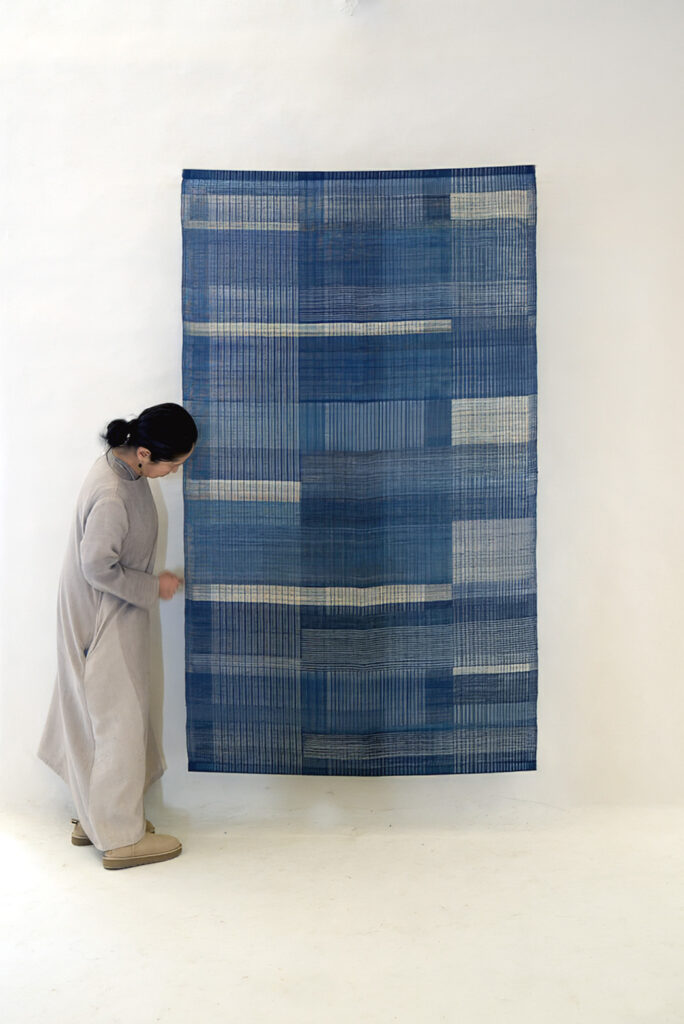
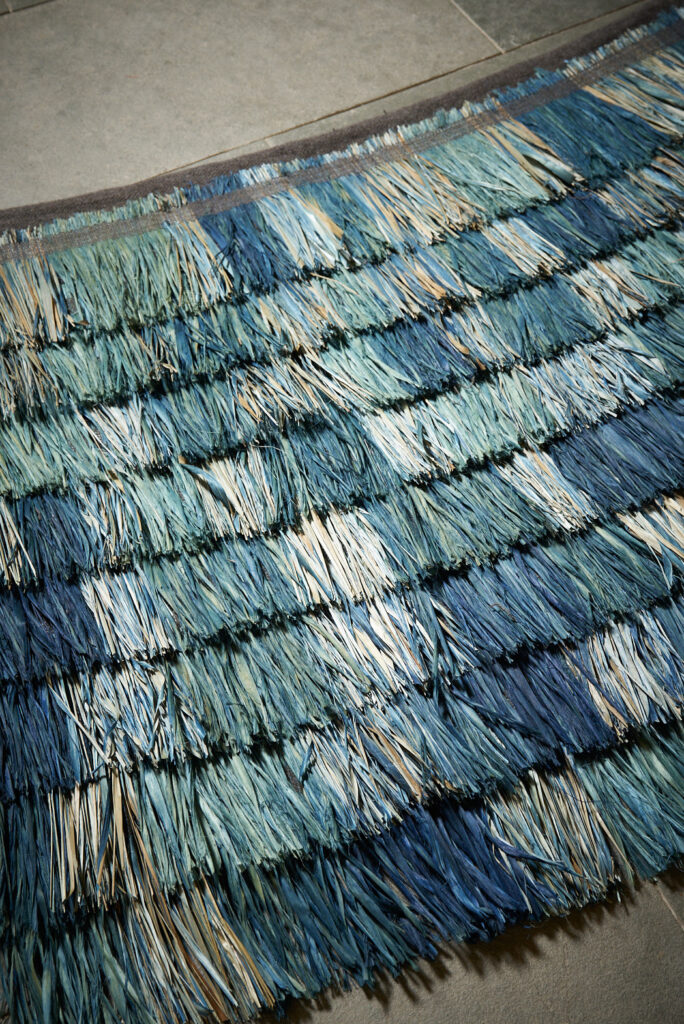
Yuragi (1st image), Aishima (2nd image), and
Sacred Skirt (3rd image). Each piece blossoms from the core practice of indigo dyeing at ganga maki, translating the studio’s essence into a spectrum of expressive forms.
Chiaki Maki cherishes the idea that it is not always the artist’s conscious intention that creates something. Rather, when natural processes and human craft intersect, forms emerge almost on their own. Visitors are invited to experience this orchestra of textile art, woven from the clear, resonant “voice of nature.”
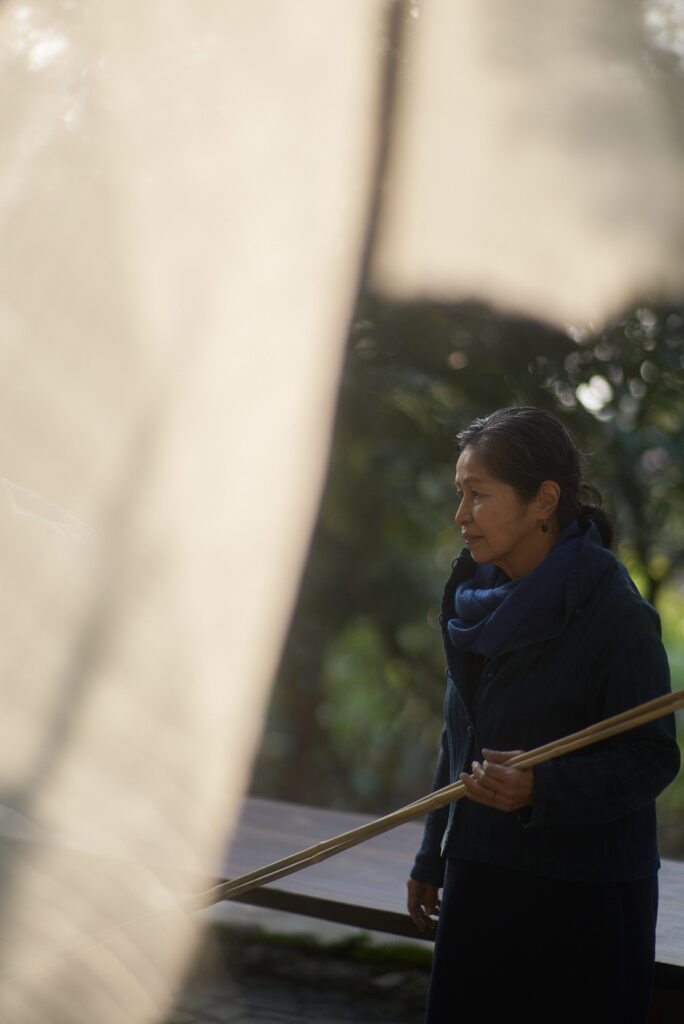
1st image: Chiaki Maki putting the finishing touches on a work.
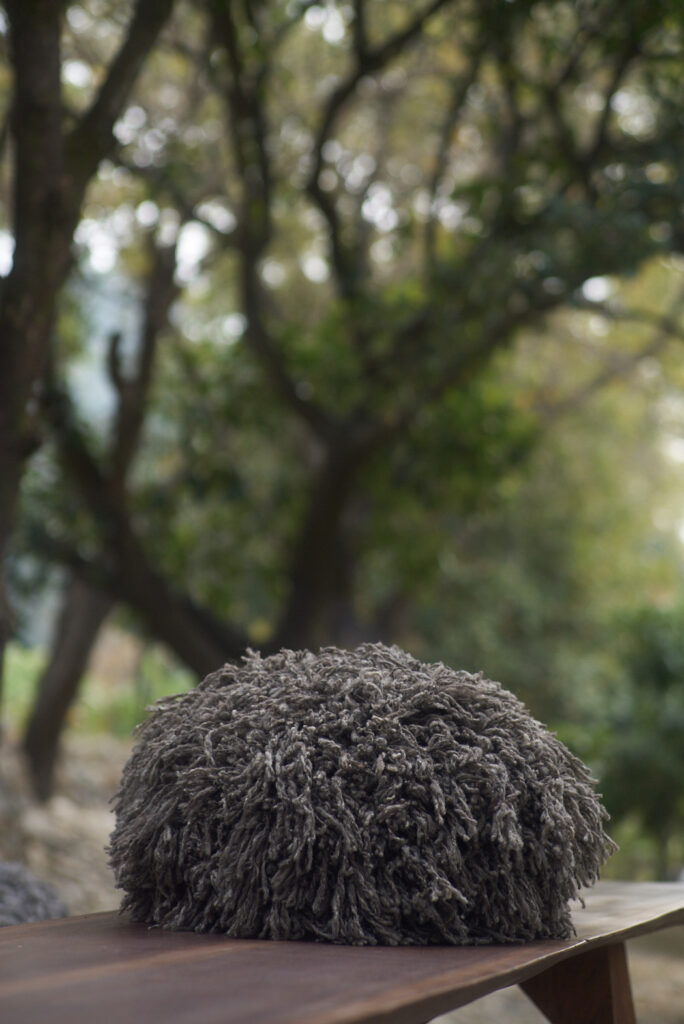
2nd image: Himalayan Cloud (hand-spun Himalayan wool, diameter 85 × 98 × height 43 cm)
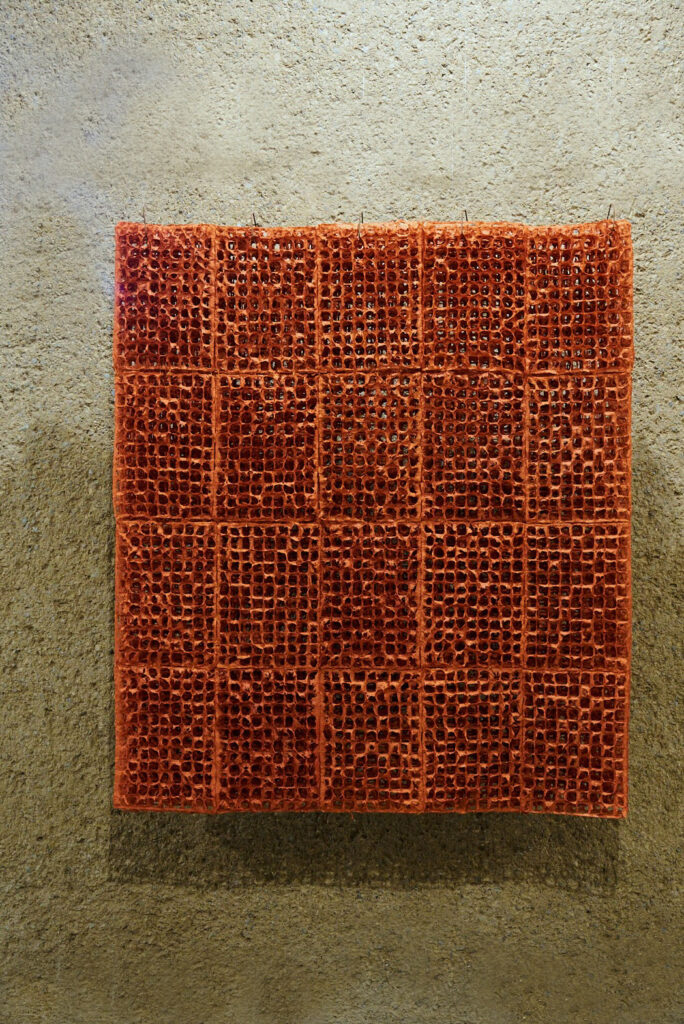
3rd image: Dancing Basho (banana and ramie fibers, 140 × 120 × 20 cm)
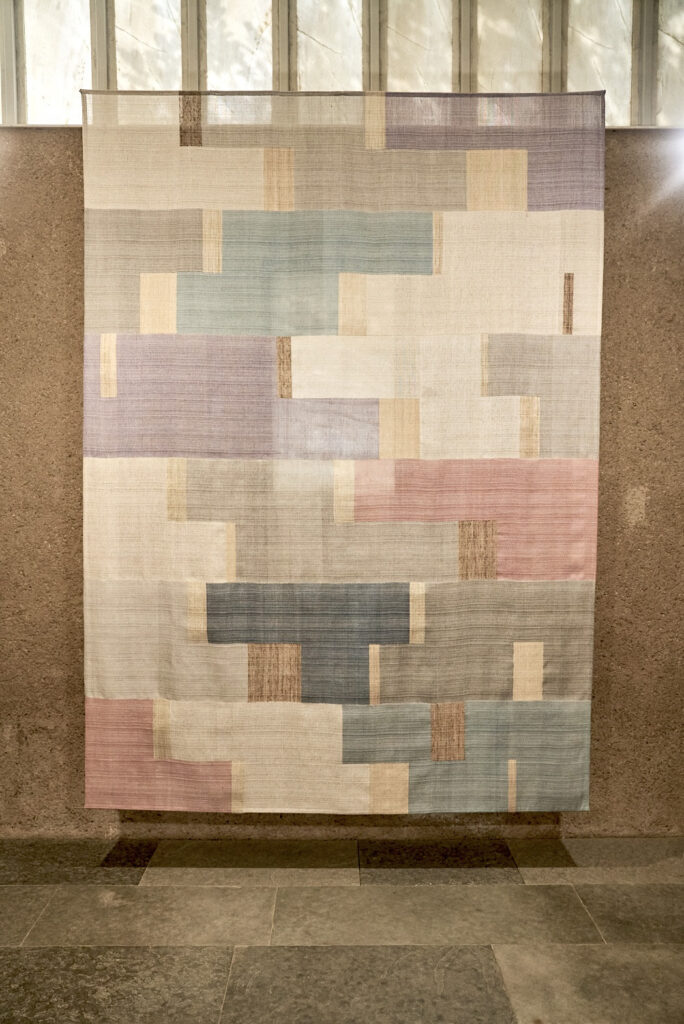
4th image: Plant Breath (hand-spun silk, wild tussar silk, ramie, 385 × 272 cm)
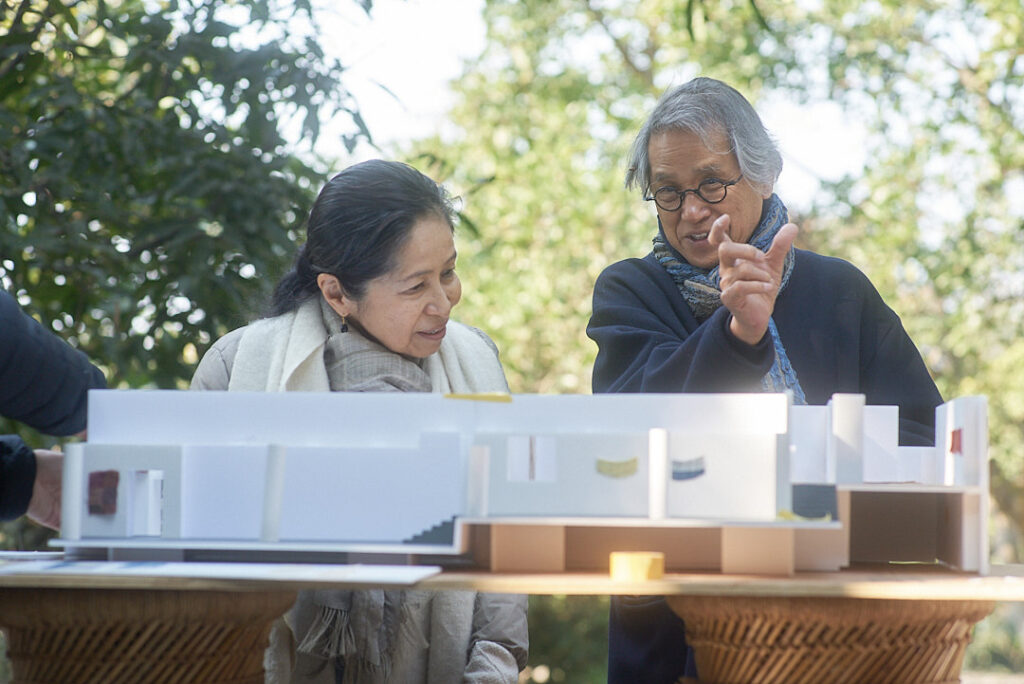
The exhibition layout and design were created by Chiaki Maki (left) in collaboration with longtime associate, architect Yoshifumi Nakamura (right).
Photo: Kenji Ijima
CHIAKI MAKI & ganga maki: “Voice of Nature”
Exhibition Dates: Thursday, April 2 – Sunday, April 12, 2026
Opening Hours: 11:00–19:00 (closes at 17:00 on the final day, April 12)
Venue: Hillside Forum (Daikanyama)
1F, 18-8 Sarugaku-cho, Shibuya-ku, Tokyo 150-0033
Admission: 800 yen (students 500 yen)
● Inquiries
Voice of Nature Exhibition Office
https://www.itoito.jp/Exhibitions/2026/von/voneng.html