Shibuya is a city in constant motion. New buildings continue to rise, the streets grow busier, and culture and commerce intersect in ever-changing ways. Yet amid all the hustle and bustle, there are still places where you can slow down, take a break and simply relax.
One such place is the newly revamped MOJA, located partway up the slope of Mitake-dori. Formerly the American-style diner MOJA in the HOUSE, the café has undergone a transformation, beginning a new chapter as a place that offers something increasingly valuable in Shibuya today: a little room to breathe amidst the city buzz.
Exploring Records and the Sounds of ’90s Shibuya-kei
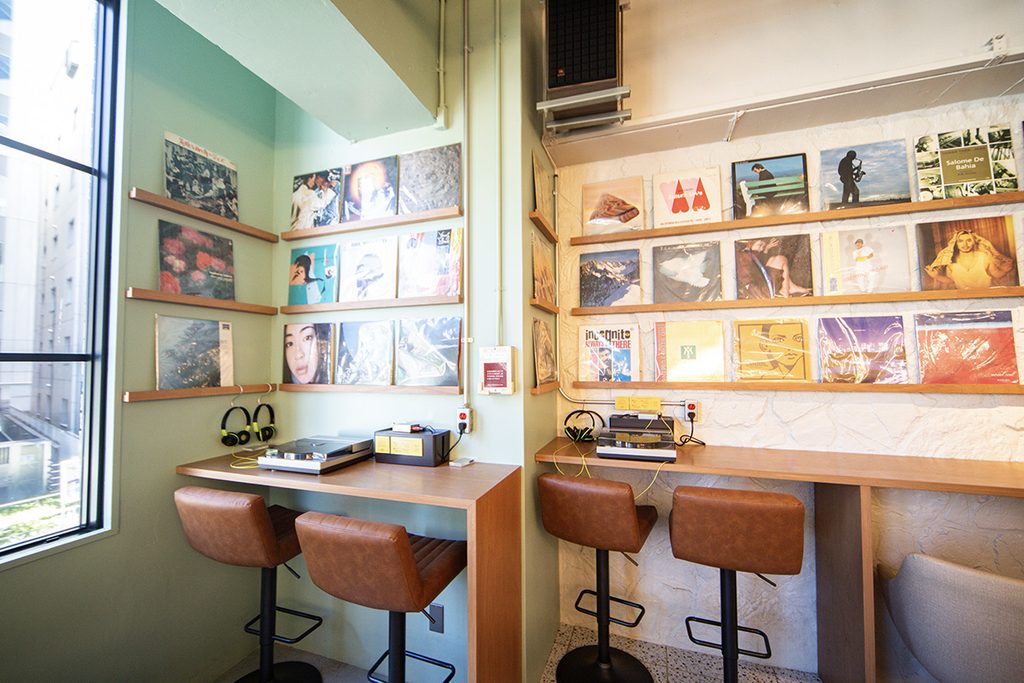
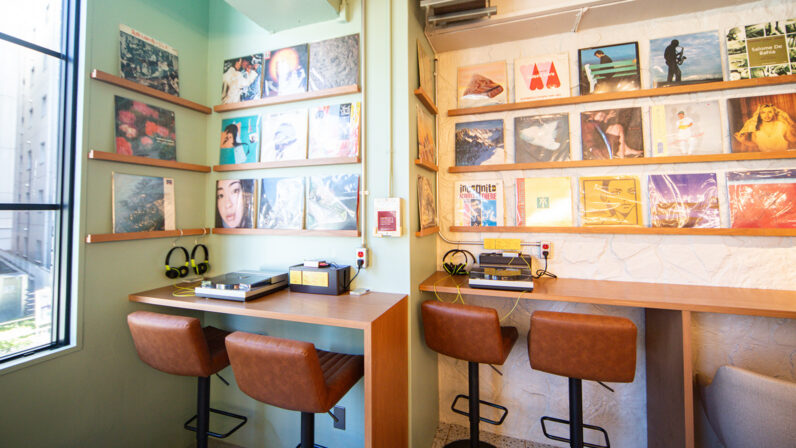
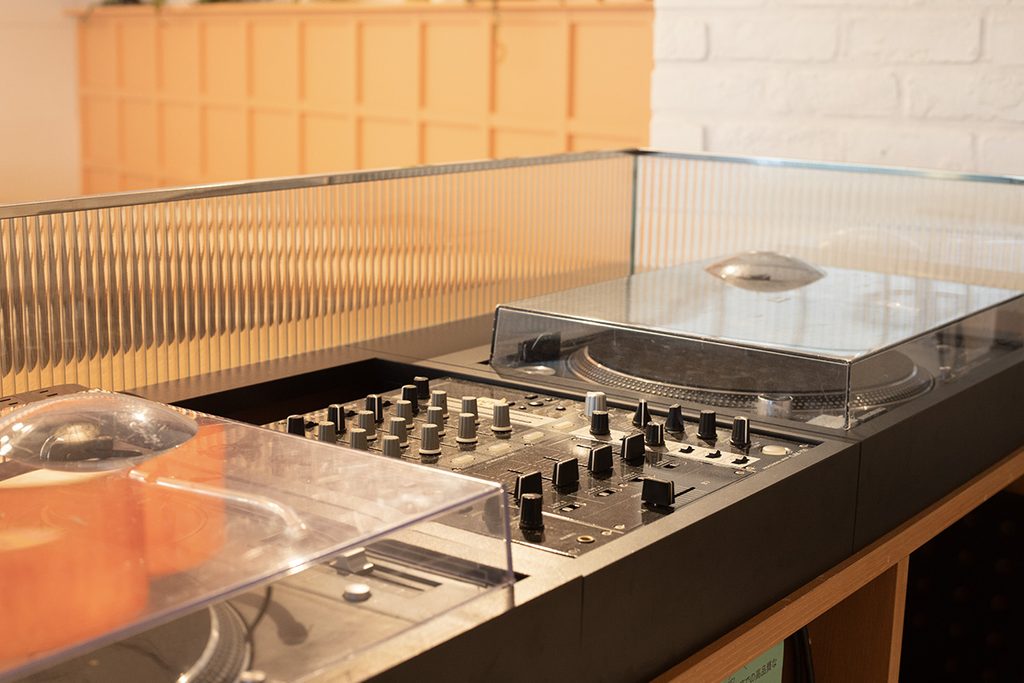
A turntable is available at the counter for guests to use freely.
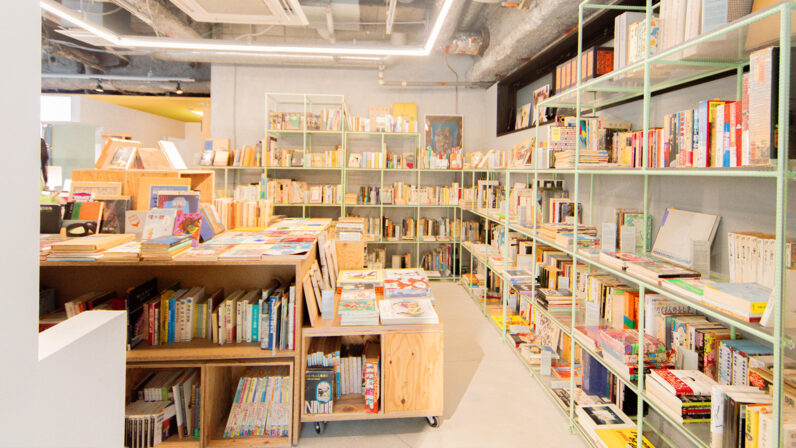
Step inside MOJA and you’re immediately greeted by a colourful wall of record sleeves. Alongside its redesigned interior, music plays a defining role in the café’s new identity. Dozens of records are displayed along a counter, where guests are free to browse, choose and listen. At the heart of the selection is Shibuya-kei, the distinctive blend of musical influences that helped define Tokyo’s cultural scene in the 1990s.
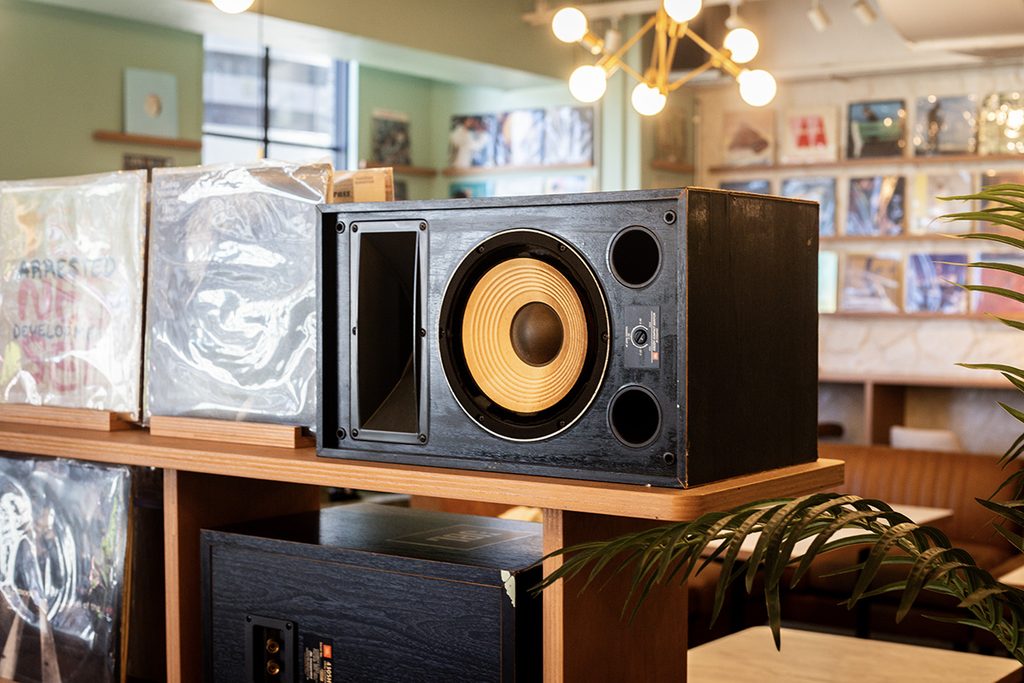
The attention to sound goes well beyond what you’d expect from a typical café. The system has been carefully calibrated so that music reaches every seat with a consistent volume and character. It’s present without being intrusive, providing a pleasant backdrop whether you’re catching up with friends or getting some work done. On Friday evenings, MOJA also hosts DJ events, with selectors choosing tracks to suit the mood of the room.
Hiratani, the company’s representative, recalls being surprised when a DJ played a track by the Japanese band Happy End shortly after the café reopened. More than 50 years ago, musicians Takashi Matsumoto and Haruomi Hosono helped evoke the idea of Kazemachi, an imagined urban landscape associated with the area stretching from Shibuya to Roppongi. That same sensibility seems to have found its way into present-day Mitake-dori. With record sleeves that are as enjoyable to look at as the music is to hear, and opportunities for younger visitors to discover vinyl, it’s a place where musical tastes and cultural sensibilities connect across generations.
Designed for Modern Lifestyles
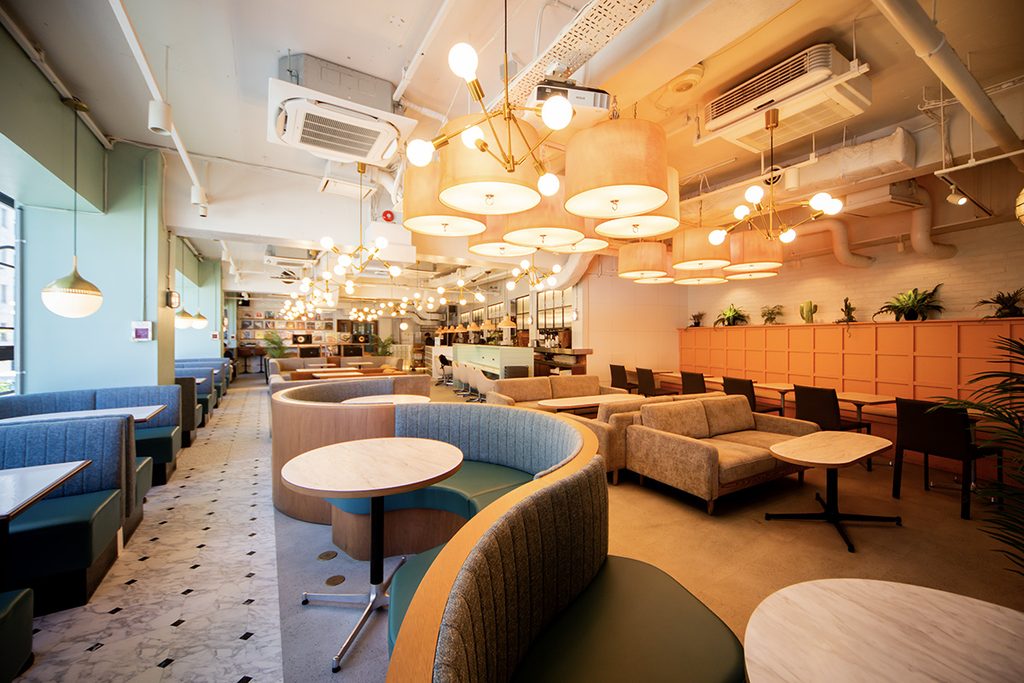
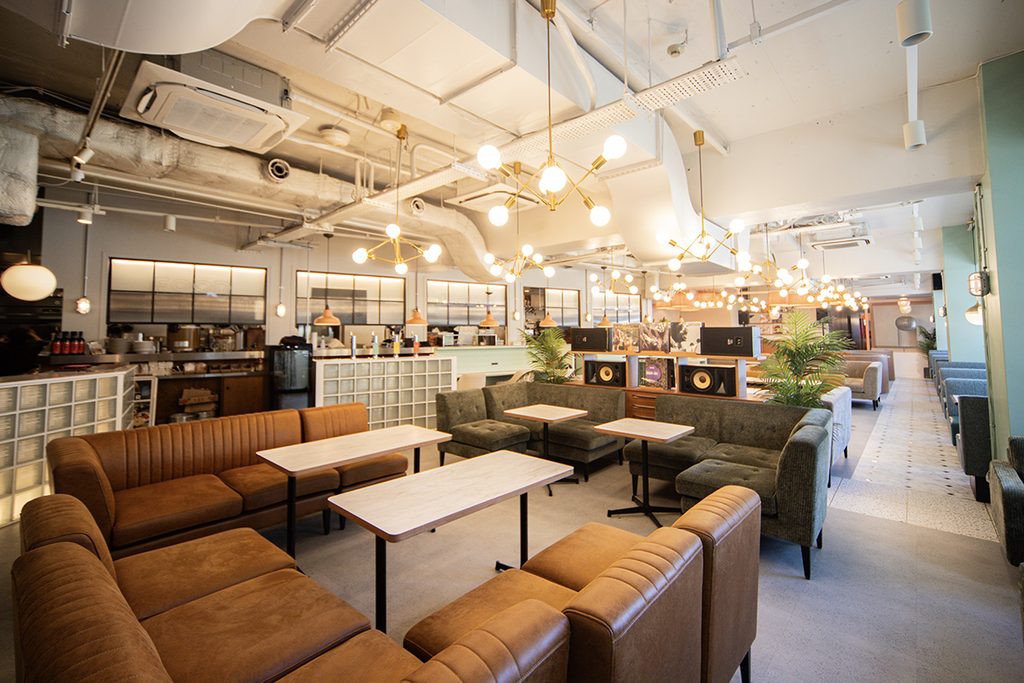
Interior designer Taisuke Higuchi was responsible for reimagining MOJA’s interior, steering it away from its former American diner aesthetic towards a more refined, contemporary café. The inspiration came from the lively yet comfortable atmosphere of places where people naturally come and go, such as train stations, airports and hotel lounges around the world. He sought to capture their distinctive blend of ambient noise and openness.
Soft, muted shades of green and turquoise set the tone, complemented by natural wood and glass that lend warmth to the space despite its central Tokyo location. Elegant signage, understated menu displays and warm lighting sit alongside carefully chosen fabrics and leather upholstery, all selected for their natural colours and rich textures. Record displays and speakers add another visual dimension to the café’s musical identity. Together, these details create a space where a quiet sense of refinement can be appreciated in everyday life.
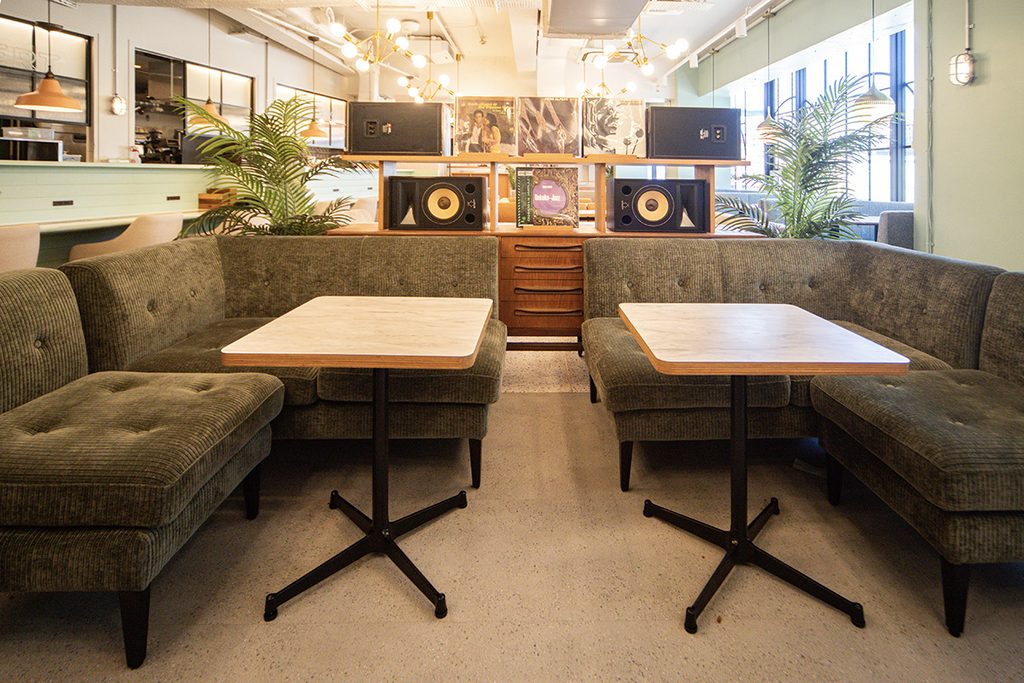
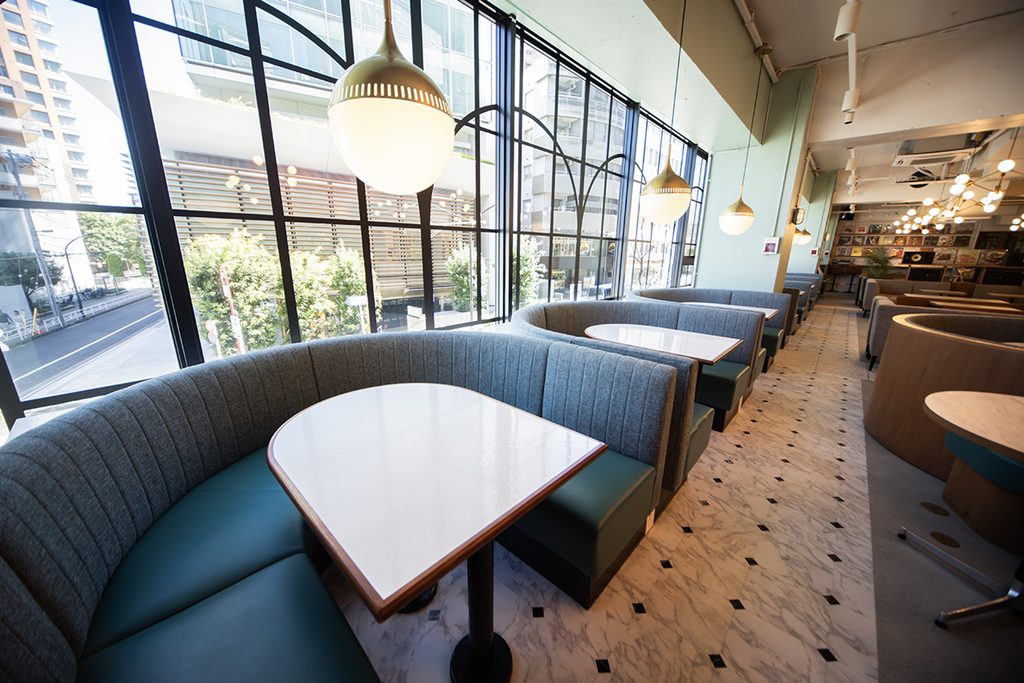
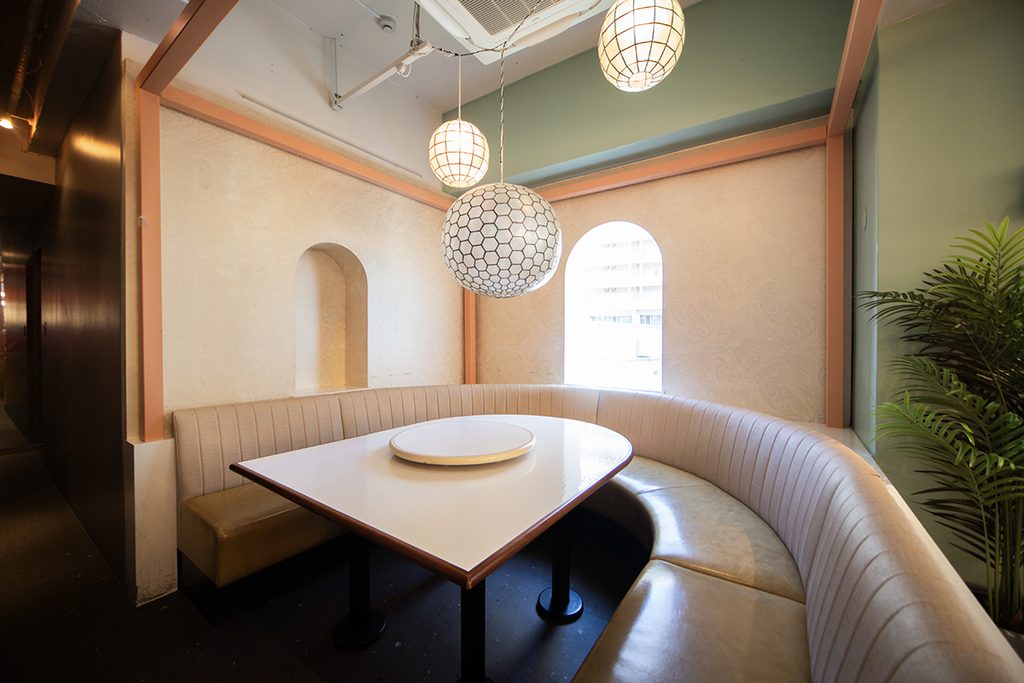
The layout has also been designed to accommodate different ways of spending time at the café. Along the windows, an indoor terrace offers an open, almost outdoor feel, with plenty of natural light streaming in. At the centre, a sofa-filled lounge takes its cues from the relaxed communal spaces of airports and hotels. The soft daylight and carefully placed greenery help soften the contrast between the busy streets outside and the calm within, making the café a comfortable place to spend time throughout the day.
Particular attention has also been paid to how guests sit and interact. These days, people often prefer sitting alongside one another or at a slight angle rather than directly face to face, allowing for a more comfortable sense of distance. With this in mind, generous sofa seating is a central feature of the space. Visitors can relax in the lounge, use the business counter to clear their heads or spend some time exploring records at the listening station. By providing considerably more personal space than a typical café in the neighbourhood, MOJA gives guests the freedom to settle in, switch off and enjoy a little breathing room in the middle of Shibuya.
MOJA’s Take on American Soul Food: Chicken and Waffles

MOJA’s signature chicken and waffles, finished with a generous drizzle of maple syrup. Photo courtesy of Café Company
The dining experience at MOJA has also evolved with its transformation, but one beloved favourite remains firmly on the menu: its signature chicken and waffles. Drawing inspiration from the soul food of the American South, the dish has been winning over customers for more than a decade. It’s easy to see why. The contrast between salty, crispy fried chicken and the sweetness of maple syrup makes for an irresistible combination. While chicken and waffles is commonly enjoyed as a breakfast dish in the US, in Shibuya it’s just as likely to be ordered for lunch or dinner, a cultural difference that international visitors seem to find particularly interesting.
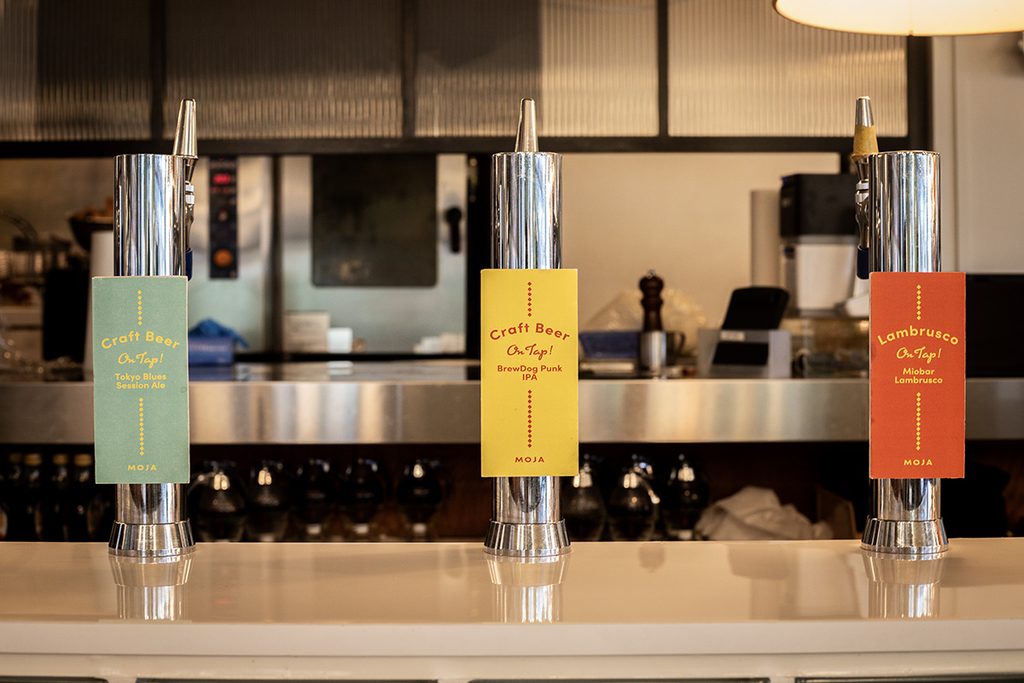
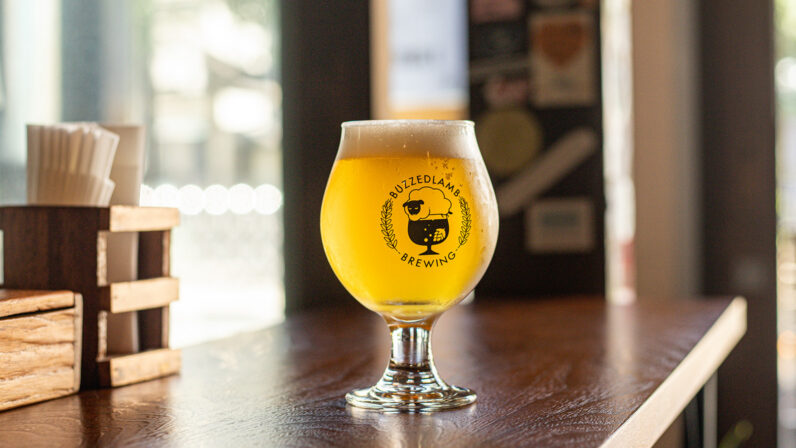
On tap at the counter are a Tokyo-born session ale, BrewDog IPA and the less common Lambrusco, a lightly sparkling red wine.
Alongside its revamped interior, MOJA has placed a stronger focus on craft and quality in its drinks selection. MOJA now makes its own cola syrup and offers a selection of affordable wines for everyday enjoyment, including options priced at just ¥500. Particularly noteworthy are the canned wines from Oregon, a place connected to Hiratani’s background. By doing away with the formality of a traditional wine bottle, they offer younger guests an easygoing way to raise a glass.
While the signature chicken and waffles is reason enough to visit, the menu also offers plenty of flexibility, with salads and appetisers to suit different appetites. Whether you’re in the mood for a substantial meal or just a light bite, MOJA caters to both with ease. It’s this welcoming, adaptable approach that makes it the kind of place you’d happily return to every day.
Rethinking the Café as a Community Space
At the heart of Café Company’s philosophy is the idea that “CAFE” stands for “Community Access For Everyone”. MOJA brings that vision to life, welcoming a diverse mix of people and creating a space where different lives and experiences come together.
During the week, local workers take a moment between meetings to gather their thoughts, while students spend their evenings chatting over plates of chicken and waffles. On weekends, former Shibuya regulars return with their children, alongside international visitors who have stumbled upon the café through social media or Google Maps and are eager to experience a slice of everyday Tokyo. Whatever their age or background, everyone is welcome here to make the space their own.
MOJA aims to be more than just somewhere to eat or drink. It’s a place to drop into during the course of an ordinary day, without any particular plans, and leave feeling a little more refreshed and clear-headed.
The café also plans to build on its connection to music and culture, with regular DJ events and workshops aimed at passing on the enjoyment of vinyl to a new generation. On lively event nights and quiet, uneventful days alike, MOJA hopes to remain an open, welcoming space for everyone who calls Shibuya home, works in the neighbourhood or is simply passing through.
MOJA
Address: 2F, Hulic Shibuya Mitake-dori Building, 1-11-1 Shibuya, Shibuya-ku, Tokyo 150-0002, Japan
Instagram: @moja_shibuya
◾️Related Article