A short distance south of Gojo Bridge, the bustle of central Kyoto gives way to a quieter stretch of the Kamo River. It’s here that you’ll find Ikehan Bunshitsu, a tea house where carefully selected Japanese, Chinese and Taiwanese teas take centre stage.
Beginnings in an Intimate, Exclusive Tea Room
The story behind the name Ikehan reaches back generations. It is derived from Ikebayashido Hanshichi, a renowned pottery kiln once based in Seto in the former Owari Province, present-day Seto City in Aichi Prefecture. Details of its early history are scarce, but records show the kiln was active by the Bunka and Bunsei eras of the early 19th century. It continued until the early Showa era, when it eventually closed.
Ikehan Bunshitsu founder and host Mantaro Kojima is the 11th generation of the family. At first, the leap from pottery to tea might seem a large one. For Kojima, however, the connection goes back to childhood.
“Most people probably think of matcha or sencha when they hear Japanese tea, while black tea and oolong tea came to Japan from overseas. They all come from the same tea plant, but each has its own specialised utensils. My ancestors were potters who made utensils for both matcha and sencha, and we still had many of them at our family home.
As a child, I used to wonder why there were so many different kinds of tea, and so many different utensils, when they all came from the same plant. As I grew older, I became interested in exploring this incredibly deep world that my ancestors had once been involved in. That ultimately inspired me to open a tea shop.”
But Ikehan Bunshitsu came later. True to its name, which means a branch or separate room, it grew out of Kojima’s original tea house, Ikehan. Established during the pandemic, Ikehan was conceived as an intimate space hosting tea gatherings for just one group each day. Its full name is Chashitsu / Chageishitsu Ikehan (茶室/茶藝室 池半), and is currently closed for renovations.
A New Space for a More Approachable Tea Experience
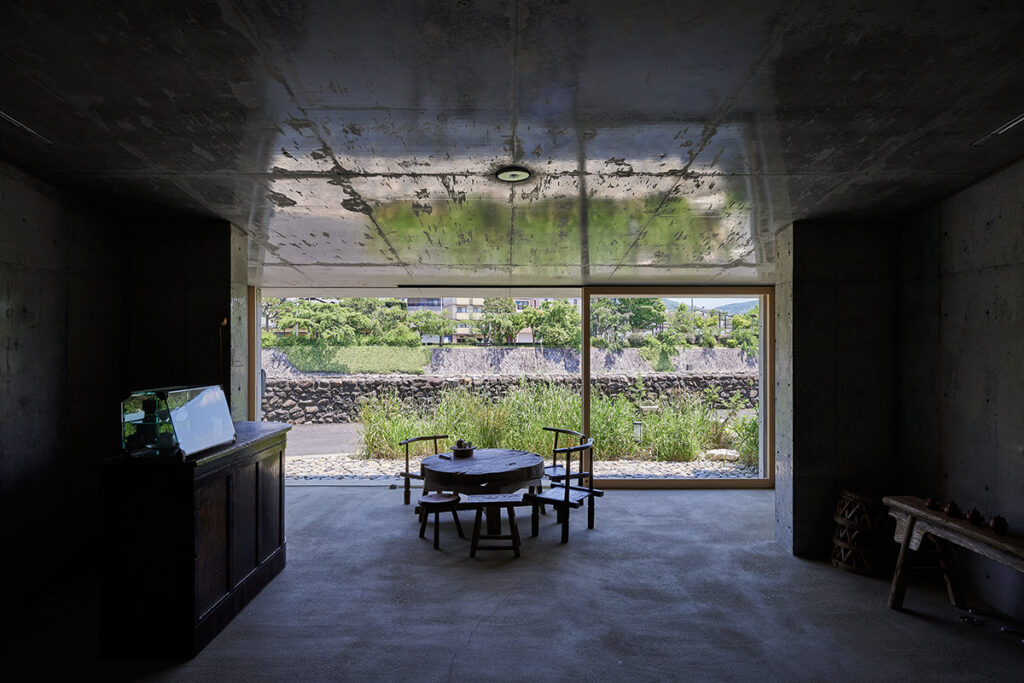
Ikehan Bunshitsu opened next door to Ikehan in 2024, on the ground floor of the four-storey Kamohan Omoya inn. Here, the experience is much more casual: there are no reservations required, and guests are free to simply drop in.
For Kojima, the highly personal experience offered at Ikehan, where a host dedicates their attention to just a small number of guests, tells only part of tea’s story. Tea has taken many forms as part of everyday life, and he wanted a space that could reflect that diversity. Focusing only on formal, reservation-only tea experiences, or at the other extreme, casual takeaway tea, risked creating a narrow impression of what tea culture actually is.
“I think presenting the many different ways of enjoying tea, without favouring one over another, is also a way of showing respect to those who have passed tea culture down to us. A tea gathering that you make a reservation for and prepare to attend is an important part of that culture, but simply enjoying tea by yourself, or casually with friends and family, is just as much a part of its essence.”
It doesn’t take long for Bunshitsu to fill up, suggesting that Kojima’s broader approach to tea is finding an audience.
Distinctive Teas, Carefully Selected
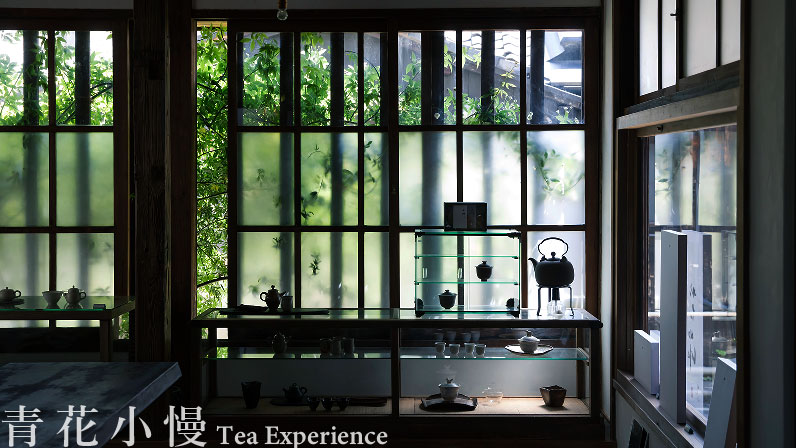
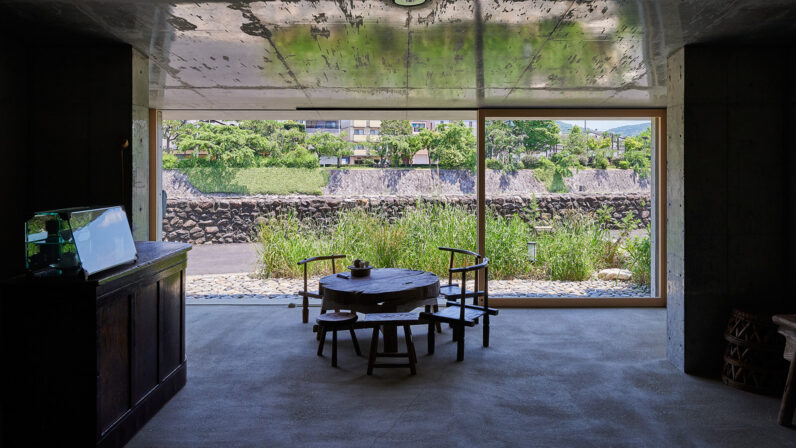
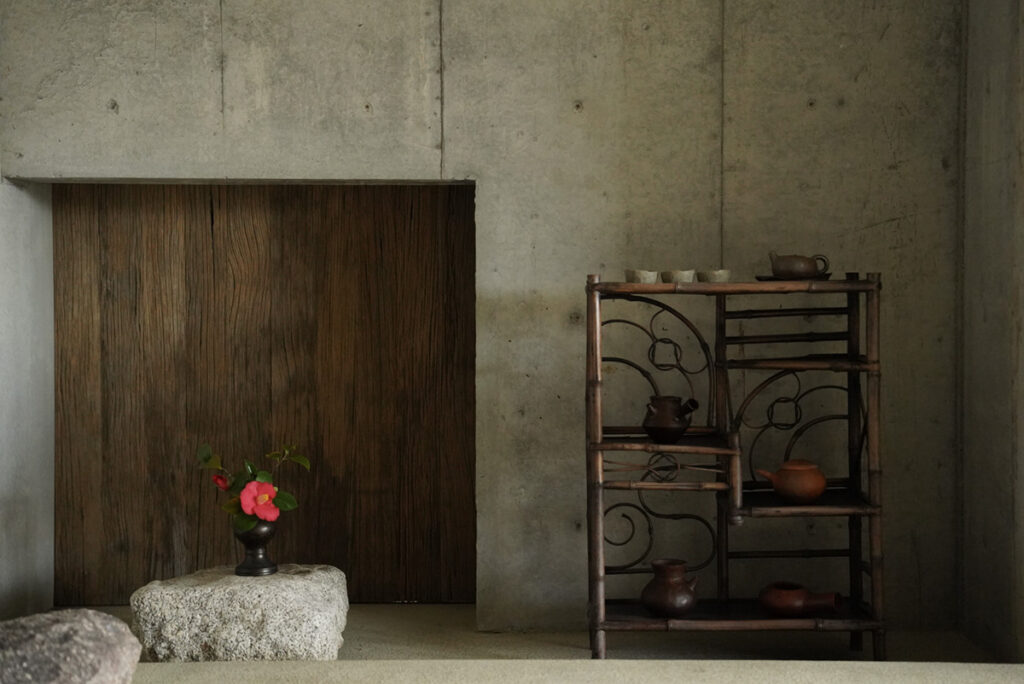
Simplicity defines the interior of Ikehan Bunshitsu. Small groups of two or three are seated throughout the compact, exposed-concrete space, with little in the way of decoration beyond a shelf of teaware and seasonal plants. Across from it stands a Meiji-era mizuya dansu, a traditional tea cabinet, lined with more than a dozen varieties of tea.
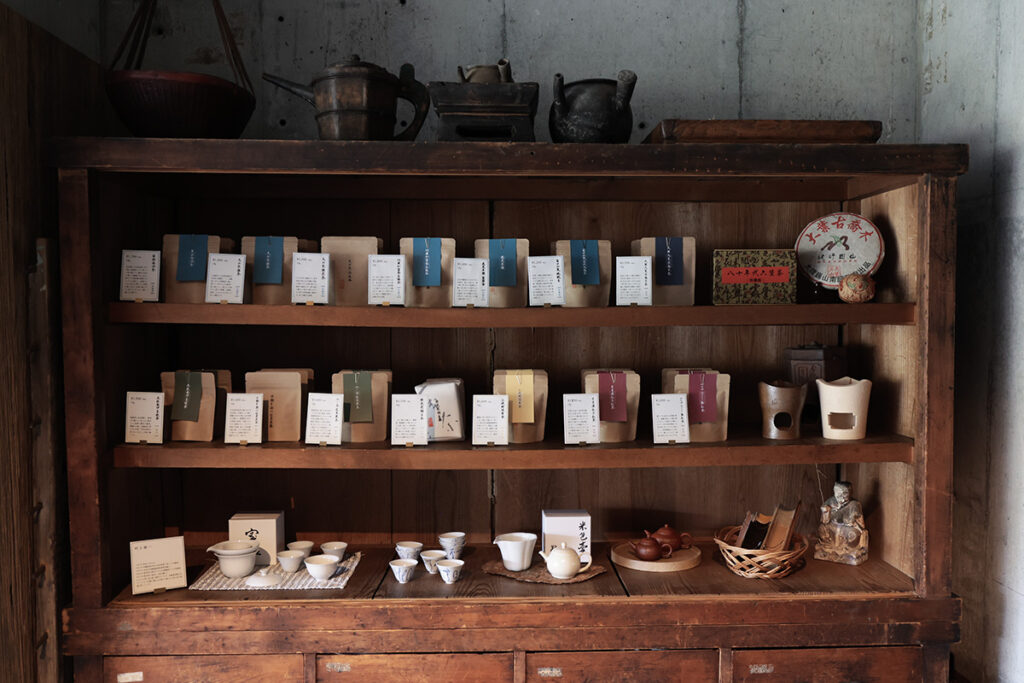
The selection is never fixed, with teas chosen to suit the season and rotated throughout the year. Broadly divided into Japanese, Chinese and Taiwanese teas, the collection spans six categories: green, oolong, black, white, yellow and dark tea. All are grown using organic or natural farming methods and personally selected by Kojima and his family during visits to the regions where they are produced.
Some come from closer to home in Kyoto. One is the Old Tree Hand-Picked Native Sencha, made from a native tea variety grown without fertiliser in the valleys of Ujitawara, the birthplace of sencha. The leaves are hand-picked and lightly steamed, with the entire Ikehan team joining the harvest each May.
It is far from the only unique tea on offer. Each has its own rarity and character, making the decision of what to order a pleasantly difficult one.
Delicate Flavours That Soothe the Mind
After going back and forth over the menu, I eventually settled on the Sanxia Wild-Grown Yellow Tea. Yellow tea gets its name from menhuang, a gentle resting and steaming process during production that gives the leaves their yellow colour. Originating in China, it is a particularly rare style of tea, though in recent years it has also begun to be produced in Taiwan, including this one.
According to the menu, the tea is carefully made from old tea trees grown without pesticides or fertiliser, with only the young bud and two leaves below it hand-picked for production. This method, known as isshin niyo, makes an already rare tea particularly special.
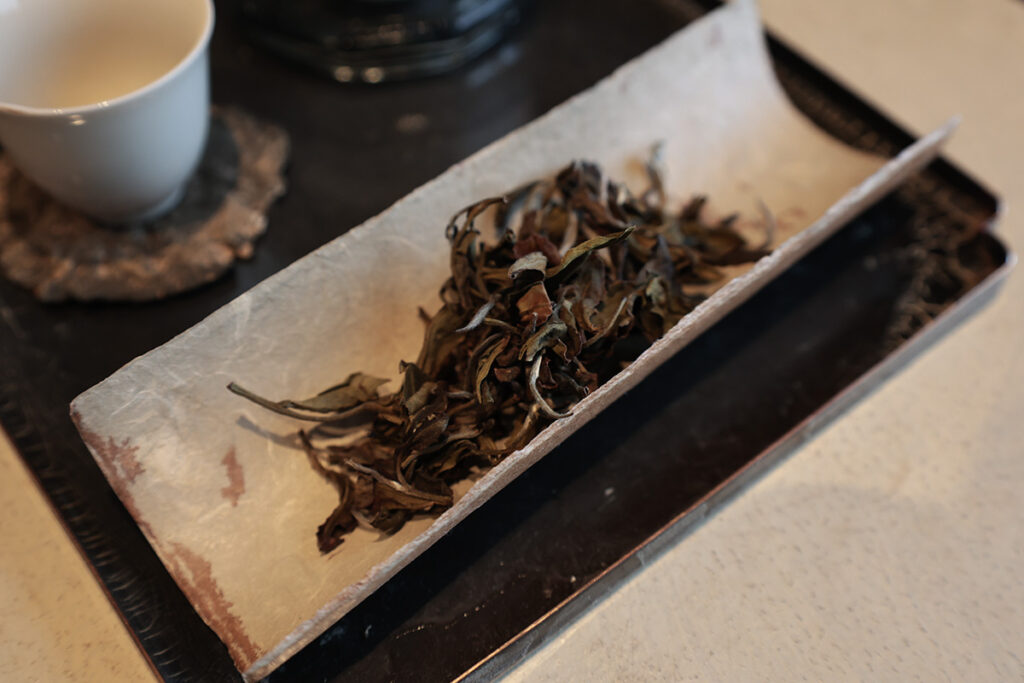
Before brewing the first infusion, Kojima holds up a tea leaf for a closer look. “You can see that the slender tip is silver. That’s the new bud,” he says. “Isshin niyo means the bud and the two leaves immediately below it, and only those parts are used.”
The leaves are then steeped in a dedicated teapot and poured into a small tea cup, producing a pale, yellow-tinted brew. Slowly, its aroma begins to emerge. Although the leaves have undergone heating and ageing during production, the fragrance is unexpectedly fresh and vegetal, almost as though it has come straight from the plant.
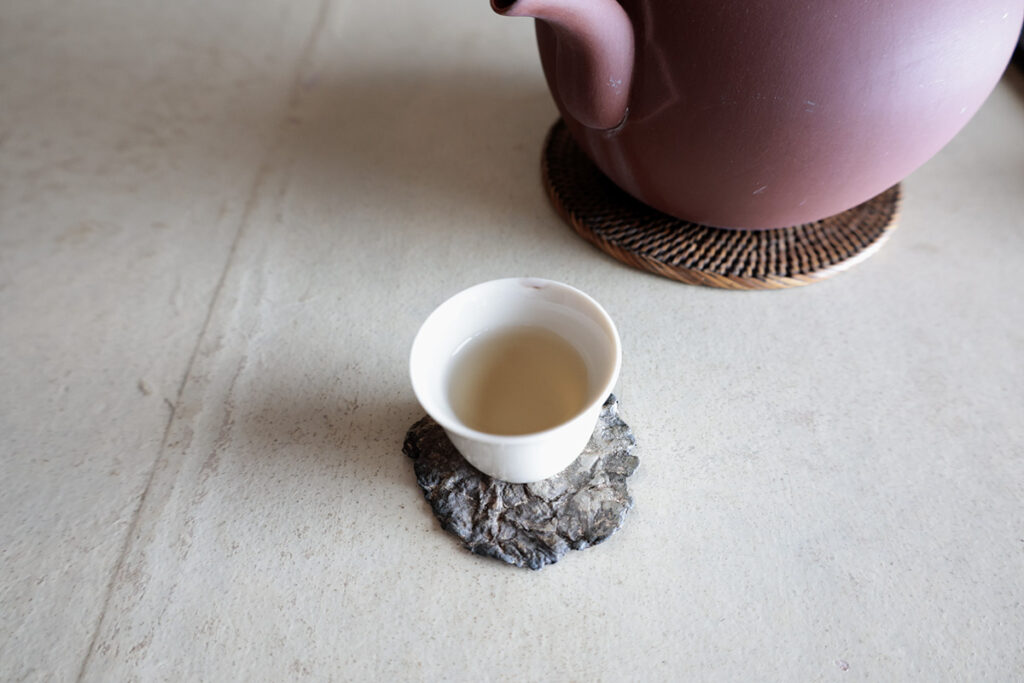
The first sip reveals a delicate flavour unlike any tea I have tasted before. Rather than simply pleasing the palate, there is something about it that seems to gently put the mind at ease. It also pairs beautifully with the three small accompaniments served alongside it: jujube nougat, dried mango and a peanut cookie.
As I search for the right words to describe it, Kojima offers a little help.
“This isn’t a tea that’s trying to make a strong statement. What we want to express is its subtlety: the faint colour of the infusion and the gentle aroma that rises from it. That’s quite different from Japanese green teas or Chinese and Taiwanese oolongs, where the flavours can be much more distinct. You can brew this tea around ten times, and part of the experience is noticing how the flavour changes with each infusion.”
I don’t make it through all ten, but by then, I understood his point. The experience is another reminder of just how much there is to discover in the world of tea. Yet for all its depth, it doesn’t have to be intimidating. Sometimes, curiosity and an open mind are all you need to begin exploring it. And on that note, I left Ikehan Bunshitsu with a newfound appreciation for that simple idea.
Ikehan Bunshitsu
Address: 143-10 Toshi-cho, Kamo-gawasuji Gojo-sagaru, Shimogyo-ku, Kyoto 600-8111
Hours: 11:00–17:00 (L.O. 16:00)
Closed: Wednesdays
Website: https://www.ikehan.jp/bunshitsu/
Instagram: @bunshitsu.ikehan