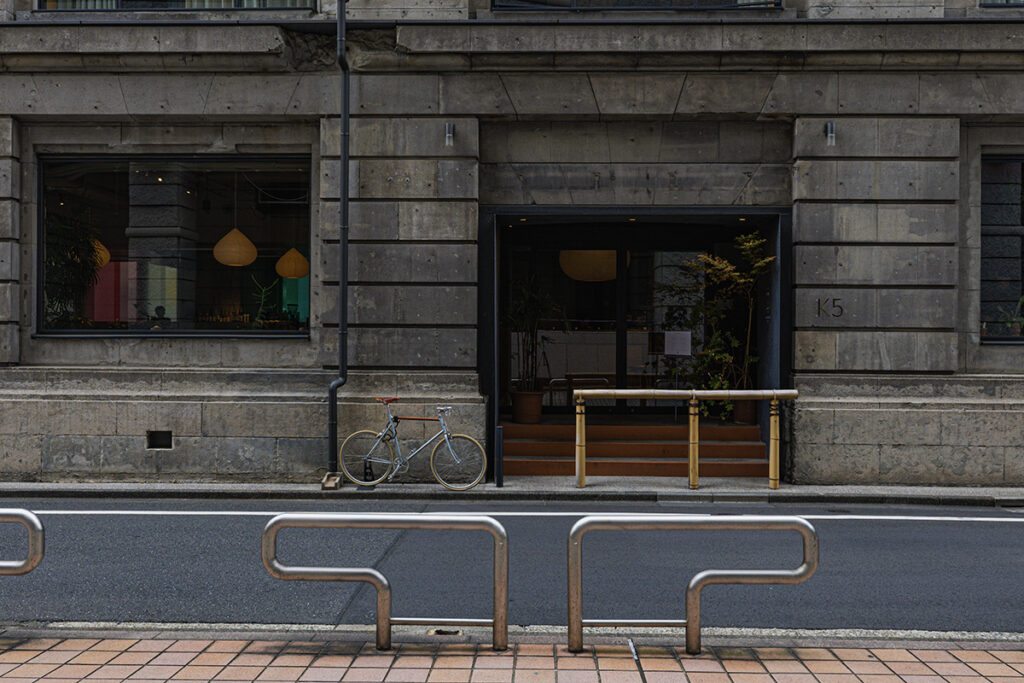
Once known as Japan’s Wall Street, Kabutocho in Nihonbashi played a central role in supporting Japan’s economy. But with the digitization of stock trading in the 1990s, the presence of people gradually faded from the streets, along with the areas’ vitality. Today, new life has been breathed into the neighborhood by the micro-complex K5.
Set within a former bank building constructed in 1923 as an annex of the First National Bank, K5 is the product of a full-scale renovation that transcends the idea of a hotel. At its core is a carefully considered aesthetic that harmonizes with the surrounding city while engaging the senses.
K5 and Its Century of History
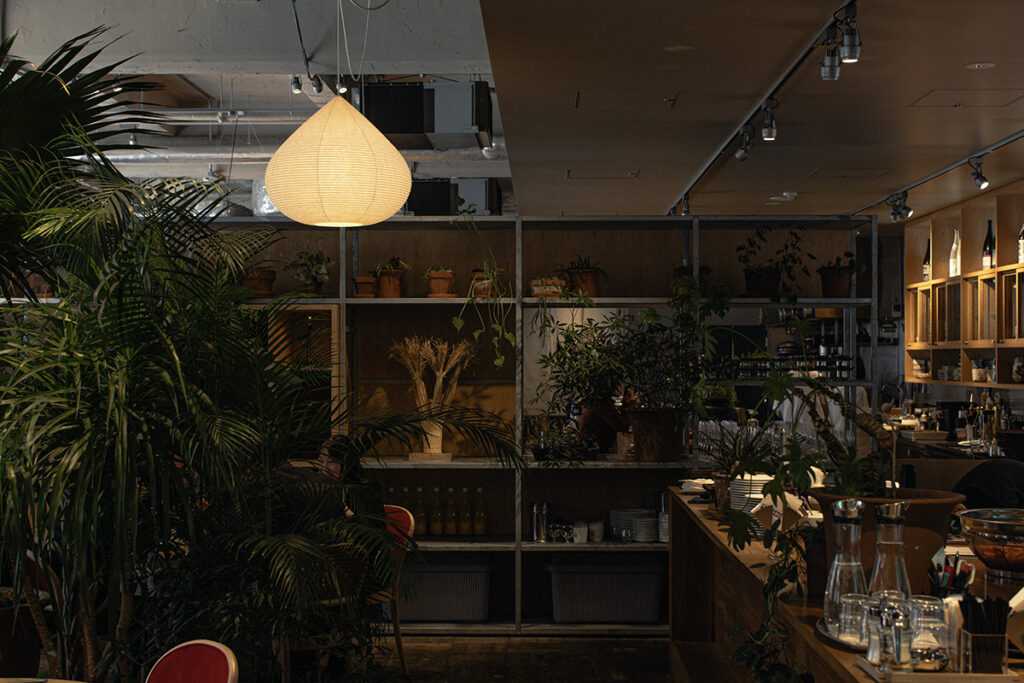
A café named DANCE sits to the left of the entrance.
K5’s story begins with the revitalization of Kabutocho. The aim was to bring back greenery and a sense of urban life to a gray financial district surrounded by stark concrete. In a gesture that reflects this mission, an abundance of plants greets visitors the moment they step inside. Over the course of five years, the interior has come to embody the concept of “Returning to Nature,” creating a striking contrast with the building’s solid exterior and drawing visitors in at first glance.
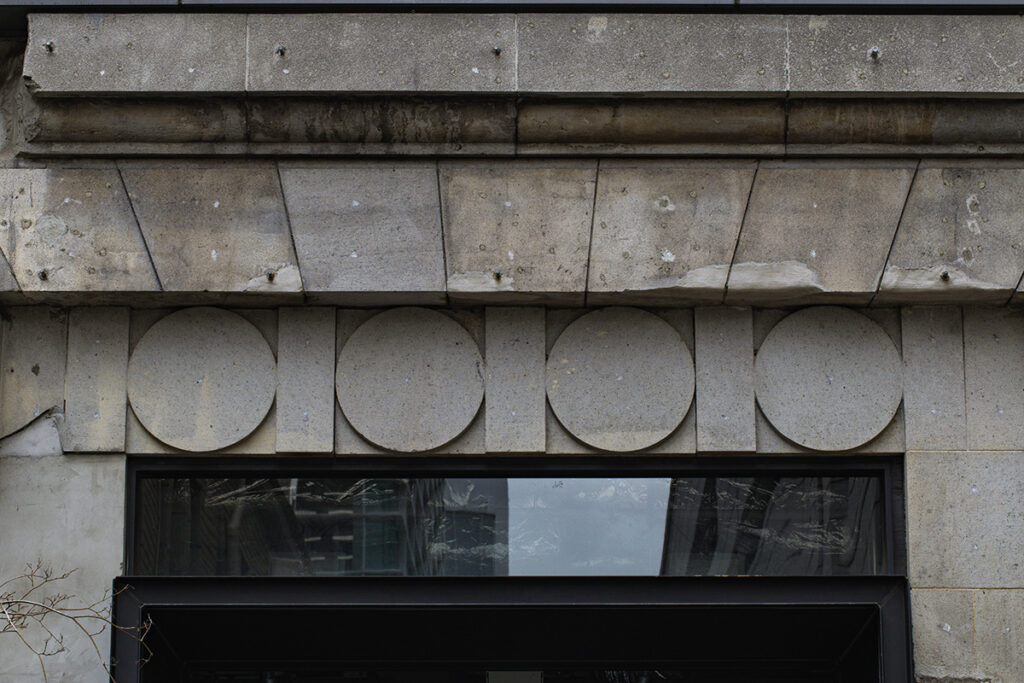
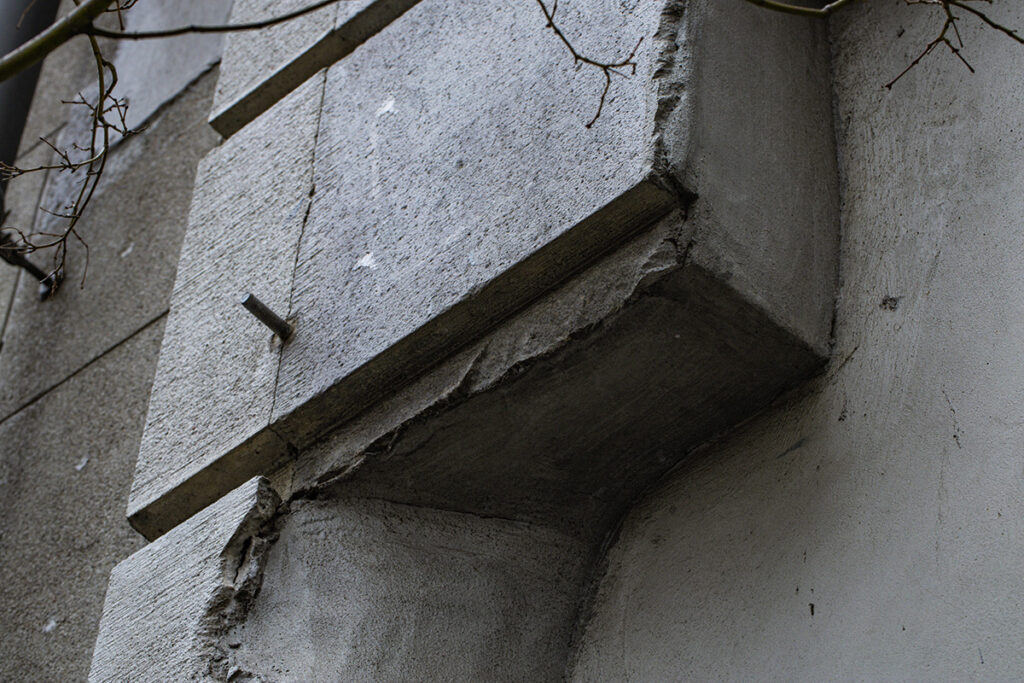
Circular and square concrete forms uncovered during the renovation are now used as K5’s logo.
During the renovation, the building’s over-100-year-old structure was intentionally left exposed. Where the floors were stripped away, square patterns matching the size of the tiles used in the corridors, baths, and café emerged, revealing layers of history once embedded in the space.
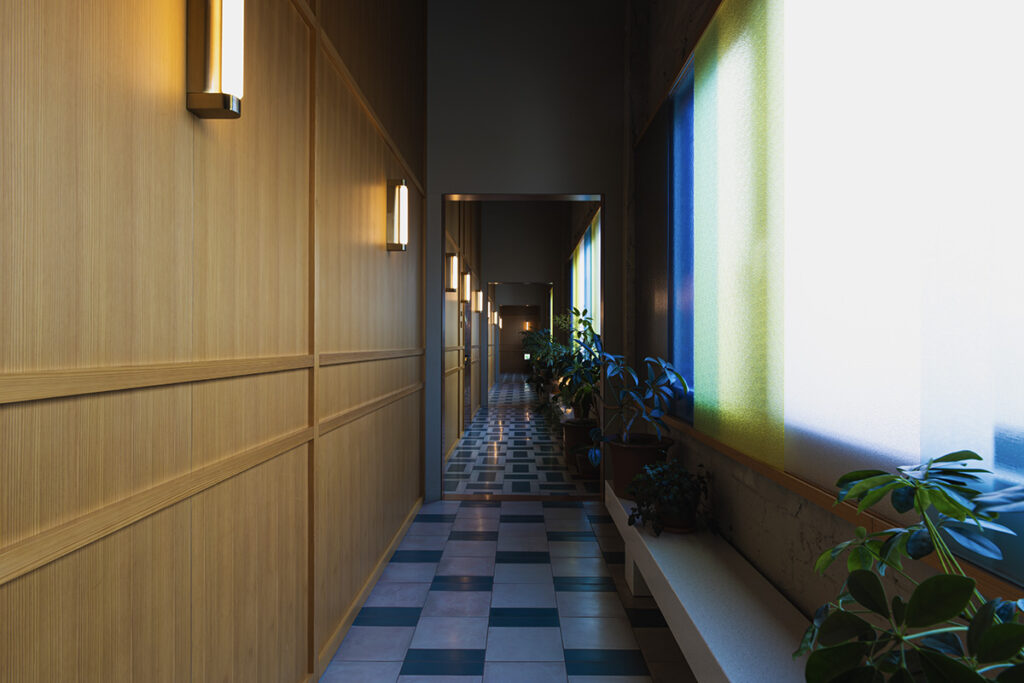
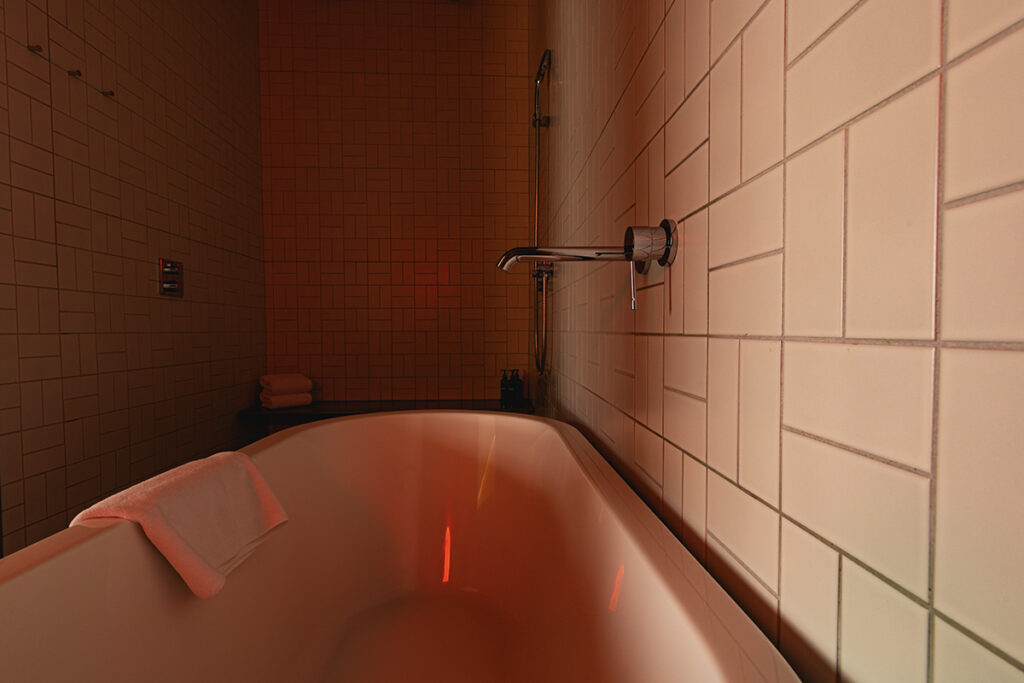
The design was led by CKR (Claesson Koivisto Rune), an architectural practice based in Stockholm, Sweden. Their guiding concept is a blend of Nordic minimalism and Japanese craftsmanship. Much of the furniture is custom-made, incorporating natural materials such as bamboo, cedar, linen, and terracotta in a contemporary way. Even the cedar used for the air-conditioning louvers deepens in character over time, giving a sense that the building itself is alive.
The Aesthetics of Ambiguity
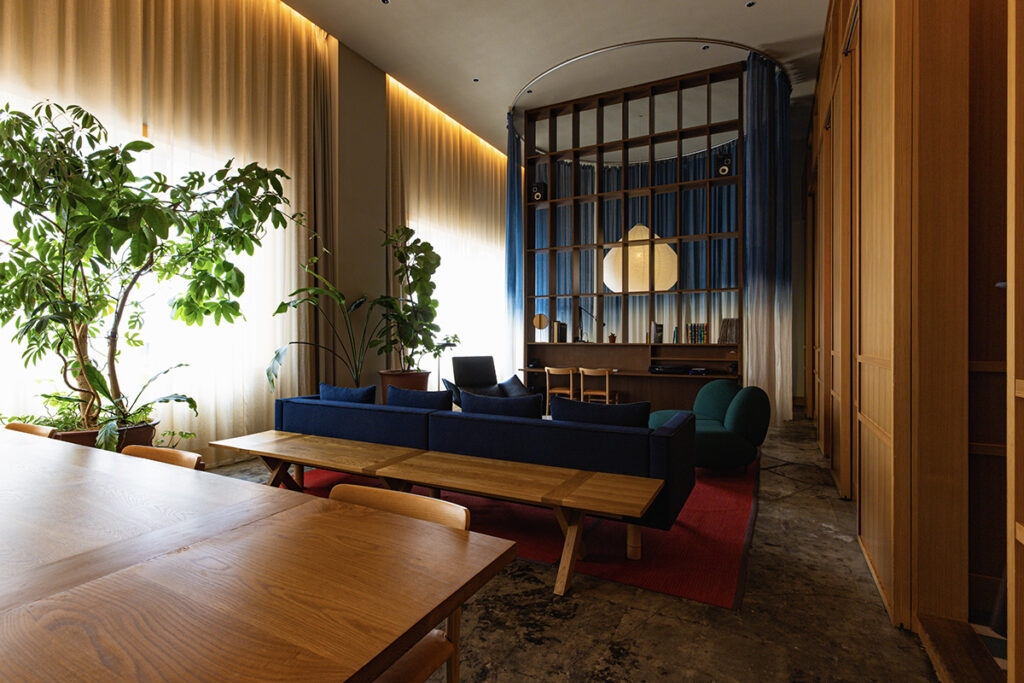
Suite Room
K5 offers seven types of guest rooms, ranging from suites to studios. One of its most striking features is the remarkable ceiling height. The signature top floor reaches 4.5 meters, while the second and third floors stand at 3.5 meters, creating a strong sense of openness. As you move through the corridors, you encounter copper walls where even fingerprints and scratches become part of the surface’s character.
At the core of K5’s concept is the idea of “ambiguity.” This reflects a Japanese interpretation, through CKR’s sensibility, of contemporary ideas such as genderless and borderless design. The guest rooms do not have clear walls or doors separating the living and sleeping areas; instead, linen curtains that allow light to pass through gently connect the spaces.
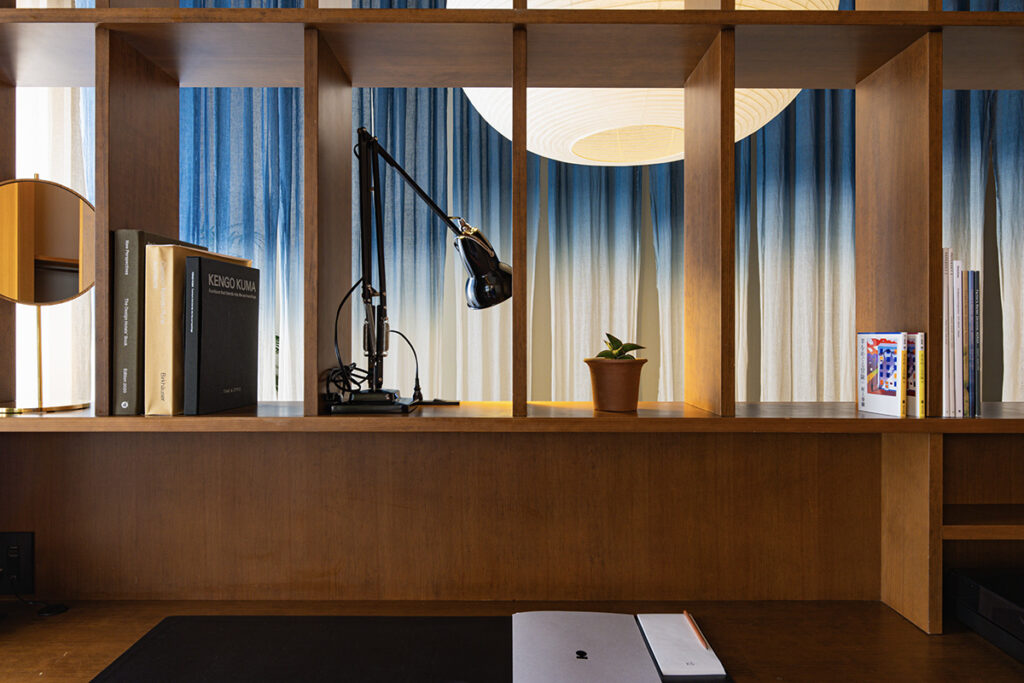
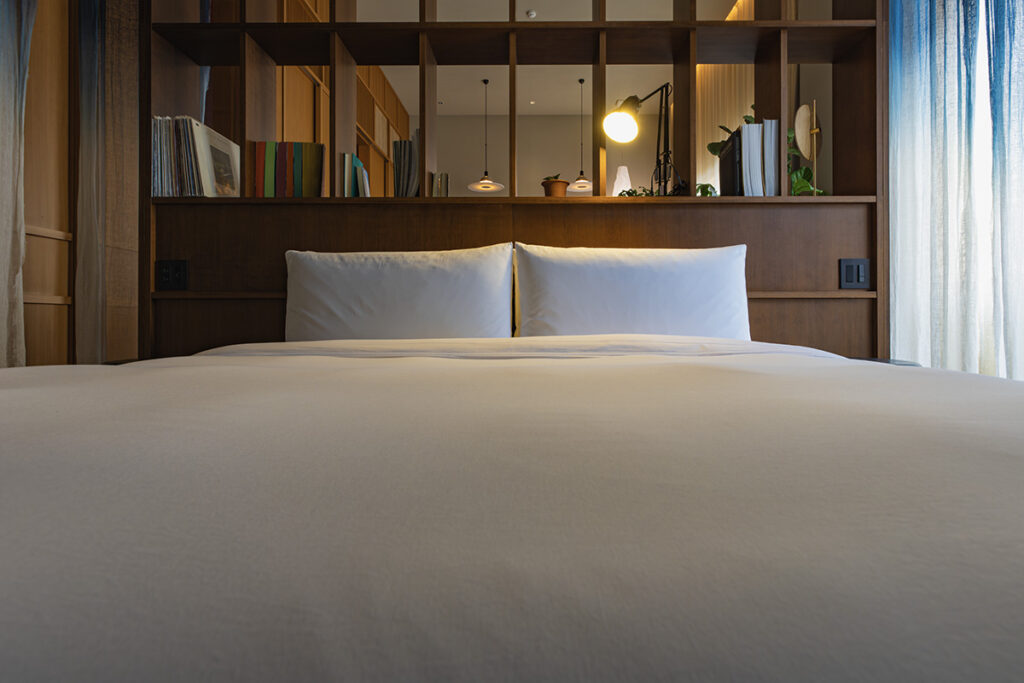
Each linen curtain is hand-dyed by artisans.
Televisions are intentionally absent from the hotel. In their place, guests are provided with a record player and books. The idea is to create space for a break from everyday life, offering a digital detox that allows guests to step away from the daily grind and online world.
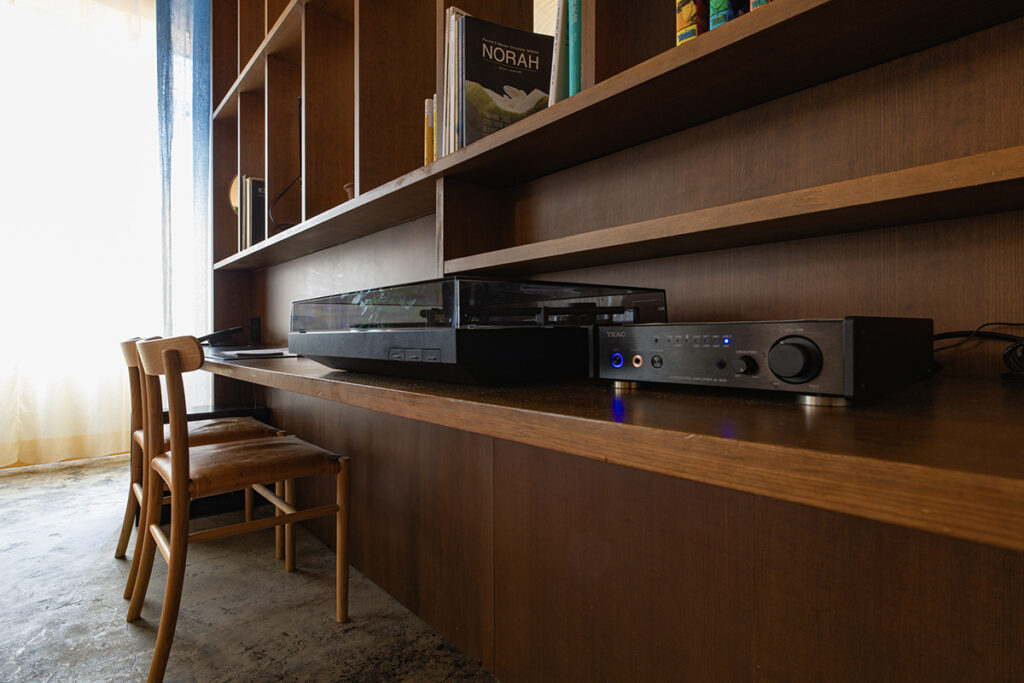
Great care is also taken in shaping the spatial experience. In the guest rooms, speakers are deliberately placed high up, designed to allow sound to gently fill the space. However, they automatically turn off after 15 minutes creating an experience of intention. With this in mind, K5 staff personally rush from the lobby to each room to switch them on at the exact moment guests check in and open the door, so that sound begins to flow through the space as they enter. This analogue, highly intentional gesture has become a defining expression of K5’s hospitality.
A Stay for the Five Senses
The experience at K5 engages not only sight but all five senses. In the suite rooms, red or green wool tatami mats are used as accents on the floor. Designed to address issues such as mold and odor commonly associated with traditional igusa, they also combine practicality with design, allowing heavy furniture to be placed on them.
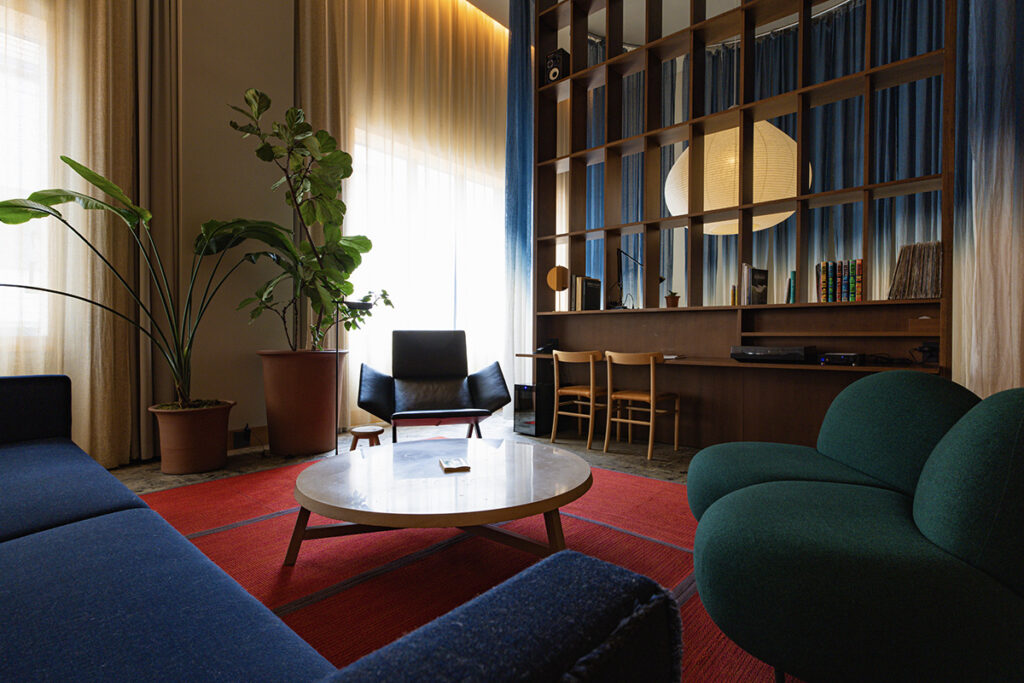
The space is defined by the deliberate use of oversized plants and furniture, which enhance its sense of presence.
Each item in the minibar carries its own story. Staff travel across Japan to meet producers in person, selecting only those whose faces and passion they have directly encountered. Each product is accompanied by written notes about its maker, adding a sense of warmth often absent in larger chain hotels.
The original teas and sweets offered as welcome snacks are also changed according to the season and timing. Rather than a fixed service, they are designed as a prompt for conversation with guests who may wonder about their story, creating natural opportunities for interaction with staff.
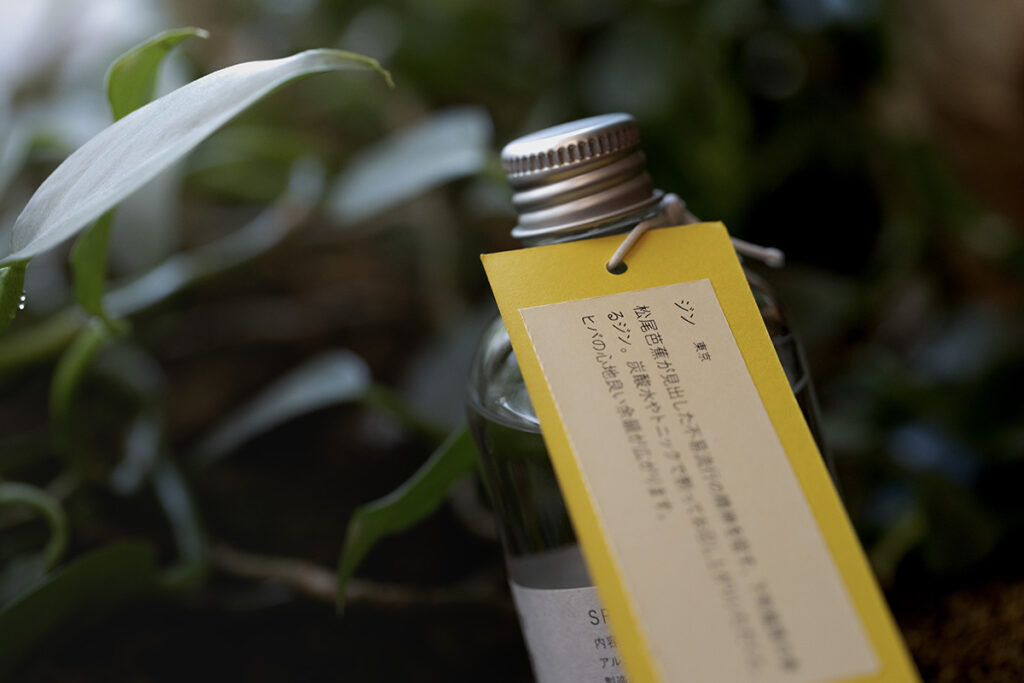
Attention to detail extends to the amenities as well. The original pencils and bottle openers feature only subtle branding, with the K5 logo kept understated. Rather than asserting the brand through logos, the idea is for guests to experience its aesthetic in the moment of use. Prioritizing a sense of “blending in,” the team consistently maintains a stance that resists mass-produced uniformity.
Envisioning the City as Part of the Hotel
At present, around 90 percent of K5’s guests are international visitors. Many are architects, designers, business leaders, and creatives drawn in after encountering the project in the media.
Yet K5’s vision extends beyond the confines of the building. Its true purpose lies in the revitalization of Kabutocho as a district. The idea can be summed up as this: if a hotel does not have a particular feature such as a gym or a pool, then the entire city can be seen as an extension of the hotel. Guided by this concept, guests who book via the official website receive “Kabutocho Credits” that can be used at partner establishments throughout the neighborhood.
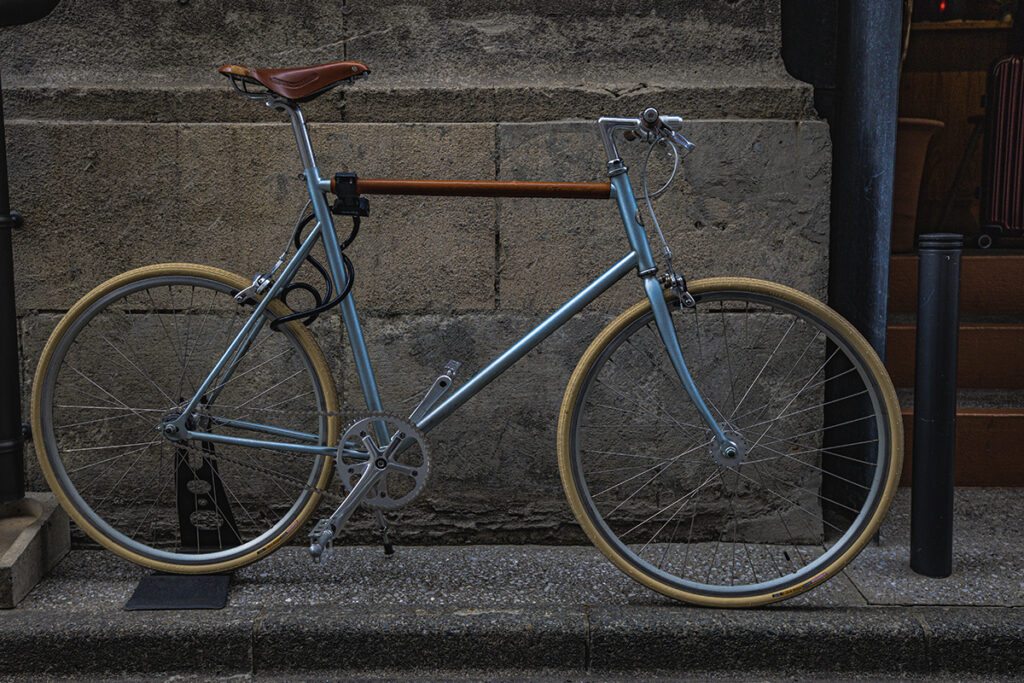
Bicycles are available outside the property for guests to explore the neighborhood.
Acting as a hub, the hotel encourages guests to step out into the neighborhood, exchange greetings in cafés, buy flowers, and blend into everyday life. Once a district defined by the hurried pace of stockbrokers, Kabutocho is now becoming a richly layered place where those working late in cafés and travelers immersed in the sound of records coexist.
Protected within a 100-year-old structure, K5 continues to shape Kabutocho’s everyday life with a sense of ambiguity, yet a clearly defined aesthetic. It is a place where, upon arrival, familiar assumptions are gently dismantled and a new sense of self can be discovered.
K5
Address: 3-5 Nihonbashi Kabutocho, Chuo-ku, Tokyo, Japan
Website: https://k5-tokyo.com/