Kyoto is home to countless quietly tucked-away restaurants. Even those who have lived here for decades still come across places they have never heard of. These places do not refuse first-time customers, yet they make little effort to advertise, and their official websites offer only very little information, leaving more unsaid than explained. More often than not, such places turn out to be exceptional.
This time, we turn our attention to one such establishment: 〇間, pronounced MA.
Provided by⚪︎間
The Process of Designing Tea
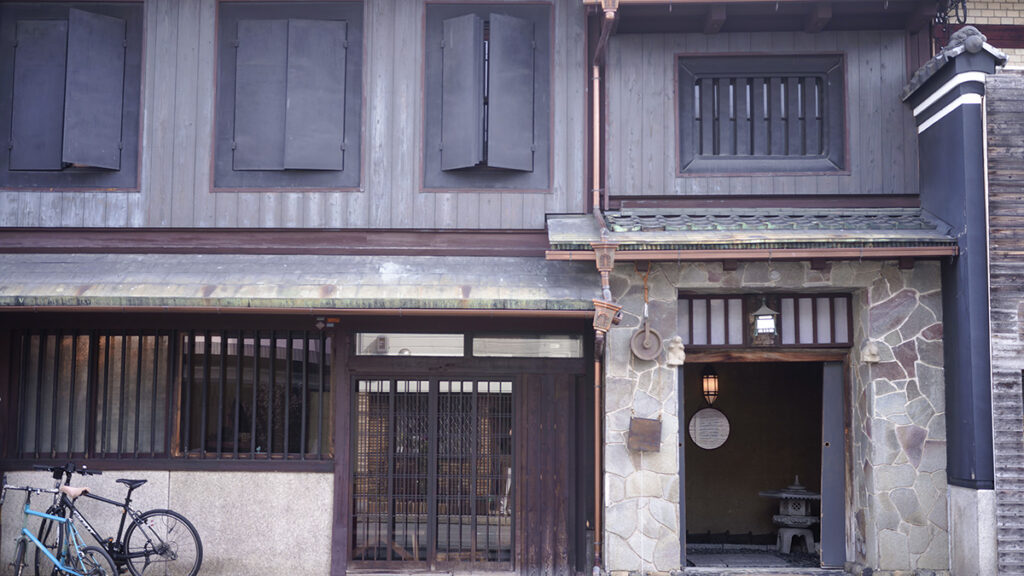
The tearoom occupies a century-old machiya townhouse near the five-story pagoda of Toji Temple, one of Kyoto’s most recognizable landmarks. Built roughly 100 years ago, the structure began as a charcoal wholesaler, later became a pawnshop, and eventually served as a private residence before falling vacant in the 2010s. Current owner Toshiaki Sakai took on the space, undertook a major renovation, and opened the doors in March 2019.
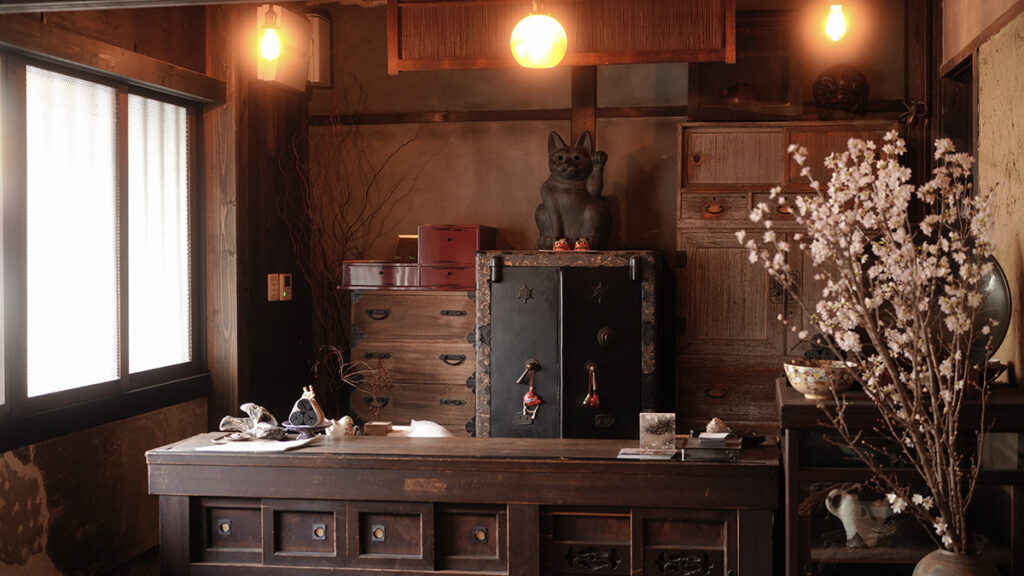
The building faces a road busy with passing cars, yet the moment you step inside, the atmosphere shifts. Antique furnishings, likely in place for generations, command the room with quiet gravity. Light filtering through the windows tempers their severity, lending the space a composed, almost suspended calm.
Provided by⚪︎間
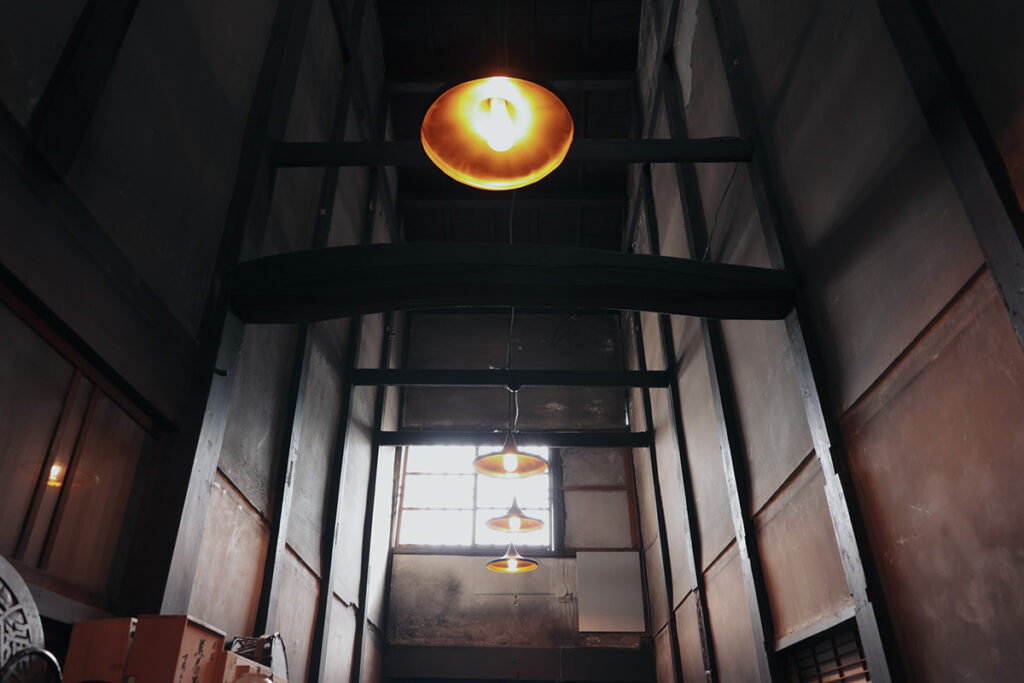
Sliding open the wooden door, a narrow corridor stretches ahead, and for a moment you are struck by the height of the open ceiling above. Display shelves line both sides of the hallway, neatly arranged with items available for purchase in the shop.
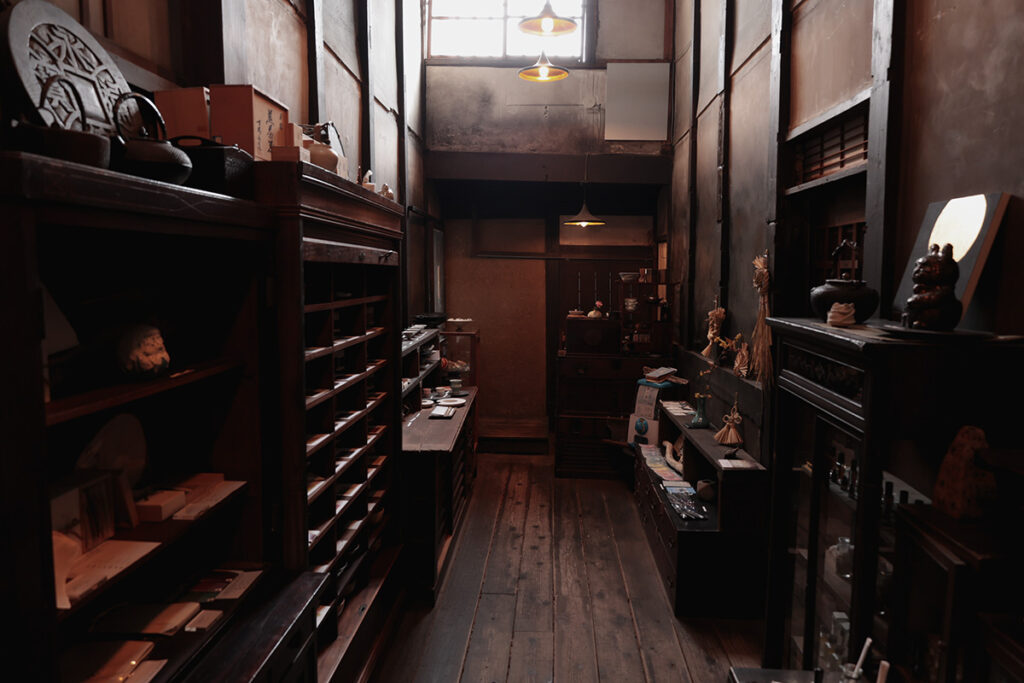
The shop’s signature offering is tea “designed” by Toshiaki. The term may sound unusual at first, but it goes beyond simply blending leaves.
Toshiaki explains:
“We begin by deciding on a concept, including the kind of flavor we want to create. At times, we consult specialists like aromatherapists as we develop the blend. Our work isn’t limited to what we serve in the shop. When commissioned by companies, we handle everything, from the tea itself to the packaging design and overall branding. The process feels very much like planning and design, which is why I use that term.”
Tea Expressed Through Poetic Hues
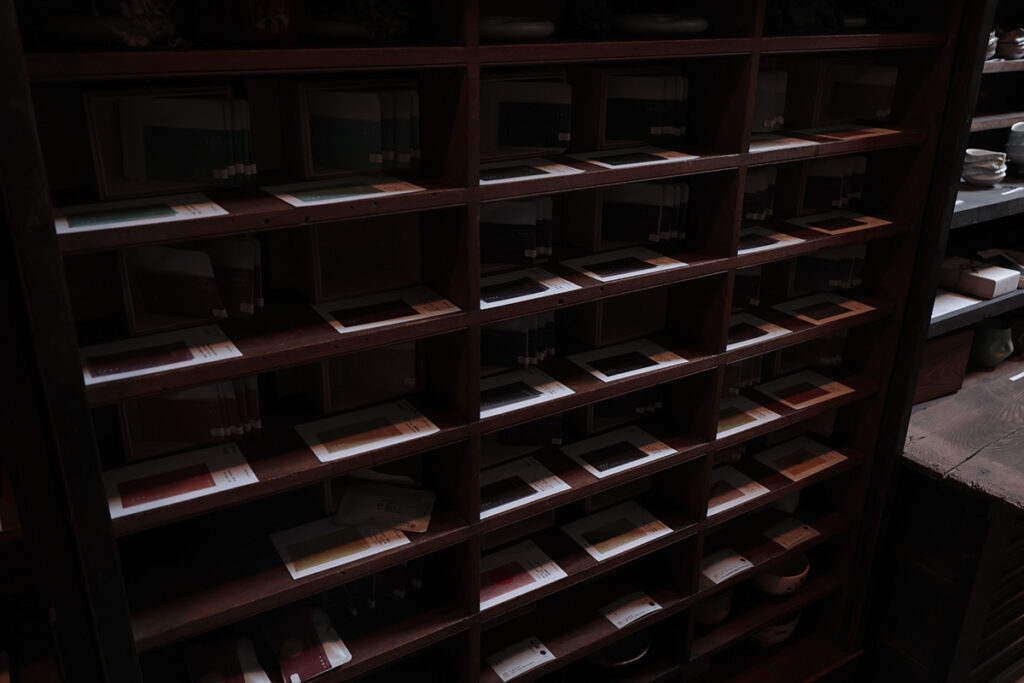
Packages of these designed teas line the display shelves. The ingredient lists move fluidly between the familiar and the unexpected: sencha, gyokuro, and Kyoto bancha alongside sage, cacao nibs, and green sansho pepper.
Their names, too, read like verses drawn from a palette of classical hues. Shinpeki (Deep Jade), Imayō-iro (a softly glowing crimson once favored in courtly dress), and Shakudō (a dark, lustrous copper) evoke colors as much as moods, inviting the drinker to taste with both the senses and the imagination.
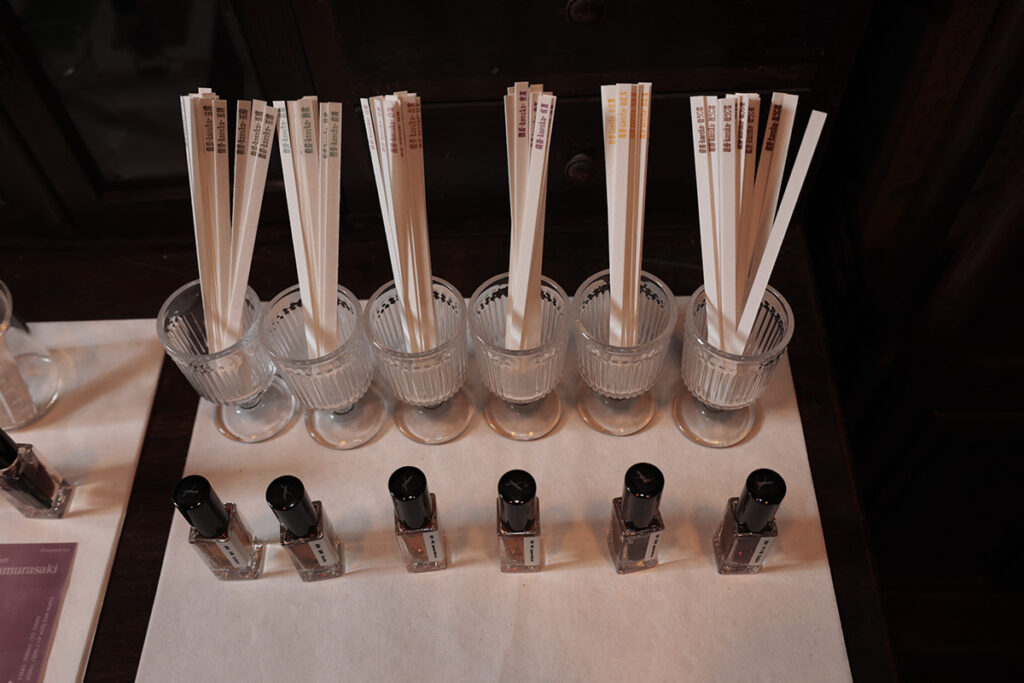
Another distinctive offering is a room spray created from essences carefully extracted from tea leaves. Made from varieties such as gyokuro, sencha, and black tea, it releases a gentle aroma that evokes the quiet, layered character of tea, allowing its subtle nuances to linger softly in the air.
Pulled Into the Alluring Dimness
Slide open the door beside the retail space and the tearoom unfolds beyond. The light is sparse, limited to carefully placed spotlights and the soft glow of daylight diffused through frosted glass, casting the room in a gentle half-shadow. The subdued darkness draws you in rather than shutting you out.
When the building was still used as a residence, this room was a Western-style parlor with a grand piano placed inside. Toshiaki first restored it as closely as possible to the machiya’s original structural form before renovating it into the space it is today.
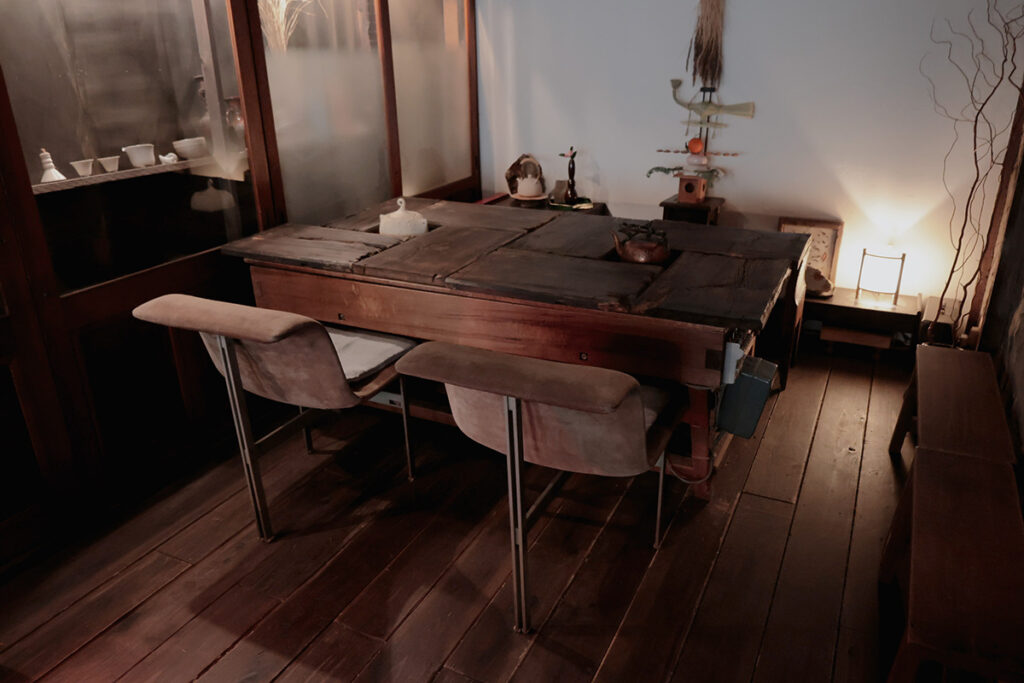
The room is intimate, with only a handful of seats. Toshiaki explains that he never set out to fill it with more tables or turn it into a bustling venue. What mattered most to him was creating an environment where guests could fully immerse themselves in its atmosphere.
Where Time Gently Fades in the Warmth of Hospitality
Settling into a seat at the counter, I am quietly handed a menu. As each service requires careful preparation, reservations are generally expected. Still, tea and sweets are available for same-day guests. Among them are several of the designed teas, and I find myself drawn without hesitation to one named Suō.
Blended from Japanese black tea, rose, and hops, it carries an unexpected harmony of elements. Toshiaki lifts the kettle and pours freshly boiled water into the kyūsu, where the leaves wait in stillness and the first notes of fragrance begin to rise.
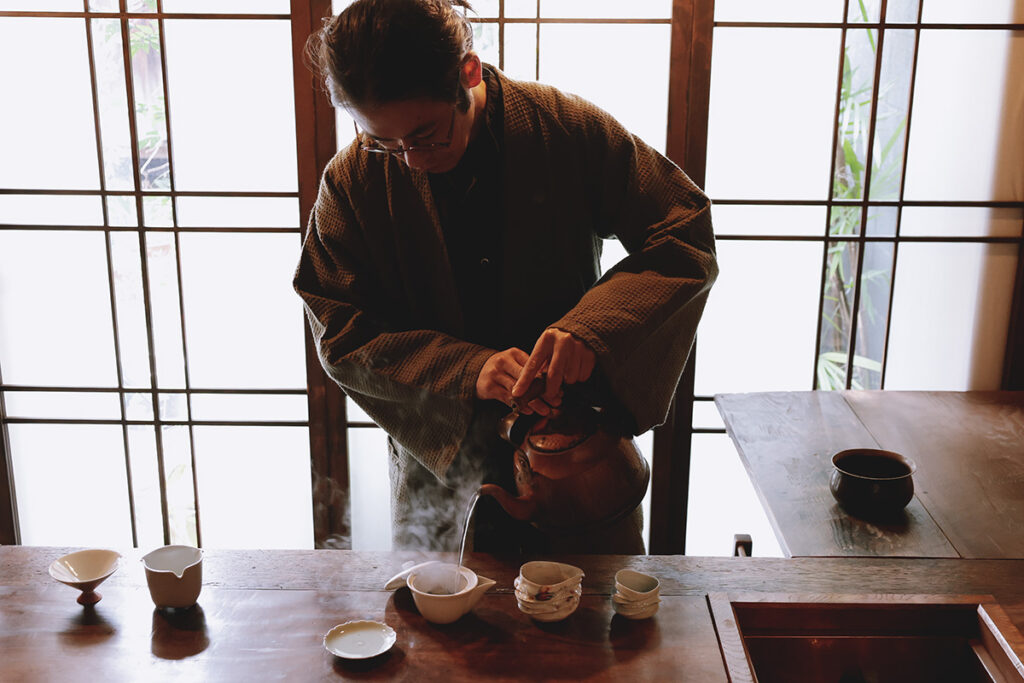
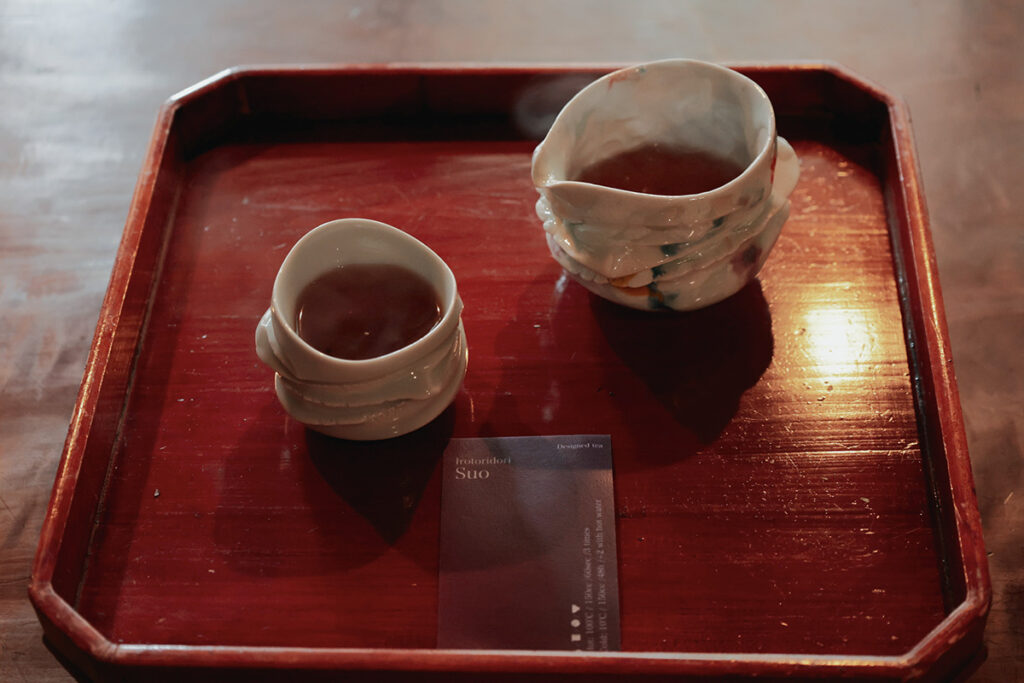
After steeping for about a minute, the tea is poured into a ceramic vessel crafted by potter Asato Ikeda. Its singular shape, I learn, is inspired by a dragon ascending toward the heavens.
Moments later, an elegant fragrance rises into the air. I take a sip, then another. Alongside the familiar notes of black tea, there is something my palate has never quite encountered before. Guided by expectation, I search for traces of rose or hops, yet what emerges feels different from either. In the end, that quiet search proves inconclusive, but the taste itself leaves me with a gentle, lingering delight.
Next, I order a tea sweet called Samyō. Created especially for the shop by the Kyoto confectioner Itodatsu, it features a delicate, thin-skinned manju over which hot gyokuro is poured at the table.
The literary titan Mori Ōgai is said to have enjoyed placing a manju atop a bowl of rice and pouring sencha over it, creating what might be called a manju chazuke. History has often treated this as a curious indulgence, but if a tea specialist has arrived at a similar idea, perhaps Ōgai’s preference was not mere eccentricity after all.
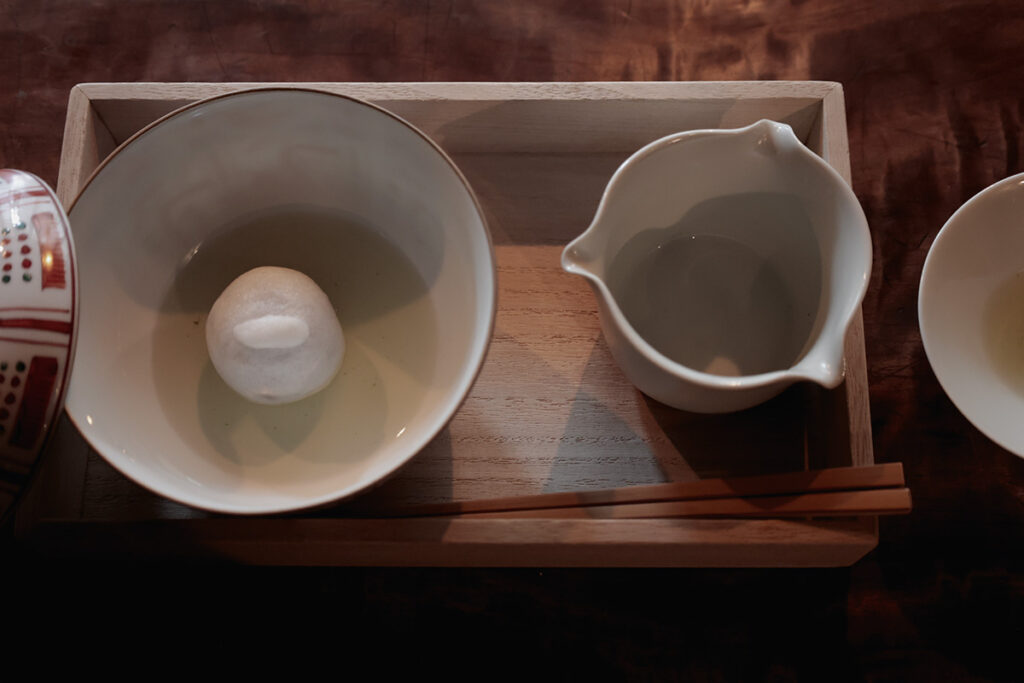
I had expected the bean paste inside the manju to be intensely sweet, but it proved surprisingly light. The sugar is kept deliberately low, allowing the gyokuro’s profound umami to unfold with clarity. I am told that dissolving the bean paste into the tea and savoring it like a delicate zenzai is another way to enjoy it.
Conversation with Toshiaki flows easily, and before I realize it, more than an hour has passed. With a faint reluctance, I return to the noise of the street. The memory of that hushed, luminous hour lingers quietly, softening the chill of the winter air.
MA
Address: 5-9 Nishikujo Hieijocho, Minami Ward, Kyoto 601-8437, Japan
Hours: 10:00–17:00
Closed: Tuesdays and Wednesdays
Website: https://0ma.jp
Instagram: @0ma_kyoto