Mademoiselle Yulia is a multifaceted talent. She is active in the fashion scene as a DJ while also producing her own kimonos. In this series, Yulia, who is well-versed in art and architecture, visits her favorite spots and discusses how she coordinates kimonos that harmonize with the surroundings. The first installment of 2026 takes us to Akasaka Hikawa Shrine, where stone steps and shrine buildings from the Edo period still remain, and sees Yulia in a kimono look imbued with wishes for good fortune.
A Sacred Sanctuary in the Heart of the City with Over 1,000 Years of History
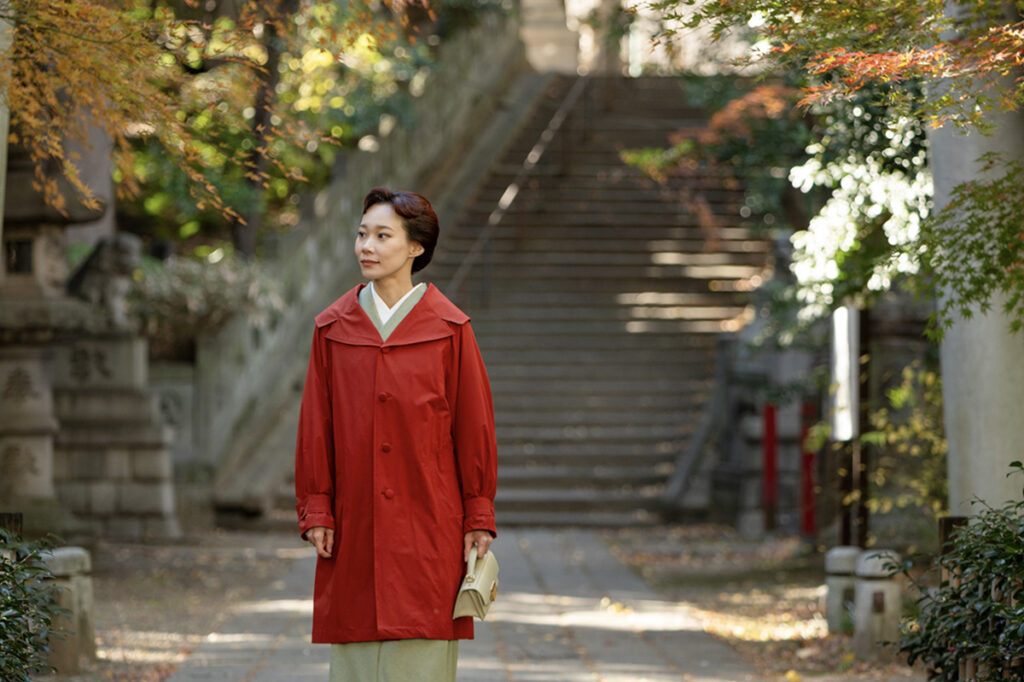
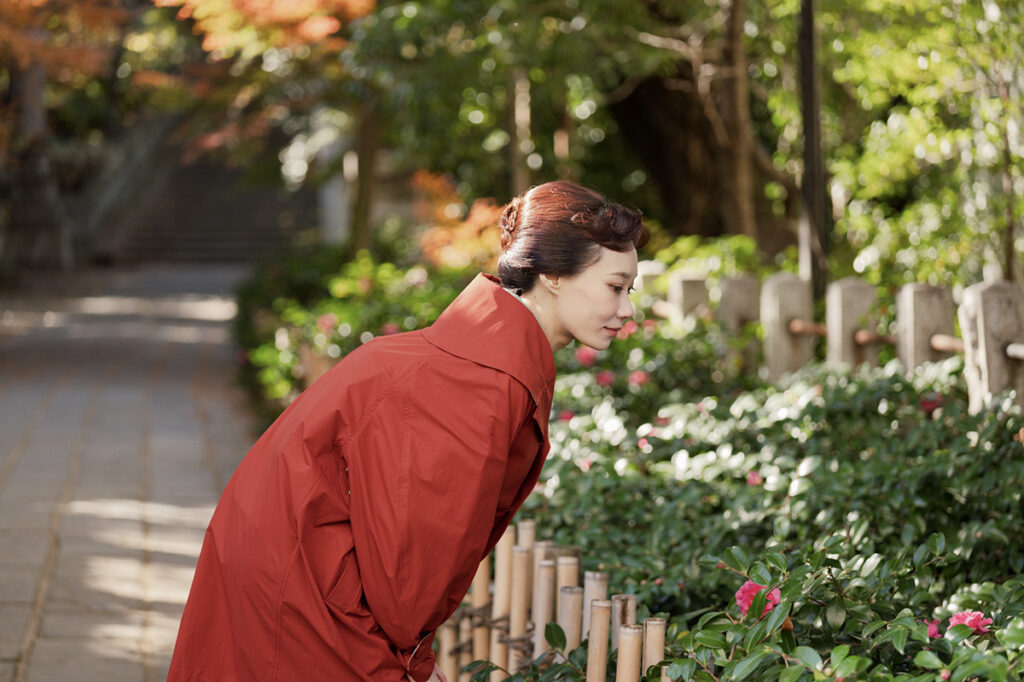
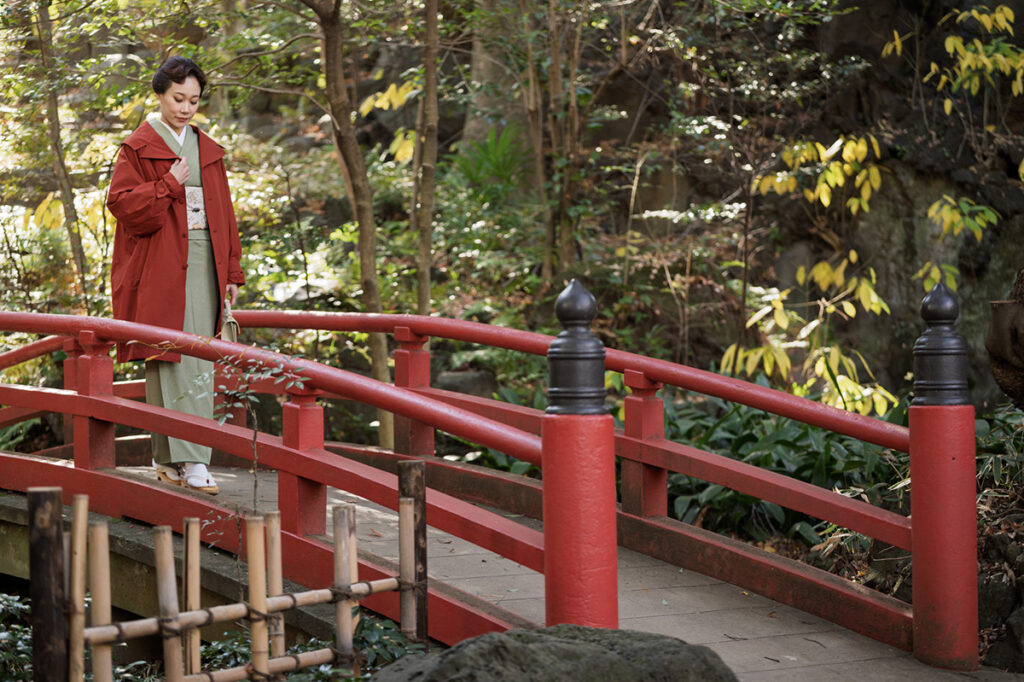
Set against the tranquil surroundings, the burgundy coat is KOTOWA’s new mulci coat, a piece Yulia herself helped design.
At the beginning of the year, Yulia visited Akasaka Hikawa Shrine, located just a short distance from the bustling districts of Akasaka and Roppongi. Among the many shrines in Tokyo, the reason she felt drawn to this one at the start of the year was the powerful impression left by a festival she had seen there for the first time. “When I first saw the annual festival and the Shinkōsai held every September, I was amazed that something so vibrant could exist right in the heart of Tokyo. The sight of up to sixteen portable shrines, along with large festival floats, making their way through the streets of Akasaka was just spectacular. And the fact that geiko take part in the procession is something unique to a historic hanamachi. I was truly moved,” she says, her excitement returning as she recalls the experience.
Akasaka Hikawa Shrine is dedicated to the married deities Susanoo-no-Mikoto and Kushinadahime-no-Mikoto, and is known as one of Tokyo’s three major shrines for matchmaking. It is also home to Ōnamuchi-no-Mikoto, a deity believed to preside over all forms of connection, from romantic relationships to friendships, work, and children, and is said to bestow blessings of prosperity in business and protection from misfortune. Cherishing human connections in both her work and personal life, Yulia first offered her prayers at the main hall, giving thanks for the new relationships that have emerged since the publication of her first book, Kimono no Toriko (Sekai Bunka Sha), released in December 2025.
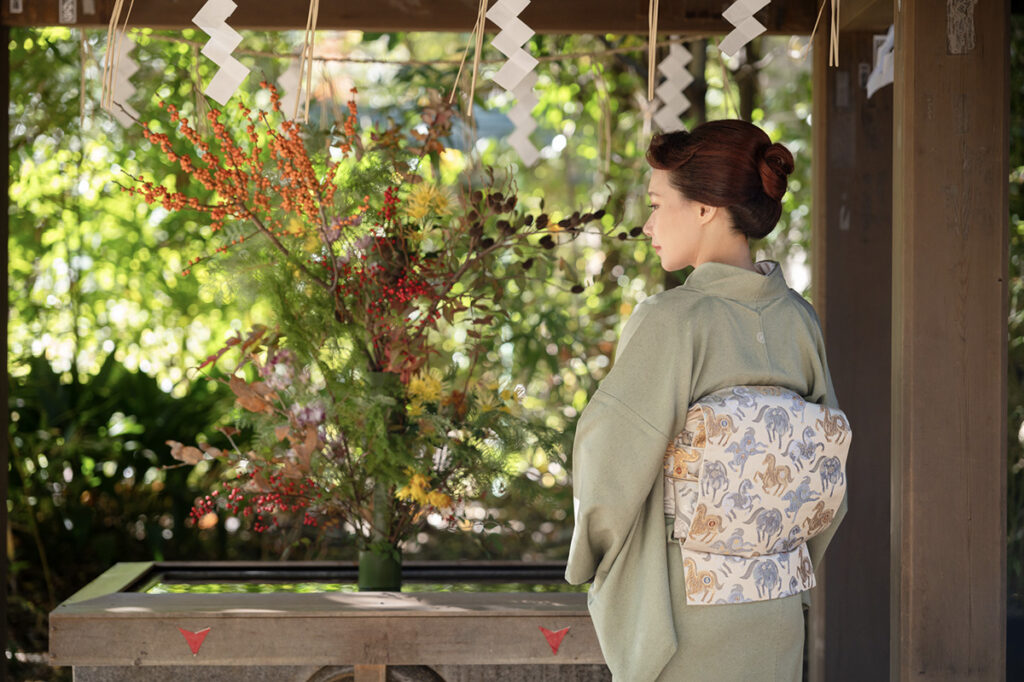
Before offering her prayers, Yulia pauses at the purification fountain to cleanse her hands, noting that the beautiful flowers make her feel cleansed in spirit as well.
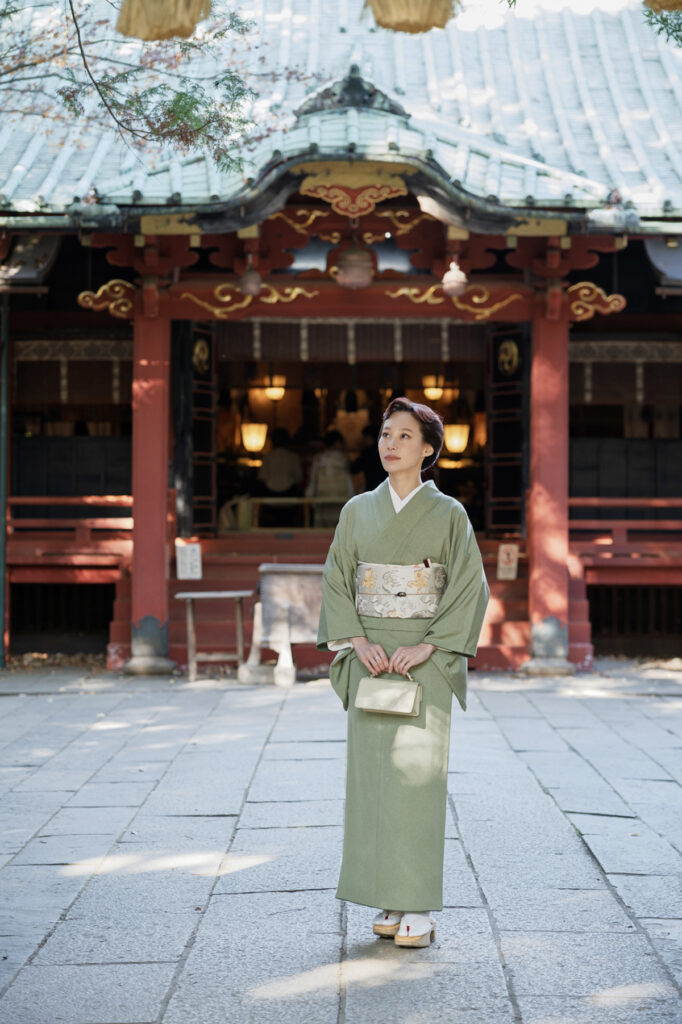
Surrounded by crisp morning air, the shrine buildings were built by Tokugawa Yoshimune.
The origins of Akasaka Hikawa Shrine date back more than 1,000 years, to the year 951. According to tradition, Rennin Sōjō, a traveling monk journeying through the eastern provinces, spent a night in Ittoki Village (in the area of present-day Akasaka 4-chōme). There, he received a divine revelation from the enshrined deity in a dream, and built and dedicated a shrine to Hikawa Myōjin on that very site.
Roughly a century later, in 1066, a severe drought spread across the Kantō region. When villagers gathered at the shrine to pray for rain, it is said that rainfall soon followed. Since then, Akasaka Hikawa Shrine has been regarded as a place of strong spiritual presence, where sacred rites have continued to be performed over the centuries.
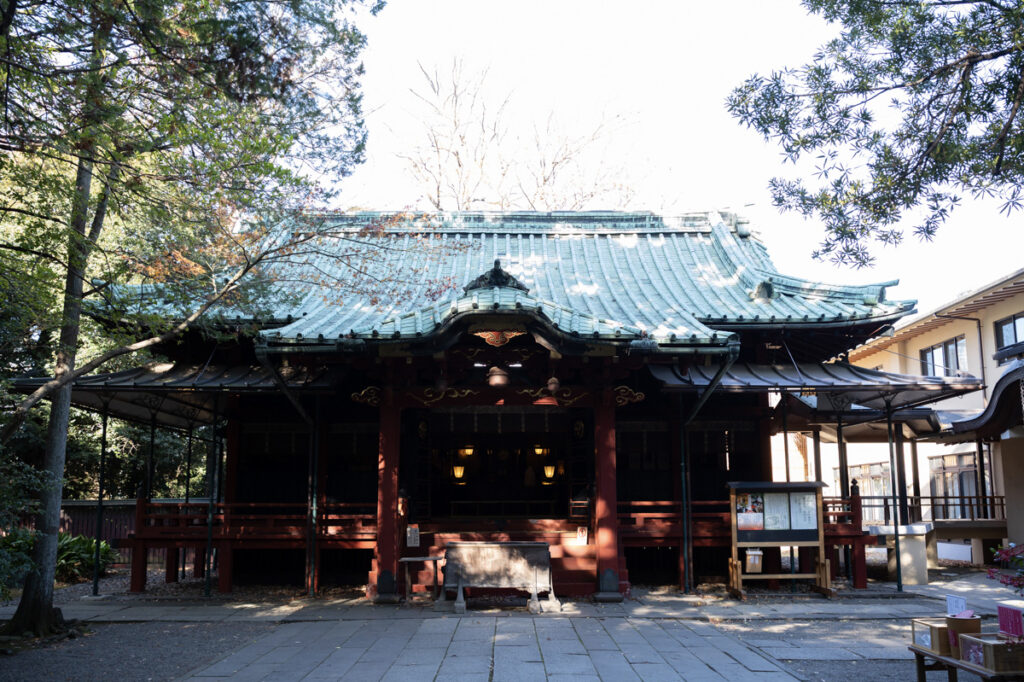
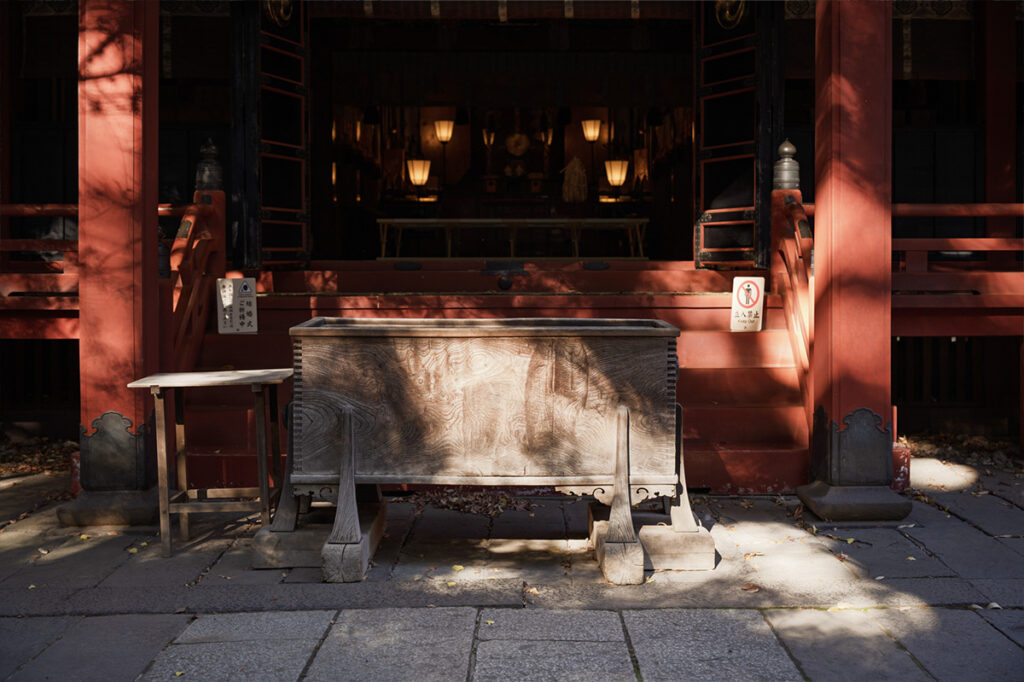
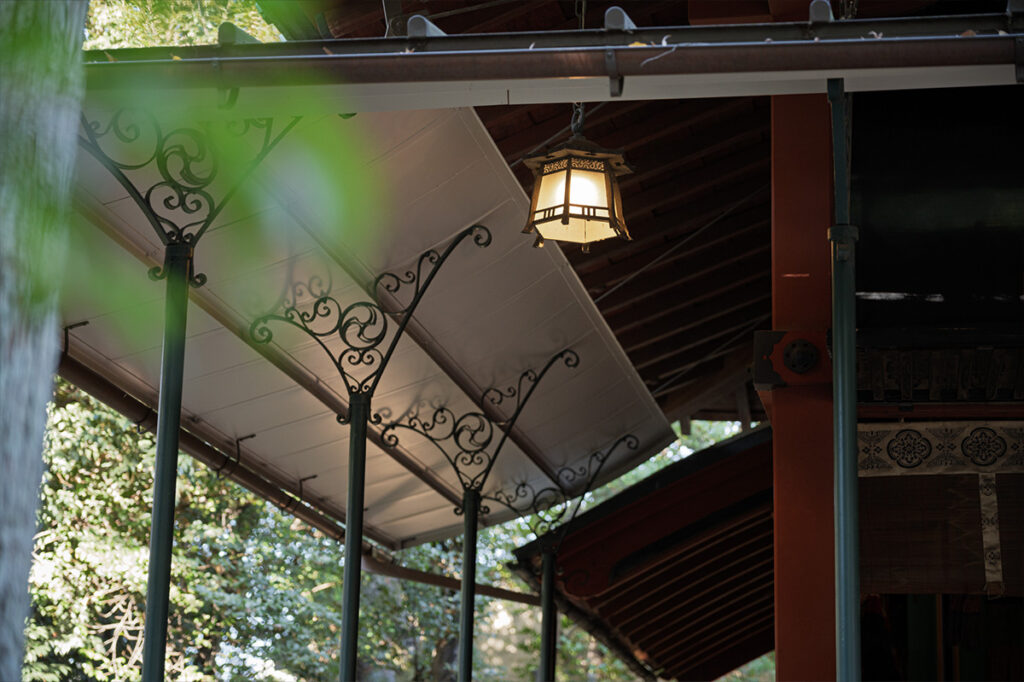
Remarkably tranquil despite its location between Roppongi and Akasaka, the shrine’s later additions are adorned with elegant Japanese–Western details that catch the eye.
In 1730, the shrine buildings were constructed by Tokugawa Yoshimune, the eighth shogun of the Tokugawa shogunate. With official seals bestowed by successive shoguns through the reign of the fourteenth shogun, Tokugawa Iemochi, the shrine has long maintained deep ties to the shogunal family. Designated a Tangible Cultural Property of Tokyo in 1976, the shrine buildings reflect the spirit of frugality that characterized the period in which they were built, while incorporating refined Edo-period elegance in their details, such as the large cloud-shaped bracket complexes and fan-patterned rafters.
Inside the shrine, the walls feature a Phoenix painting created in 1929 by Shūhō Yamakawa, now designated an Important Cultural Property of Tokyo. Together with the lavish coffered ceiling adorned with floral and bird motifs, these elements bring a sense of quiet elegance and richness to the shrine’s dignified interior.
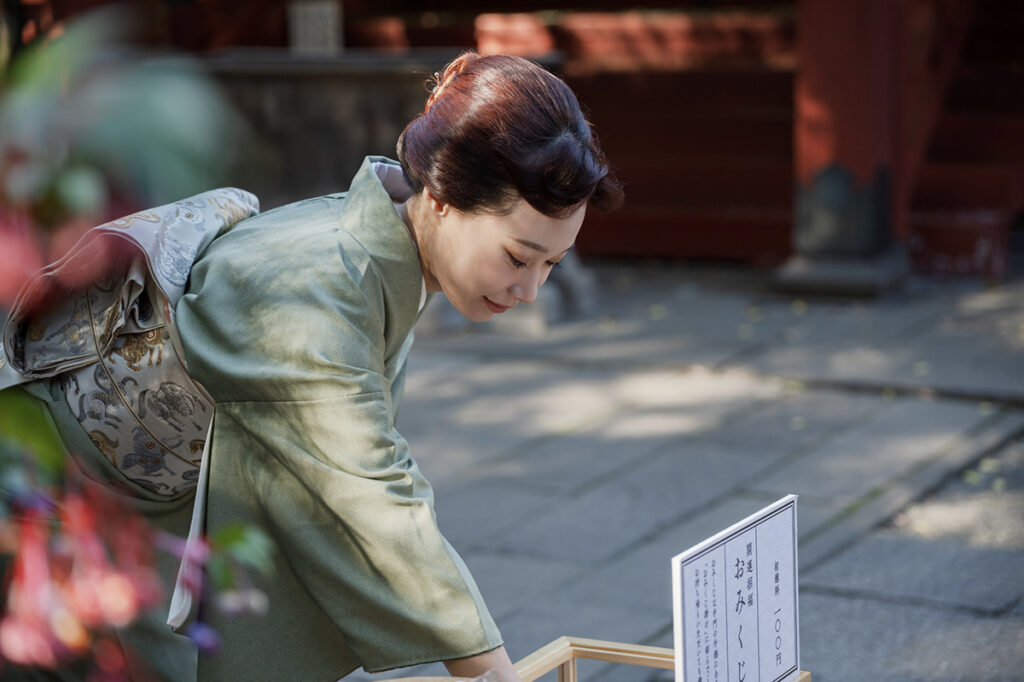
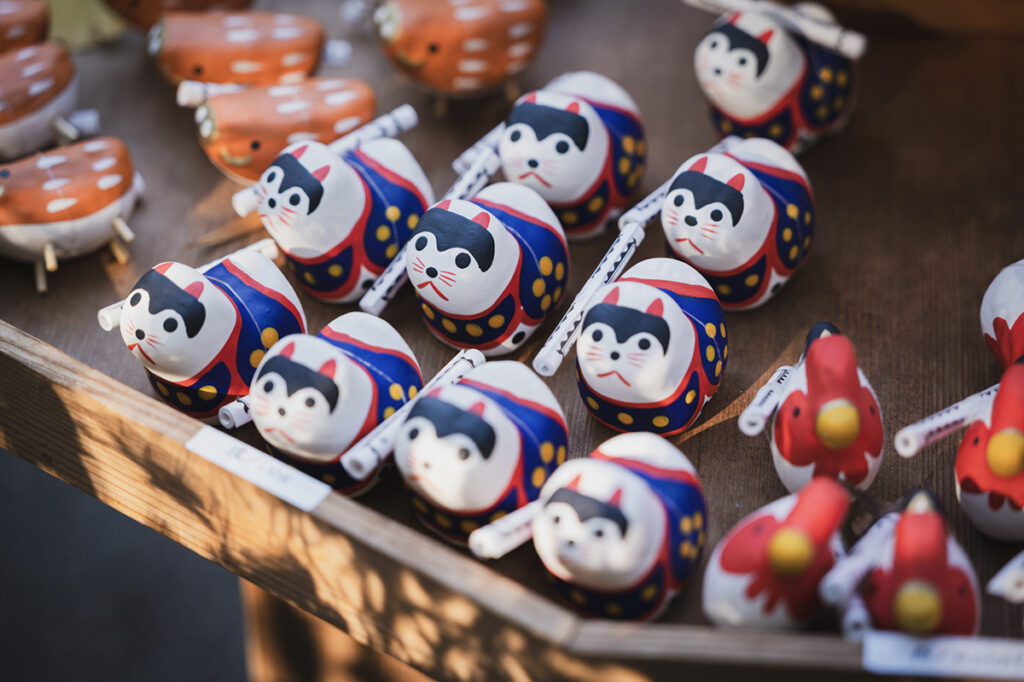
A charming omikuji found within the shrine grounds. Edo-era dates engraved on torii gates, lanterns, and komainu allow the spirit of the past to linger softly in the present.
Welcoming the New Year in a Wakamatsu-Green Edo Komon and Horse-Motif Obi
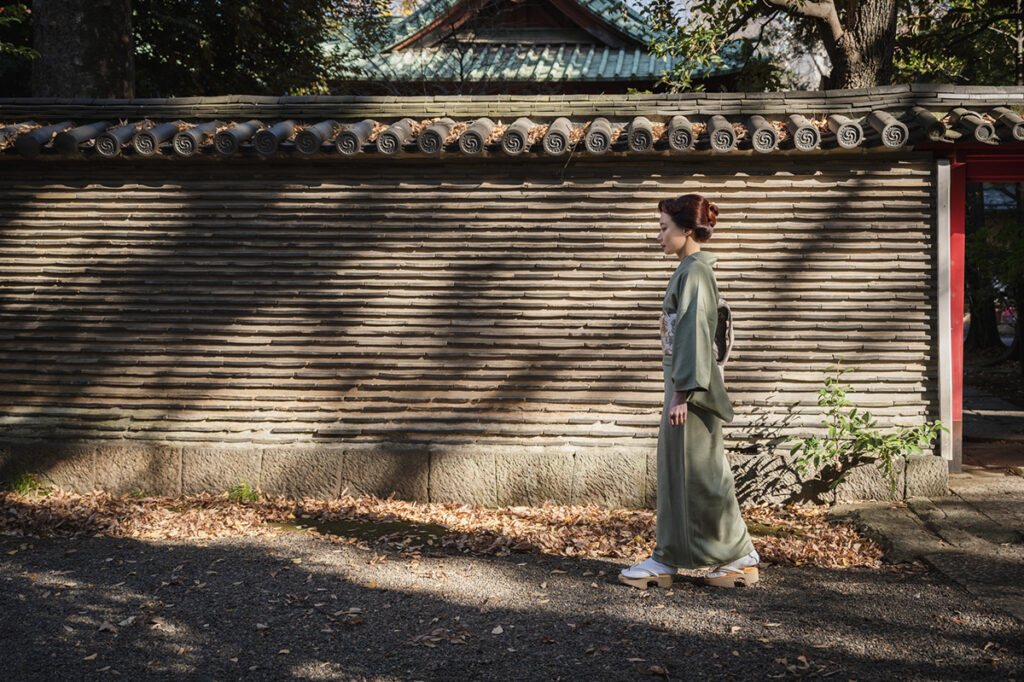
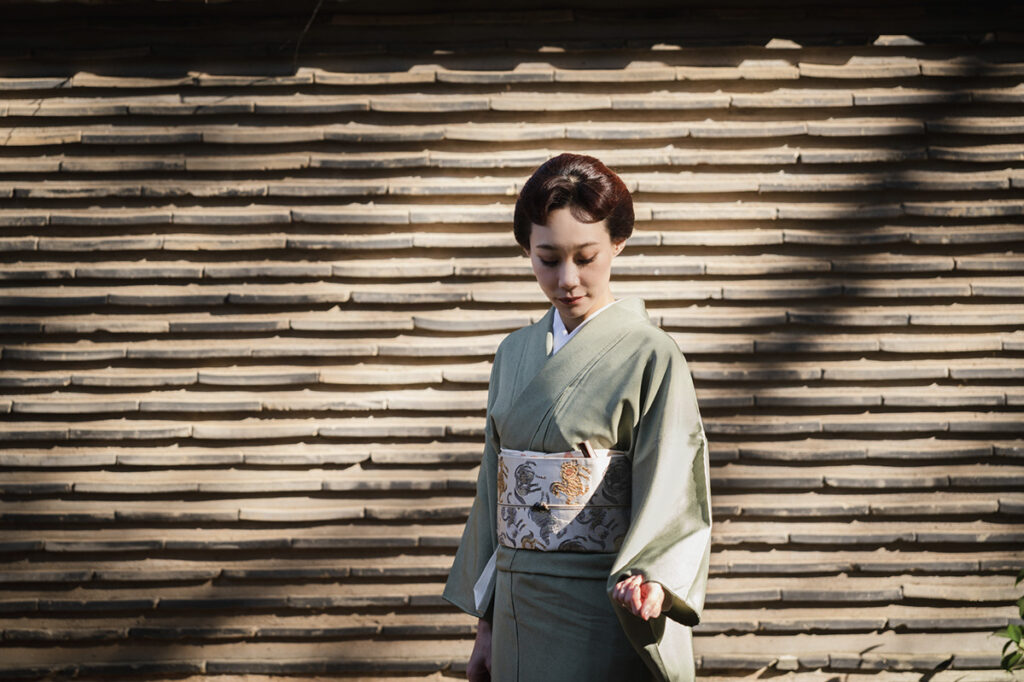
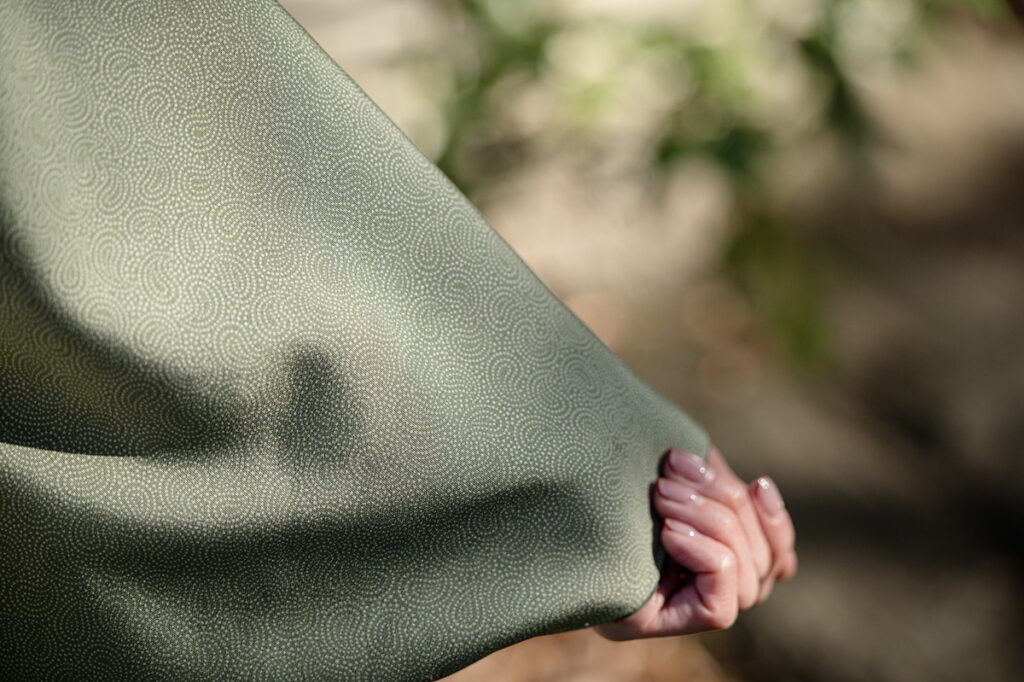
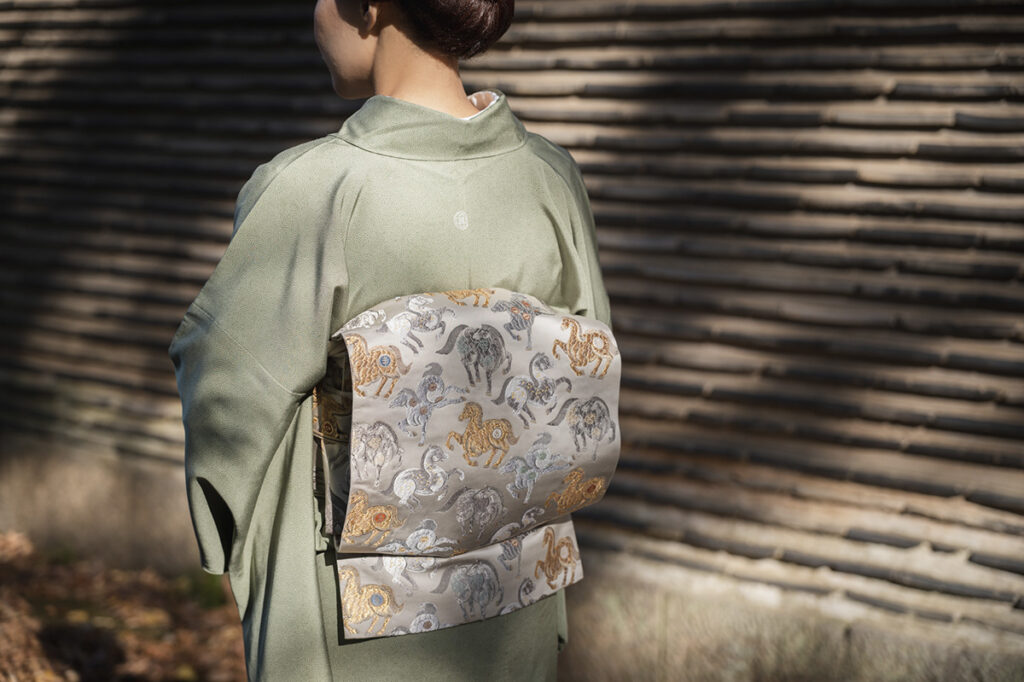
As she walks beside the tiled earthen walls encircling the shrine, the scene unfolds like a moment from a film. Her look for the day pairs a paisley-patterned Edo komon with a fukuro obi woven with lively, galloping horses.
For ‘Hatsumōde’, the traditional first shrine visit of the New Year, Yulia chose an Edo komon kimono. This style of komon became popular among the samurai class during the reign of Tokugawa Yoshimune, a period when frugality was encouraged. It is defined by extremely fine stencil-dyed patterns that appear solid from a distance, reflecting the understated elegance of Edo sensibilities.Yulia’s Edo komon features an elegant wakamatsu-green base with an oriental paisley motif. She pairs it with a fukuro obi woven with lively horses, a nod to 2026, the Year of the Horse.
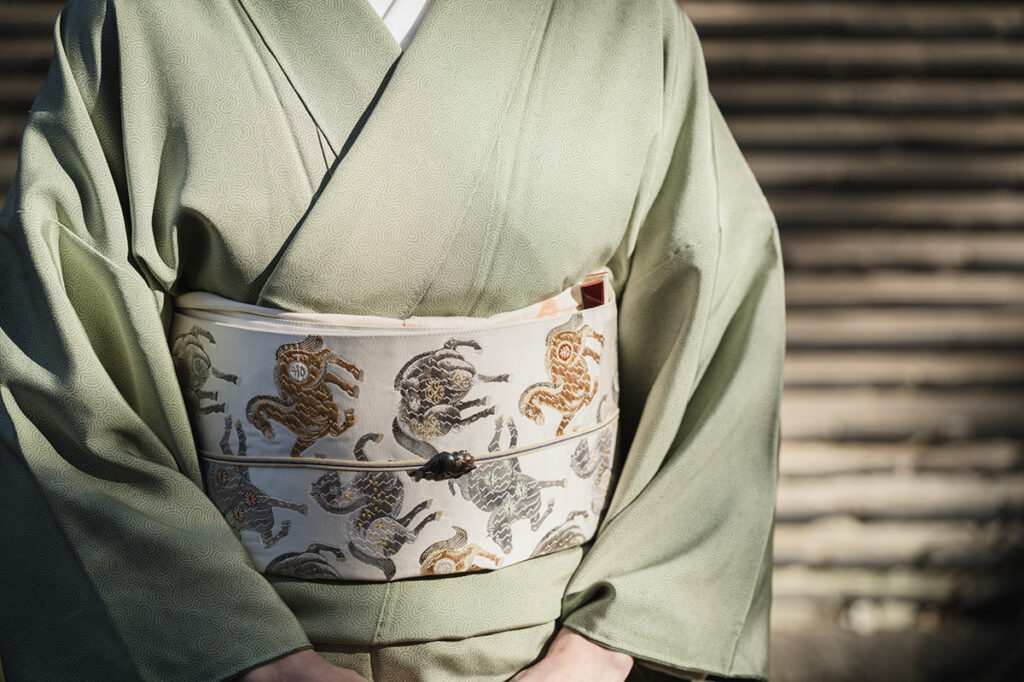
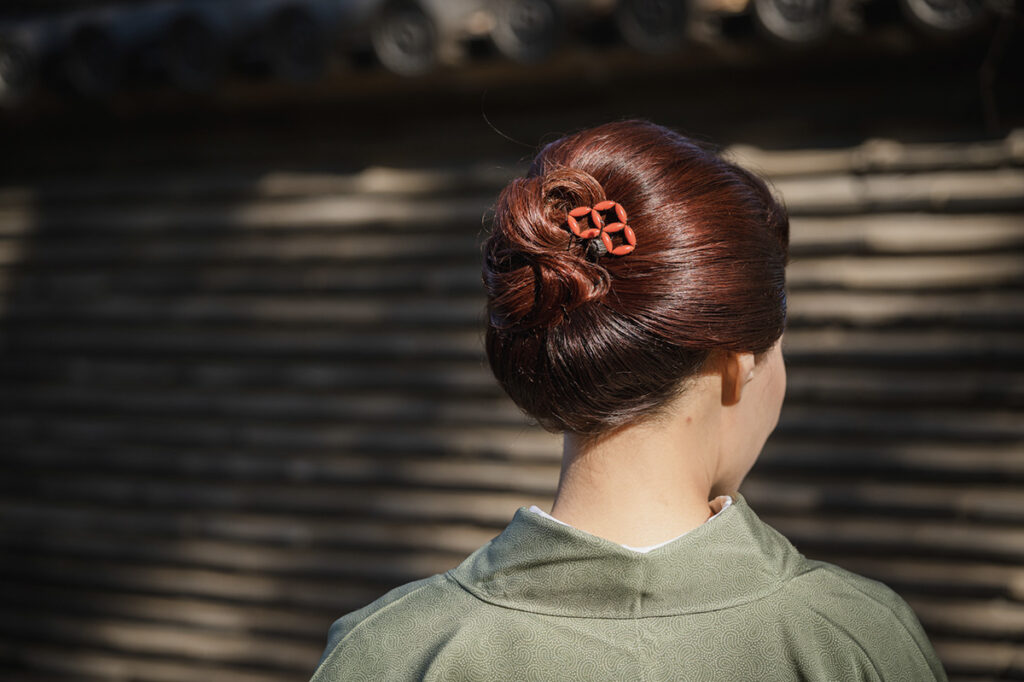
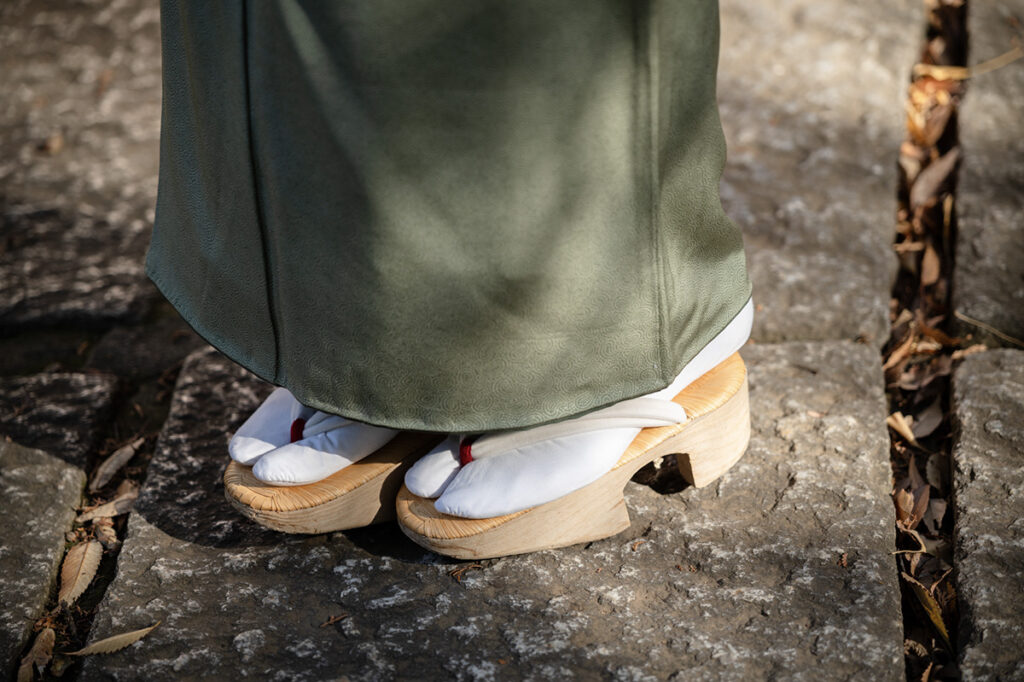
A refined aesthetic runs through every detail, from the shishi-mai–themed obidome and shippo-tsunagi hairpin to footwear finished with tatami-woven soles.
“I’ve been saving this obi for years, waiting for the Year of the Horse to wear it,” says Yulia. “Woven into the horse’s body are auspicious motifs, including seigaiha patterns that express wishes for lasting happiness, chrysanthemums as symbols of good fortune, and even the character for kichi, meaning good luck. I chose it with the hope that it would bring blessings not only to myself, but also to those I share time with.”
She finishes the look with New Year–appropriate details, selecting a shishi-mai–themed obidome and a shippo-tsunagi hairpin believed to bring good fortune, subtly infusing the ensemble with layers of meaning. As 2026 begins, it leaves us eager to see what stories her kimono narratives will unfold next.
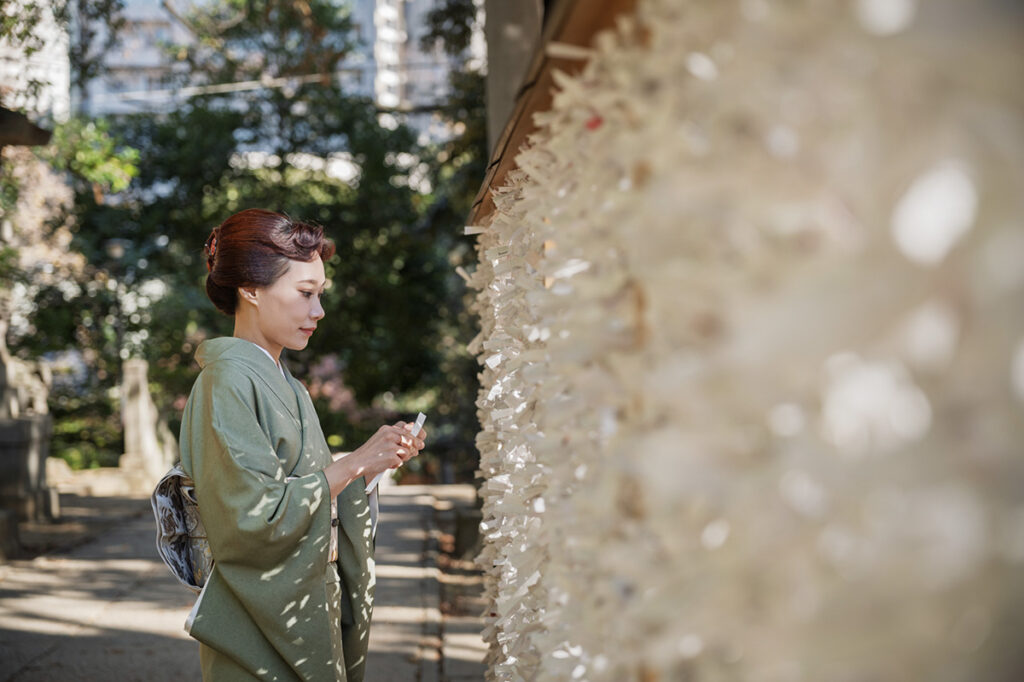
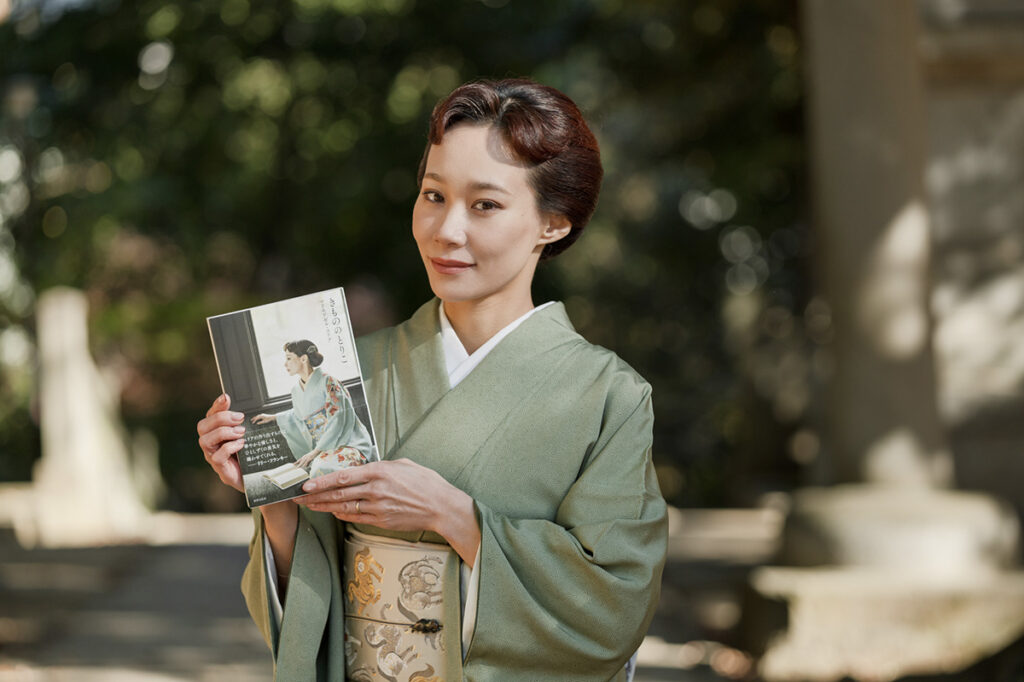
At a shrine known for blessings of prosperity in business, she offers a quiet wish that her book Kimono no Toriko (Sekai Bunka Sha) will resonate with many readers.
◾️The Location Featured
Akasaka Hikawa Shrine
Address: 6-10-12 Akasaka, Minato-ku, Tokyo
Tel: 03-3583-1935
Official website: https://www.akasakahikawa.or.jp/