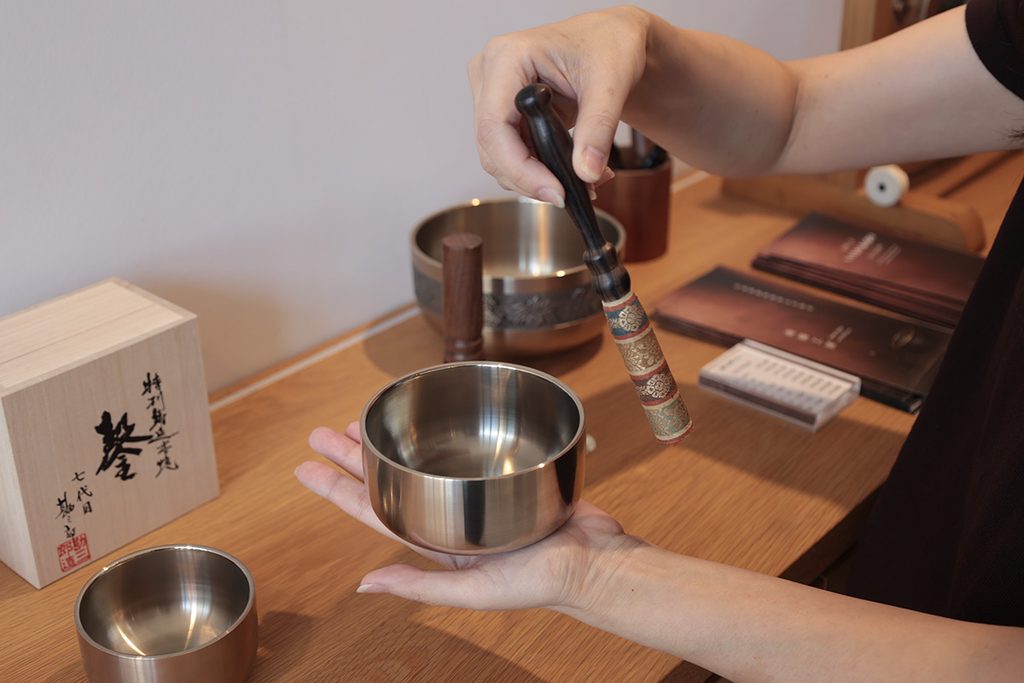
Traditionally sounded during prayers at a household Buddhist altar, the orin is a familiar part of Japanese religious practice.
Kyoto-based Nanjō Kobo is giving this familiar ritual object new possibilities, creating contemporary designs and introducing ways to enjoy its sound beyond religious settings. Through collaborations with artists and fashion brands, the workshop has also attracted attention from a wide range of creative fields. We visited the workshop to discover the craftsmanship behind its creations.
Seven Generations of Craftsmanship Behind Nanjo Kobo’s Distinctive Sound
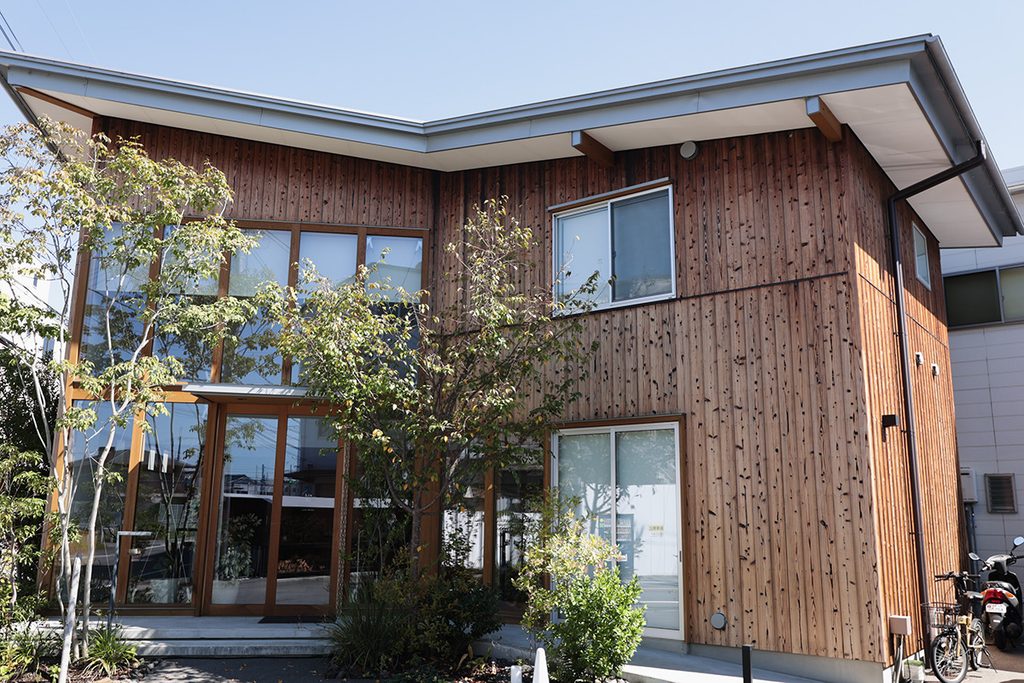
Nanjō Kobo is located in Uji, Kyoto Prefecture, near Ōbaku Station on the Keihan Railway. Nearby stands Manpukuji Temple, the head temple of the Ōbaku school of Zen Buddhism.
The name Kanzaburō Nanjō is engraved on a gong made for Kyoto’s Gion Festival in 1839, indicating that he was already making musical instruments by that time. Today, the workshop is run by seventh-generation craftsman Kazuya Nanjō.
The orin displayed in the workshop’s showroom differ from conventional brass versions. They are made from sahari, an alloy of copper and tin, with a proprietary metal composition developed through the pursuit of an ideal sound. Nanjō Kobo is also one of the few workshops in Japan still practising traditional mould casting, in which the moulds are fired using wood.
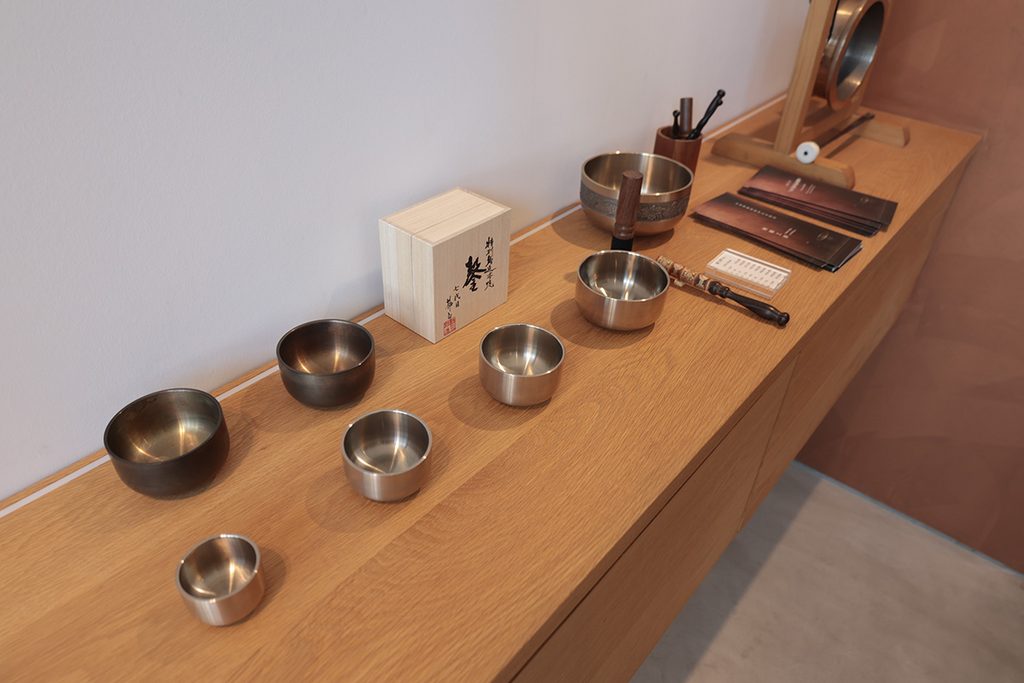
While they may look alike, no two orin are exactly the same. Each carries subtle differences born from the handcrafted process, giving it a character all its own. Their tones vary subtly, so visitors are encouraged to listen to several and compare their sounds before choosing the one that resonates most with them.
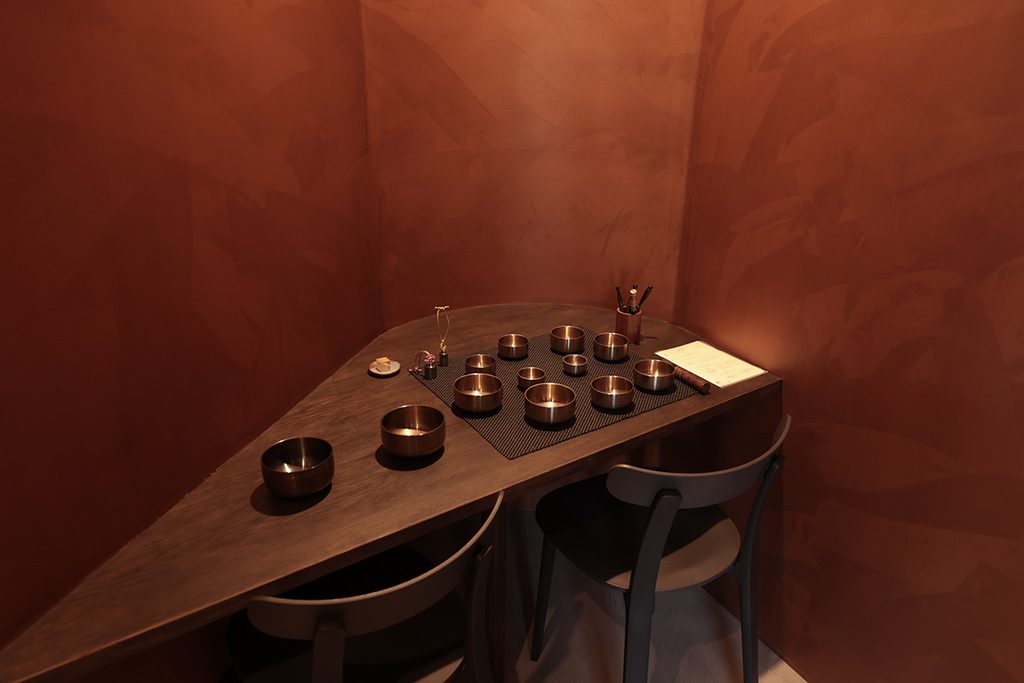
A small room inside the shop where visitors can listen to and compare the sounds of different orin.
During our visit, Yukiko Nanjō, one of the workshop’s directors, revealed that international travellers also visit to purchase orin. I hadn’t expected that.
She explains:
“Among our Japanese customers, roughly half buy orin for traditional Buddhist use. The others, especially visitors from overseas, are drawn to them for different reasons, including meditation and music. We often hear people say that the sound helps them feel more centred and makes them want to take the time to really listen. For some, sounding an orin at the family altar used to feel like something they simply did out of habit. But after choosing one with a tone they personally love, that same moment has become something much more special.”
Curious to hear it for myself, I asked Nanjō for a demonstration. A pure, clear note rang through the showroom, unlike the familiar sound of the orin at my family’s Buddhist altar. Even as it faded, its rich resonance seemed to hang in the air for tens of seconds.
LinNe Brings Traditional Japanese Orin into Everyday Life
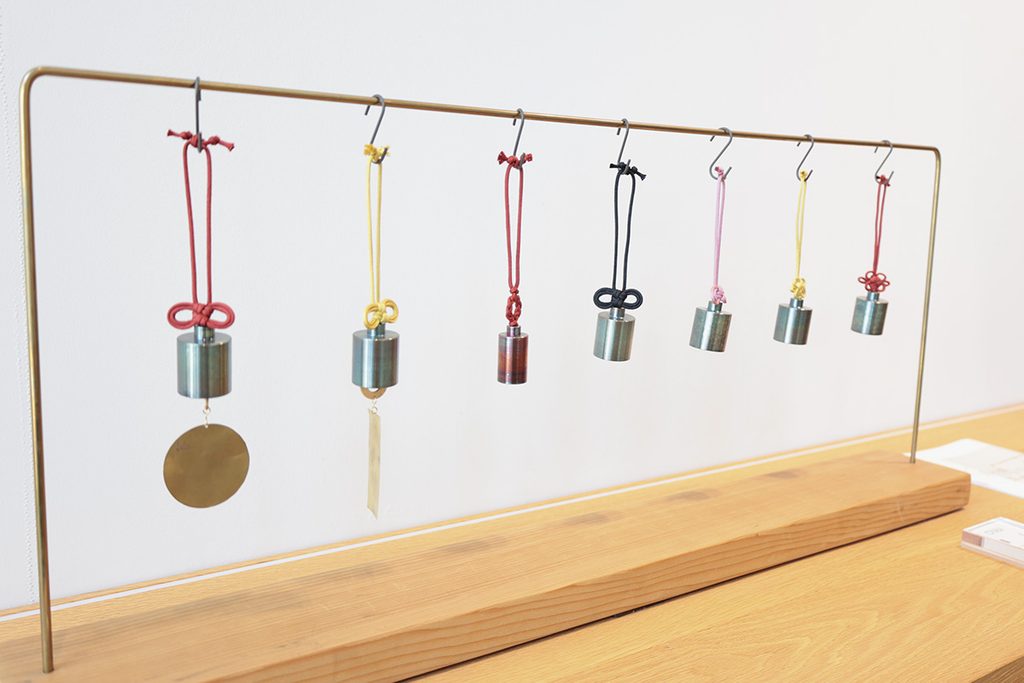
Beyond its traditional bowl-shaped orin, Nanjō Kobo has developed a collection of contemporary designs that invite people to enjoy their sound in different ways. Among them are LinNe Myo, Chibi and Ren.
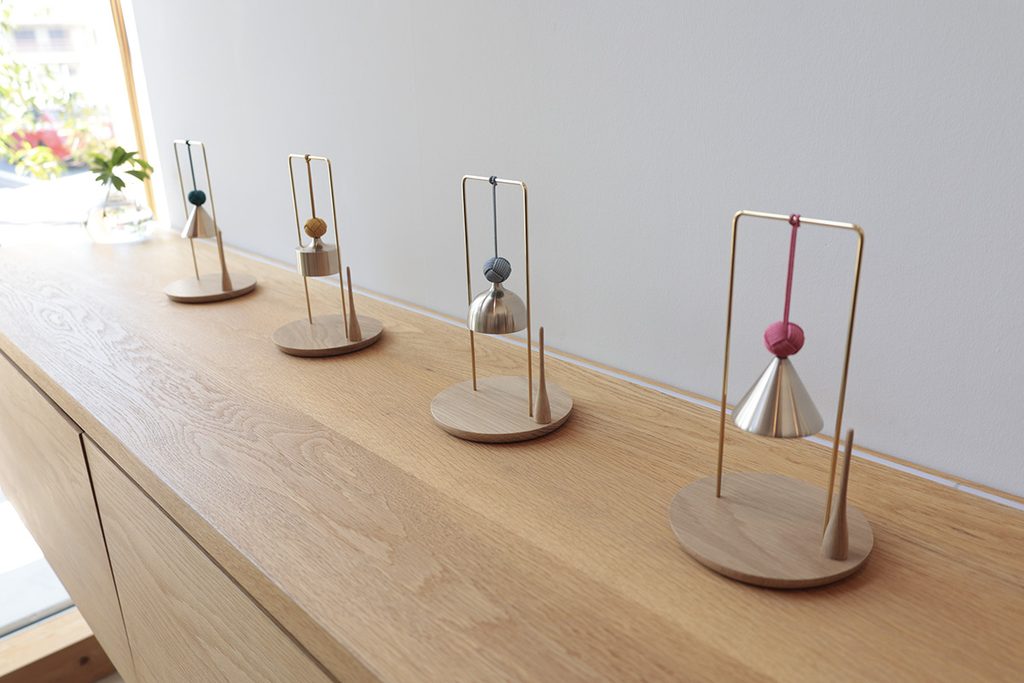
1st image : 「LinNe Myo」
2nd image : Chibi, the smallest model in the collection.
Viewed from the side, the orin take three distinct shapes: circular (enn), triangular (sui) and square (hou). Each is suspended by a colourful braided cord and produces a clear, beautiful tone with a lingering resonance when struck with the accompanying mallet. The cords are crafted by Shōen Kumihimo, a traditional braiding workshop also based in Uji.
The products belong to LinNe, a brand established in 2019 around a simple idea: to bring the beautiful sound of orin into everyday life, beyond their traditional role as Buddhist ritual instruments.
Interestingly, Nanjō reveals that when the brand was first conceived, there was no particular setting or purpose in mind.
“We started by speaking with a wide range of people and developing our ideas based on their feedback. One comment that has stayed with me came from a participant at a workshop we held at Apple Kyoto. They told us, ‘My mind is constantly racing, thinking about what I need to do next, and I find it difficult to switch off. I’d like to use the orin to break that cycle. The sound has such a pleasant, lingering resonance that I hope concentrating on it will help me let go of distracting thoughts.’ Since around the time of the pandemic, we’ve heard from many more people who want to use the sound to shift their focus and calm their minds.”
Not prescribing a particular use also gives people the freedom to make the orin their own. Some carry them on the pilgrimage around Shikoku’s 88 sacred temples, while others use their sound to cleanse a space or ward off negative influences. Even within Buddhist traditions, many have adopted a more relaxed approach, sounding an orin simply to say hello to their ancestors.
Inside the Workshop Where Each Orin Is Cast and Finished by Hand
With our conversation drawing to a close, Nanjō took us into the adjoining workshop for a closer look at the production process.
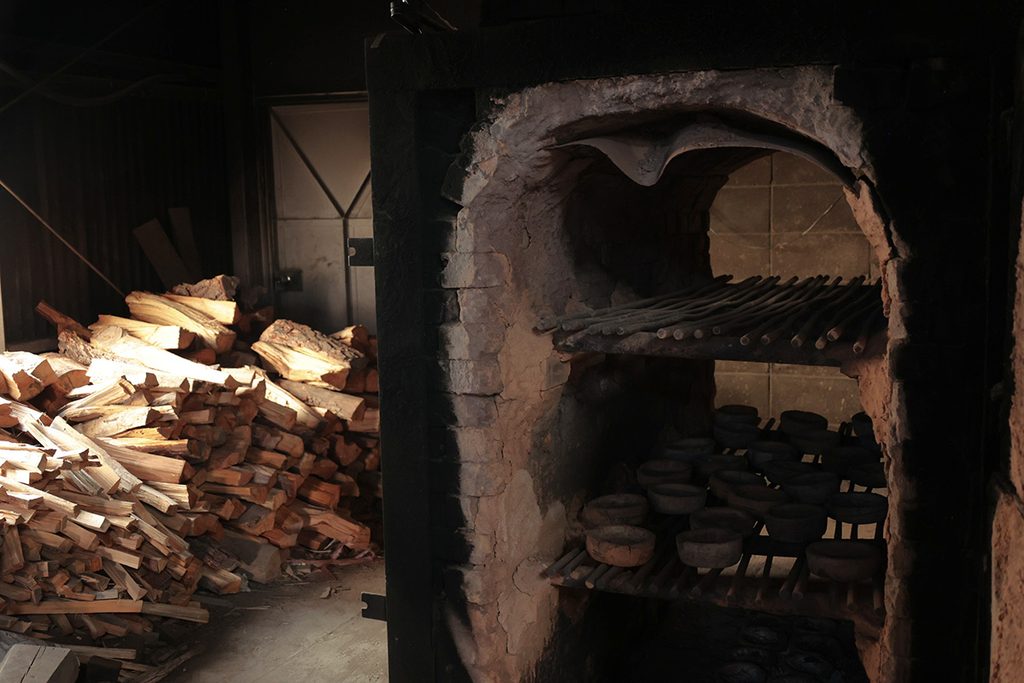
Everything begins with mould-making. A highly heat-resistant clay is kneaded into shape, fired once and then coated to prepare the mould for the next stage of production.The completed moulds are arranged inside a kiln and slowly fired using firewood until hardened.
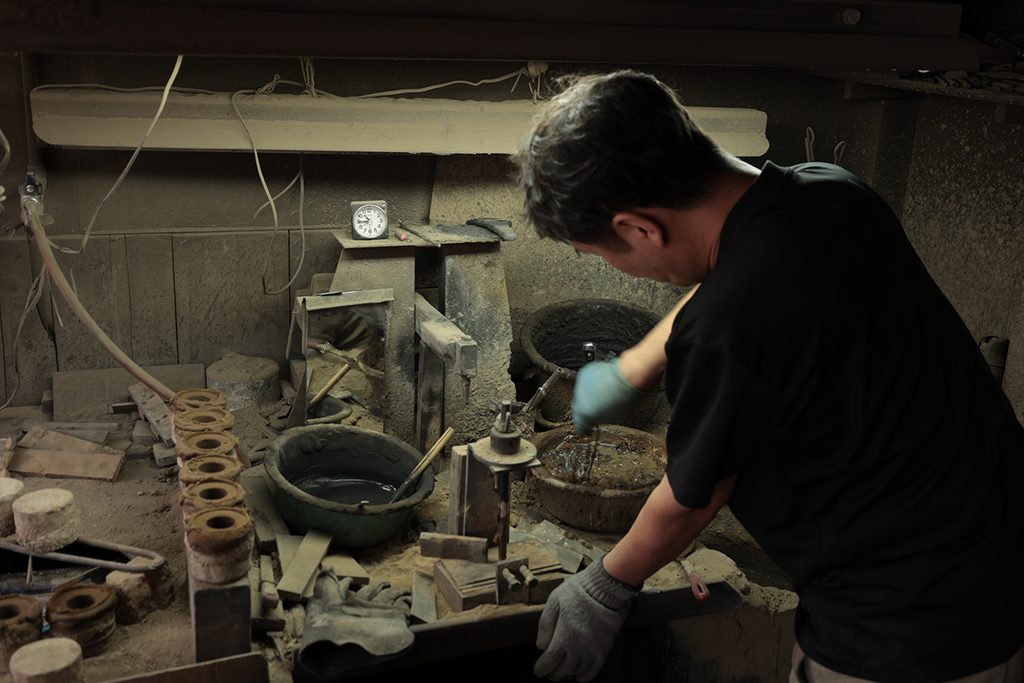
1st image : The coating process in progress.
2nd image : The firewood and kiln used to fire the moulds.
Next comes what could be considered the highlight of the process: casting. The moulds are lined up on the floor, and molten sahari, heated to an extremely high temperature, is poured into each one. Casting takes place just two or three times a month, and during summer, temperatures inside the workshop can exceed 60°C.
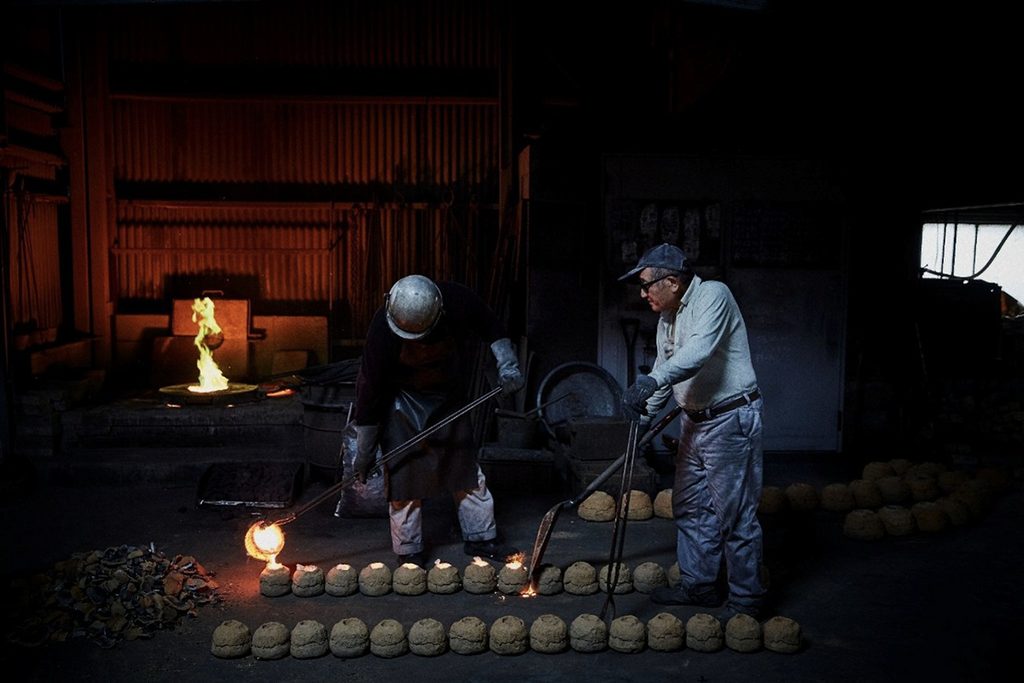
The casting process. (Photo courtesy of Nanjō Kobo)
After the molten sahari has cooled and hardened, each orin is removed from its mould and prepared for finishing. The first step involves rough machining to remove the hardened surface layer left by casting, while correcting any unevenness in thickness or shape. A second, finer machining stage smooths the surface, with both the interior and exterior worked twice to achieve the desired form.
The completed orin are then carefully inspected for sound quality. Only those that produce a tone meeting the workshop’s exacting standards move on to the final polishing and wax coating. These crucial stages, from casting and machining to evaluating each instrument’s sound, are personally handled by seventh-generation craftsman Kazuya Nanjō.
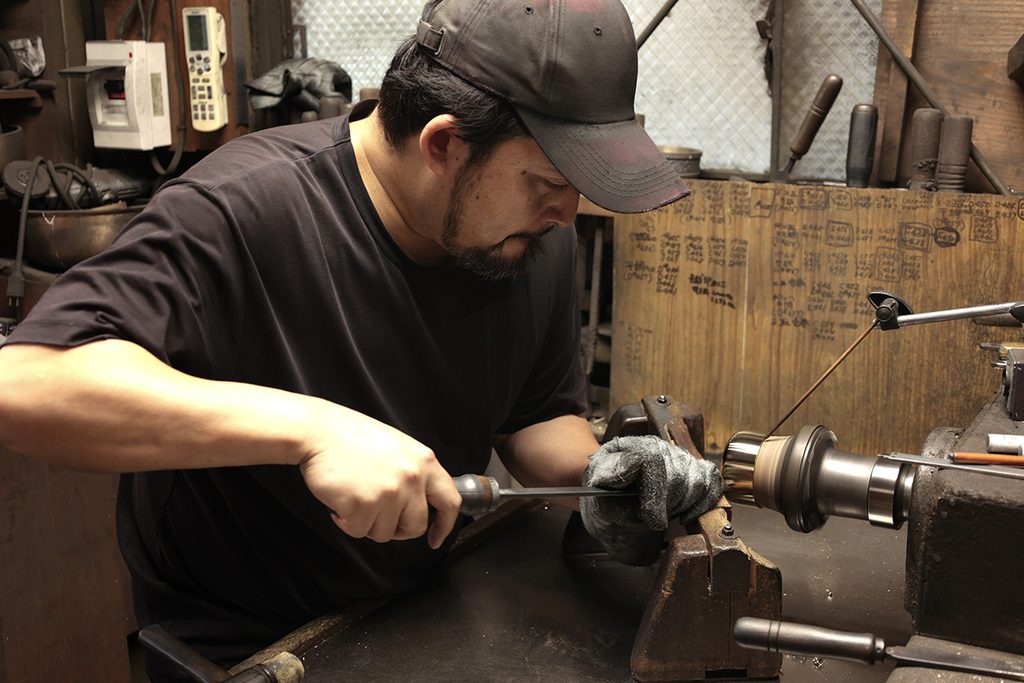
Kazuya Nanjō carrying out the finishing process.
Nanjō works with effortless precision, shaving the surface of the metal as it rotates on the lathe. Before I know it, a beautifully polished orin emerges. Watching his remarkable craftsmanship, I can’t help asking a rather naive question: just how long does it take to master a skill like this?
“Around ten years, I’d say,” he answers with a relaxed smile.
The entire process is completed by hand, from the initial mould-making to the final finishing touches. Creating the moulds takes approximately one month, with casting and subsequent machining requiring another month. Each month, the workshop produces between 300 and 400 orin, destined for people who find comfort and fulfillment in their beautiful, lingering tones.
While the orin remains an important part of Buddhist traditions, its sound is finding new meaning in people’s lives, from meditation and music to simple moments of personal reflection. Through Nanjō Kobo’s dedication to traditional craftsmanship and its openness to new possibilities, this centuries-old instrument continues to enrich people’s lives in unexpected ways. Perhaps it’s through such small moments that the world gradually becomes a more beautiful place.
Nanjō Kobo
Address: 42-2 Sensoku, Makishima-cho, Uji, Kyoto 611-0041, Japan Tel: 0774-22-2181
Opening Hours: Irregular. Please check the reservation calendar on the official website for available dates and times.
Website: https://linne-orin.com/
Instagram: @linne_orin