In Japan, record bars have become a distinct part of late-night culture, with origins dating back to the 1950s. Decades later, they continue to thrive, offering a haven for music lovers, audiophiles and discerning drinkers. In OFF THE RECORD, we explore establishments where music and atmosphere are central, uncovering the stories, people, and sounds that define them.
In our 12th edition, we head to moderno in Komazawa, a small record bar opened by veteran DJ and producer Tatsuo Sunaga after more than four decades behind the decks. Here, an exceptional ear for jazz and beyond, paired with equal enthusiasm for a well-made drink, offers an intimate glimpse into the tastes of one of Japan’s most seasoned selectors.
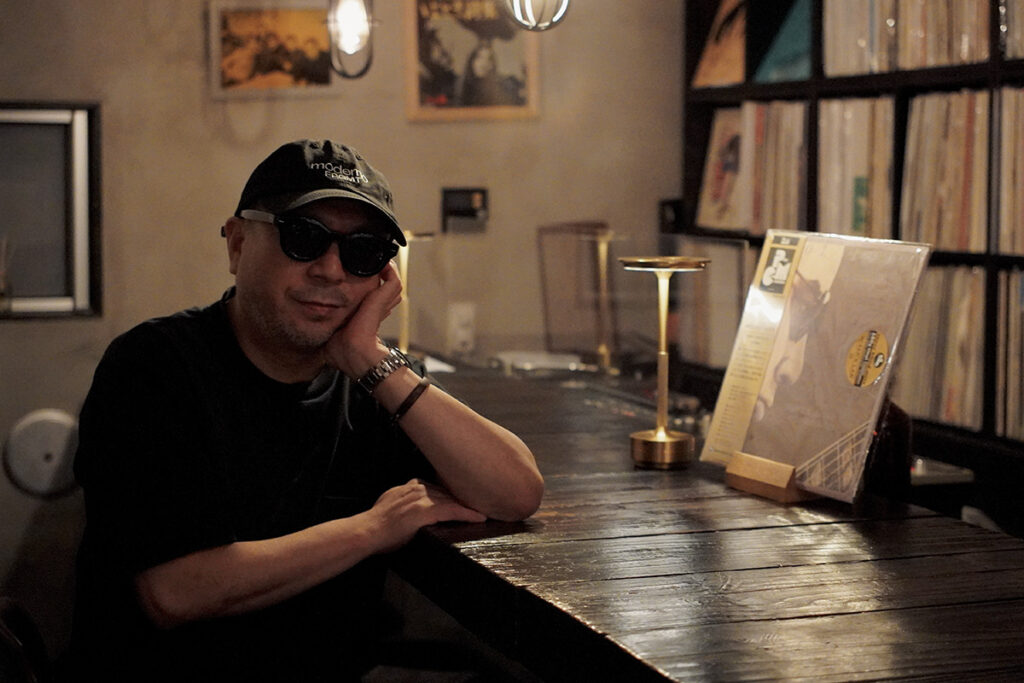
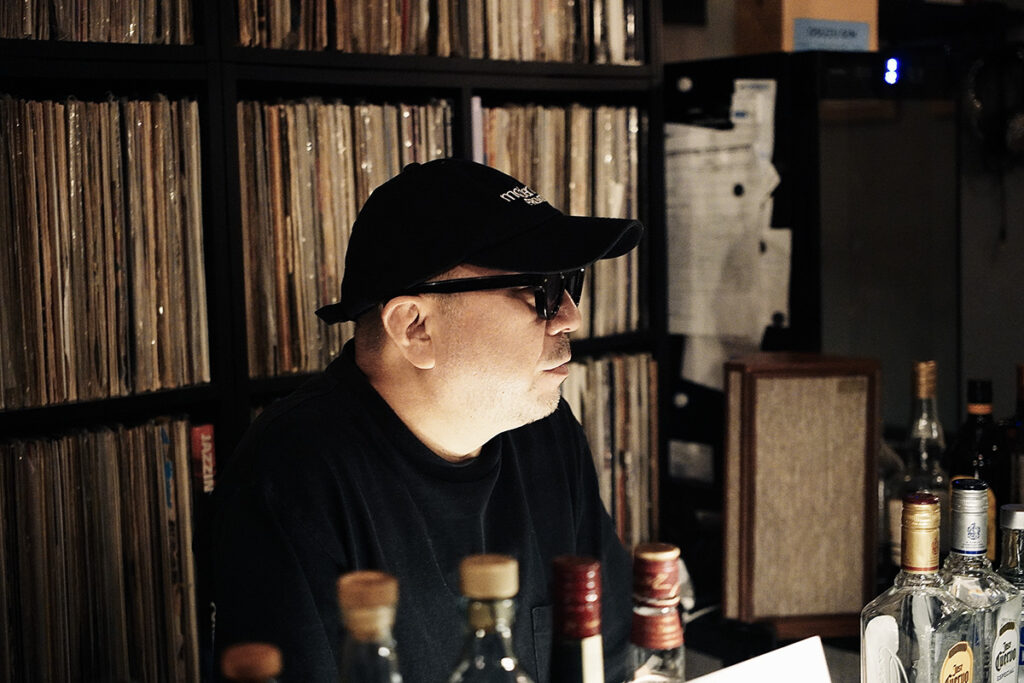
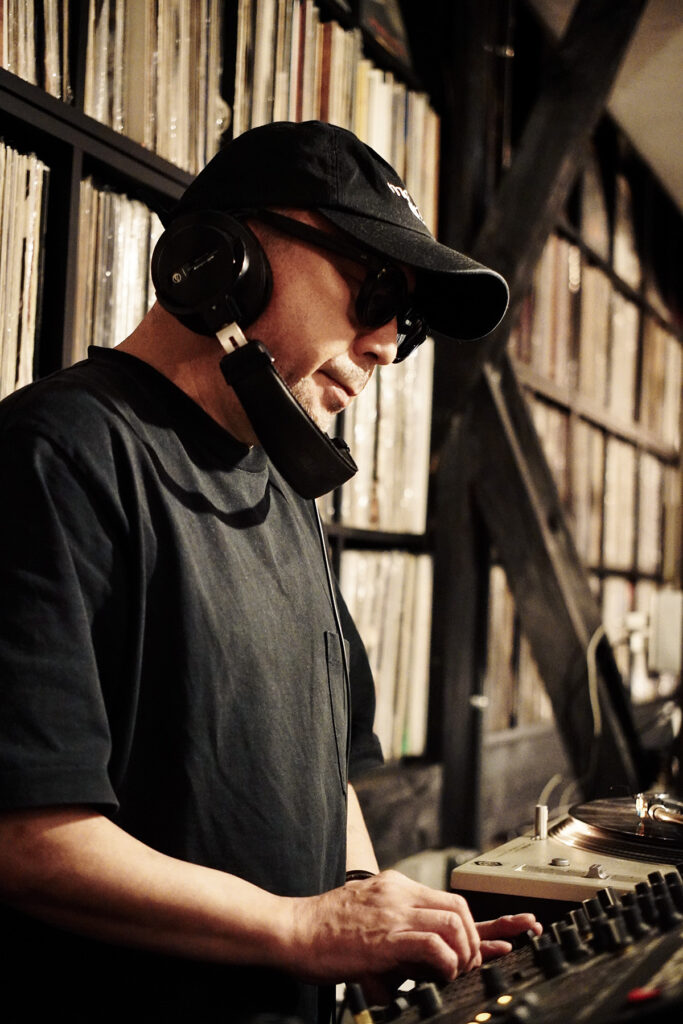
DJ, Producer, and owner of Moderno, Tatsuo Sunaga
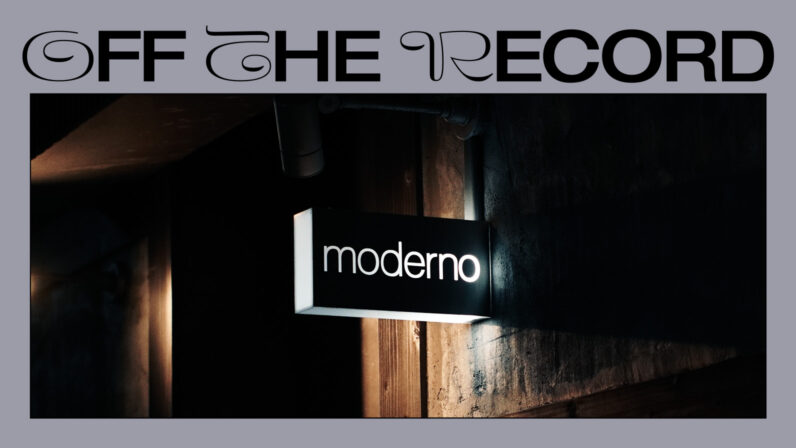
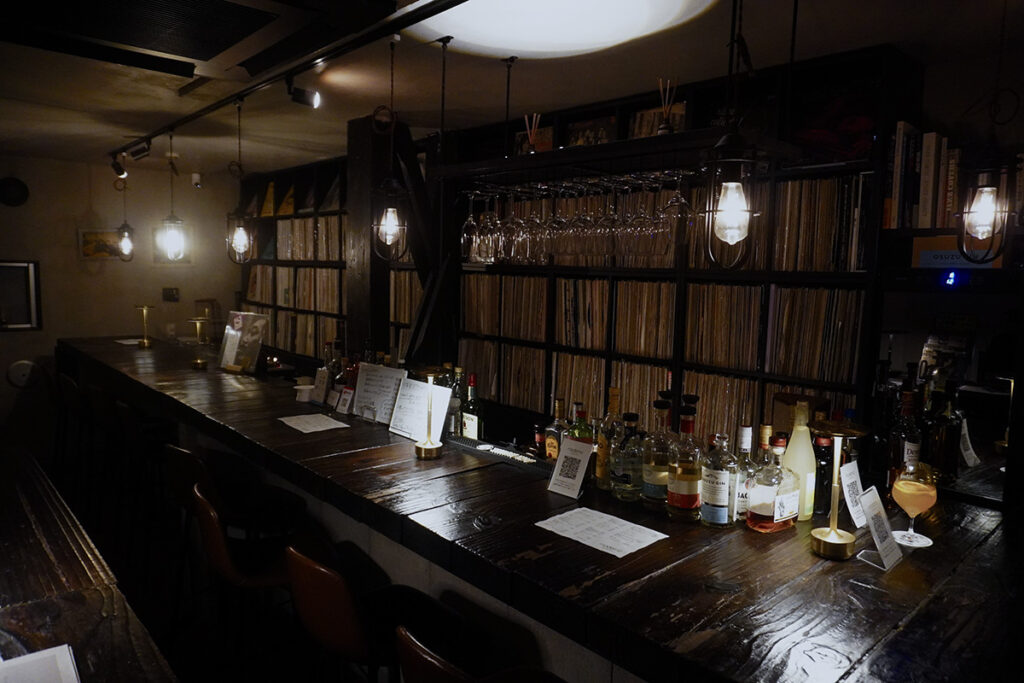
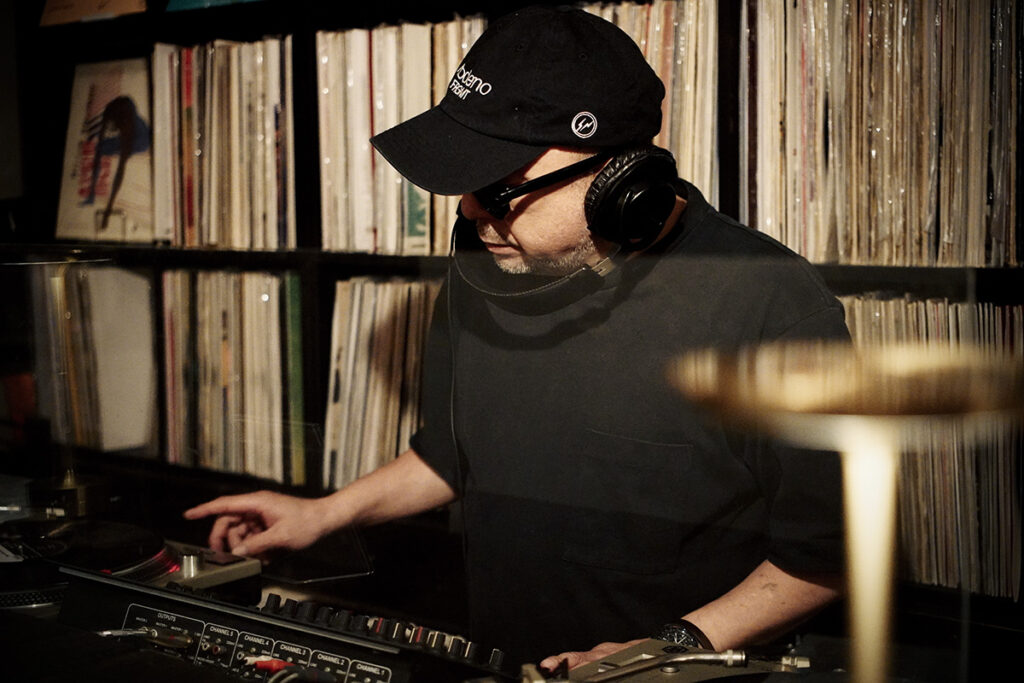
A short walk from Komazawa Olympic Park, moderno sits discreetly along Komazawakoen-dori, a largely residential street dotted with restaurants, cafés and small shops. A small illuminated sign is almost the only clue to what lies behind the windowless door. Inside, the dimly lit room feels closer to a private listening room than a conventional bar: a long wooden counter, around nine seats, and Sunaga moving between selecting records, adjusting the mixer and pouring drinks.
A DJ’s Collection, Beyond the Dance Floor
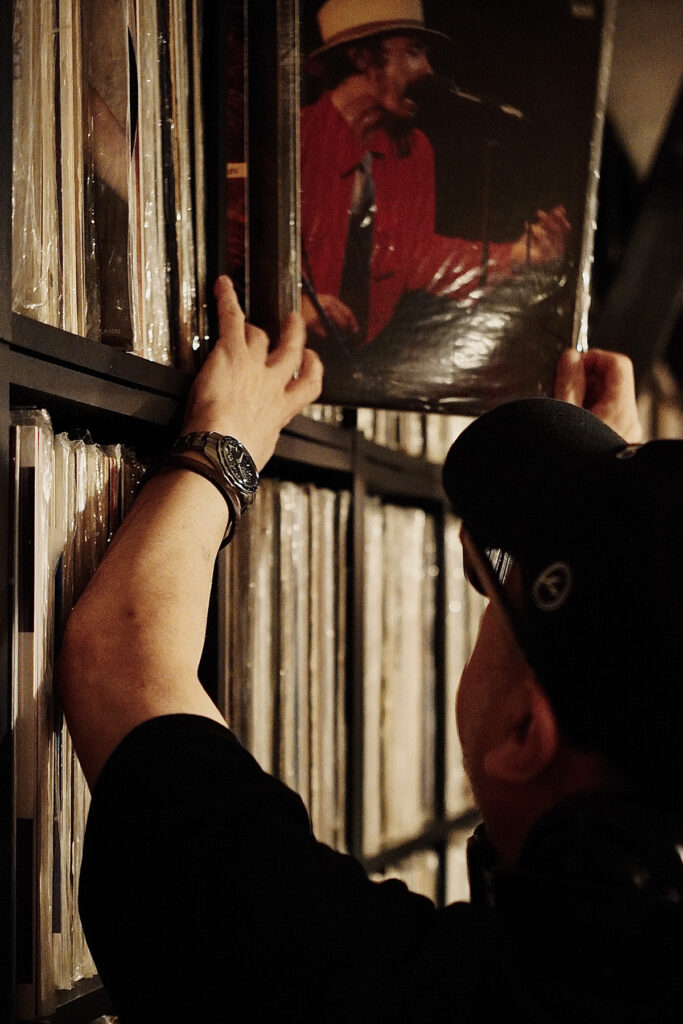
Dominating the rear wall is a collection of around 3,500 records, a fraction of the more than 10,000 Sunaga has accumulated over the years. Jazz features heavily, but spend a night at moderno and you might hear everything from ambient and post-classical music to Brazilian sounds, folklore, singer-songwriters and new discoveries that have caught Sunaga’s ear. Unlike the records he carries to DJ sets, many are here for the simple pleasure of listening rather than moving a dance floor.
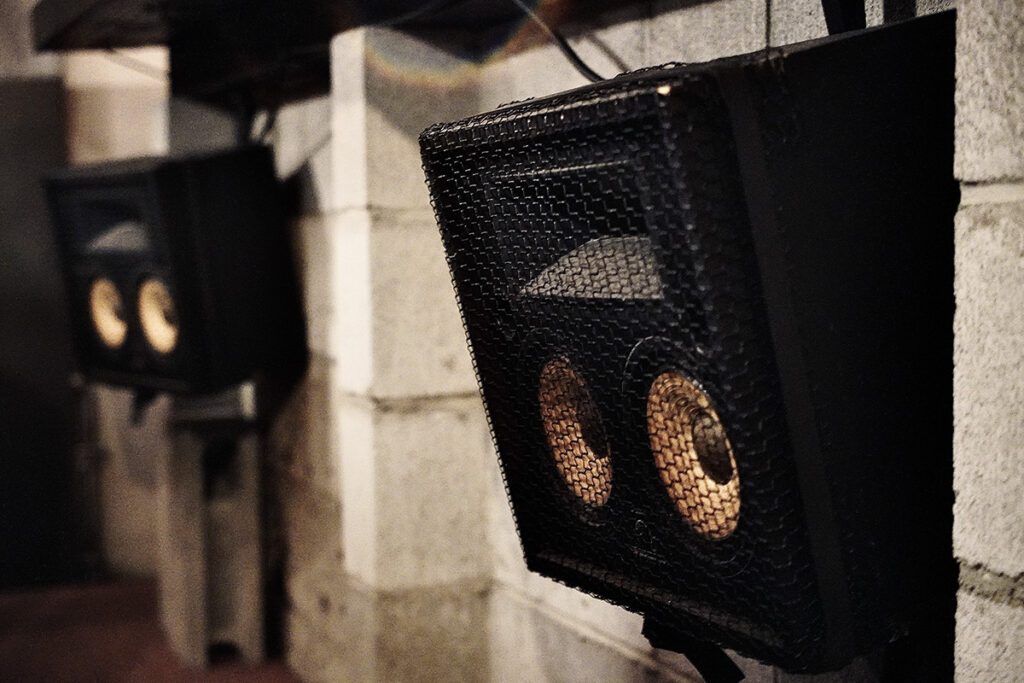
The sound system makes clever use of the compact space and brings the records to life. JBL 4304H speakers work with a pair of Tannoy Autographs positioned low at the front, while two Technics SL-1200MK3D turntables reveal Sunaga’s DJ background more than the specialist hi-fi approach of some listening bars. After decades using SL-1200s, he sees little need to overcomplicate things. A Douk Audio 300B PUSH 845 tube amplifier and classic Rodec CX-1100 analogue mixer complete a setup that warmly fills the compact room without overpowering conversation.
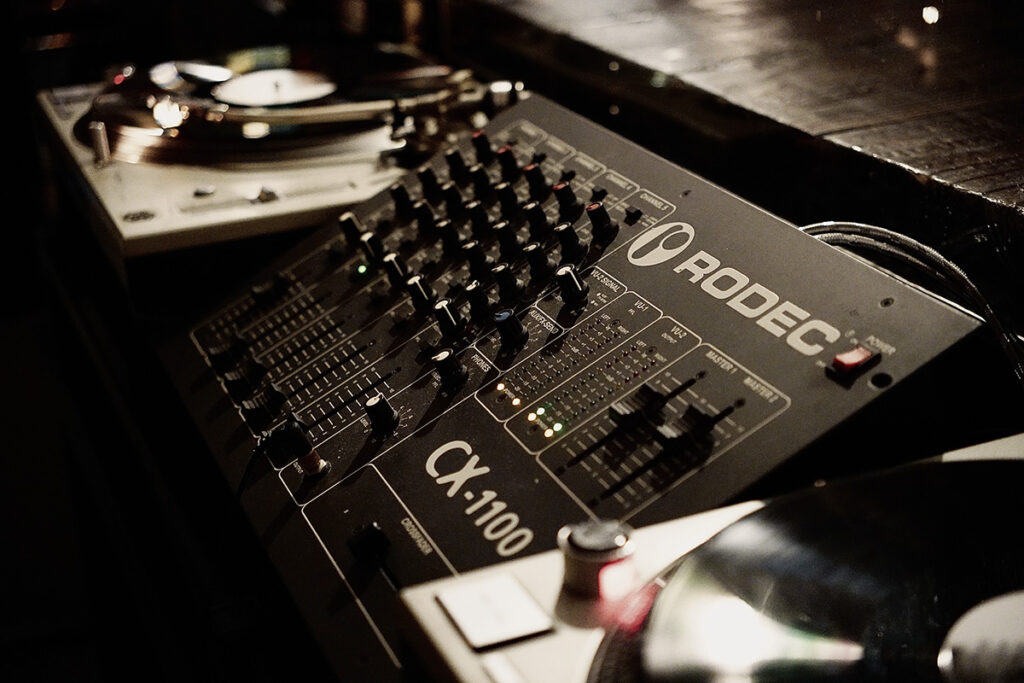
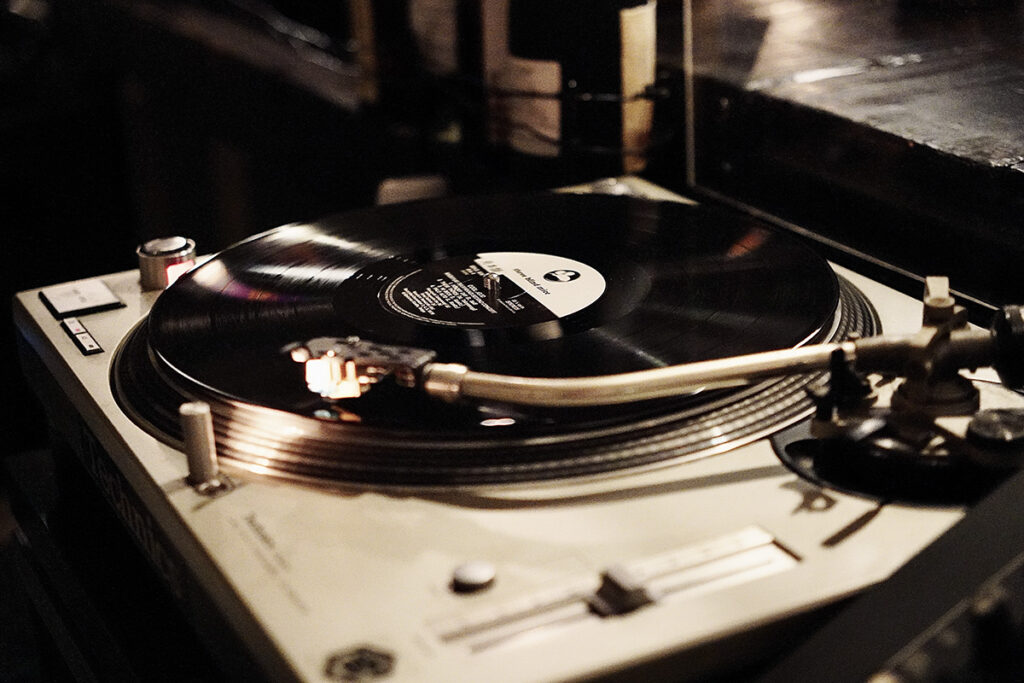
Levels are adjusted on a Rodec CX-1100 five-channel analogue DJ mixer, while each Technics SL-1200MK3D turntable sits on layers of marble and rubber to help isolate it from vibrations in the room.
The Taste of a ‘Professional Drinker’
Sunaga jokingly describes himself as a “professional drinker,” and moderno’s menu reflects years spent exploring everything from old-school Japanese drinking spots to wine bars. A standout is his highball, made with Dewar’s whisky and Kagetsu, an independent soda from Koiwa chosen for its strong carbonation and subtle sweetness, and finished with lemon peel.
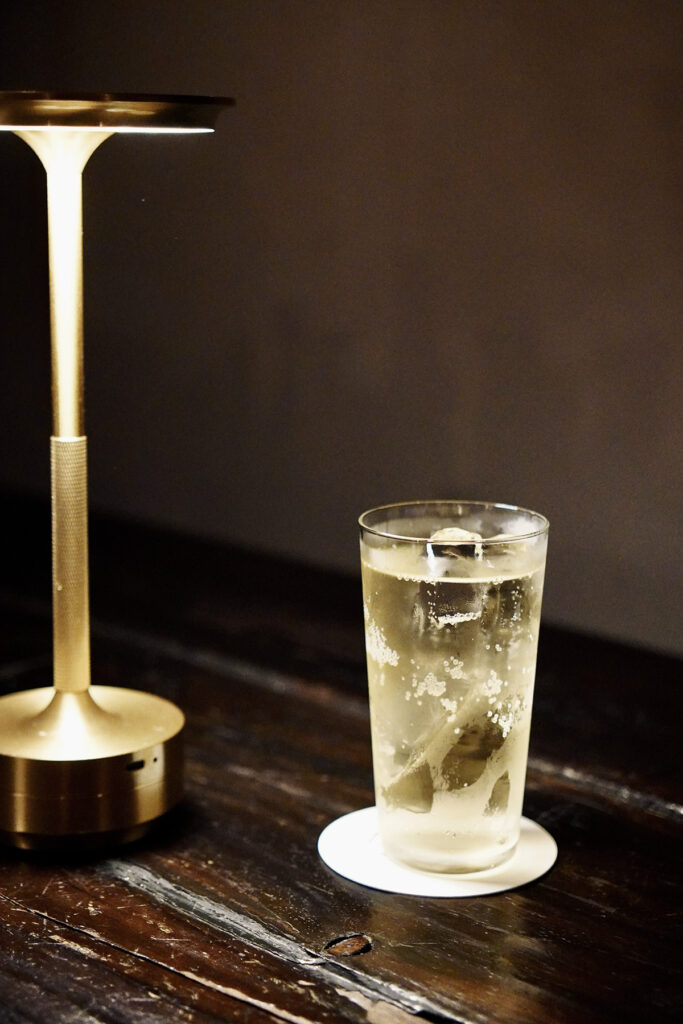
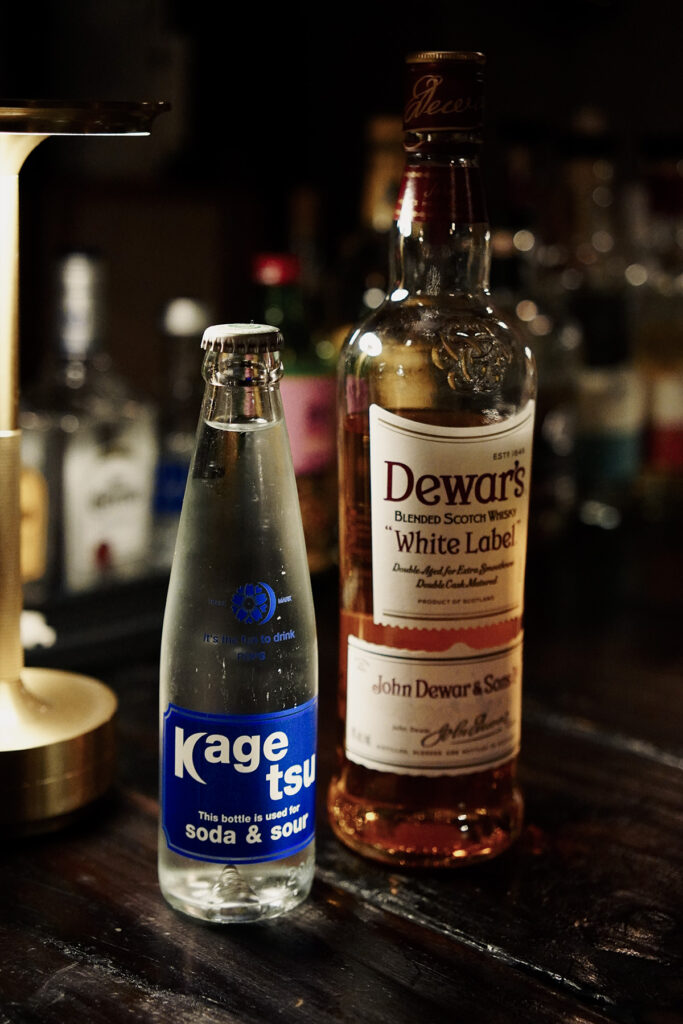
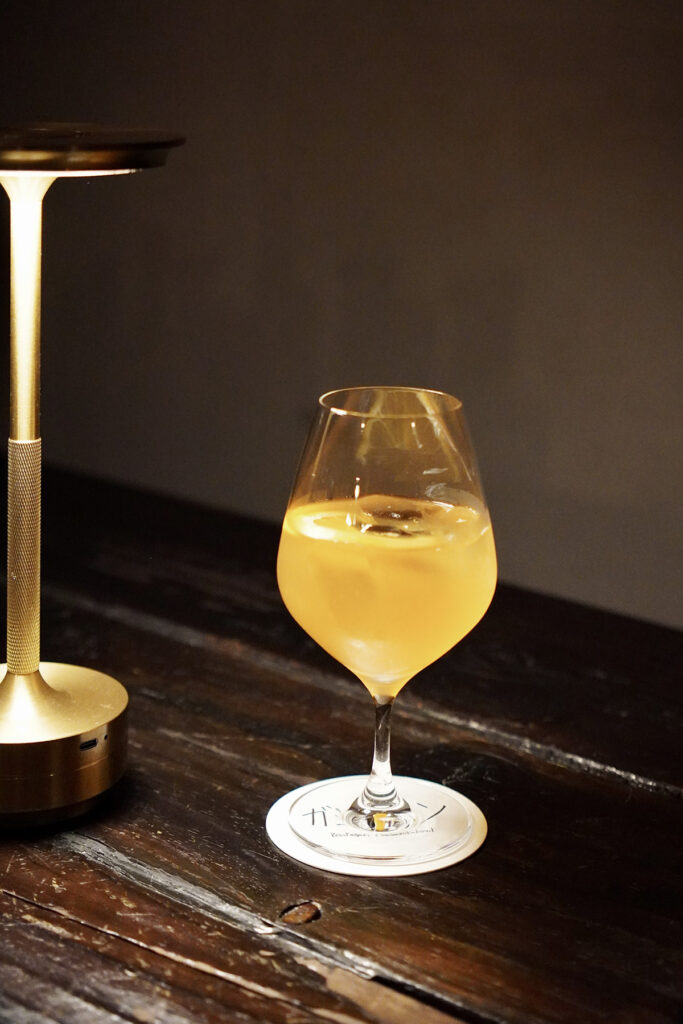
Wine also features prominently, including bottles from Coco Farm & Winery in Ashikaga, where Sunaga serves as a tourism ambassador. The drinks are deliberately straightforward enough for Sunaga to move between pouring and selecting records, but the small details make them worth coming for in their own right.
A New Chapter After Four Decades Behind the Decks
Beginning his DJ career in the 1980s, Sunaga became a fixture of Tokyo’s club and record culture, closely associated with venues such as Shibuya’s Organ Bar before establishing himself as a producer with his project Sunaga T Experience. Often described as a pioneer of the scene and widely known as the “Record Bancho” (Record Don), his career has spanned changing eras of jazz, club music and record culture. For all moderno’s attention to sound, records and drinks, it soon becomes clear that the bar is a reflection of the man behind it. Yet it was never part of some long-held plan.
The idea emerged after his 60th birthday and 40th anniversary as a DJ were marked by STE100, a large outdoor event held in his honour.
“Honestly, I had wanted to let the whole thing pass without making too much of it,” Sunaga recalls. “But then they put on this big event, and suddenly it became this real milestone. That made me start thinking that I needed to begin something new.”
One possibility was a a ramen shop. Sunaga had been making ramen at home for around 25 years, serving it at events and even sharing recipes in Japanese food magazine dancyu. But his friends in the business quickly discouraged him. “They said, ‘If you start now, you’re going to end up with a hernia.’”
The other possibility brought him back to music. “I wanted an environment where I could listen to records all day. I had so many sitting in storage that I’d never really heard,” he says. These included jazz he would never play on a dance floor, albums bought as production references, and records he had simply put aside for later in life. “And I love drinking too, so I thought it would be nice to have somewhere I could drink while playing records, invite friends over and introduce each other to good music. Then I realised a record bar could be one way to do that.”
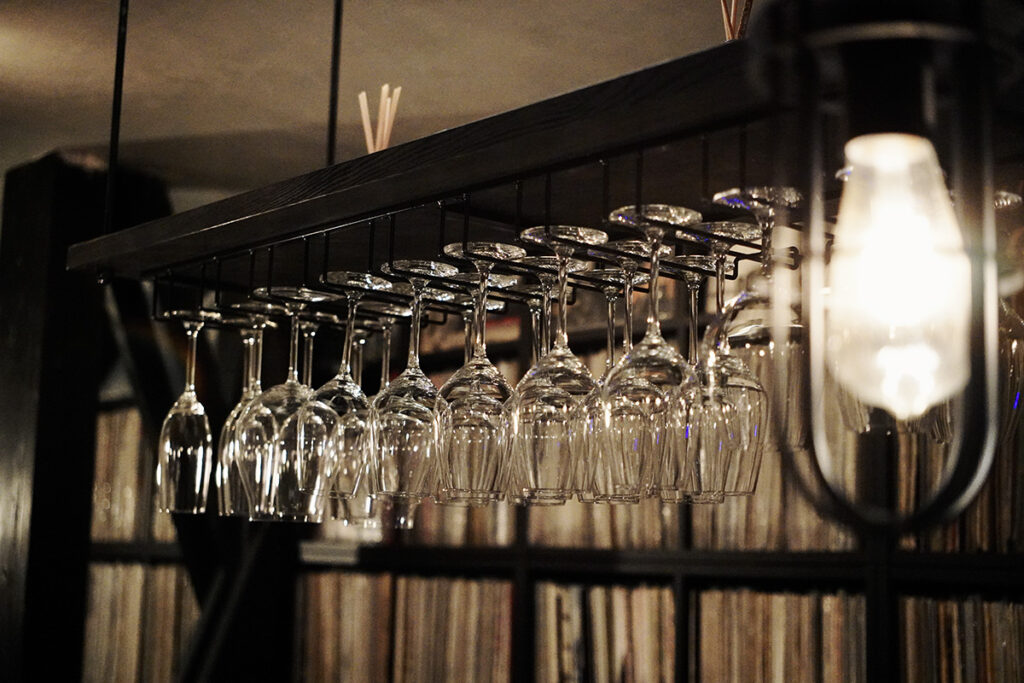
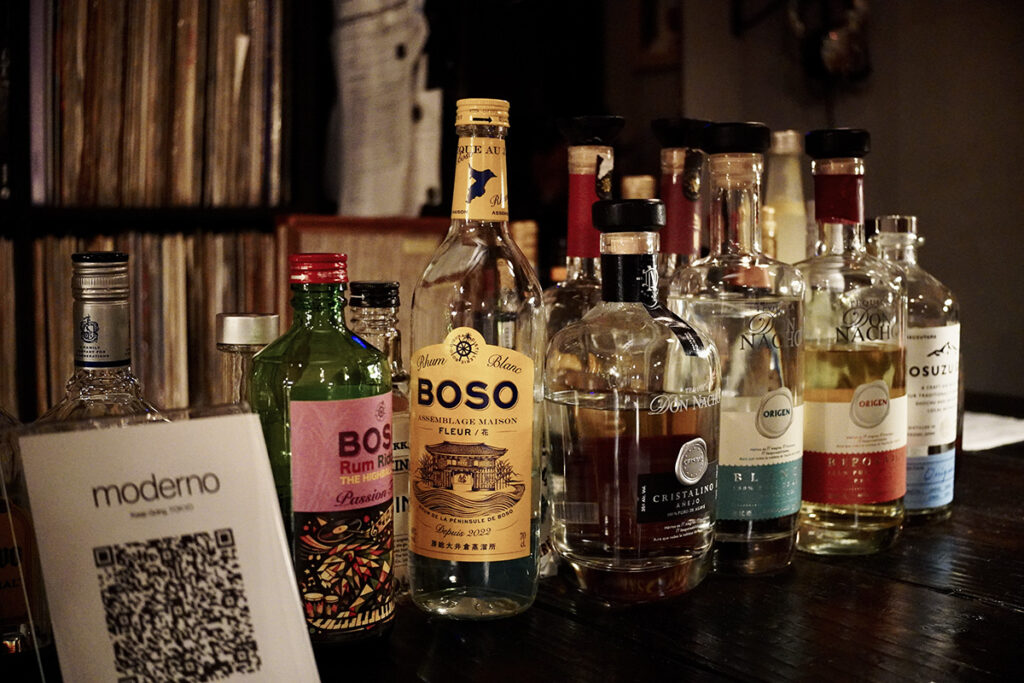
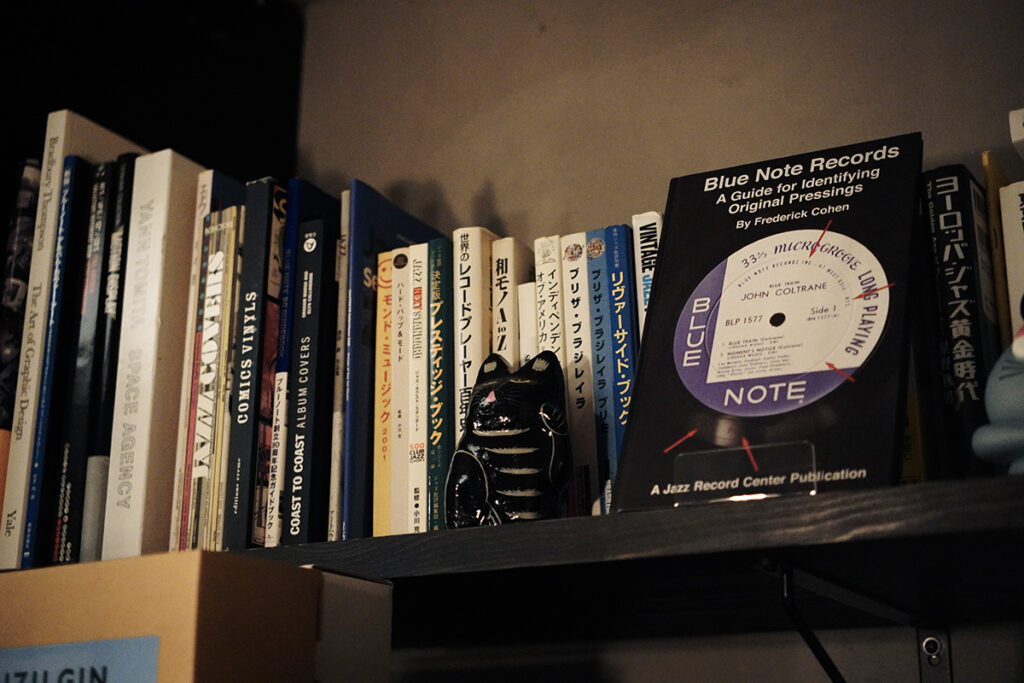
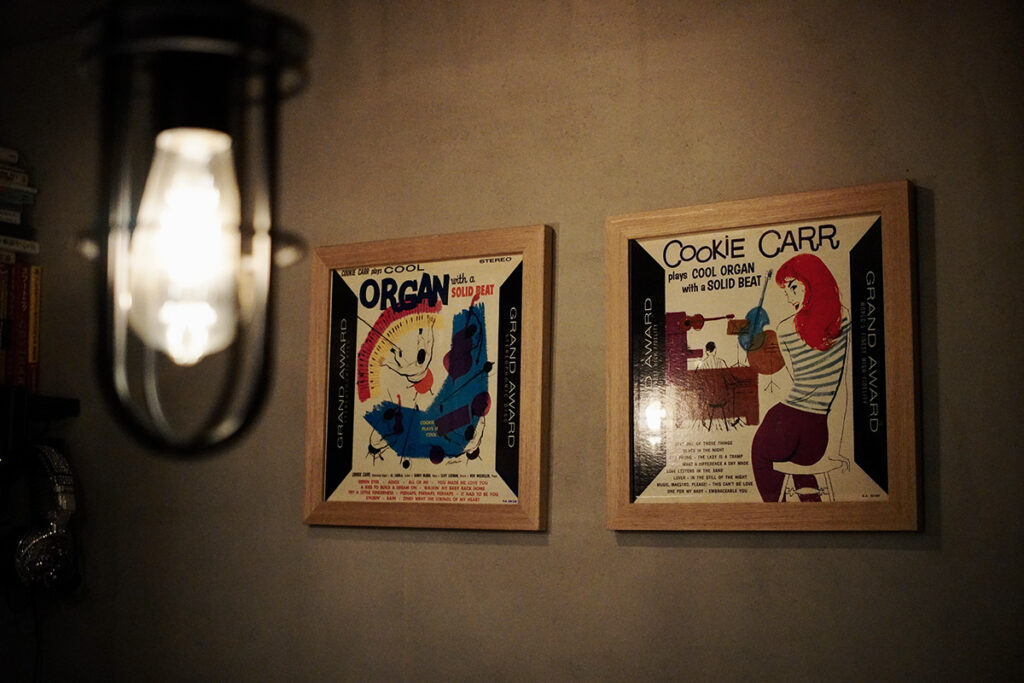
Finding the space itself happened almost by chance. Over drinks with a friend who operates live music venues in Shimokitazawa and Shibuya, Sunaga mentioned his ideas for what might come next. “He put me straight into a taxi and brought me here,” the space belonged to his friend and had been sitting largely untouched for around two years. The counter, audio system and even records were already in place, remnants of his friend’s short-lived attempt to create a small bar of his own. “It was covered in dust, but he turned on the sound for me. The moment I heard it, I thought, ‘Ah, this is the place.’” Sunaga bought the space soon after, making remarkably few changes, and moderno came to be.
At first, he imagined little more than his own record room with a bar: put on an LP, pour a drink and listen at his own pace. But his DJ instincts soon returned. Where he once played more albums from beginning to end, he now often chooses individual tracks according to the room. “I started the bar because I wanted to get away from that, but somehow the DJ in me always comes out,” he says. “I guess it’s just ingrained in me.” The bar has also expanded his own listening, leading him toward post-classical music and other sounds he might never have selected for a dance floor.
Still Listening, Still Discovering
More than a year into running moderno, the bar has also given Sunaga something he rarely had before: the time to properly revisit his own collection. In the past, he might buy an album for a single track he wanted to play or use as a reference, without ever listening closely to the rest. Now, records that spent years sitting on his shelves are finding their way back onto the turntable. “Sometimes I’ll listen to a record and find that a song I didn’t understand back then sounds even better now than the one I originally bought it for,” he says. Hearing those records again with decades of experience behind him has also changed what catches his ear and allowed him to dig deeper. “It makes me happy to realise that my ears still have room to grow.”
That sense of discovery extends beyond his own collection. Running moderno has encouraged Sunaga to explore music he might previously have passed over, while customers and guest selectors regularly bring their own discoveries into the room. Rather than becoming a place for Sunaga to simply retreat into four decades of accumulated records, moderno has become another way for him to keep finding new ones.
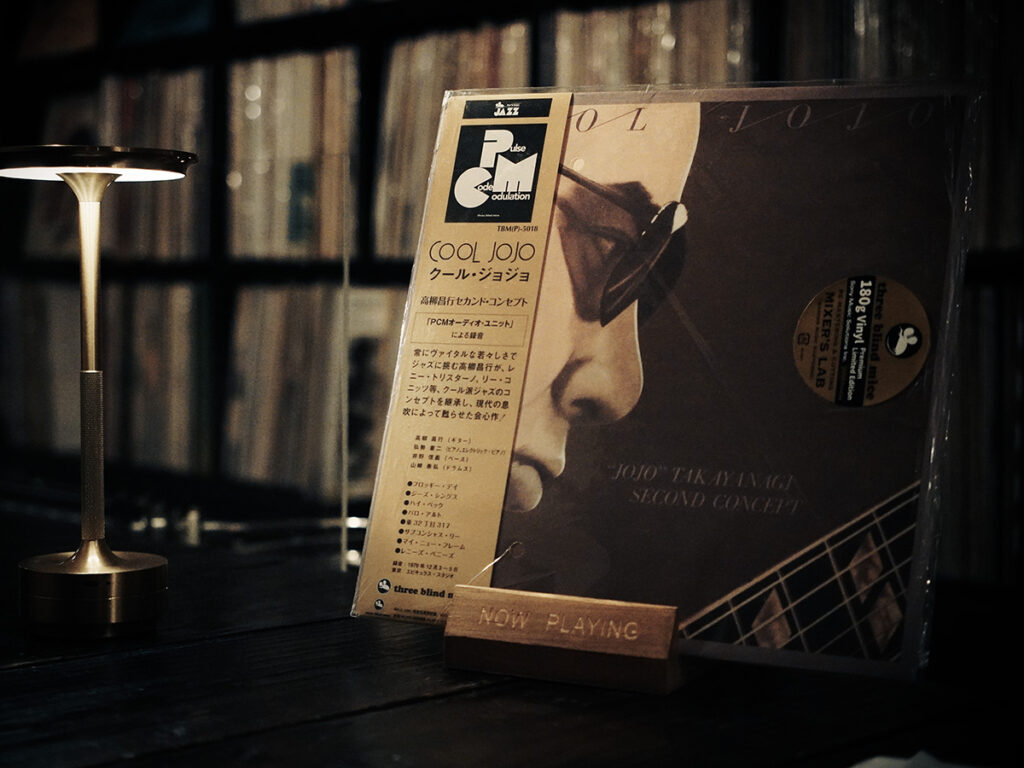
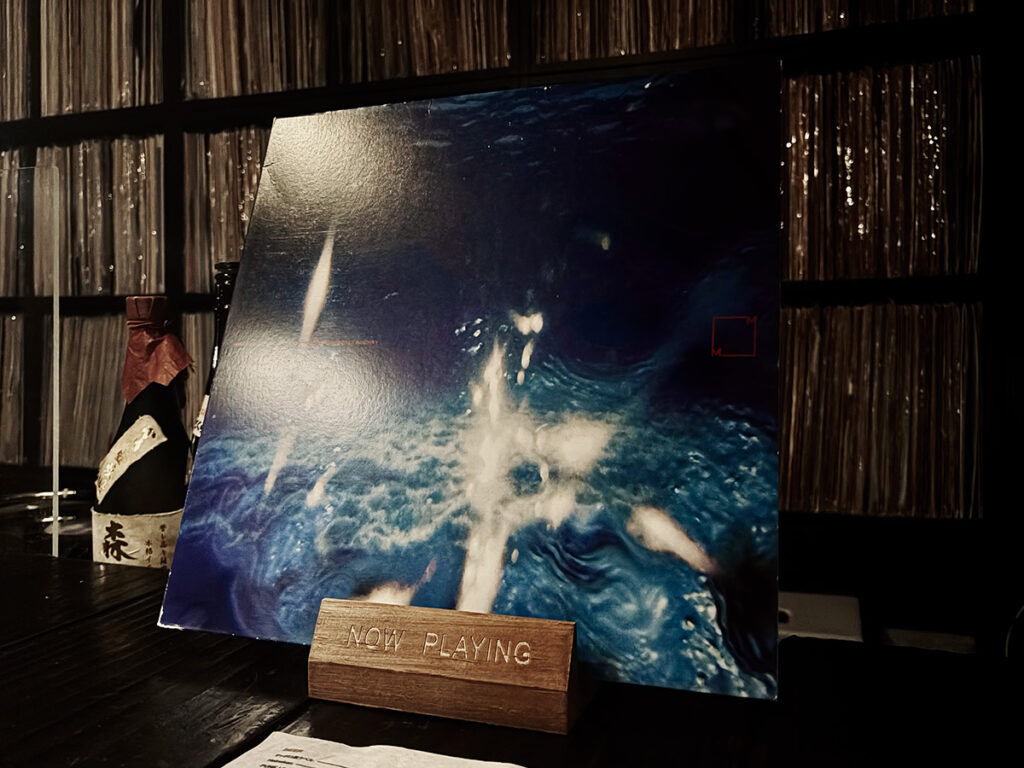
Two records that reflect the exploratory spirit behind Sunaga’s “In Search of the Jazz of the Future” approach: Cool Jojo Second Concept by Japanese free jazz and improvisational guitarist Masayuki Takayanagi, and Aquáticos, a collaborative album by Fabiano do Nascimento and E Ruscha V that moves freely through Brazilian, ambient and experimental sounds.
Sunaga’s relationship with DJing may have changed over the years. No longer spending late nights in clubs, more of his sets now take place in bars and listening-oriented venues, including a monthly slot at Takadanobaba’s Bar Stereo. But even after four decades behind the decks, his appreciation for innovation and appetite for new music remain. “Our selection of new records is better stocked than just about anywhere,” he says. “Records arrive everyday.”
Jazz remains an important reference point, though Sunaga is particularly interested in a younger generation of musicians approaching it without some of the conventions that shaped earlier generations. “Young jazz musicians aren’t bound by rules about what jazz is supposed to be,” he says. “I find that refreshing, and I learn from it too.” More than 40 years into his career, Sunaga is still looking forward. That outlook feeds directly into moderno, where he describes the concept behind selecting new records as “In Search of the Jazz of the Future.”
That exchange also works in the other direction. As much as Sunaga continues to learn from a younger generation, he is equally keen to pass on what he has learned over four decades as a DJ. “These days, anyone can DJ easily with just a computer,” he says. “But if you want to do it seriously, without the fundamental skills, eventually things will fall apart. That’s why I want people to come here and ask me. I want to teach them.”
What began as somewhere Sunaga could finally slow down and listen to the records he had accumulated has gradually become something broader: a place to discover new music, learn from others and pass knowledge and experience on to those coming next. MODERNO is no longer simply the “record room with a bar” he first imagined, but an evolving space where Sunaga and the people who pass through it continue to listen, learn and exchange ideas through music.
moderno
Address: TOOS Building 1F, 5-16-9 Komazawa, Setagaya-ku, Tokyo 154-0012
Hours: 8:00 PM–3:00 AM
Closed: Sunday
Instagram: @moderno_komazawa