Kashiwara City in Osaka Prefecture has a long history of grape cultivation and was once celebrated as Japan’s top grape-growing region. While urban development has reduced its vineyards, the hillsides are still dotted with rows of grapevines.
It is in this historic setting that Katashimo Winery (Katashimo Wine Food Co., Ltd.) produces its wines. Founded in 1914, it holds the distinction of being the oldest winery still operating in western Japan.
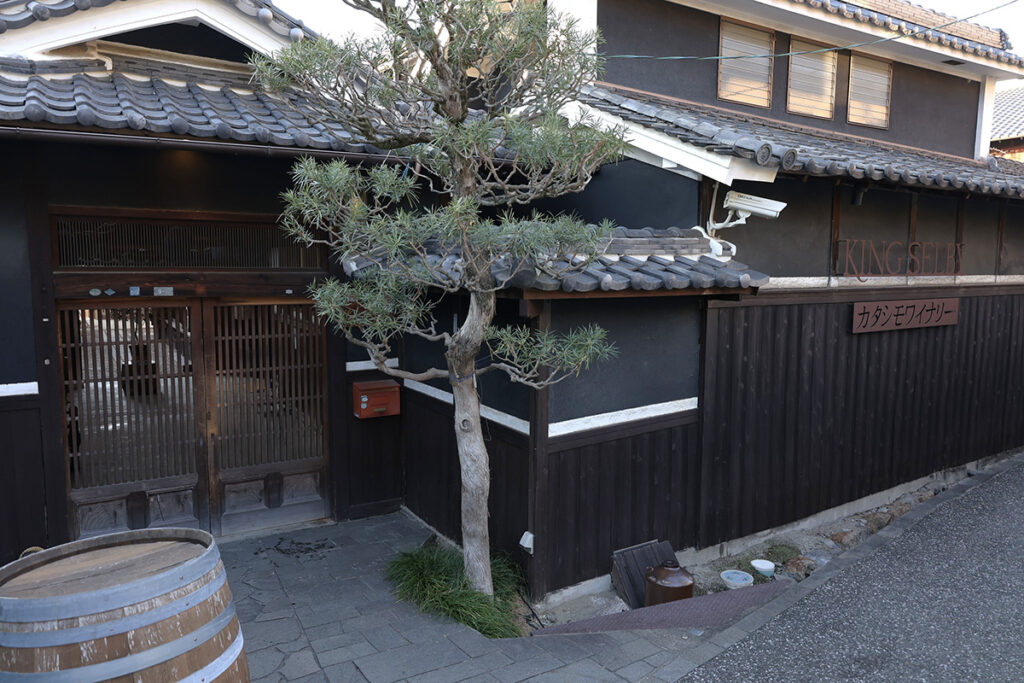
The Katashimo Winery Building
A Legacy of Wine-Making Through Trials and Challenges
The winery’s building is nestled along a narrow lane crowded with tile-roofed houses. Next to it stands a wine cellar designated as a national cultural property. Opening the heavy doors and passing through a narrow corridor, you descend into the cool, dimly lit underground space, where bottles of wine and brandy are stacked. Some are remarkably old, including vintages dating back as far as 1941.
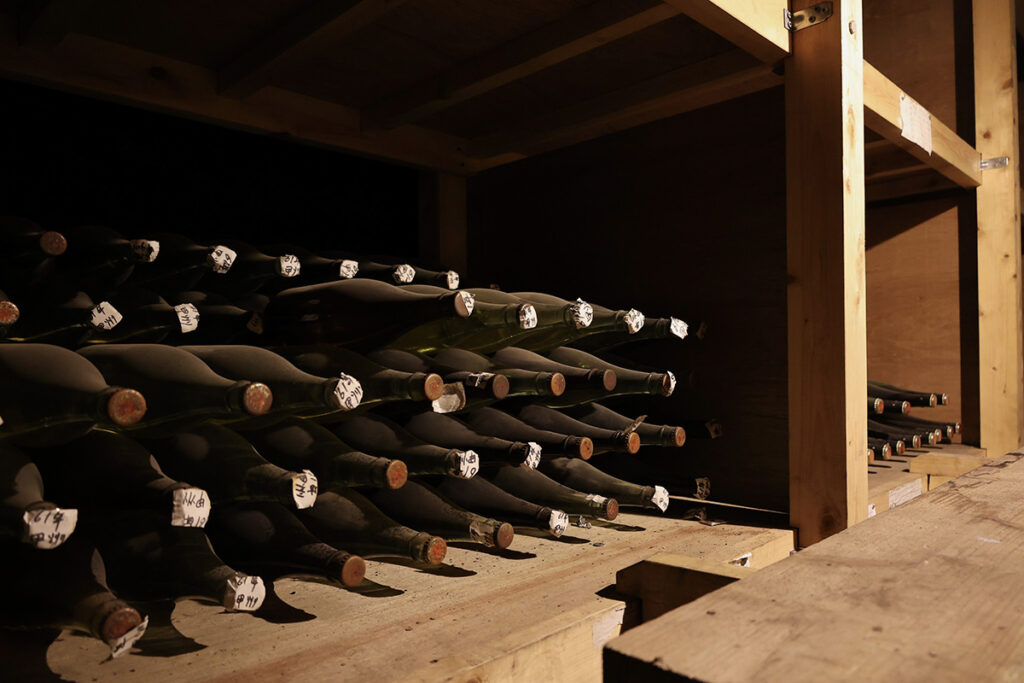
The floor above the cellar has been turned into a small museum, showcasing brewing equipment mostly from the Taisho era. This collection has been designated a tangible folk cultural property by Kashiwara City. Makiko Takai, the winery’s fifth-generation owner, shared the story of her family’s legacy.
According to Makiko, the founder, Risaburo Takai, was a prominent grape farmer. At that time, there was no concept of making wine; he focused solely on cultivating crops for sale. It was his son, Sakujirō, who first turned the family’s attention to wine, inspired by the fact that grapes were used to make alcoholic beverages abroad. With winemaking techniques largely unknown in Japan, they experimented alongside sake brewers, gradually developing their own unique wines.
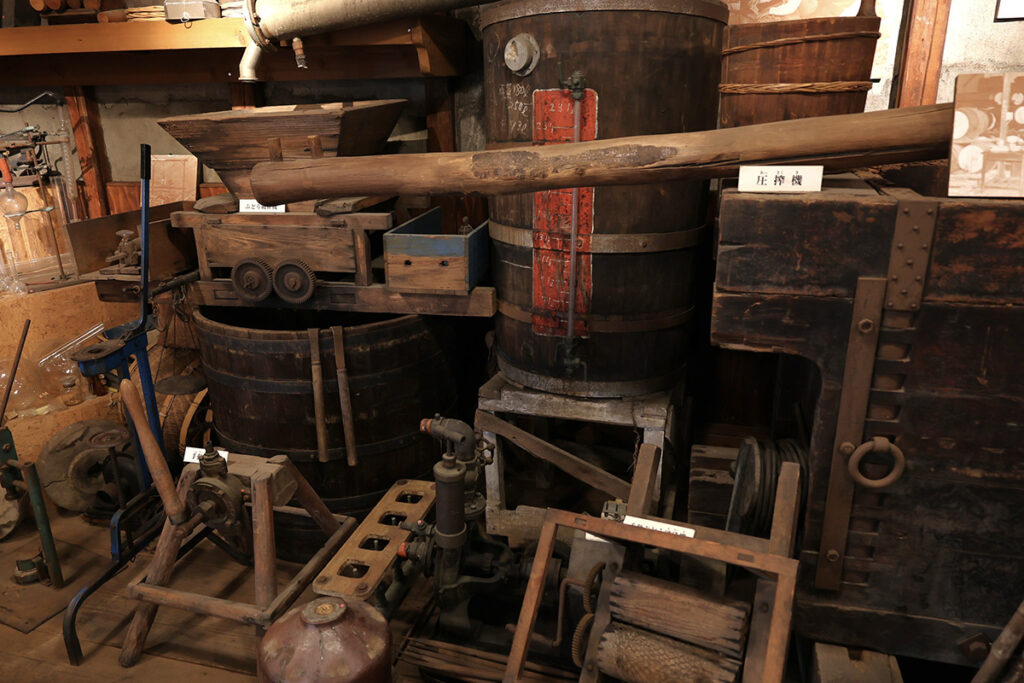
The Takai family also saw wine as a way to stabilize income, since harvests could be unpredictable and profits fluctuated year to year. Once made, wine could be stored long-term, providing a steadier revenue stream. But shortly after their production and sales systems were established, the 1923 Great Kanto Earthquake struck. A major Tokyo-based supplier went bankrupt, forcing the winery to scale back operations. Hardship continued, with much of their vineyard later destroyed by the Muroto Typhoon. At the same time, the region saw a boom in new wineries, though most of these declined after the war, leaving only a handful today.
Fine Wines Born from a Historic Landscape
Katashimo Winery’s wines are imbued with a richness that only comes from enduring the tests of time. Today, the winery offers around 60 varieties, including the internationally acclaimed RIKAEN KATASHIMO-HONBUDOU, which took gold at the 2025 Berliner Wine Trophy. And that’s just one of many globally recognized wines. It’s a curious and somewhat enchanting thought that such exceptional wines come from a modest vineyard just a short walk from the winery.
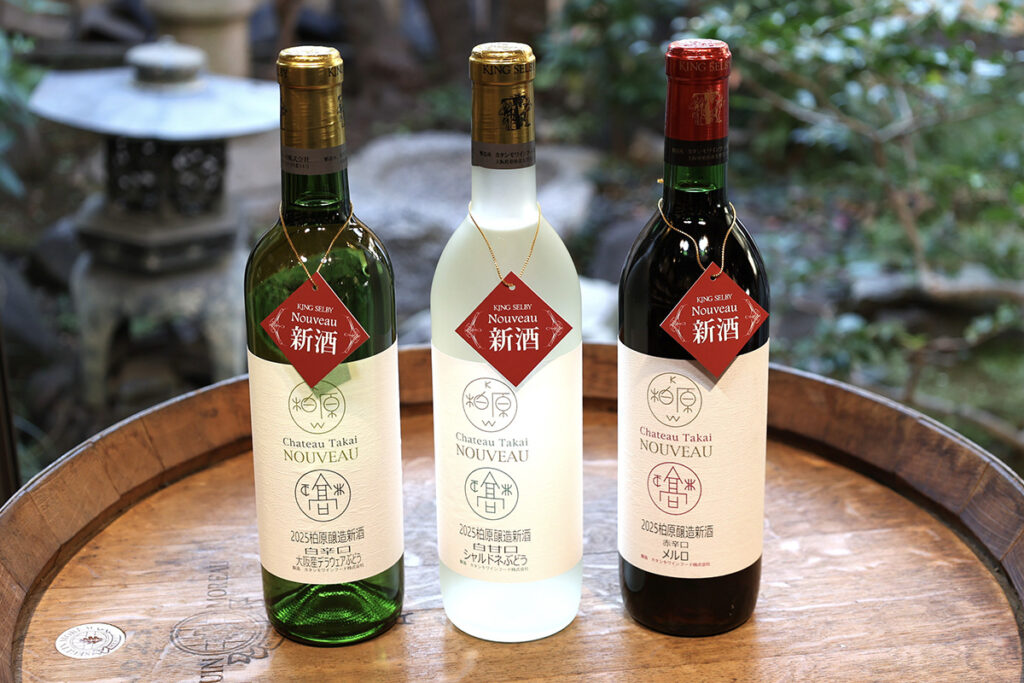
Katashimo Winery’s New Wines for 2025
Makiko led me through the vineyard. Once we passed the residential area, the landscape opened up, revealing rows of grapevines. By late November, the harvest was almost complete, with only a few withering leaves remaining, but a few clusters of grapes still hung as if waiting just for us. Encouraged by Makiko, I popped a few into my mouth. Their wild, sweet flavor was unlike anything you’d find in a supermarket. Makiko explained that they were Muscat Bailey A, a variety suitable for both eating fresh and making wine.Memories of this past summer’s extreme heat came to mind, and I asked about the impact of climate change. Makiko replied, “The impact is huge. Many grapes dried up in the heat. But apart from those almost ‘endangered’ grapes, some became incredibly sweet, it was truly outstanding. Moving forward, we’ll need to cultivate grape varieties that can withstand hotter conditions.” Clearly, it’s not just earthquakes and typhoons that pose challenges; this is a business constantly confronted with trials.
When we nearly reached the top of the hill and looked back, the vineyard stretched down toward the residential area, and in the distance, the Mozu-Furuichi Kofun Group, a UNESCO World Heritage site, came into view.
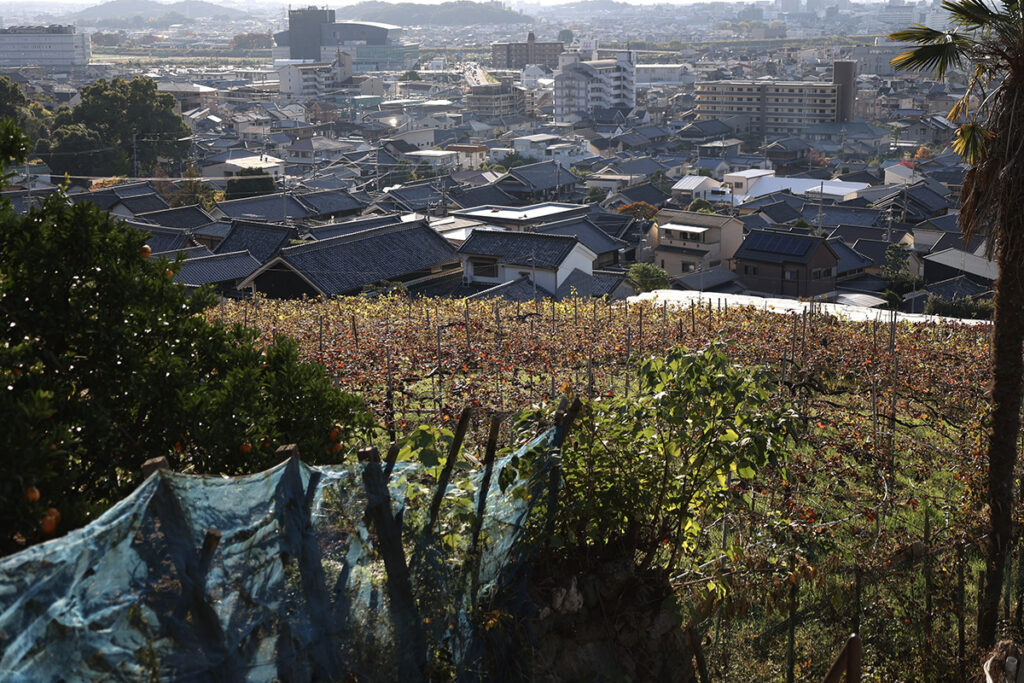
Until around the 1950s, there were hardly any houses here, and the area was almost entirely covered with vineyards. Going further back to the Nara period, this site was home to Chishiki-ji, a temple with an extensive layout. It is said that Emperor Shōmu was so impressed by the temple’s Great Buddha that he decided to commission the construction of the Great Buddha at Tōdai-ji. Today, only faint traces of the temple remain, a quiet reminder of the passage of time and life’s impermanence.
Wine and Takoyaki, a Pairing Made for Osaka
The final stop Makiko showed me was the winery’s shop, located just across from the main building. Two large shelves display a variety of wines. Most are priced reasonably, between roughly 1,000 and 3,000 yen, which is pleasantly surprising. With autumn in full swing, it’s the season for new releases, which are naturally the bestsellers. By the time I visited, only a few bottles remained on the shelves.
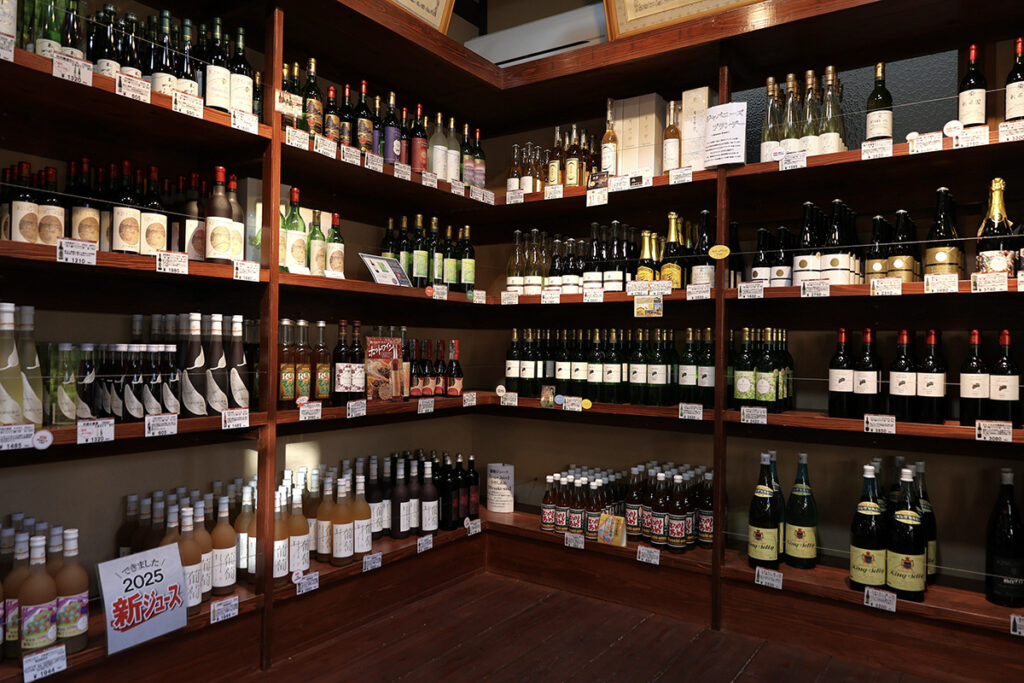
As I stood unsure which wine to pick, Makiko offered a helpful suggestion: “How about this?” It was called Tako-cham, a sparkling wine fermented in the bottle that is known to pair perfectly with Osaka’s famous takoyaki. She also recommended a tasting set for anyone feeling indecisive, so I decided to give it a try. Soon, three wines were served in glasses, each accompanied by a short description: RIKAEN Muscat Bailey A 2022, Fragrant Neo Muscat & Riesling, and Osaka Delaware 2024.
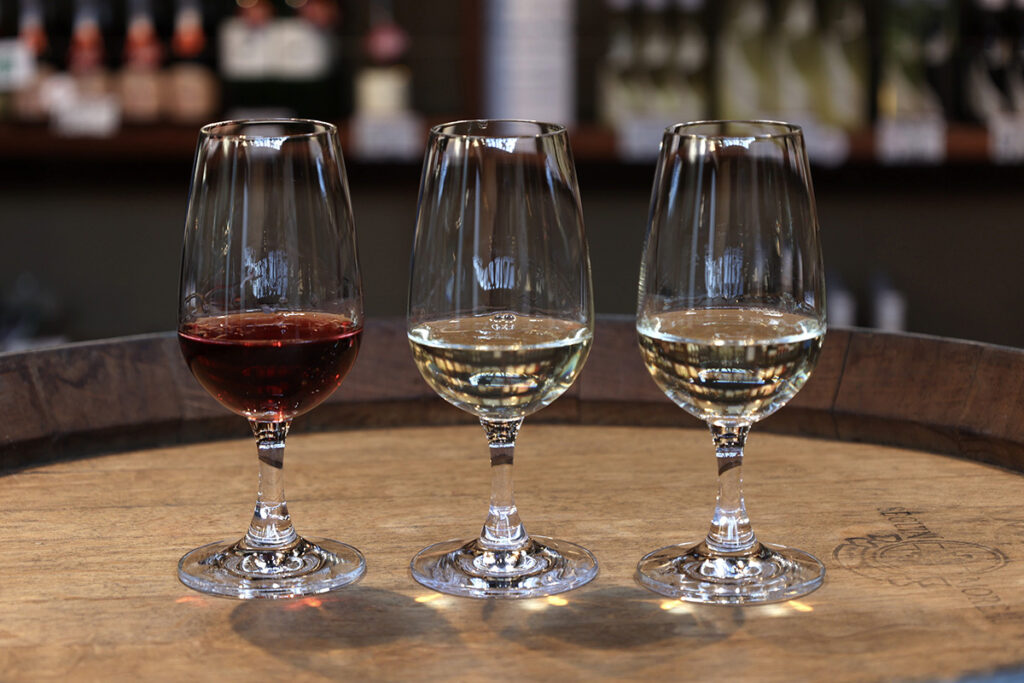
Tasting the three wines, each was distinct and excellent in its own way, but the most striking was RIKAEN. Its aroma and flavor were layered and complex, offering a depth that quietly soothes a heart wearied by life’s setbacks. As I enjoyed the gentle buzz, I couldn’t help but wonder what kind of wine the next generation of grapes would produce. These grapes, grown resiliently and shaped by climate change, will undoubtedly create their own unique flavors. The thought alone filled me with a sense of excitement and anticipation.
Katashimo Winery (Katashimo Wine Food Co., Ltd.)
Address: 2-10-5 Taiheiji, Kashiwara City, Osaka 582-0017, Japan
Shop Hours: Weekdays 10:00–18:00 | Weekends & Holidays 10:00–17:00
Closed: New Year’s holidays
Website: https://kashiwara-wine.com
Instagram: @katashimowinery