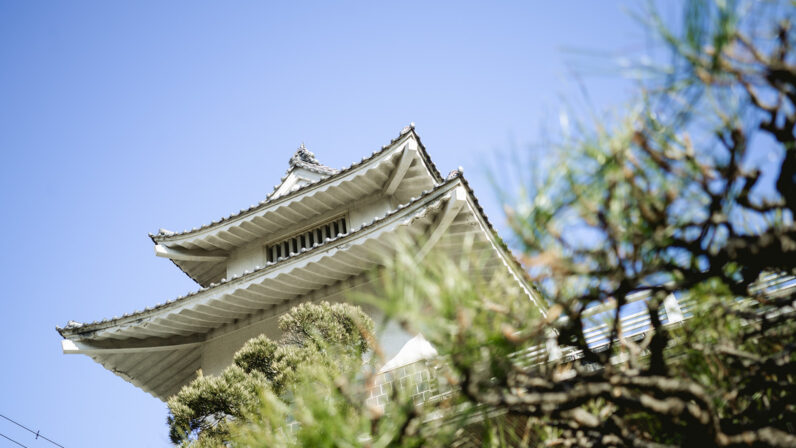
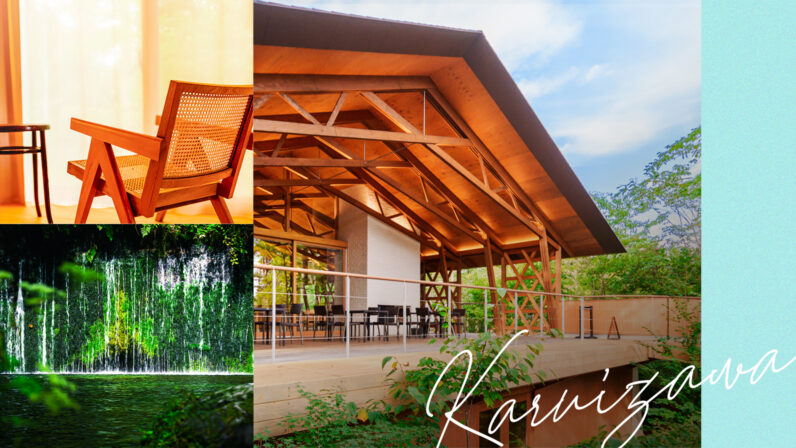
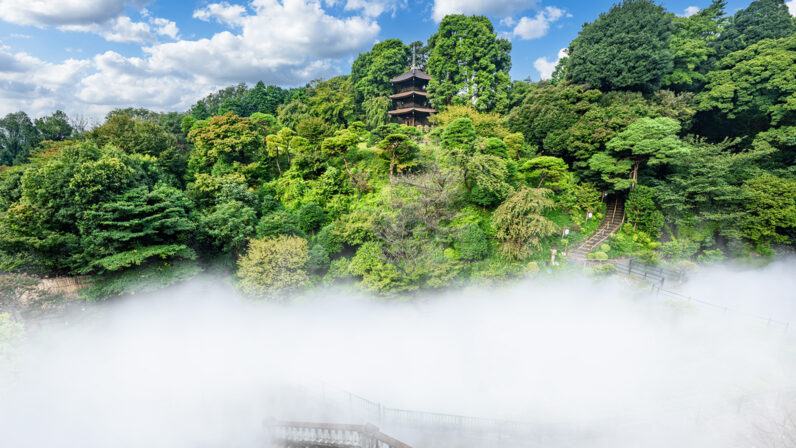
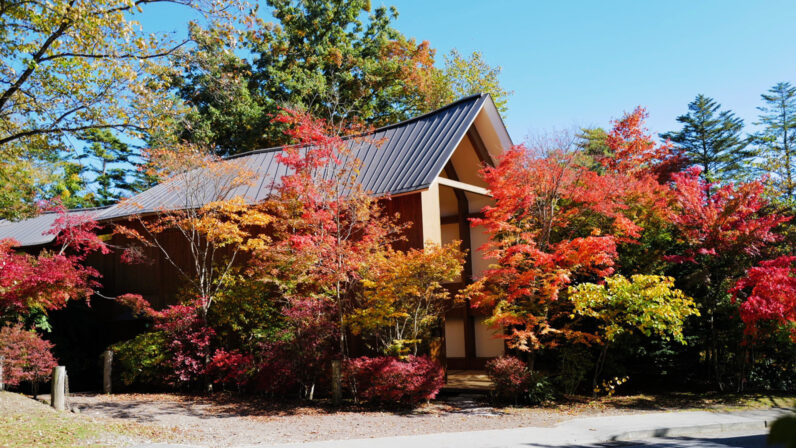
With 20 years of experience as a concierge for international VIPs, ZEROMILE Editor-in-Chief Ayako Inaba travels across Japan to experience firsthand the places she might recommend to her guests. In the first installment of THE CONCIERGE’S EYE, she journeys through historic Iwakuni before visiting Shimose Art Museum, named the world’s most beautiful museum in 2024.
A Concierge’s Rule: Experience It Before You Recommend It
In Hiroshima Prefecture, there is a museum that has been named the “world’s most beautiful.” But what makes it so beautiful?
Many of my guests are art collectors or work in the art world, and visitors from the United States in particular often include Hiroshima in their travels. With Shimose Art Museum attracting international attention, I knew I needed to experience it for myself.
This journey actually began with an invitation from someone I know: “Why don’t you come to Hagi?”
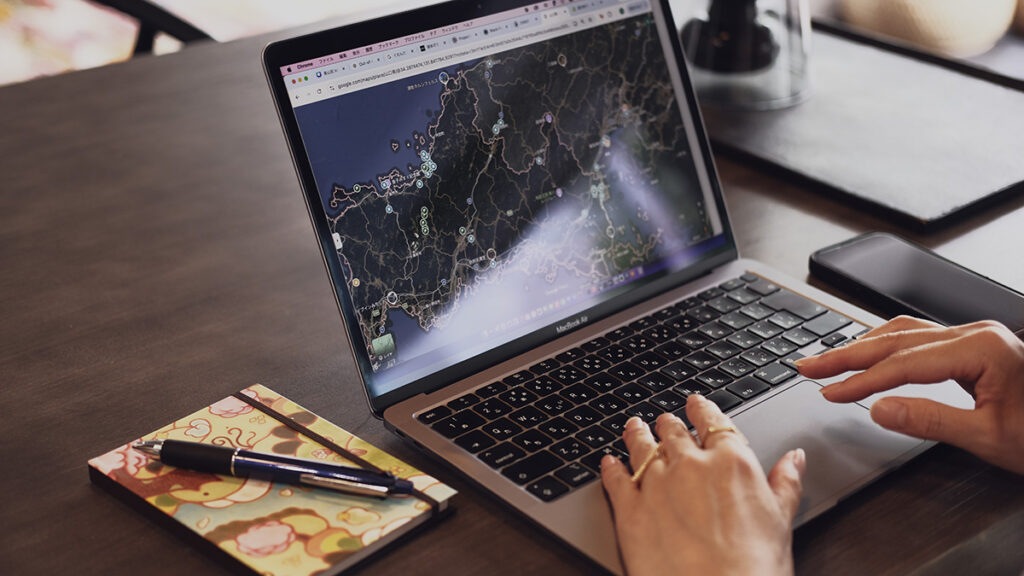
Whenever I plan a trip, I start with a map. I zoom in and out on Google Maps, looking for places that connect naturally until an itinerary begins to take shape.
Shimose Art Museum, I discovered, is only about 20 minutes by car from Iwakuni Airport. I could also visit a new hotel in Miyajimaguchi that I had been curious about. Iwakuni quickly became the obvious place to begin.
Rather than heading straight to Hagi after visiting Iwakuni and the museum, I decided to add Tsuwano, a historic town often visited together with Hagi. And just like that, the journey became a two-night, three-day trip before I even reached Hagi.
Iwakuni’s History and Kintaikyo Bridge
Getting to Iwakuni is surprisingly convenient. ANA operates five flights from Haneda throughout the day, from morning into the early evening. Iwakuni Airport itself is tiny, with just one gate and one baggage carousel. Stepping down from the plane, I could see the Seto Inland Sea dotted with small islands, and once outside, the atmosphere already felt unmistakably Setouchi.
After picking up a rental car, my first destination was Kintaikyo Bridge. The airport makes this particularly easy, with the rental car counters located inside the terminal immediately after you exit the gate.
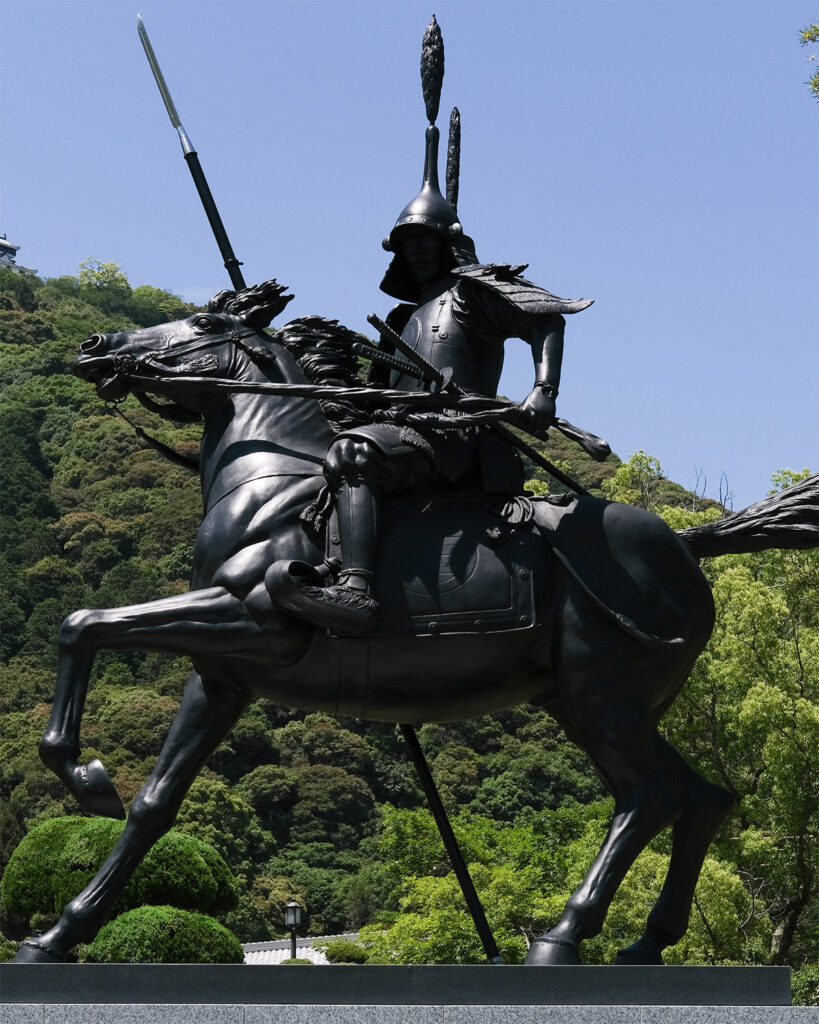
Before continuing, it is worth touching briefly on Iwakuni’s history. Its first lord, Kikkawa Hiroie, negotiated with Tokugawa Ieyasu to ensure the survival of the Mori clan, which his family served. After the battle, he was granted a domain in Iwakuni valued at 30,000 goku. Iwakuni Castle was then built, only to be dismantled a few years later under the shogunate’s One Castle per Province policy. In the centuries that followed, Iwakuni remained part of the Choshu Domain while maintaining an unusual degree of independence, occupying a position almost like a semi-autonomous satellite domain.
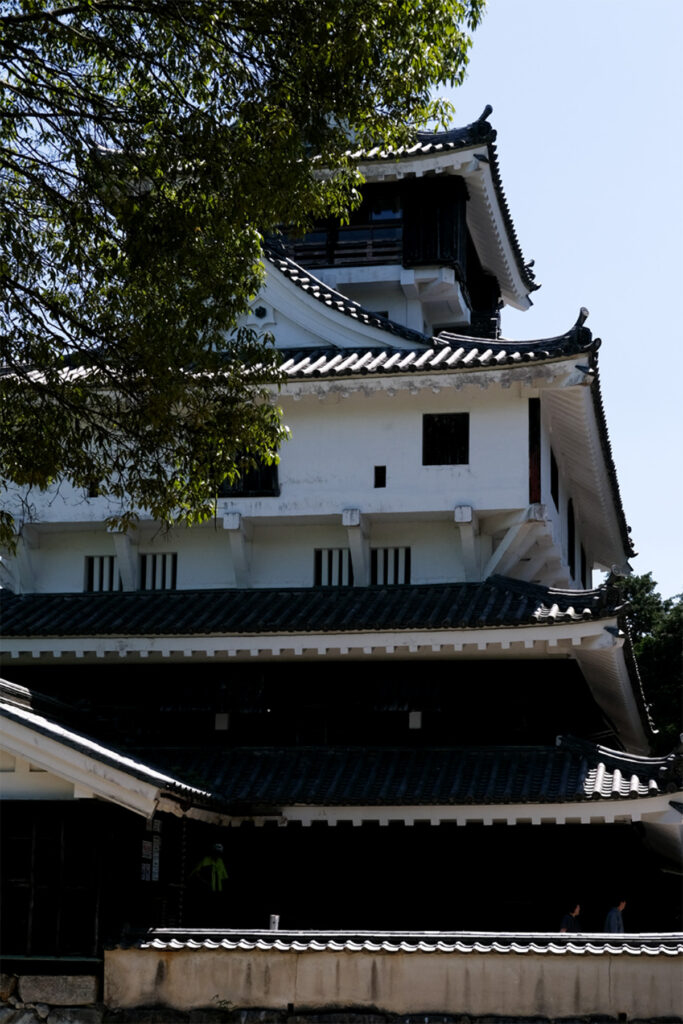
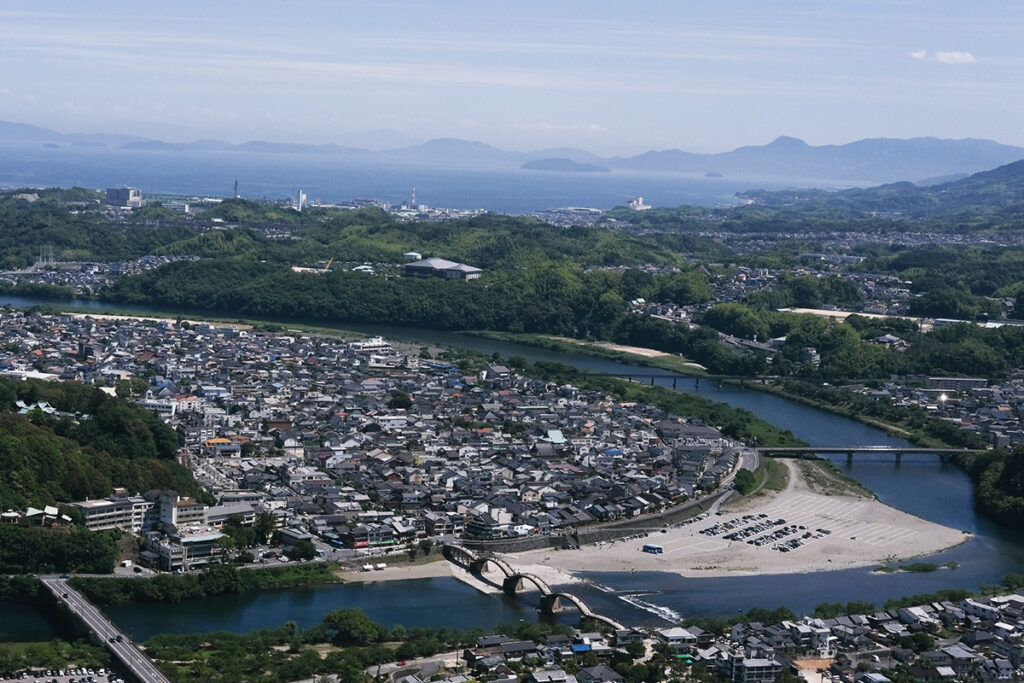
1st image: Iwakuni from above
2nd image: Statue of Kikkawa Hiroie
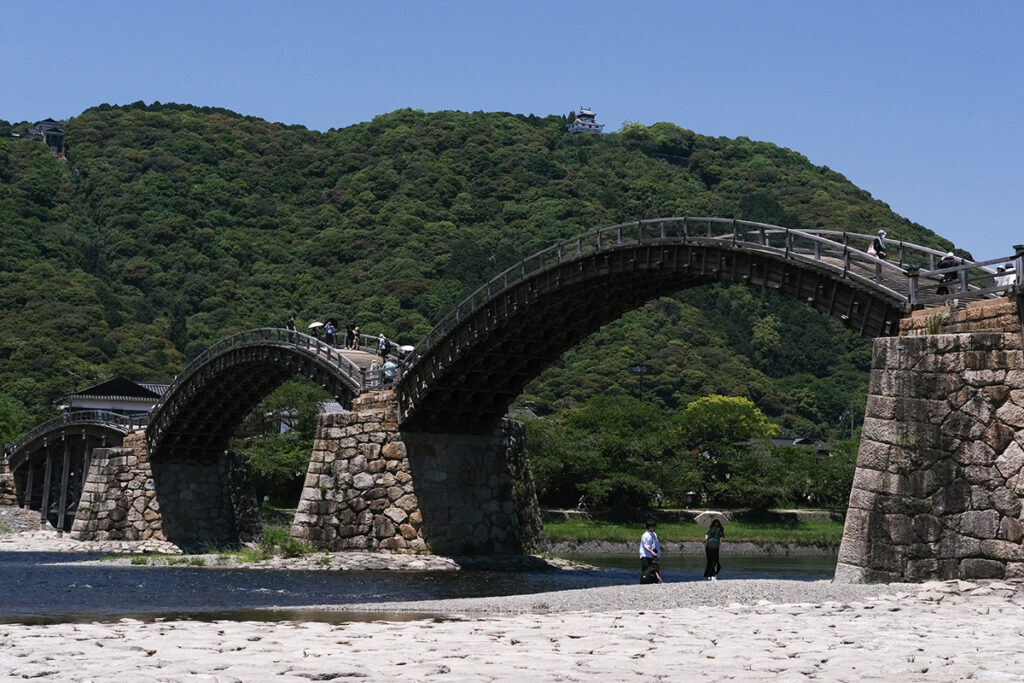
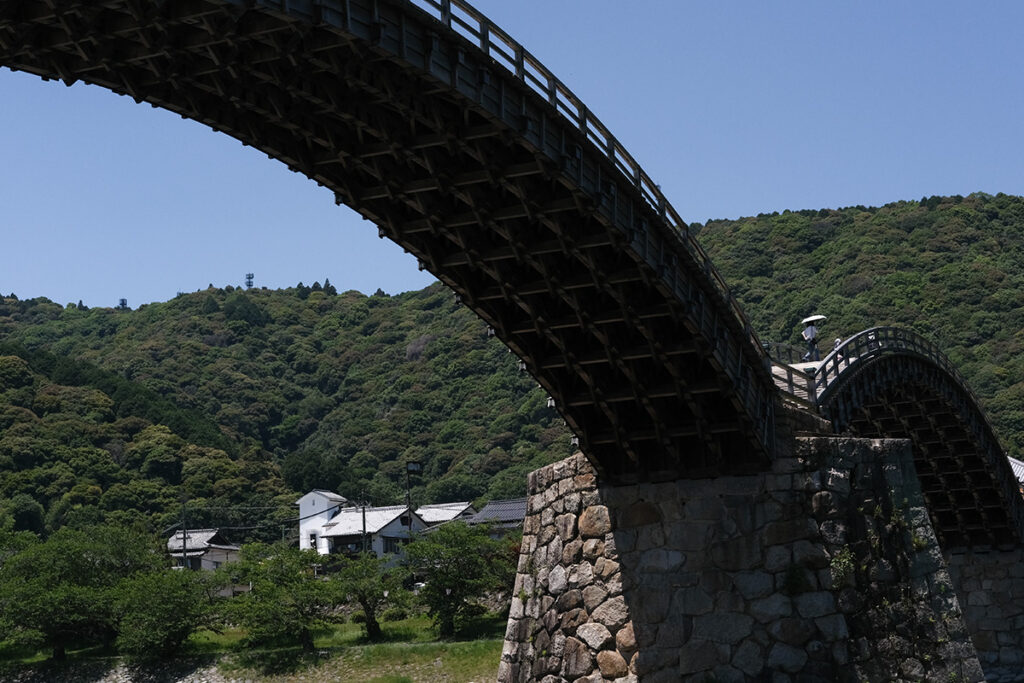
The Nishiki River, which winds through the city, was prone to devastating floods. Kintaikyo Bridge was born from repeated attempts to create a bridge that could withstand this unruly river.
I parked by the riverbank and spotted a white heron. If there’s a heron, there must be fish, I thought. Suddenly I wanted to see what was swimming below the surface—only to realise I’d left my polarised fishing glasses in the car.
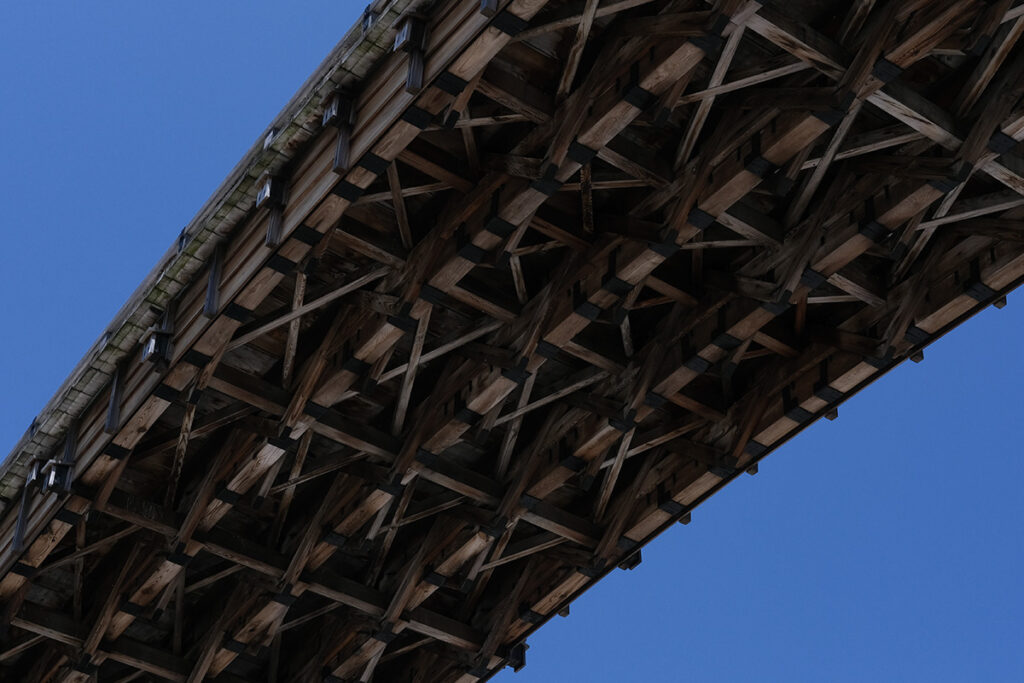
Kintaikyo is beautiful from every angle. Look underneath and you see layers of wooden components intricately fitted together, a reminder of the extraordinary craftsmanship of the Edo period.
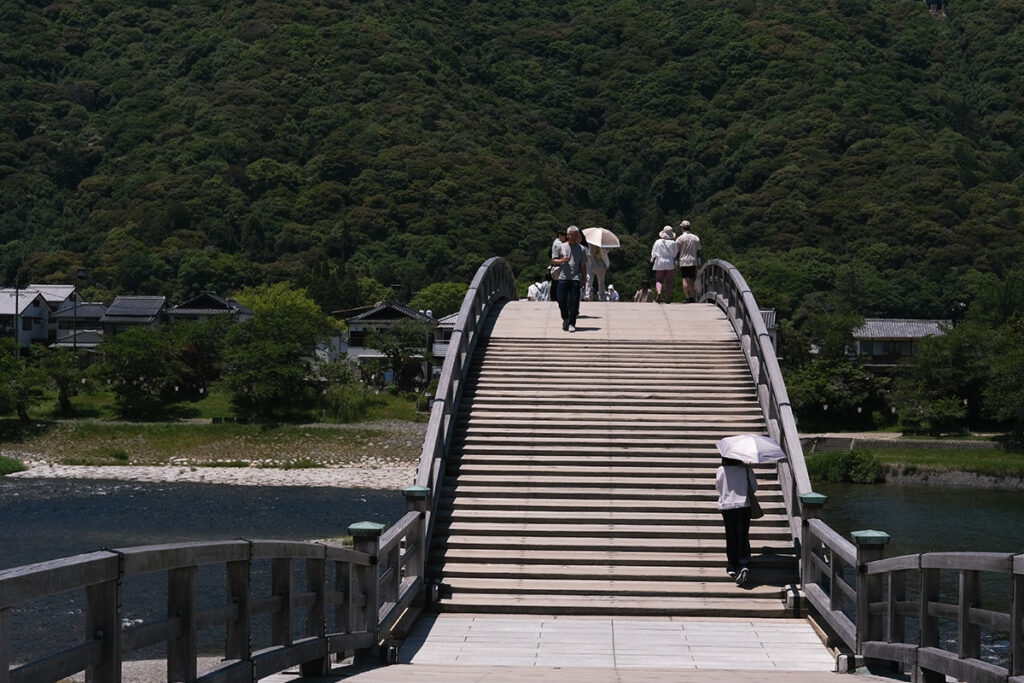
Crossing its steep wooden arches is an experience in itself. The shallow steps made me wonder whether they had been designed for people walking in kimono, with their shorter stride. With my modern-day pace, I almost found myself breaking into a little jog.
Stepping into a Slower Rhythm
Once across Kintaikyo Bridge, the atmosphere changes. Old walls evoke the former samurai residences, and the streets still carry the character of a castle town.
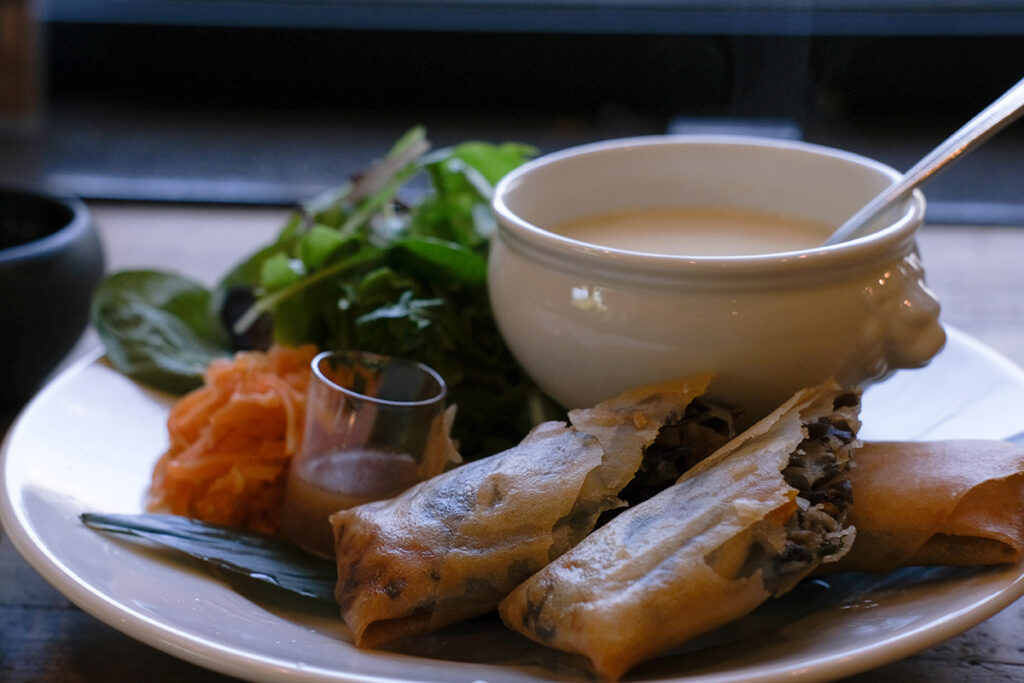
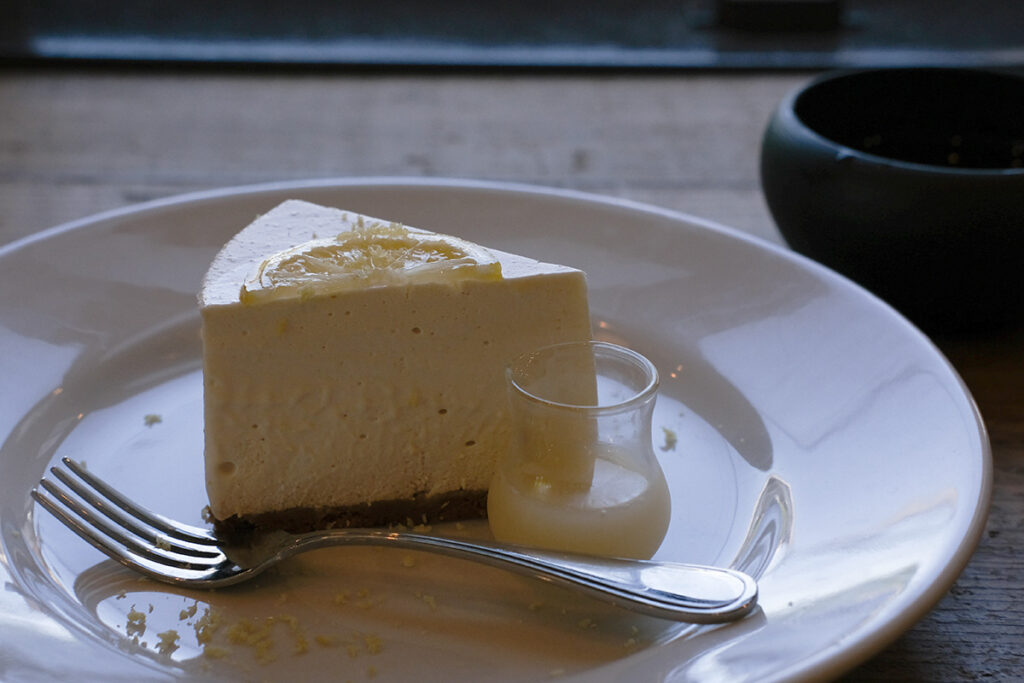
A short walk brought me to Kissaten Kuhaku, a quiet café framed by fresh greenery. It seemed to attract more locals than tourists, so I stopped for lunch. The spring roll set meal and honey-lemon rare cheesecake were both carefully made and comforting in the best possible way.
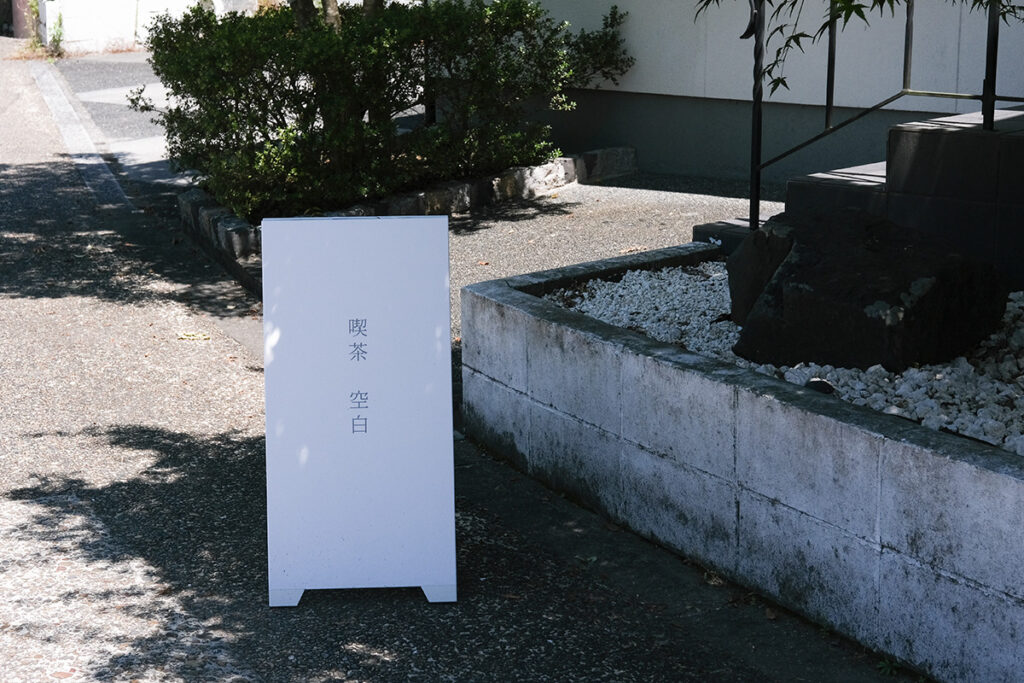
After lunch, I took the ropeway up toward Iwakuni Castle and continued on foot through a cedar forest. All I could hear were birds and leaves moving in the wind.
Somewhere around the time I crossed Kintaikyo Bridge, the pace of time seemed to have shifted. I felt as though I had slipped into another era.
From the top floor of the reconstructed castle keep, the view opened out over the winding Nishiki River and Kintaikyo Bridge, with Iwakuni and the calm Seto Inland Sea stretching beyond. Through my camera’s viewfinder, the vivid green landscape beneath the blue sky was difficult to look away from.
Finally, the “World’s Most Beautiful Museum”
Then it was time for the main destination: Shimose Art Museum, about a 20-minute drive from Iwakuni. On view that day was LA VITA: Koji × Kota × Kanako Kinutani, an exhibition bringing together Koji Kinutani—known for his intensely colourful paintings—and his two children.
I had deliberately arrived without learning much about the museum’s architecture beforehand.
After scanning my ticket, I entered the exhibition area and followed the numbered route. I walked through a video gallery and came back out the same way I had entered. But there was no next number.
“Wait, is that it? How do I get to those colourful boxes?”
Then I noticed an explanation of the museum’s structure and a sign pointing the way. Almost as if the building were answering my question.
Apparently, the real experience was only just beginning.
The Real Beauty Is in the Experience
Shimose Art Museum was designed by architect Shigeru Ban.
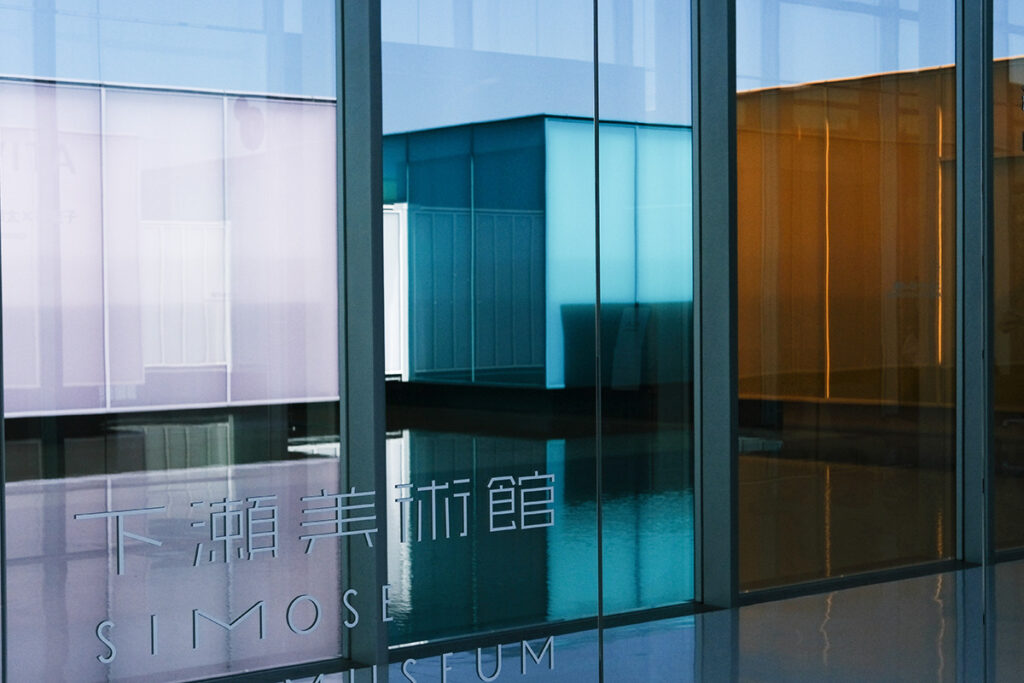
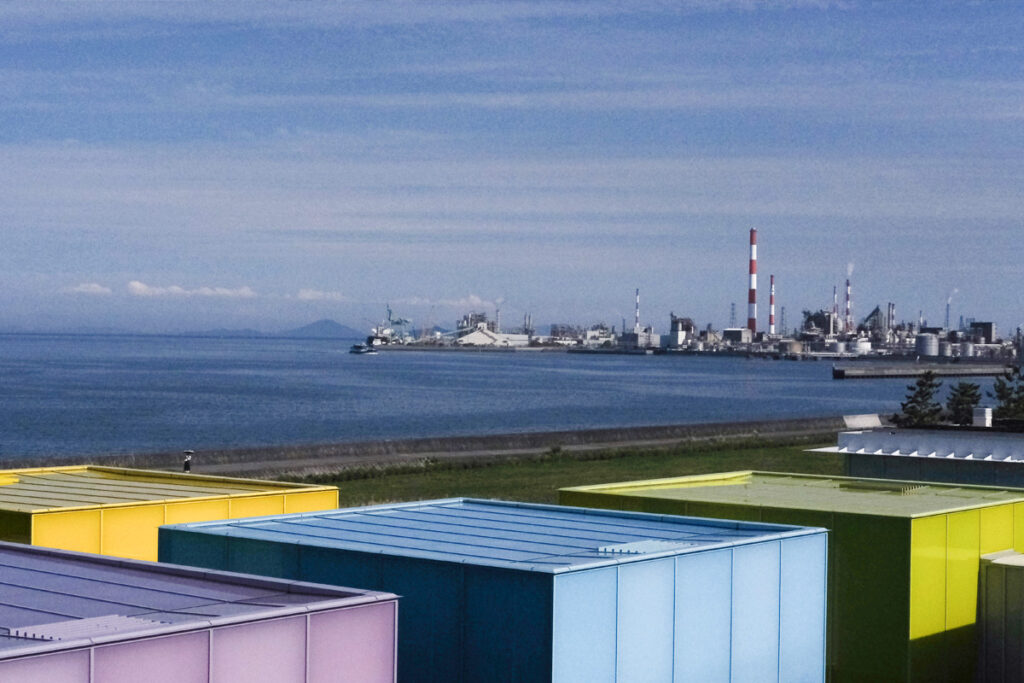
Its colourful, box-like galleries appear to float on a reflecting pool and can be repositioned according to the needs of each exhibition. Visitors move from one gallery to the next almost as though they were crossing from island to island. Having arrived knowing almost nothing about the architecture, I was able to discover how it all worked for myself.
There is much more behind the museum’s design than first meets the eye. The eight movable galleries floating on the reflecting pool were made in reference to the islands of the Seto Inland Sea, while their floating structure draws on Hiroshima’s shipbuilding technology. Elsewhere, mirrored glass screens reflect the surrounding sea, sky and landscape, visually weaving the museum into its Setouchi setting. These are just some of the many ideas embedded in Shigeru Ban’s design.
Taking all in, the more I discovered, the more I began to understand why Shimose Art Museum had earned such acclaim.
In 2024, Shimose Art Museum was selected as one of seven museums on the “World’s Most Beautiful Museums” list by the Prix Versailles, an international architecture and design award announced annually at UNESCO Headquarters in Paris. It later went on to receive the Prix Versailles itself, the top World Title in the Museums category.
But standing there in person, I realised something. Perhaps it wasn’t simply the world’s most beautiful museum. Its beauty went beyond the visual; it was designed for the experience itself to be beautiful. Without even realising it, I had played straight into Shigeru Ban’s design trick.
I realise I’ve just spoiled some of the surprise for some, but I hope you’ll forget everything you’ve just read and go experience it for yourself too.
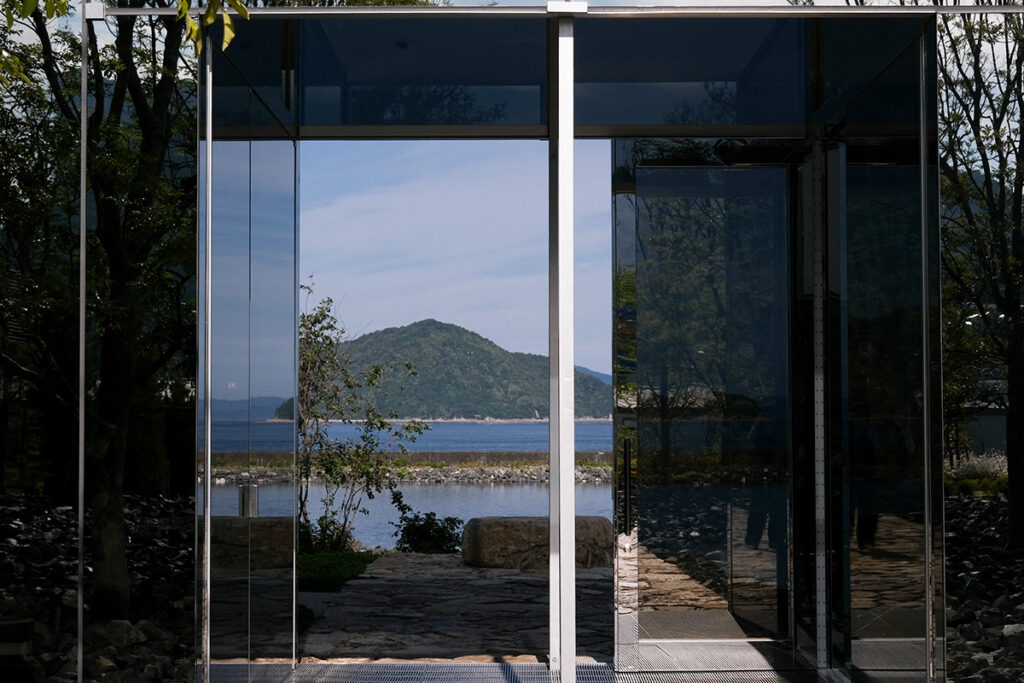
Throughout the museum, mirrored glass screens capture reflections of the Seto Inland Sea, the sky above and the colourful galleries themselves. Walk along the passageways or outside the buildings and you, too, become part of the reflected landscape. For a moment, it feels as though you’ve wandered into a parallel world.
The exhibition was excellent, but what left the strongest impression on me was the experience itself, shaped by both the architecture and the Seto Inland Sea around it. Kintaikyo Bridge emerged from generations of confronting an unruly river; Shimose Art Museum was designed to incorporate the surrounding Seto Inland Sea landscape. Different eras, different purposes, yet both are beautiful structures born from the relationship between people and nature.
So, to circle back, what makes the “World’s Most Beautiful Museum” a fitting title?
Simply looking at the building wasn’t enough to understand. You have to walk through it, get a little lost and find yourself becoming part of the landscape. That experience itself, I think, is where the true beauty of Shimose Art Museum lies.
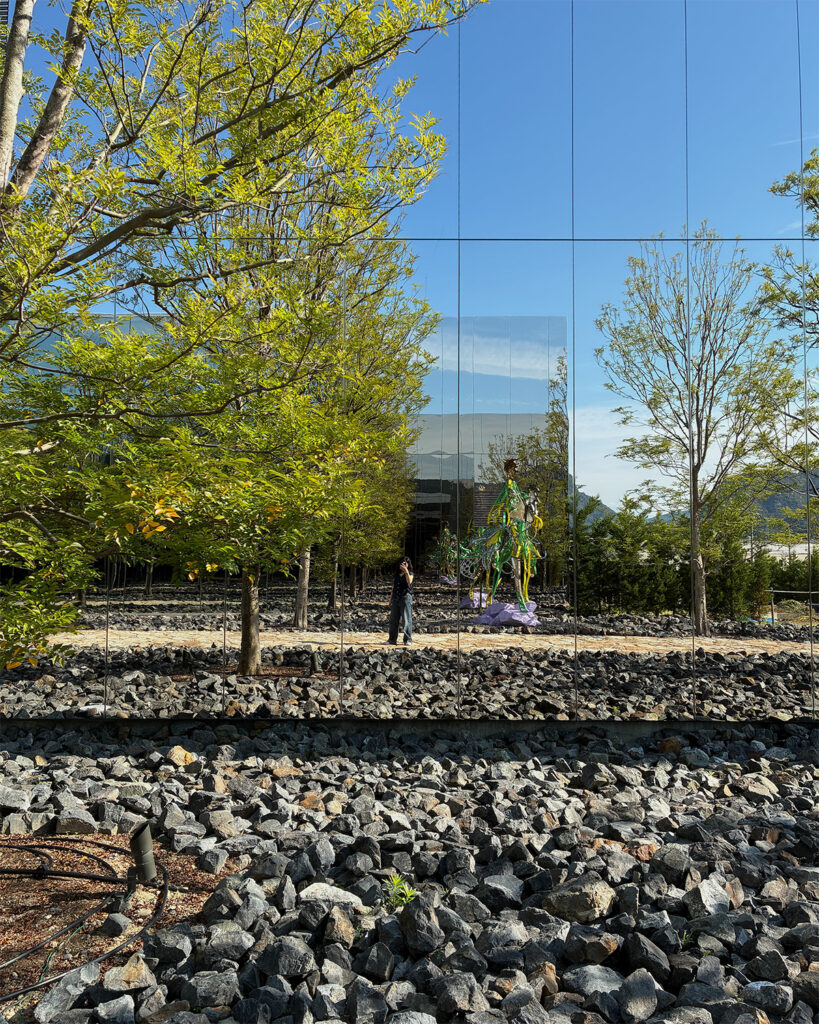
It even made me want to take a selfie, something I rarely do.
Simose Art Museum
Address : Japan, 〒739-0622 Hiroshima, Otake, Harumi, 2 Chome 10-50
Web site : https://simose-museum.jp/en/