Located in Kobe, Hyogo Prefecture, the Nada Gogo region is recognised as one of Japan’s premier sake-producing areas. Home to more than 20 sake breweries, the region includes many long-established producers with histories spanning several centuries. In recent years, international attention has grown following the registration of Japan’s Traditional Sake Brewing as a UNESCO Intangible Cultural Heritage. More travellers are now adding the region to their Kansai itineraries as a destination to experience this brewing tradition firsthand.
For this feature, we visited the Hakutsuru Sake Brewery Museum, where approximately half of all visitors are international travellers.
A Historic Sake Brewery Transformed into a Museum
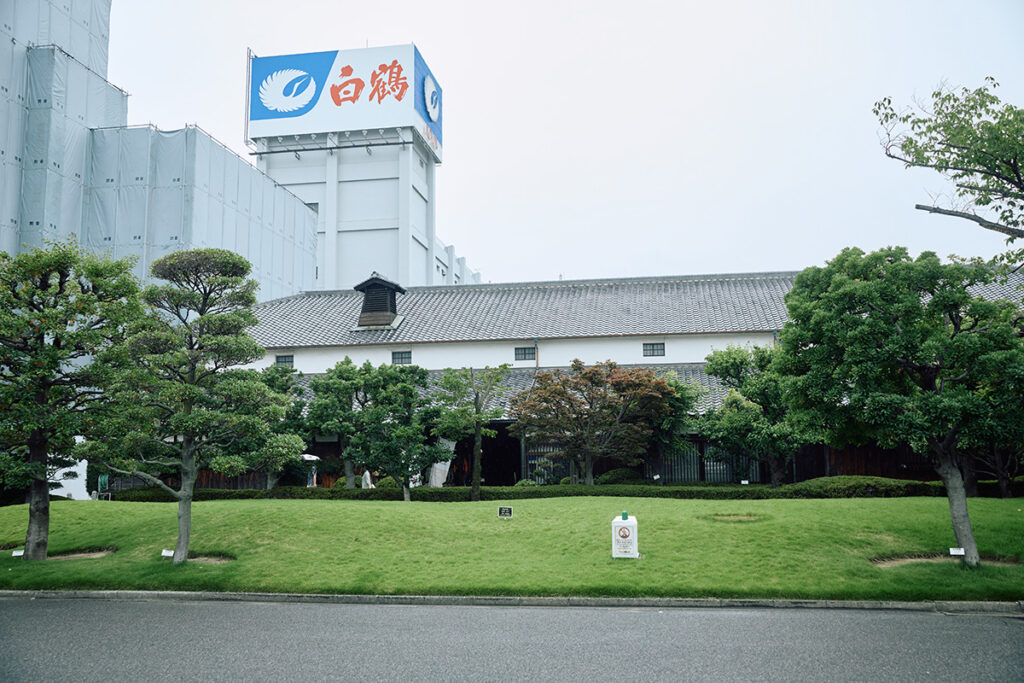
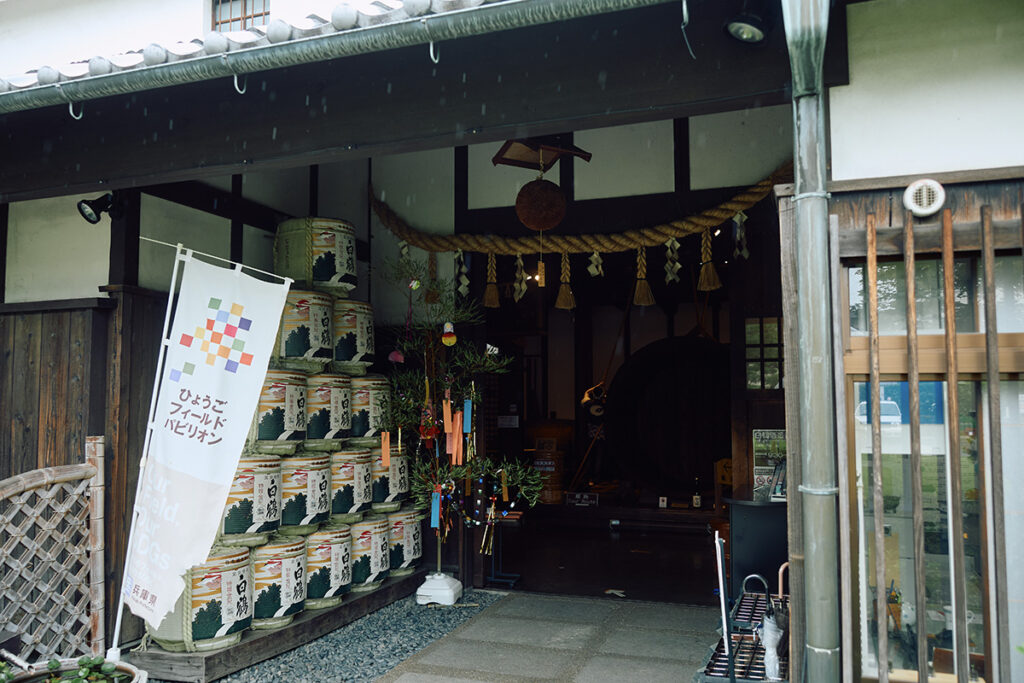
Founded in 1743, Hakutsuru Sake Brewing is one of Japan’s leading sake producers, not only within the Nada Gogo region but across the country. The Hakutsuru Sake Brewery Museum is located near the company’s headquarters, marked by the iconic Hakutsuru sign. Housed in a long, tiled-roof building, the museum was created by renovating the company’s No. 1 Main Brewery, which remained in operation until 1969. Today, the space carries a unique atmosphere where the character of its history coexists with a sense of renewal.
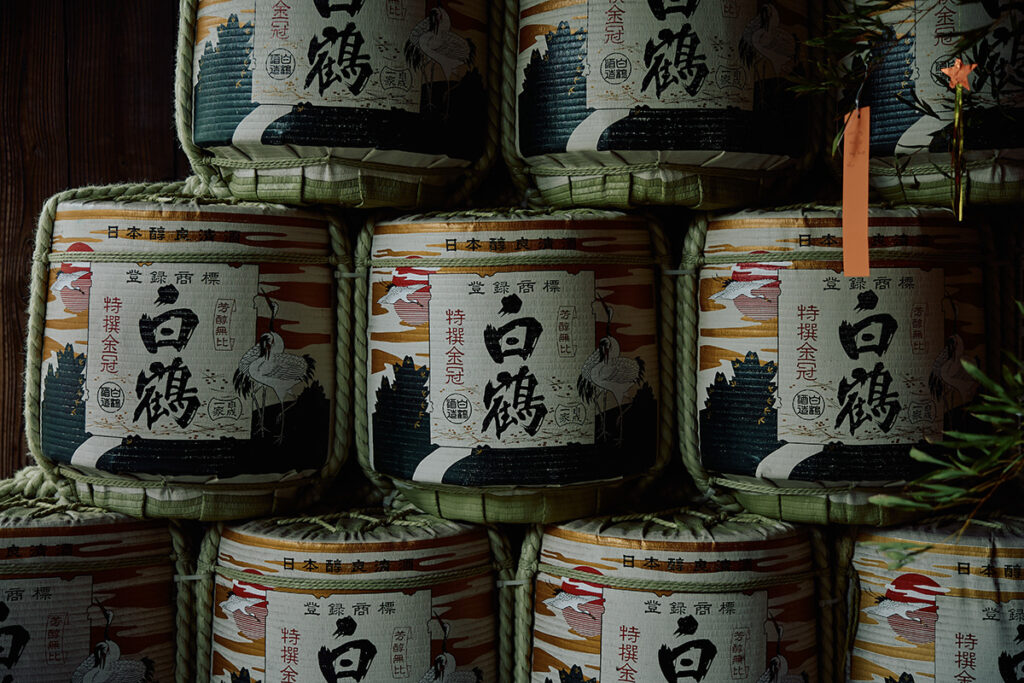
Beside the entrance, sake barrels wrapped in traditional decorative komo are neatly stacked. Komo is a type of woven packaging material made from dried rice straw and other plant fibres. In the past, it was used to protect wooden sake barrels from damage during transportation. Over time, auspicious motifs such as cranes and pine trees began to be added, and today these decorated barrels are often used to bring a celebratory touch to occasions such as wedding receptions.
Learning Traditional Sake Brewing Methods
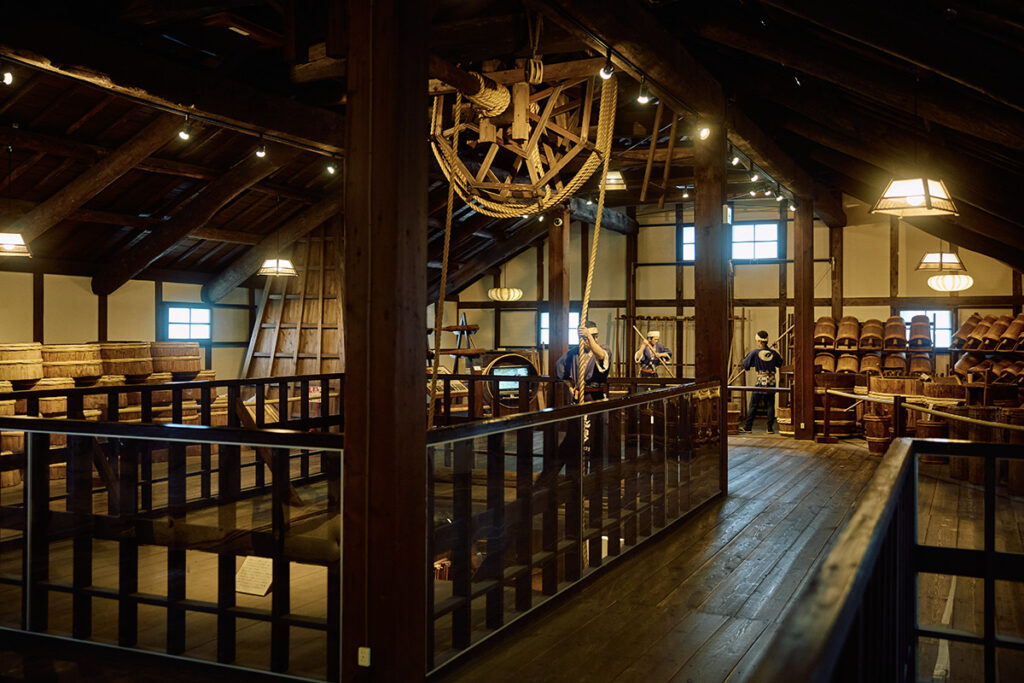
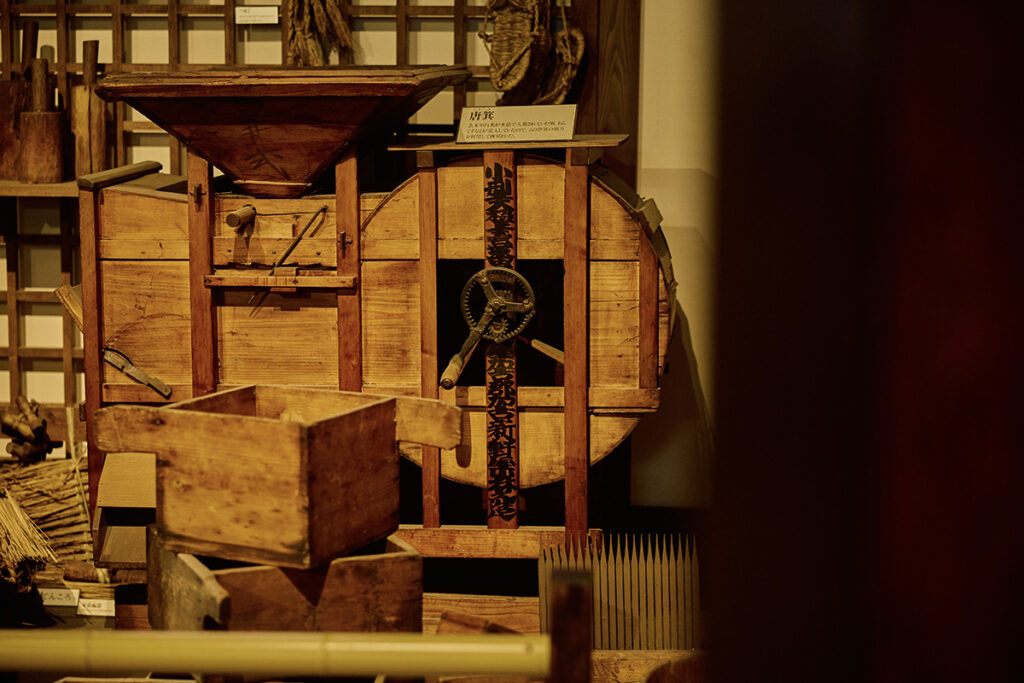
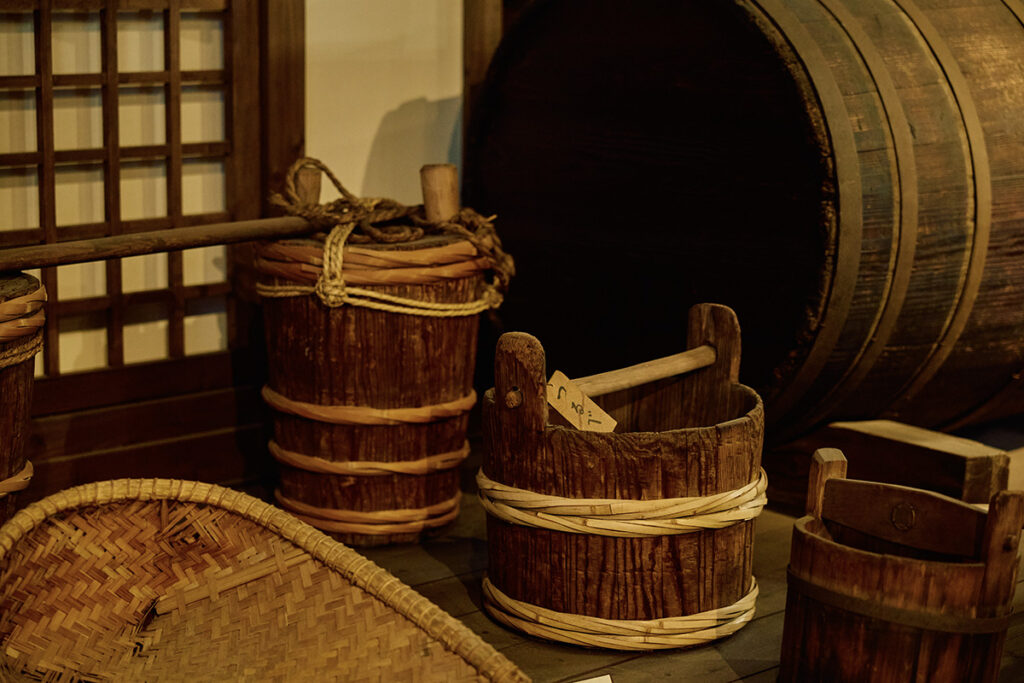
The two-storey museum displays sake brewing tools that were still in use until around 60 years ago. Looking around the exhibition, visitors will find a wide variety of vessels, from small containers to large barrels and brewing kettles.
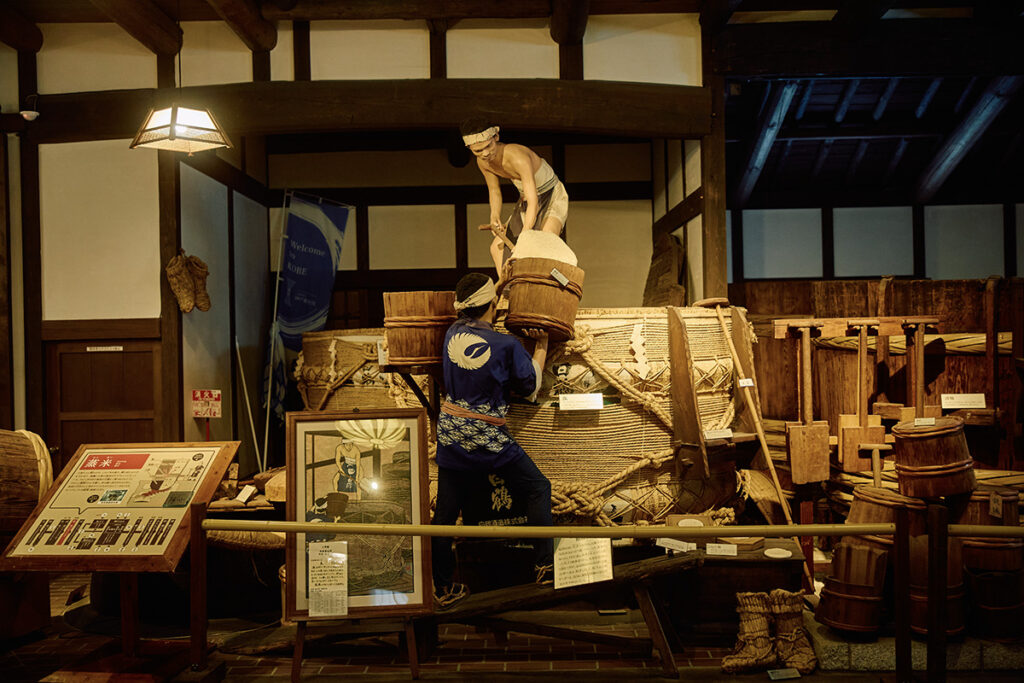
One example can be seen in the early stages of sake production, when the main ingredient, rice, is steamed. This process was carried out using a large koshiki placed over a kettle. A single opening at the bottom of the koshiki allowed hot steam to rise through and steam the rice.
In this section of the exhibition, life-sized models of two brewers recreate the scene. One uses a shovel-like tool to remove the freshly steamed rice, while the other prepares to transfer it into the bucket carried on his shoulder. The actual brewing environment at the time must have been filled with clouds of steam, making the workspace unbearably hot even for workers wearing minimal clothing.
The steamed rice was immediately carried upstairs, where it was spread across woven mats on the floor to cool. This same floor was also where the mould responsible for converting rice starches into sugar, known as koji, was cultivated. While the rice needed to be cooled, koji required a warm environment to grow. For this reason, the room called the koji-muro was separated from the other areas by a thick door. The museum also recreates the traditional process of making koji.
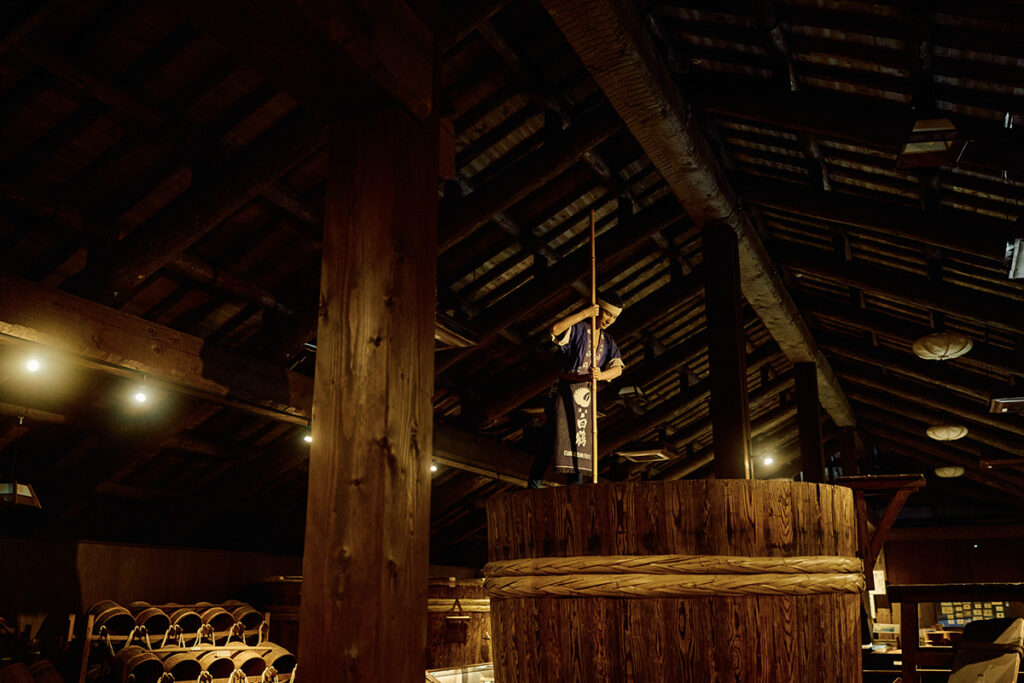
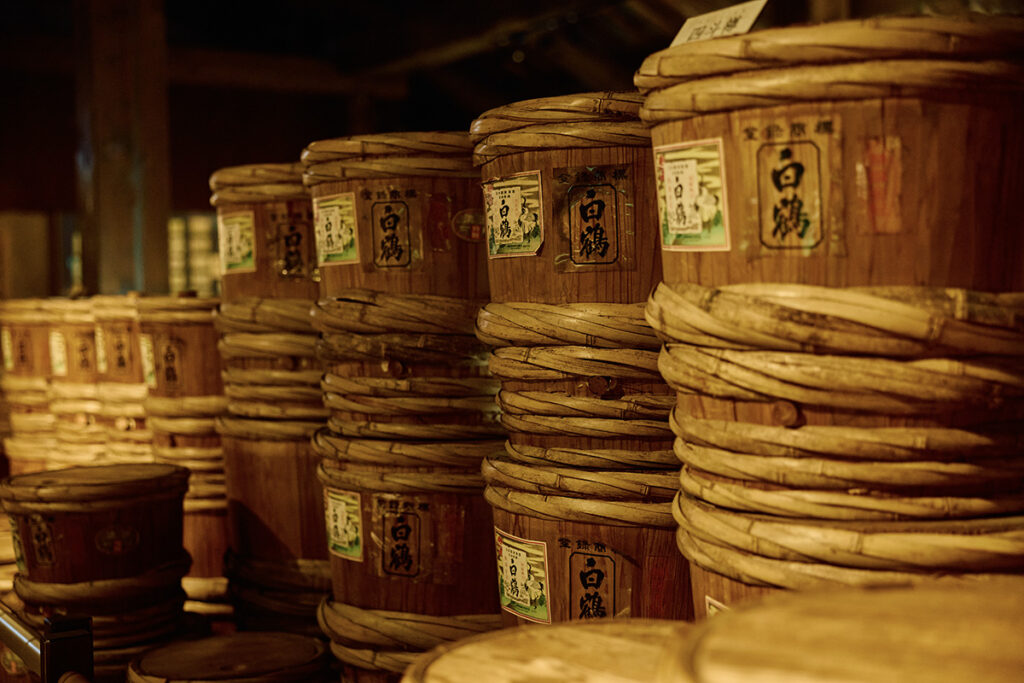
When rice and koji were combined through a series of complex processes, fermentation began, eventually creating a white liquid known as moromi. This stage took place inside a large vessel called a shikomioke. After several further steps, the sake was complete. It was then filled into 4-to barrels made from Yoshino cedar, each with a capacity of 72 litres, wrapped in decorative komo, secured with rope, and shipped.
Exploring New Possibilities with Unexpected Ingredients
After following the traditional sake brewing process through the exhibition, visitors descend to the first floor, where the atmosphere changes completely. Beyond a glass window is a room filled with metal brewing equipment, where a man dressed in white can be seen moving busily between the machines.
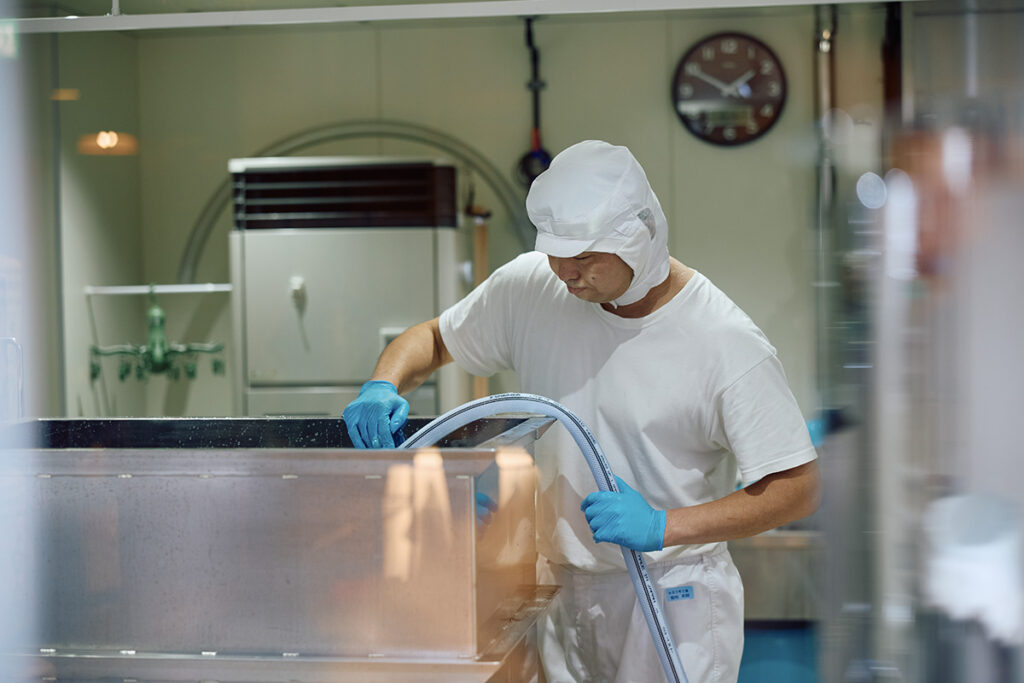
This small-scale facility is called HAKUTSURU SAKE CRAFT. Unlike the large-scale production of sake distributed nationwide, it operates as a microbrewery dedicated to producing sake on a much smaller scale. The facility handles the entire brewing process, from rice washing to hi-ire (heat sterilisation), allowing limited quantities to be produced and released as commercial products.
The brewery has explored numerous experimental approaches, including adding ingredients such as vanilla beans and hops to sake-based creations. Its latest release is HAKUTSURU SAKE CRAFT No.19 Cacao. Made by fermenting sweet junmai daiginjo moromi with cacao mass sourced from the Dominican Republic, the sake is bottled in 720ml quantities, with only 260 bottles available for purchase at the museum. Like the other releases in this series, it will not be reproduced once sold out, including the cacao edition.
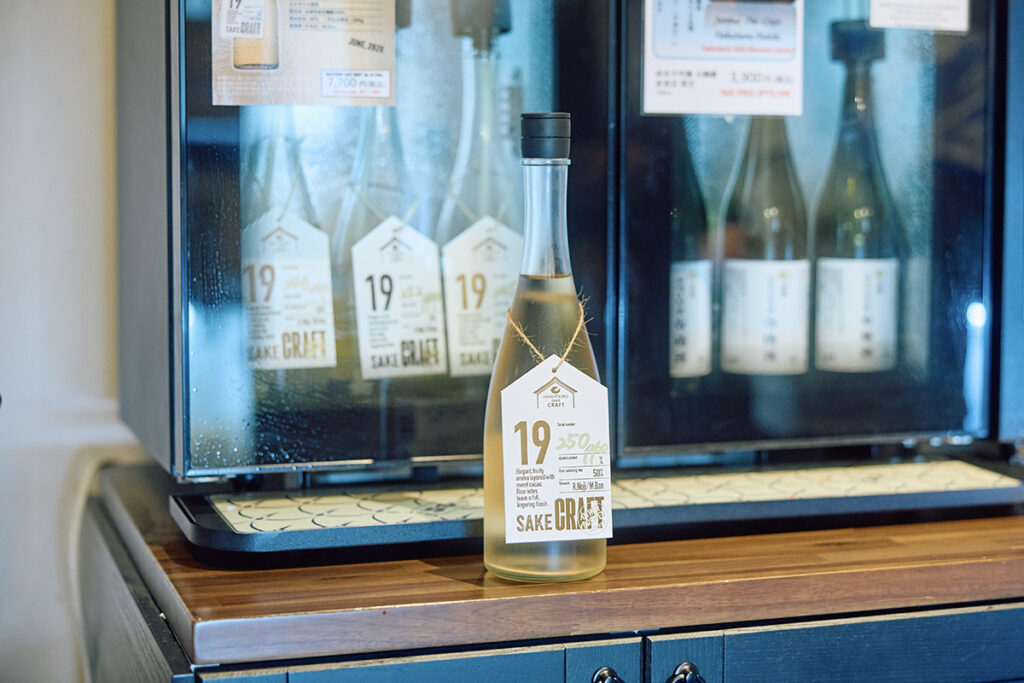
Encouraged by Masakazu Takada, the director of the museum, I took a sip. Contrary to my expectation that it might taste like unsweetened chocolate, the sake offered a delicate and exotic flavour that was difficult to put into words.
Nearby, a tasting corner offers visitors the chance to sample Tokubetsu Junmai Genshu Kurazake and Nigori Yuzushu. Following Takada’s recommendation, I tried a glass of the nigori yuzushu. Once again, it defied expectations in the best possible way, delivering a bold, striking acidity that gradually gave way to a warm sense of satisfaction.
I had always considered sake a world that felt somewhat intimidating, despite only occasionally enjoying it myself. Yet after learning about its history and production methods, and discovering new expressions of its flavour, it suddenly felt much more approachable. The museum is worth visiting not only for sake enthusiasts, but also for anyone with even a passing interest in Japanese sake.
Hakutsuru Sake Brewery Museum
Address: 4-5-5 Sumiyoshiminamimachi, Higashinada-ku, Kobe, Hyogo 658-0041
Admission: Free
Opening hours: 9:30–16:30 (last admission 16:00)
Closed in 2026: August 5–18, December 28–January 4, 2027
Website: https://www.hakutsuru.co.jp/community/shiryo/
Instagram:@hakutsuru_shiryoukan